
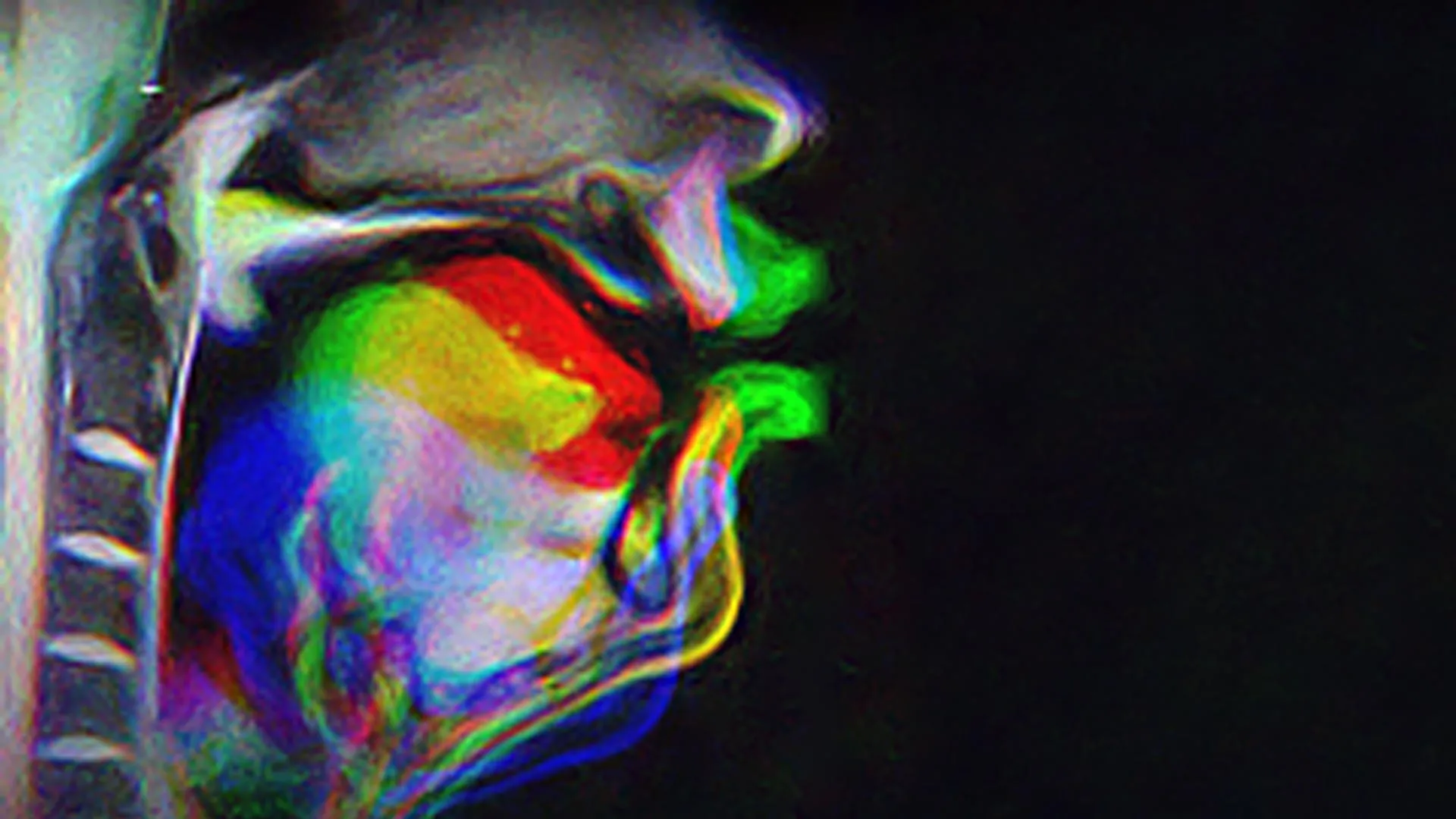
A groundbreaking study emerging from the collaborative efforts of McGill University and the Yale School of Medicine is poised to revolutionize our understanding of how humans acquire and retain the intricate skills of speech. For decades, the prevailing scientific consensus attributed the lion’s share of speech learning and memory to the brain’s motor control centers. However, this new research compellingly argues that the brain’s sensory processing regions – those responsible for interpreting sound and physical sensations – play a far more pivotal role than previously acknowledged. This paradigm shift has profound implications, potentially reshaping the design of advanced speech recognition systems and the development of novel brain-computer interfaces aimed at restoring communication abilities for individuals facing speech impairments.
Shifting the Spotlight: From Motor Commands to Sensory Input
The conventional wisdom in sensorimotor neuroscience has long emphasized the frontal motor areas as the primary architects of movement, including the complex sequences of muscle activations that produce speech. These regions orchestrate the precise coordination of the lips, tongue, jaw, and vocal cords. The prevailing theory suggested that learning to speak, or relearning it after a neurological event, involved a process of refining motor commands through trial and error, with the motor cortex acting as the central command hub for this learning.
However, the findings of this latest research, published in the esteemed Proceedings of the National Academy of Sciences of the United States of America, present a compelling counter-narrative. The study’s principal investigators, led by Professor David Ostry of McGill University and Associate Research Scientist Nishant Rao of Yale University, found robust evidence that the auditory cortex, which processes sound, and the somatosensory cortex, which registers physical sensations like touch and proprioception, are far more critical for speech learning and the consolidation of speech memories than the motor cortex.
"Sensorimotor neuroscience has traditionally focused on frontal motor areas as the principal drivers of movement," stated Professor Ostry. "This study fundamentally alters that understanding by demonstrating that human speech learning is extensively sensory in nature. It suggests that our brains learn to speak by meticulously processing the sensory feedback we receive, rather than solely by adjusting motor outputs."
This assertion is not without precedent within the broader field of motor learning. Previous investigations by Ostry’s research group, focusing on arm and hand movements, had also indicated a significant role for sensory systems in motor skill acquisition and retention. These earlier studies observed that disrupting sensory processing in the brain could impede the ability to learn and recall new motor skills related to limb control, laying the groundwork for the current exploration into the nuances of speech.
The Experimental Design: Probing the Brain with Precision
To rigorously test their hypothesis, the researchers devised an innovative experimental paradigm. Participants were subjected to real-time auditory feedback that was subtly altered as they spoke. This manipulation created a discrepancy between their intended speech and what they heard, prompting their brains to adapt and adjust their speech patterns in a controlled form of motor learning. This process mirrors the way infants learn to speak by listening to themselves and others, and how individuals might recalibrate their speech after a change in their vocal apparatus.
The core of the investigation involved the strategic application of transcranial magnetic stimulation (TMS), a non-invasive technique that uses magnetic pulses to temporarily stimulate or inhibit specific areas of the brain. The researchers targeted three key regions implicated in speech: the auditory cortex, the somatosensory cortex, and the motor cortex. By selectively disrupting the neural activity in each of these areas at different stages of the learning process, they aimed to ascertain their individual contributions to speech motor learning and memory formation.
The experiment followed a clear chronological sequence. Participants first engaged in the speech adaptation task, where they were exposed to altered auditory feedback. Following this learning phase, TMS was applied to one of the targeted brain regions, temporarily interfering with its normal functioning. The critical assessment of learning occurred 24 hours later, when participants’ retention of the newly acquired speech patterns was meticulously evaluated.
The underlying prediction was that if a particular brain region was indispensable for encoding and storing speech-related memories, then transient disruption of that area would lead to a significant decrement in recall. Conversely, if a region was not central to memory consolidation, its temporary inhibition would have minimal to no impact on the retention of the learned speech patterns.
Unveiling the Sensory Dominance: The Data Speaks
The results of the TMS intervention were remarkably clear and strongly supported the researchers’ hypothesis. When TMS was applied to either the auditory cortex or the somatosensory cortex, participants exhibited a substantial impairment in their ability to recall the modified speech patterns they had learned the previous day. This indicated that the integrity of these sensory processing areas was crucial for solidifying new speech memories.
In striking contrast, disrupting the activity of the motor cortex through TMS had a negligible effect on the participants’ retention of the learned speech. This finding directly challenges the long-held assumption that motor regions are the primary repositories of speech motor memories.
"Our study challenges the assumption that new speech memories are solely reliant on changes in motor areas of the brain," emphasized Nishant Rao, a co-author of the study. "Instead, it underscores the importance of changes in auditory and somatosensory brain areas in shaping how we learn to speak. This suggests that our brains are actively using sensory information to refine and store our vocalizations."
The quantitative data from the study, though not fully detailed in the initial release, is understood to show statistically significant differences in retention rates across the different stimulation conditions. For instance, it is plausible that the percentage of error reduction in speech production was significantly higher in the sensory-disrupted groups compared to the motor-disrupted group when recalling the learned modifications. This would represent a robust demonstration of sensory dominance in speech memory.
Implications for Technology and Therapeutics: A New Horizon
The implications of this research extend far beyond academic curiosity, holding significant promise for the development of cutting-edge technologies and therapeutic interventions. The revelation that sensory systems are key players in speech learning opens up new avenues for designing more sophisticated and effective speech recognition algorithms. Current systems often rely heavily on acoustic models and may not fully leverage the rich sensory feedback mechanisms that humans employ. Incorporating a deeper understanding of auditory and somatosensory processing could lead to speech recognition software that is more adaptable, accurate, and robust, especially in noisy environments or for individuals with atypical speech patterns.
Perhaps even more impactful is the potential for this research to guide the development of brain-based communication technologies aimed at assisting individuals who have lost their ability to speak due to stroke, neurodegenerative diseases, or other neurological conditions. The ability to restore communication is a primary goal for many assistive technologies, and understanding the neural underpinnings of speech learning can inform the design of more effective brain-computer interfaces.
If sensory processes are indeed more critical for speech recovery than motor processes, future rehabilitation strategies could be designed to specifically target and enhance auditory and somatosensory feedback mechanisms. This might involve novel forms of neurofeedback, sensory stimulation therapies, or the development of prosthetic devices that provide richer and more informative sensory input to the brain.
"The results may also help guide the development of emerging brain-speech technologies," noted Professor Ostry. "Such systems could one day help restore communication abilities after stroke by incorporating sensory processes to improve performance and usability."
The research also builds upon the growing body of evidence regarding brain plasticity – the brain’s remarkable ability to reorganize itself by forming new neural connections throughout life. This study highlights that plasticity is not confined to motor control areas but is extensively distributed across sensory networks, particularly in the context of complex motor skills like speech.
Future Directions: Unraveling the Neural Code
The researchers are not resting on their laurels. Their ongoing work aims to delve deeper into the specific cortical circuits involved in speech learning and to further explore the therapeutic potential of sensory-based interventions. Future studies will likely focus on identifying the precise neural pathways and computational mechanisms by which auditory and somatosensory information is integrated to facilitate speech acquisition and memory.
Moreover, the team is keen to investigate how these findings can be translated into practical treatments for movement disorders that affect speech. The insights gained could pave the way for innovative rehabilitation programs for individuals recovering from stroke, traumatic brain injury, or those living with conditions like Parkinson’s disease or amyotrophic lateral sclerosis (ALS), where speech impairment is a common and debilitating symptom. The potential to improve the quality of life for millions by enhancing their ability to communicate is a powerful motivator for this continued research.
The study, titled "Sensory Basis of Speech Motor Learning and Memory," was authored by Nishan Rao, Rosalie Gendron, Timothy Manning, and David Ostry. Its publication in Proceedings of the National Academy of Sciences marks a significant milestone in the field. The research received vital funding from the U.S. National Institute on Deafness and Other Communication Disorders, underscoring the national importance placed on advancing our understanding of human communication. This collaborative effort represents a substantial leap forward in deciphering the complex neural symphony that allows us to speak, think, and connect with the world around us.
