

Zurich, Switzerland – SentiaNova, a nascent Swiss biotechnology firm, has officially exited stealth mode, unveiling a proprietary pre-processing technology poised to revolutionize the plant-based protein industry. This innovative approach directly addresses one of the most persistent challenges hindering widespread consumer adoption: the unpleasant off-flavors inherent in many plant-derived protein sources. By effectively neutralizing these undesirable taste profiles before conventional processing, SentiaNova aims to unlock the full potential of pulses as a sustainable and scalable alternative to animal proteins, while simultaneously offering significant cost efficiencies to manufacturers.
The company’s patented technology targets the root cause of flavor issues in plant proteins, particularly those derived from legumes. Unlike methods that attempt to mask undesirable notes through extensive use of flavorings or other additives, SentiaNova’s process fundamentally alters the protein structure to remove off-flavors at their source. This results in a neutral-tasting protein base, paving the way for cleaner ingredient lists and more authentic flavor profiles in a diverse range of food products. Early indications suggest this approach can lead to cost reductions of up to 15% for food manufacturers.
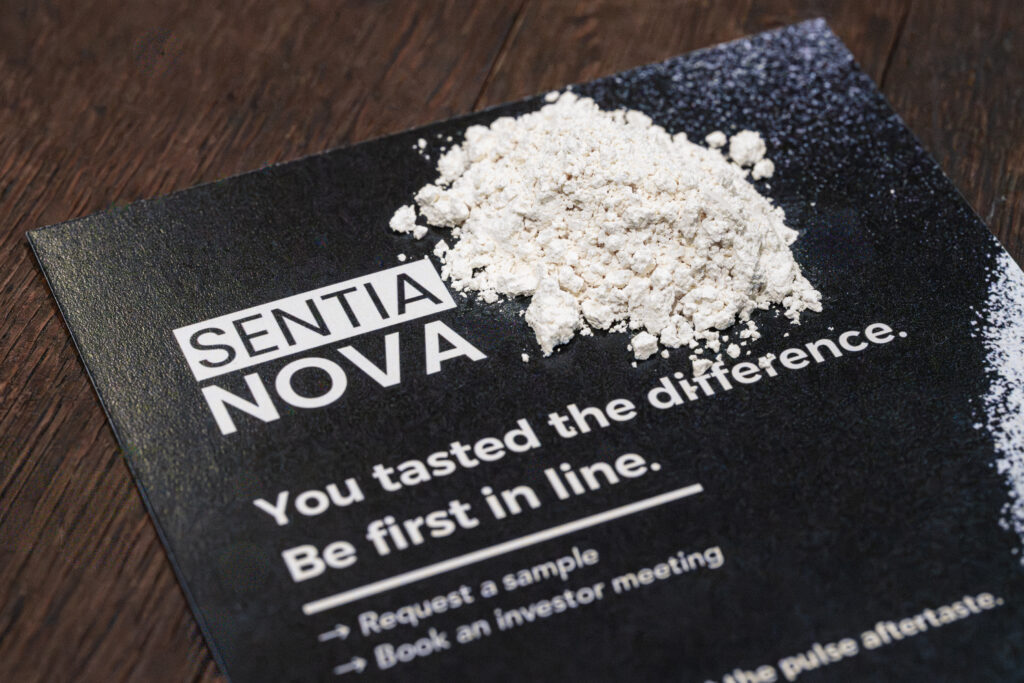
SentiaNova’s initial product offering is a pea protein concentrate, which is currently available in sample quantities. The company plans to scale up production to commercial volumes by the end of the current year. Following this, an even more refined pea protein isolate is slated for release, further expanding the company’s portfolio and catering to a broader spectrum of food industry needs.
"The convergence of several critical factors has created an unprecedented opportunity for plant proteins to bridge the global protein gap," stated Daria Reisch, co-founder and CEO of SentiaNova. "We are witnessing significant investments in processing infrastructure, coupled with European agricultural policies actively incentivizing legume cultivation for enhanced protein sovereignty and nitrogen capture. Concurrently, consumer demand for plant-based alternatives is accelerating at an unprecedented rate. Historically, taste has remained the most significant impediment. SentiaNova is poised to decisively remove this final barrier. Our independently validated results demonstrate that our technology is not merely an incremental improvement; it represents a paradigm shift in the industry."
Addressing the Global Protein Crunch and Consumer Dissatisfaction
The escalating global demand for protein is a defining characteristic of the contemporary food landscape. This surge is fueled by a confluence of factors, including evolving dietary recommendations that emphasize protein intake, the widespread adoption of GLP-1 agonists for weight management which often increase appetite, and continuous global population growth. The conventional livestock industry, however, faces inherent limitations in its capacity to scale rapidly enough to meet this burgeoning demand.

Projections highlight a critical need for an additional three billion kilograms of whey protein by the end of the current year alone. This demand is occurring at a time when whey protein supplies are already experiencing significant shortages. In the United States, for instance, whey protein contracts have been booked well into 2026, compelling manufacturers to seek alternative sourcing, including from Europe. However, Europe itself possesses limited supplies relative to global requirements, inevitably leading to upward price pressures.
Plant proteins, therefore, represent a crucial avenue for fulfilling this demand. In Europe, a substantial portion of the existing dry fractionation capacity for food-grade pulse protein concentrates remains underutilized. SentiaNova identifies the prevailing issue as the inherent flavor profile of these proteins, which has consistently been cited as the primary obstacle to broader market penetration.
Extensive research has underscored the critical role of taste in consumer acceptance of plant-based foods. A comprehensive taste test conducted last year revealed that only 30% of American omnivores expressed satisfaction with the taste of the average meat-free product, a stark contrast to the 68% who hold a positive opinion of conventional meat. The study further indicated that meat alternatives were five to six times more likely to exhibit an off-putting aftertaste or undesirable flavor notes compared to animal proteins. Other significant weaknesses identified in plant-based meat alternatives included undesirable textural qualities, such as mushiness, and off-colors.
This challenge is not confined to the United States. A comprehensive European survey conducted in 2023 identified taste as the paramount consideration for consumers when purchasing plant-based products, with 54% of respondents citing it as the most important factor.
Food manufacturers are acutely aware of this market dynamic. An analysis by the Fairr Initiative suggests that among the world’s largest food conglomerates, including major players like Nestlé, Walmart, and Kraft Heinz, approximately 90% are actively engaged in launching and promoting new plant-based product lines. However, a significant 77% of these companies perceive concerns surrounding taste, cost, and nutritional profiles as substantial hindrances to widespread consumer uptake.
SentiaNova’s technological innovation directly confronts these challenges by focusing on the intrinsic removal of bitter, beany, and green off-notes, rather than attempting to mask them. This is achieved through a pre-processing step that occurs before the protein is concentrated or isolated. The outcome is a clean, neutral ingredient base that is versatile enough to be incorporated into a wide array of pulses, including peas, fava beans, mung beans, and chickpeas.

Beyond flavor enhancement, SentiaNova’s technology also contributes to improved color characteristics and functional properties. These include enhanced dispersibility, superior water retention capabilities, and improved emulsification. The company asserts that these benefits enable the development of premium food applications with higher protein inclusion rates, often without the need for additional additives. Furthermore, the SentiaNova platform is designed for seamless integration into existing pulse protein manufacturing systems, minimizing the need for extensive capital investment by downstream manufacturers.
Independent Validation Confirms SentiaNova’s Superiority in Sensory Evaluation
To substantiate its claims, SentiaNova commissioned an independent sensory evaluation of its pea protein concentrate. The results of this rigorous assessment revealed that SentiaNova’s ingredient significantly outperformed existing de-flavored pea protein benchmarks available on the market. This included comparisons against the leading pea protein concentrate and a top-tier pea protein isolate.
A panel comprising 12 trained sensory evaluators concluded that SentiaNova’s pea protein concentrate was the sole ingredient to achieve a statistically significant reduction in overall off-notes, with a confidence level of 99%. The panel also consistently recorded substantial decreases in bitterness, astringency, and green flavor profiles.
The evaluation further quantified the downstream economic impact of incorporating SentiaNova’s ingredient. When used to replace the currently most neutral pea protein concentrate in a vanilla pudding formulation, SentiaNova’s ingredient led to a cost reduction of 15%. This economic advantage is attributed to the complete elimination of masking agents and a reduction in the required amount of vanilla flavoring, from 1% to 0.8%.
SentiaNova officially launched its ingredient at the HackSummit in Lausanne, Switzerland, which took place from April 22nd to 23rd. During the event, the company hosted a tasting session where attendees had the opportunity to sample three finished products formulated with the pea protein concentrate: a vanilla pudding, a ready-to-drink protein beverage, and protein balls. These demonstrations effectively showcased the ingredient’s pristine white color, excellent dispersibility, and robust functional performance.
The company has adopted an operational and capital expenditure-light production model. This strategy involves forging partnerships with established pulse protein manufacturers, enabling SentiaNova to bring high-volume products to market within compressed timeframes. Importantly, SentiaNova’s ingredient does not require regulatory approval in major global markets, allowing food companies to confidently plan reformulations and develop new products with a clear and near-term commercialization pathway.
Roi Wurgaft, co-founder and Chief Technology Officer of SentiaNova, brings a wealth of experience to the venture, having spent 26 years building plant protein facilities. He commented, "Throughout my career, I have observed numerous promising technologies falter because the fundamental unit economics were not viable. This experience was instrumental in shaping SentiaNova’s strategic approach. Our focus is on delivering clean taste at an accessible price point – precisely what the industry has been advocating for. All other considerations are secondary to achieving this core objective."
The company’s approach also offers significant advantages for product development teams. By providing a truly neutral protein base, SentiaNova empowers formulators to create a wider array of products with cleaner labels, reducing reliance on artificial flavors, sweeteners, and texturizers. This aligns with growing consumer preferences for minimally processed foods and ingredients perceived as natural and wholesome.
The implications of SentiaNova’s technology extend beyond mere taste improvement. Enhanced functionality, such as improved emulsification and water-holding capacity, can lead to more stable and appealing finished products. For instance, in baked goods, a neutral and functional pea protein could contribute to better texture and shelf-life. In dairy alternatives, it could facilitate smoother, creamier textures without the characteristic graininess or off-flavors often associated with current formulations.
The timing of SentiaNova’s market entry is particularly opportune. With increasing global awareness of the environmental impact of animal agriculture and a growing desire for healthier, more sustainable food options, the demand for plant-based proteins is projected to continue its upward trajectory. By effectively removing the primary barrier to acceptance, SentiaNova is well-positioned to capture a significant share of this rapidly expanding market. The company’s commitment to affordability and scalability suggests that its technology could democratize access to high-quality plant proteins, making them a more viable and attractive option for a broader range of food manufacturers, from large corporations to smaller artisanal producers. The successful integration of SentiaNova’s technology could mark a pivotal moment in the evolution of the plant-based food industry, moving it closer to parity with, and in some aspects, surpassing its animal-derived counterparts.
