
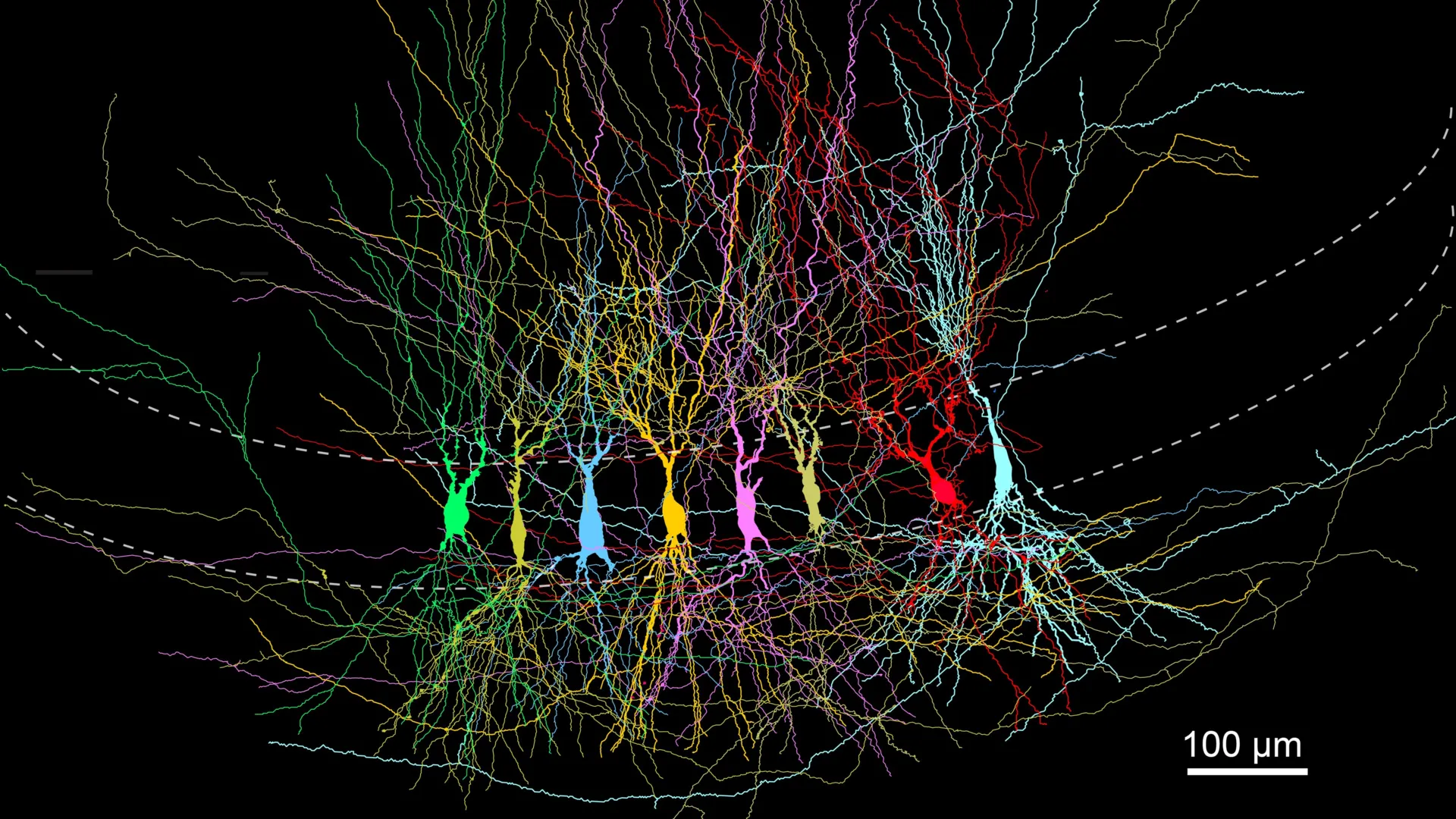
The intricate architecture of the human brain, particularly the hippocampus, a region fundamental to memory formation and spatial navigation, is far from a simple "blank slate" at birth. New research from the Institute of Science and Technology Austria (ISTA) challenges conventional notions of neural development, revealing that a key hippocampal network begins with an abundant, almost "full slate" of connections that are subsequently refined and optimized. This groundbreaking study, published in the esteemed journal Nature Communications, sheds crucial light on the developmental trajectory of the CA3 hippocampal circuit and its implications for learning and cognitive function.
Unraveling the Mysteries of Neural Development: Tabula Rasa vs. Tabula Plena
For centuries, the philosophical debate between tabula rasa (blank slate) and tabula plena (full slate) has pondered the origins of knowledge and identity. In the realm of biology, this translates to the enduring question of how much of our development is preordained by genetics and how much is sculpted by environmental influences. This fundamental dichotomy has long been a guiding principle in understanding brain development. The prevailing assumption has often leaned towards a model where neural circuits gradually assemble and strengthen connections from a relatively unformed state, akin to a blank page being filled with writing.
However, the recent work by scientists at ISTA, led by Magdalena Walz Professor for Life Sciences Peter Jonas, offers a compelling counterpoint. Their investigation focused on the CA3 region of the hippocampus, a critical hub responsible for associative memory – the ability to link different pieces of information to form a coherent memory. This region is paramount for recalling past events, recognizing familiar environments, and even imagining future scenarios. The research team hypothesized that the development of the CA3 neural network might deviate from the "blank slate" paradigm, potentially adopting a "full slate" approach where an initial exuberance of connections is later pruned for efficiency.
A Deep Dive into the CA3 Hippocampal Network
The study meticulously examined the development of CA3 pyramidal neurons in mouse brains across three distinct developmental stages: early postnatal (days 7-8), adolescence (days 18-25), and adulthood (days 45-50). This chronological approach allowed researchers to observe the dynamic changes in neural connectivity as the brain matured. The selection of these specific time points is significant, representing crucial periods of rapid neural growth, synaptic maturation, and the establishment of functional circuits in rodents, which share remarkable similarities with human hippocampal development.
To achieve this detailed examination, the ISTA team employed a sophisticated suite of cutting-edge electrophysiological and optical techniques. The patch-clamp technique, a cornerstone of neuroscience research, was utilized to measure the minute electrical signals transmitted between neurons. This involved precisely recording from presynaptic terminals, the crucial points where one neuron communicates with another, and dendrites, the branched extensions of neurons that receive signals. By applying this technique, the researchers could assess the functional strength and efficacy of synaptic connections.
Complementing the electrophysiological recordings, advanced imaging technologies, including two-photon microscopy, provided unprecedented views into the living brain. These techniques allowed scientists to visualize the intricate structures of neurons and their connections in real-time. Furthermore, optogenetic methods, which use light to control genetically modified neurons, enabled the precise activation of individual neural connections. This level of control is essential for dissecting the complex interplay of signals within the hippocampal network and understanding how specific connections contribute to overall circuit function.
From Dense and Disorganized to Streamlined and Precise: A Developmental Paradox
The findings from this extensive investigation yielded a revelation that defied initial expectations. Instead of observing a gradual increase in neural density and connectivity from a sparse starting point, the researchers discovered a strikingly different developmental trajectory. In the early stages of postnatal life, the CA3 network was found to be exceptionally dense, characterized by a multitude of connections that appeared to be largely random. This "exuberant" connectivity suggests a period of widespread initial wiring.
As the mouse brains matured, a remarkable transformation occurred. The CA3 network did not simply continue to grow denser; rather, it underwent a process of selective pruning and refinement. The overall density of connections decreased, but the remaining connections became significantly more organized and efficient. This transition from a dense, seemingly haphazard network to a more streamlined and optimized one underscores a sophisticated developmental strategy.
"This discovery was quite surprising," stated Professor Peter Jonas in a statement to the press. "Intuitively, one might expect that a network grows and becomes denser over time. Here, we see the opposite. It follows what we call a pruning model: it starts out full, and then it becomes streamlined and optimized." This observation directly challenges the conventional "blank slate" model, suggesting that the brain’s initial state is one of over-connection, which is then meticulously curated.
The Evolutionary Advantage of a "Full Slate" Beginning
The question of why the brain adopts this "full slate" developmental strategy is a subject of ongoing research and intriguing hypotheses. Professor Jonas proposes that the initial abundance of connections plays a crucial role in facilitating rapid and robust integration of diverse sensory information. The hippocampus, in particular, is tasked with the extraordinarily complex job of weaving together disparate sensory inputs – sights, sounds, smells, and even emotional states – into cohesive and enduring memories.
"That’s a complex task for neurons," Professor Jonas elaborated. "An initially exuberant connectivity, followed by selective pruning, might be exactly what enables this integration." He further explained that if the brain began as a true tabula rasa, with no pre-existing connections, neurons would first have to expend significant energy and time locating and establishing appropriate partners. This initial bootstrapping process could potentially lead to delays in communication and hinder the efficiency of memory formation.
Imagine trying to build a complex road network from scratch. If you start with no roads, you first have to identify destinations and then lay down individual paths. This would be a slow and potentially inefficient process. However, if you begin with a dense web of potential routes, even if some are redundant or lead to dead ends, you can quickly establish initial connections and then systematically upgrade and optimize the most efficient routes, removing the unnecessary ones. This analogy highlights the potential advantages of an initially over-connected system.
Implications for Memory and Cognitive Function
The implications of this research are far-reaching, particularly for our understanding of memory consolidation and spatial cognition. The ability to form stable long-term memories from fleeting experiences is a hallmark of advanced cognition. This process relies heavily on the hippocampus’s capacity to strengthen and stabilize synaptic connections that represent learned information. The finding that the CA3 network begins with a rich tapestry of connections suggests that the brain has evolved a mechanism to maximize the opportunities for initial learning and association.
Furthermore, spatial navigation, another key function of the hippocampus, involves creating and updating mental maps of our environment. This requires integrating visual cues, proprioceptive information, and internal directional signals. A highly interconnected CA3 network at an early stage could facilitate the rapid formation of initial spatial representations, which are then refined as the individual gains more experience and the network becomes more specialized.
The concept of synaptic plasticity, the brain’s remarkable ability to change and adapt, is central to this developmental process. The pruning of unnecessary connections, a form of synaptic plasticity, allows the network to become more efficient, reducing the energetic cost of maintaining unused synapses and sharpening the signaling pathways that are crucial for learned behaviors and memories. This selective elimination of connections is not a sign of deficit but rather a sophisticated optimization strategy.
Broader Impact and Future Directions
This study contributes significantly to the ongoing dialogue about nature versus nurture in human development. It suggests that while environmental experiences undoubtedly play a critical role in shaping our brains, there is also a powerful innate developmental program that lays down a robust, albeit initially unrefined, neural foundation. This foundation is primed for learning and adaptation.
The findings could also have implications for understanding neurological disorders associated with impaired memory and spatial cognition, such as Alzheimer’s disease or certain developmental disorders. Disruptions in the normal pruning and refinement processes of hippocampal circuits could potentially contribute to cognitive deficits. Future research could explore whether deviations from this typical developmental trajectory are observed in individuals with such conditions.
Moreover, the methodologies developed and employed by the ISTA team offer powerful tools for future investigations into brain development across various regions and species. The ability to precisely manipulate and measure neural activity at the synaptic level provides unprecedented insights into the fundamental mechanisms of neural circuit formation.
In conclusion, the research from ISTA offers a compelling new perspective on hippocampal development, challenging the long-held "blank slate" model. By revealing that a critical memory-forming network begins with an abundant, "full slate" of connections that are subsequently refined, this study underscores the remarkable complexity and efficiency of the brain’s developmental processes. It suggests that the brain is not merely built from scratch but is instead meticulously sculpted from an initial state of rich potential, a testament to the intricate evolutionary journey that has shaped our cognitive abilities. This paradigm shift promises to invigorate research into neural development, memory formation, and the fundamental principles that govern how our brains learn and adapt throughout life.
