
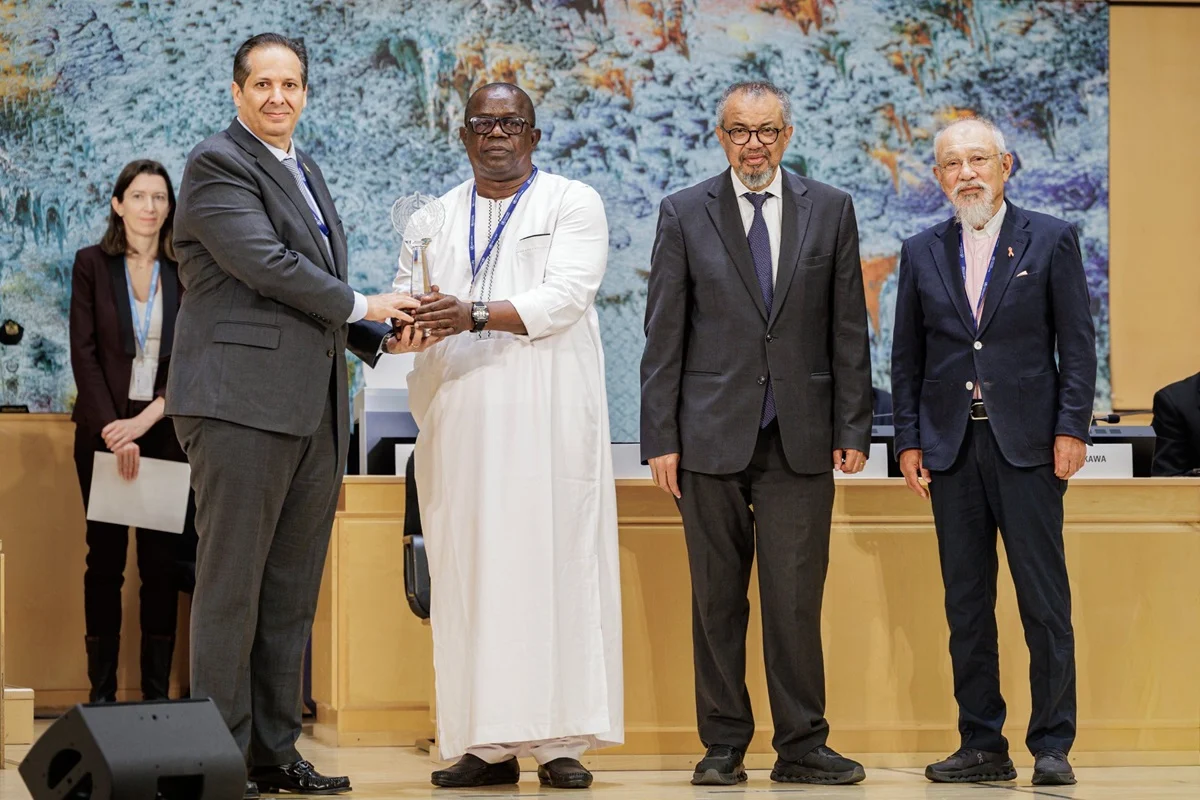
The Seventy-ninth World Health Assembly (WHA) convened in Geneva this week to celebrate the extraordinary contributions of individuals and institutions dedicated to the advancement of global health equity and primary healthcare. During a high-profile plenary session, six laureates from across the globe were honored for their tireless efforts to bridge health disparities and bring the vision of "Health for All" closer to a tangible reality. The ceremony, a cornerstone of the annual assembly, was presided over by Dr. Víctor Elias Atallah Lajam, the President of the Seventy-ninth World Health Assembly and representative of the Dominican Republic. He was joined by Dr. Tedros Adhanom Ghebreyesus, Director-General of the World Health Organization (WHO), and representatives from the various foundations that have sponsored these prestigious awards for four decades.
The 2026 awards serve as a testament to the resilience of the global health community in an era characterized by complex emergencies and evolving epidemiological challenges. The selection of the laureates, finalized by the WHO Executive Board during its session in February 2026, highlights a global consensus on the importance of scientific excellence, grassroots innovation, and community-led outreach. As the world navigates the mid-way point of the decade, these prizes underscore the critical role of primary healthcare as the most effective and equitable path toward achieving Universal Health Coverage (UHC).
A Milestone Anniversary: The Legacy of Dr. LEE Jong-wook
This year’s ceremony carried a profound emotional weight, marking exactly 20 years since the passing of Dr. LEE Jong-wook, the WHO’s sixth Director-General. Dr. Lee, a visionary leader from the Republic of Korea, passed away unexpectedly in May 2006 while the World Health Assembly was in session. Known affectionately as a "man of action," Dr. Lee is remembered for his aggressive strategies to combat HIV/AIDS—most notably the "3 by 5" initiative, which aimed to provide antiretroviral treatment to three million people by 2005—and his commitment to eradicating polio and controlling tuberculosis.
The Dr. LEE Jong-wook Memorial Prize for Public Health, one of the honors bestowed during the 2026 assembly, serves as an enduring tribute to his philosophy that health is a fundamental human right. The prize specifically targets those who have demonstrated exceptional leadership in areas that Dr. Lee championed, including disease prevention and the strengthening of public health management systems. Speakers at the ceremony noted that the 20-year milestone provides an opportunity for the global community to reflect on how far health systems have come since 2006, while acknowledging the persistent gaps that still require the "Lee Jong-wook spirit" of urgency and dedication.
The 2026 Public Health Prizes: Categories and Focus
The awards presented at the 79th WHA represent a diverse array of health priorities, ranging from the needs of an aging population to the promotion of healthy lifestyles in marginalized communities. The six laureates were selected from nearly 100 nominations, a record number that reflects a significant uptick in global engagement with the WHO’s recognition programs.
The Sasakawa Health Prize
Long recognized as one of the most prestigious awards in international health, the Sasakawa Health Prize focuses on innovative work in health development. In 2026, the focus remained on programs that have successfully integrated community participation with modern medical technology to solve local health crises.
The United Arab Emirates Health Foundation Prize
This prize honors individuals or institutions that have made outstanding contributions to health development. Historically, this award has recognized breakthroughs in maternal and child health, as well as the management of non-communicable diseases (NCDs) in resource-limited settings.
The State of Kuwait Health Promotion Foundation’s His Highness Sheikh Sabah Al-Ahmad Al-Jaber Al-Sabah Prize for the Promotion of Healthy Ageing
As the global population ages at an unprecedented rate, this prize has gained significant relevance. It rewards initiatives that foster "healthy ageing," ensuring that older persons can live with dignity, health, and social connectivity. The 2026 recognition emphasizes the need for integrated care models that prevent chronic illness in the elderly.
The Nelson Mandela Award for Health Promotion
Inspired by the legacy of the former South African President, this award celebrates those who have demonstrated excellence in health promotion, particularly through the lens of social justice and human rights. The 2026 awardee was noted for their work in empowering vulnerable populations to take control of their health outcomes.
Chronology of the Selection Process
The journey to the 79th World Health Assembly awards ceremony is a rigorous, multi-stage process designed to ensure transparency and meritocracy. The timeline for the 2026 prizes began in the latter half of 2025:
- Call for Nominations: WHO Member States and former laureates were invited to submit nominations for individuals or organizations that have demonstrated impact beyond the standard call of duty.
- Review Phase (Late 2025): Selection panels, consisting of representatives from the respective prize foundations and members of the WHO Executive Board, reviewed the submissions. Criteria included scientific rigor, the sustainability of the health intervention, and the potential for the model to be scaled globally.
- Executive Board Designation (February 2026): During its 158th session, the WHO Executive Board officially designated the winners based on the recommendations of the selection panels.
- Plenary Presentation (May 2026): The awards were formally presented during the high-level segment of the World Health Assembly in Geneva, providing the laureates with a global platform to share their insights.
Data Trends in Global Health Recognition
Analysis of the last 15 years of WHO public health prizes reveals a shifting landscape in global health priorities. Since 2011, more than 80 laureates from over 50 Member States have been recognized. The 2026 cycle saw a nearly 25% increase in nominations compared to previous years, a trend experts attribute to the increased visibility of public health workers following the COVID-19 pandemic.
Furthermore, there has been a notable shift toward recognizing "South-South" cooperation. Increasingly, laureates are originating from low- and middle-income countries (LMICs), showcasing home-grown solutions to health challenges that were once addressed primarily through Western-led interventions. The 2026 cohort reflects this geographical diversity, with winners representing several of the six WHO regions, including Africa, South-East Asia, and the Americas.
Official Responses and Strategic Implications
Dr. Tedros Adhanom Ghebreyesus, in his address to the assembly, emphasized that the laureates represent the "beating heart" of the WHO’s mission. "At a time when science is often questioned and health systems are under immense strain, these awardees remind us that progress is possible through dedication and evidence-based action," Dr. Tedros stated. He further noted that the 2026 theme, "Together for health. Stand with science," is not merely a slogan but a necessary mandate for the survival of global health initiatives.
Dr. Víctor Elias Atallah Lajam echoed these sentiments, highlighting the importance of the Dominican Republic’s role in the assembly. He noted that small island developing states (SIDS) often face the brunt of climate-related health issues and that the innovations celebrated today—particularly in primary healthcare—are vital for the resilience of such nations.
Industry analysts suggest that the 2026 awards signal a strategic pivot by the WHO toward "Primary Health Care (PHC) 2.0." This approach moves beyond basic clinical services to include digital health integration, climate-resilient infrastructure, and mental health support at the community level. By honoring champions of PHC, the WHO is reinforcing its "Triple Billion" targets: one billion more people benefiting from universal health coverage, one billion more protected from health emergencies, and one billion more enjoying better health and well-being.
Broader Impact: Science as the Foundation of Health
The ceremony also served as the launchpad for a year-long campaign following World Health Day 2026. The theme, "Together for health. Stand with science," reflects a concerted effort by the WHO to combat the rise of health misinformation and the erosion of trust in scientific institutions.
The 2026 laureates are viewed as ambassadors for this cause. Their work—ranging from the eradication of neglected tropical diseases to the implementation of innovative vaccination strategies—is grounded in rigorous scientific methodology. By highlighting their success, the WHO aims to demonstrate that science-led policy is the only viable path to protecting global well-being.
As the 79th World Health Assembly continues its deliberations on topics such as pandemic preparedness and the health impacts of climate change, the recognition of these six laureates provides a moment of optimism. Their achievements offer a blueprint for how individual commitment can catalyze systemic change, ensuring that the legacy of leaders like Dr. LEE Jong-wook continues to inspire a new generation of public health professionals.
In the coming months, the WHO plans to feature the stories of the 2026 laureates in a series of global webinars and publications. The goal is to facilitate the transfer of knowledge between regions, allowing the "scientific excellence and innovation" celebrated in Geneva to be adapted and implemented in the 150+ locations where the WHO operates. Through this continued investment in human capital and scientific integrity, the global health community moves one step closer to a safe, healthy, and equitable world for all.
