
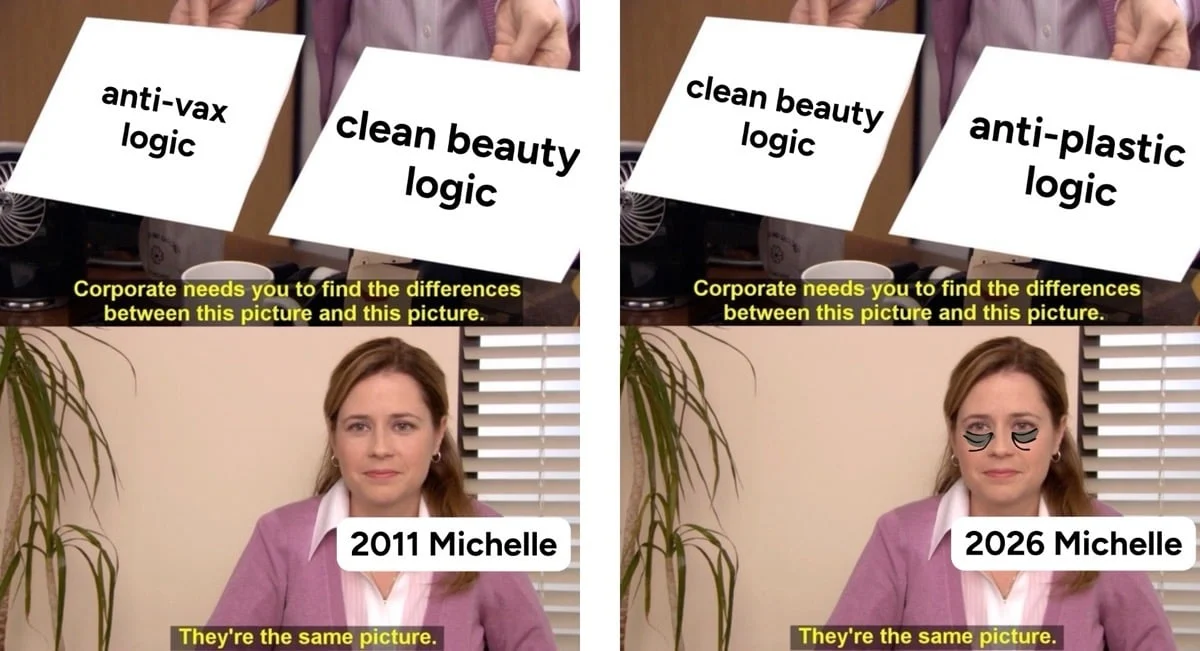
A recent observation shared on social media platform Threads by user @idea.soup, positing a nascent connection between the anti-polyester movement and certain political pipelines, has sparked a significant discussion within the scientific communication community. This seemingly innocuous comment served as a "lightbulb moment" for Dr. Michelle Wong of Lab Muffin Beauty Science, who immediately recognized striking parallels with the "clean beauty" movement she has extensively critiqued over the past decade. Dr. Wong, a cosmetic chemist and science communicator, has long argued that the underlying logical fallacies and fear-mongering tactics employed by the "non-toxic" clean beauty trend bear a disturbing resemblance to anti-vaccination narratives, even demonizing the same substances such as aluminum and formaldehyde. Now, she contends, the burgeoning anti-plastic trend is exhibiting many of these identical characteristics, raising concerns that it could similarly mislead consumers and undermine genuine efforts towards sustainability.
The Precedent of "Clean Beauty" and its Pseudoscientific Roots
The "clean beauty" movement gained significant traction in the 2010s, promoting products devoid of what it deemed "toxic" or "dirty" ingredients, often without scientific basis. This trend was characterized by a blanket demonization of synthetic chemicals, an "appeal to nature" fallacy, and a profound disregard for fundamental principles of toxicology, such as the crucial concept that "the dose makes the poison." Ingredients like parabens, phthalates, sulfates, and synthetic fragrances were frequently targeted, despite extensive safety testing and regulatory approval.
Dr. Wong’s journey into science communication began around 2011, precisely because she identified the "non-toxic" narrative of clean beauty as a potential gateway to broader anti-science beliefs, particularly anti-vax sentiment. The shared rhetoric, the uncritical acceptance of anecdotal evidence, and the consistent vilification of scientifically validated substances created a dangerous echo chamber. Many proponents of clean beauty, often driven by a genuine desire for safer products, inadvertently became conduits for misinformation, swayed by marketing claims rather than rigorous scientific evaluation. This historical context is crucial for understanding the current concerns surrounding the "plastic-free" movement.
The Rise of "Plastic-Free" and Emerging Parallels
In recent years, the consumer landscape has seen a dramatic shift towards "plastic-free" alternatives, particularly within the beauty industry. Brands and influencers are increasingly marketing products with blanket "plastic-free" claims, often accompanied by alarming rhetoric about microplastics. While concerns about plastic pollution and its environmental impact are valid and widely acknowledged by the scientific community, Dr. Wong points out that the current anti-plastic trend frequently employs the same flawed logic and fear-based messaging seen in clean beauty.
The irony, as Dr. Wong highlights, is that many individuals who readily identify clean beauty as pseudoscientific seem to overlook the application of similar debunking arguments to their anti-plastic messaging. Even reputable scientific outlets and experts, who would typically scrutinize clean beauty claims, have occasionally fallen into what Dr. Wong describes as "clean beauty tropes" when discussing plastics. This selective application of scientific rigor underscores the pervasive nature of these logical fallacies.
It is critical to preface any critique by stating that the underlying goal of reducing plastic waste is undeniably important. The world grapples with an immense plastic pollution crisis, and the health impacts of microplastics warrant serious scientific investigation. However, Dr. Wong argues that overblowing these concerns without nuanced evidence, and uncritically switching to "eco" alternatives, can paradoxically undermine the very goals of improved human and environmental health, much like the removal of scientifically sound ingredients in clean beauty led to misaligned outcomes.
Key Parallels: A Detailed Examination
The parallels between anti-plastic messaging and clean beauty are numerous and profound, extending beyond superficial similarities in marketing jargon.
1. Appeal to Nature Fallacy:
At the core of both movements lies the "appeal to nature" fallacy: the assumption that "natural = good" and "synthetic/plastic = bad." This oversimplification dictates that materials derived from natural sources, such as bioplastics, paper, glass, or bamboo, are inherently superior to synthetic plastics, regardless of their actual environmental footprint or functional properties.
This fallacy ignores a fundamental scientific principle: a substance’s origin does not determine its safety or environmental impact. Many of the most toxic substances known to humanity are entirely natural (e.g., arsenic, cyanide, botulinum toxin). Conversely, many synthetic materials are inert and highly beneficial. In the context of "plastic-free," this leads to an uncritical embrace of alternatives like glass or aluminum, without considering their full lifecycle impacts.
2. Ignoring Basics of Relevant Science – Life Cycle Assessment (LCA):
Just as clean beauty often disregards fundamental toxicology (e.g., dose-response relationships), blanket "plastic-free = better for the environment" claims frequently ignore the foundational principles of sustainability science, particularly Life Cycle Assessment (LCA). LCA is the internationally recognized scientific standard for quantitatively measuring the environmental impact of a product throughout its entire life cycle, from raw material extraction, manufacturing, transport, use, to its end-of-life disposal or recycling.
Crucially, LCA reveals that for many products, the "end-of-life" stage (e.g., decomposition in landfills, microplastic generation, recycling rates) is not the largest environmental impact. Public perception, however, tends to fixate on these highly visible issues. Most discussions around plastic focus almost exclusively on waste management, neglecting other critical factors like greenhouse gas emissions, energy consumption, water usage, and resource depletion associated with production and transport.
Climate change, widely agreed upon by scientists as the most significant environmental threat, is often where plastic packaging demonstrates surprising advantages. For instance, a 2011 analysis by Denkstatt found that switching from plastic to glass, paper, or aluminum alternatives would, on average, require 3.6 times more material, 2.2 times more energy, and result in 2.7 times more carbon emissions. This is primarily due to plastic’s lightweight nature, which significantly reduces transport-related fuel consumption and emissions. Its excellent barrier properties also extend product shelf life, reducing waste. While plastic is not always the best option, these benefits are often ignored in the rush to demonize the material entirely.
This oversight is further exacerbated by "performative greenwashing" from brands. Dr. Wong cites Dieux Skin, a brand often perceived as science-forward, for promoting aluminum samples as gifts with purchases alongside limited-edition, non-practical tote bags made of nylon and polyester. Many customers, misled by the brand’s messaging, erroneously believe these items are "plastic-free." Such examples highlight how even seemingly informed consumers can be swayed by brand narratives that prioritize marketing over scientific rigor.
3. Citing Studies with Serious Methodology Issues:
The current discourse around microplastics often relies on studies with significant methodological flaws, leading to exaggerated or false positive results. Measuring minute quantities of any substance accurately is challenging, but microplastic research faces unique hurdles. For example, a common quantification method, pyrolysis-GCMS (Py-GCMS), struggles to differentiate fats from polyethylene without meticulous correction, leading researchers to overreport microplastic presence. This issue was highlighted in studies claiming to find a "spoon’s worth" of microplastics in human brains.
Contamination is another pervasive problem. Microplastics are ubiquitous in the environment, making it incredibly difficult to conduct studies without contamination from laboratory equipment, clothing, or even ambient air. This often results in microplastics from external sources being incorrectly attributed to the samples under investigation. These esoteric methodological challenges create fertile ground for misinformation, allowing unverified or exaggerated findings to spread rapidly through media and social channels.
4. Assuming Presence Means Harm (Correlation vs. Causation):
A critical error frequently made in both clean beauty and anti-plastic narratives is the assumption that the mere presence of a substance automatically implies harm. Finding microplastics in diseased tissues, such as artery plaque or the brains of individuals with dementia, does not automatically establish a causal link to the disease. This is a classic example of confusing correlation with causation. Alternative explanations include:
- Reverse causation: The disease itself might alter tissues in a way that makes them more prone to accumulating microplastics.
- Confounding factors: Other lifestyle choices, genetic predispositions, or environmental exposures might be the true drivers of the disease, with microplastic presence being incidental.
- Ubiquity: Given the pervasive nature of microplastics in the environment, finding them in human tissues is not necessarily surprising and doesn’t inherently signify a health risk without a demonstrated dose-response relationship.
This mirrors the infamous "parabens in breast tumors" study, which garnered significant media attention but failed to measure paraben levels in normal breast tissue, thus providing no baseline for comparison or evidence of causality.
5. Ignoring Other Reasons for Using the Material:
The demonization of plastic often overlooks its numerous functional benefits beyond just environmental impact. Plastics offer:
- Lightweight properties: Reduces shipping weight, lowering transport emissions and costs, and making products easier for consumers to handle.
- Durability and protection: Prevents product breakage and contamination, extending shelf life and reducing product waste. This is particularly crucial for perishable goods and sensitive formulations.
- Barrier properties: Protects contents from oxygen, moisture, and microbes, maintaining product efficacy and safety.
- Cost-effectiveness: Makes essential products more accessible to a wider demographic.
- Versatility: Allows for innovative packaging designs that enhance user experience, product delivery, and ingredient stability.
Ignoring these benefits can lead to the adoption of alternatives that are less effective, more costly, or have a higher overall environmental footprint. For example, replacing effective preservatives like parabens (a clean beauty target) often necessitates higher concentrations of less potent preservatives, potentially increasing the risk of irritation or allergic reactions for consumers. Similarly, switching from plastic to heavier, more fragile, or less protective materials can increase product spoilage and transport emissions.
6. Science-Washing Using Convenient Myths and Experts:
A significant concern is the prevalence of "science-washing," where brands and influencers selectively present scientific-sounding information to validate their anti-plastic claims, often relying on cherry-picked evidence and unqualified "experts." This is not unique to the anti-plastic movement, having been a hallmark of clean beauty and other wellness trends. Brands often claim to follow science but fail to adhere to rigorous scientific methodology or critical evaluation.
Regulatory bodies in major regions, including the US FTC, UK CMA, and Australian ACCC, have issued guidelines deeming unsubstantiated sustainability claims as misleading and deceptive. Brands are increasingly expected to hire genuine sustainability experts and adhere to their advice, rather than engaging in superficial green marketing.
Furthermore, there is a consistent pattern of brands and influencers lacking relevant expertise. In clean beauty, nutritionists or lifestyle gurus often dispensed advice on cosmetic chemistry. In the anti-plastic discourse, individuals without backgrounds in materials science, toxicology, or life cycle assessment frequently make definitive pronouncements about environmental impact, overlooking the complex, multidisciplinary nature of sustainability science.
Other Parallels and Broader Implications
Beyond these core parallels, other similarities include:
- Fear-mongering: Emphasizing potential harms without context or quantification.
- Misleading visuals: Using images of plastic-polluted oceans to create emotional responses that override rational assessment.
- "Free-from" marketing: Creating an illusion of safety by highlighting the absence of certain materials.
- Identity-based motivated reasoning: People accepting evidence only when it aligns with their pre-existing beliefs or political affiliations.
It’s also noteworthy that some experts who previously engaged in fear-mongering about ingredients like parabens and phthalates have now shifted their focus to microplastics, continuing a pattern of selective concern.
The ultimate goal should be to reduce overall environmental and health impacts, which may not always mean eliminating plastic entirely. A blanket demonization of plastic without a proper evidence-based assessment risks "misplaced conservation," leading to choices that are ultimately worse for both humans and the environment, much like the misdirected efforts of the clean beauty movement.
Watch Out for Motivated Reasoning
The rise of identity-based motivated reasoning and confirmation bias is a concerning trend across many anti-science movements. Individuals tend to accept evidence that supports their existing political or ideological alignments while dismissing contradictory information. This phenomenon is clearly evident in the anti-plastic discussion.
For example, when The Guardian, a mainstream media outlet, published an article in January 2026, titled "’A bombshell’: doubt cast on discovery of microplastics throughout human body," acknowledging and correcting previous misinformation regarding microplastic measurement issues, it faced backlash. Despite quoting two independent scientists from public institutions and referencing a response letter from nine European scientists, the article was accused of being "bought by Big Plastic" simply because it also quoted a former Dow chemist.
As cosmetic scientist Jen Novakovich of The Eco Well aptly states, "Discounting something solely based on funding source or affiliation is actually the opposite of critical thinking." While financial conflicts of interest are a valid consideration, they should be one factor among many in a comprehensive evaluation of evidence. Dismissing arguments outright based on perceived affiliations, without engaging with the substantive points presented, is intellectually lazy and counterproductive. The Guardian article, in fact, presented complex scientific issues in an accessible manner, allowing non-experts to grasp the nuances.
Conclusion
The parallels between the "plastic-free" movement and the "clean beauty" trend are too striking to ignore. Both are characterized by an appeal to nature fallacy, a disregard for fundamental scientific principles like toxicology and life cycle assessment, a reliance on flawed studies, an assumption of harm based solely on presence, and a tendency towards science-washing and motivated reasoning.
While the imperative to reduce plastic waste and address plastic pollution is undeniable, an uncritical, fear-driven approach that demonizes an entire class of materials without considering their functional benefits and overall environmental footprint is misguided. Such an approach risks diverting resources and attention from genuinely impactful solutions, leading to "misplaced conservation" that ultimately hinders progress towards a healthier planet and populace. For consumers and industry alike, a commitment to critical thinking, evidence-based decision-making, and a holistic understanding of sustainability science, rather than succumbing to buzzwords and fear-mongering, is essential for navigating the complex challenges of environmental stewardship. The lessons learned from the "clean beauty" movement must be applied to the "plastic-free" discussion to ensure that genuine progress, not just performative activism, is achieved.
