
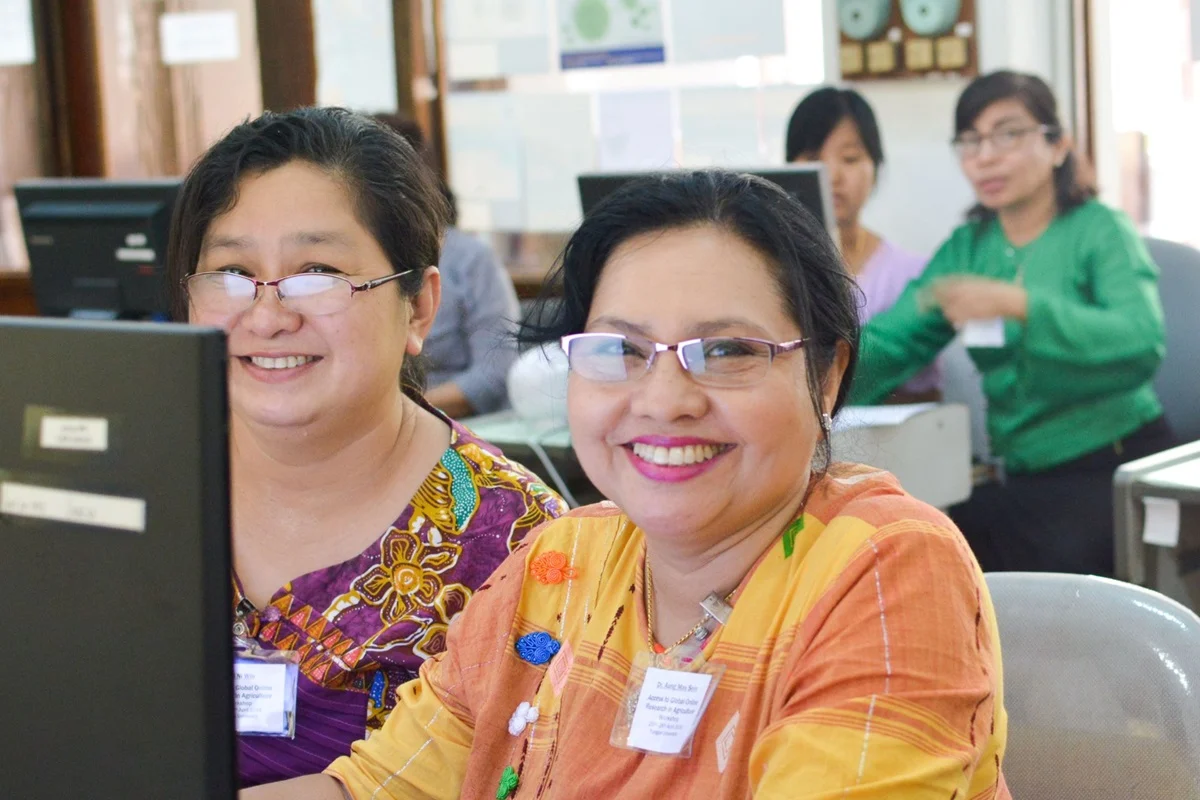
The World Health Organization (WHO) is today commemorating the 25th anniversary of Research4Life, a landmark public-private partnership that has fundamentally transformed the landscape of global scientific communication. Established as a visionary response to the widening "digital divide" at the turn of the millennium, Research4Life provides researchers, educators, health professionals, and policy-makers in low- and middle-income countries (LMICs) with free or highly subsidized access to high-quality, peer-reviewed scientific knowledge. Over two and a half decades, the initiative has expanded from a modest pilot program into a global juggernaut of information equity, currently serving more than 120 countries and thousands of institutions that would otherwise be excluded from the global scientific discourse due to financial constraints.
The anniversary is being formally observed during the Research4Life Partners Meeting, hosted by the World Intellectual Property Organization (WIPO). This gathering serves not only as a retrospective of the program’s significant achievements but also as a strategic forum for shaping the Research4Life 2030 Strategy. The partnership’s trajectory highlights a shift from merely providing access to literature to fostering a comprehensive ecosystem where researchers in the Global South are empowered to contribute their own findings to the global body of knowledge.
The Evolution of a Global Movement: From Pilot to Permanent Fixture
The origins of Research4Life date back to 2001, a period when the burgeoning internet offered the promise of global connectivity but also threatened to leave developing nations behind in a "knowledge vacuum." At that time, subscription costs for medical journals were prohibitively expensive for institutions in many parts of Africa, Asia, and Latin America. In response, the WHO, in collaboration with six major publishing houses, launched the Health InterNetwork Access to Research Initiative (HINARI). Initially intended as a three-year pilot project, the overwhelming demand and immediate impact of HINARI proved that a sustainable, long-term solution was required.
Recognizing that health outcomes are inextricably linked to other sectors, the partnership rapidly expanded. In 2003, the Food and Agriculture Organization of the United Nations (FAO) joined to launch AGORA (Access to Global Online Research in Agriculture). This was followed in 2006 by the United Nations Environment Programme (UNEP) with the creation of OARE (Online Access to Research in the Environment). By 2009, the World Intellectual Property Organization (WIPO) introduced ARDI (Access to Research for Development and Innovation), and in 2018, the International Labour Organization (ILO) added GOALI (Global Online Access to Legal Information).
This multidisciplinary approach consolidated under the "Research4Life" umbrella, reflecting a holistic understanding of sustainable development. What began with six publishers has grown into a consortium of more than 185 partners, including commercial publishers, university presses, and scientific societies. Today, the collective portfolio offers access to an unprecedented 250,000 journals, books, and databases, representing a wealth of knowledge that was once behind insurmountable paywalls.
Quantifiable Impact: Strengthening Global Research Capacity
The success of Research4Life is not merely anecdotal; it is backed by rigorous independent studies that demonstrate its role in leveling the academic playing field. Data indicates that the program has increased research publishing output in participating countries by up to 75%. This surge in productivity suggests that when the barrier to information is removed, the intellectual potential of researchers in LMICs is unleashed, leading to a more diverse and representative global scientific community.
Furthermore, the partnership has had a direct impact on clinical practice and public health. Participation in international clinical trials has increased by more than 20% in regions supported by Research4Life. This is a critical metric, as it ensures that medical research is conducted within the populations it intends to serve, leading to treatments and interventions that are more culturally and biologically relevant to local contexts.
One of the most significant achievements of the partnership lies in its impact on gender equity. In countries facing the most severe socioeconomic barriers, publication rates for women researchers have increased by up to 30% through the support of Research4Life resources. By providing female scientists with the same evidentiary tools as their male counterparts, the program is helping to dismantle systemic barriers that have historically marginalized women in STEM (Science, Technology, Engineering, and Mathematics) fields.
Strategic Leadership and Official Perspectives
Dr. Sylvie Briand, Chief Scientist at the World Health Organization, emphasized the transformative nature of the initiative during the anniversary proceedings. "What began as an effort to close the knowledge gap in health has grown into a global movement for research equity," Dr. Briand stated. "For 25 years, Research4Life has helped ensure that researchers, educators, health professionals and policy-makers everywhere can access the evidence they need to improve lives and advance sustainable development."
The sentiment is echoed by leaders across the United Nations system. Representatives from WIPO noted that access to technical literature and patent information via the ARDI program has been essential for fostering innovation and protecting intellectual property in developing economies. Similarly, the FAO has highlighted how AGORA has empowered agricultural scientists to tackle food insecurity and climate change through data-driven strategies.
The partnership’s success is also attributed to the unique collaboration between the public and private sectors. The International Association of Scientific, Technical and Medical Publishers (STM) has played a pivotal role in coordinating the involvement of hundreds of publishers. This cooperation demonstrates a shared recognition that the dissemination of scientific knowledge is a global public good that transcends commercial interests.
Addressing New Challenges: The Shift Toward Open Science
As Research4Life enters its next quarter-century, the global research landscape is undergoing a profound transformation. The rise of Open Science and Open Access publishing has changed how information is shared, but it has also introduced new obstacles. While many articles are now free to read, the costs have often shifted to the authors in the form of Article Processing Charges (APCs).
For many researchers in LMICs, these charges represent a new kind of paywall—one that prevents them from publishing their work in prestigious journals even if they have access to read them. Research4Life’s 2030 Strategy specifically targets these emerging barriers. The partnership is increasingly focused on "Research Equity," which encompasses not only the right to access information but also the right to contribute to it.
To this end, Research4Life has expanded its mission to include training and capacity building. Through workshops, webinars, and collaborative initiatives with institutions like Cornell and Yale Universities, the partnership helps researchers develop the technical skills needed to navigate the complex world of academic publishing. This includes training in information literacy, grant writing, and the use of reference management software, ensuring that researchers can produce high-quality work that meets international standards.
Institutional Reach and Sustainable Development
The scale of Research4Life’s current operations is vast. More than 12,000 institutions—ranging from national universities and research institutes to teaching hospitals and government offices—now utilize the platform. This widespread adoption has fostered evidence-informed decision-making at the highest levels of government. Policy-makers in LMICs are now better equipped to draft legislation and public health strategies based on the latest scientific consensus, rather than relying on outdated or incomplete data.
The partnership’s alignment with the United Nations Sustainable Development Goals (SDGs) is evident across its five specialized programs. By supporting health (SDG 3), food security (SDG 2), environmental protection (SDG 13), and innovation (SDG 9), Research4Life serves as a foundational tool for the 2030 Agenda. The ability of a nation to solve its own challenges is fundamentally dependent on its access to information, and Research4Life has become the primary conduit for that information in the developing world.
Conclusion: A Lasting Legacy of Science as a Foundation for Health
As the WHO looks toward the future, the theme of "Together for health. Stand with science" for World Health Day 2026 serves as a fitting backdrop for Research4Life’s ongoing mission. The organization remains dedicated to the principle that everyone, everywhere, deserves an equal chance at a safe and healthy life.
The 25th anniversary of Research4Life is more than a celebration of past successes; it is a reaffirmation of a commitment to the democratization of knowledge. By continuing to adapt to the digital age and addressing the economic barriers to both reading and publishing research, the partnership ensures that scientific progress remains inclusive.
The WHO has expressed profound gratitude to the hundreds of partners whose commitment has allowed a short-term pilot project to evolve into a permanent global movement. As the 2030 Strategy takes shape, the focus will remain on strengthening research capacity and translating knowledge into tangible improvements in health and sustainable development worldwide. In a world where information is power, Research4Life continues to empower those who need it most, proving that science, when shared equitably, is the most effective tool for global progress.
