
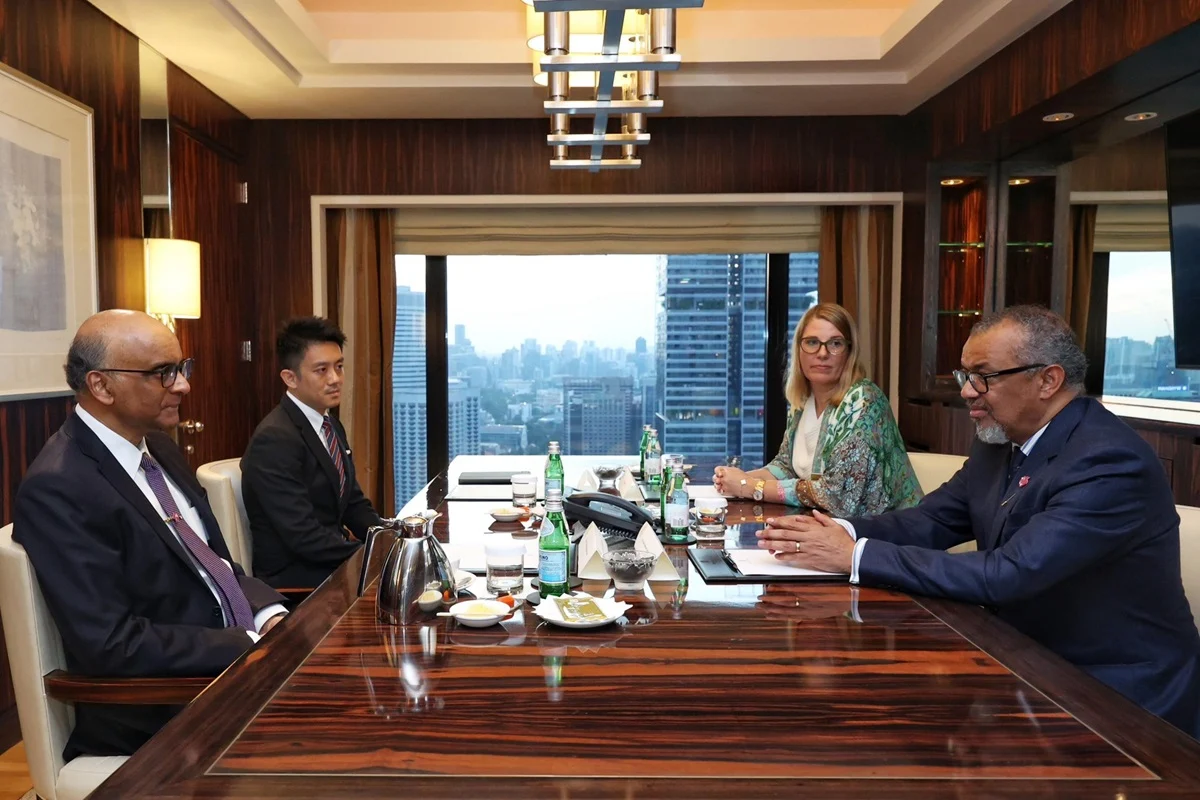
The landscape of global health financing is undergoing a structural transformation as the World Health Organization (WHO) increasingly formalizes its engagement with private sector philanthropies to bridge critical funding gaps. This strategic shift, highlighted during the Philanthropy Asia Summit held in Singapore from May 5 to 7, 2025, reflects an acknowledgment that traditional government funding alone is insufficient to address the complexities of modern health crises. As the global community grapples with the lingering effects of the COVID-19 pandemic and the emergence of new epidemiological threats, the convergence of philanthropic capital and public health policy has become a decisive factor in building resilient, self-reliant national health systems.
The Philanthropy Asia Summit, organized by the Temasek Foundation and the Philanthropy Asia Alliance, served as a high-level forum to catalyze these partnerships. Dr. Tedros Adhanom Ghebreyesus, the WHO Director-General, utilized the platform to emphasize that philanthropy is no longer merely a peripheral source of "gap-filling" funds but a foundational element of the global health architecture. By providing flexible, risk-tolerant capital, philanthropic actors are enabling the WHO to pursue long-term objectives that extend beyond the constraints of traditional annual budget cycles.
A New Era of Strategic Partnership
The role of philanthropic organizations has evolved from traditional grant-making to proactive, strategic partnership. Historically, charitable foundations often focused on specific disease-control efforts, such as polio eradication or malaria prevention. While these vertical programs remain essential, the contemporary focus has pivoted toward horizontal strengthening—building the structural integrity of health systems to manage any challenge, whether it be a pathogen outbreak or the rising burden of non-communicable diseases.
At the Singapore summit, Dr. Tedros underscored this evolution, pointing to the WHO Investment Round as a critical mechanism for this new era. The Investment Round, a strategic initiative launched to ensure a more sustainable and predictable funding model for the organization, has found a willing partner in the philanthropic community. Singapore’s leadership, exemplified by the early commitments from the Temasek Foundation, has set a benchmark for how national entities and private philanthropic arms can align their resources with global health mandates.
Chronology of the WHO Investment Round and Private Engagement
The move toward broadening the donor base has been in development for several years, accelerated by the lessons of the COVID-19 pandemic. A brief timeline of this progression illustrates the systematic shift:
- 2020–2021: The COVID-19 pandemic exposes the fragility of global health funding, highlighting the risks of over-reliance on a narrow base of contributors.
- 2022: The WHO begins structural reforms to its financing mechanisms, prioritizing "flexible funding" to allow for rapid response to global health emergencies.
- 2023: Consultations commence with various stakeholders, including high-net-worth philanthropic foundations and regional alliances, regarding the design of the Investment Round.
- May 2024: The WHO formalizes its strategy for engaging non-state actors, emphasizing transparency and the protection of organizational integrity against conflicts of interest.
- May 5–7, 2025: The Philanthropy Asia Summit in Singapore serves as a major mobilization point, where private sector pledges are integrated into the broader WHO resource mobilization framework.
The Economic Rationale for Philanthropic Integration
From a fiscal perspective, the integration of philanthropic support provides a buffer against the volatility of international politics. When government budgets tighten due to domestic economic pressures, philanthropic funding can often remain steady, providing a critical lifeline for essential services.
Data from the OECD and the WHO indicate that while Official Development Assistance (ODA) remains the largest share of global health financing, private philanthropic contributions have grown significantly in influence. According to recent health financing reports, private philanthropic spending on global health has seen an annual growth rate of approximately 4.5% over the last five years. Furthermore, philanthropies are increasingly acting as "risk-takers." In research and development, where traditional donors may be risk-averse due to the high probability of failure, philanthropic funds are often the first to enter, funding innovative approaches to vaccine delivery, diagnostic technology, and digital health infrastructure.
Impact on Health Equity and Universal Health Coverage (UHC)
The primary goal of these partnerships is the realization of Universal Health Coverage. As Dr. Tedros articulated in his address, the founding vision of the WHO—that health is a fundamental right, not a luxury—requires a level of investment that outstrips current global public funding. Philanthropy contributes to this vision by funding the "last mile" of health delivery.
In many developing nations, the barrier to healthcare is not only the lack of medicine but the lack of an organized delivery system. Philanthropic grants are currently being deployed to:
- Strengthen Supply Chains: Ensuring that vaccines and essential medications reach remote or underserved populations.
- Health Workforce Development: Funding the training of community health workers, who are the backbone of primary healthcare in rural environments.
- Digital Health Integration: Supporting the transition to electronic health records, which improves patient monitoring and data collection for public health surveillance.
Official Responses and Stakeholder Perspectives
The reception from the international community has been largely positive, though it is accompanied by calls for rigorous governance. Representatives from the Temasek Foundation, during the Summit, highlighted that their approach is driven by a long-term commitment to sustainable impact. By partnering with the WHO, these foundations gain access to the technical expertise and global network necessary to ensure that their investments are evidence-based and aligned with international standards.
Conversely, some global health experts have noted that while private-public partnerships are essential, they must remain under the stewardship of public institutions to ensure that the priorities of philanthropic donors do not override the sovereign health needs of individual nations. The WHO has addressed this by maintaining a strict framework of engagement that ensures the organization retains its normative role, setting the standards and policies that donors must support.
Broader Implications for Global Governance
The trend of philanthropic-WHO collaboration carries profound implications for global governance. It suggests that the future of international health security will rely on a "polycentric" model—one where the WHO acts as the central coordinator, but the execution and funding are distributed across a network of governments, non-governmental organizations, and philanthropic foundations.
This model is inherently more complex than the traditional donor-recipient relationship. It requires greater transparency, robust mechanisms for accountability, and clear communication channels to ensure that all parties are moving toward the same objectives, specifically those outlined in the WHO’s Fourteenth General Programme of Work.
Looking ahead, the success of these partnerships will be measured not by the total dollar amount pledged, but by the tangible improvements in health outcomes. The focus will remain on whether these funds can reduce the mortality rates of preventable diseases, improve maternal and child health, and ensure that pandemic preparedness is not just a concept, but a reality in every nation, regardless of its economic status.
Conclusion: A Collaborative Path Forward
As the Philanthropy Asia Summit concluded, the overarching message was clear: the challenges of the 21st century—climate-driven health crises, antibiotic resistance, and the aging of the global population—demand a collaborative response. By leveraging the agility and innovation of philanthropic organizations alongside the regulatory and clinical expertise of the WHO, the international community is establishing a more robust defense against the health threats of tomorrow.
The partnership between Singapore, the Temasek Foundation, and the WHO stands as a model for this new era. It demonstrates that when private capital is effectively harmonized with public policy, the goal of achieving the highest attainable standard of health for all becomes a reachable, albeit arduous, objective. The coming years will be critical in testing the sustainability of these arrangements, but the precedent has been set: in a turbulent world, global health is a shared responsibility, and philanthropy is a vital instrument in securing that collective future.
