
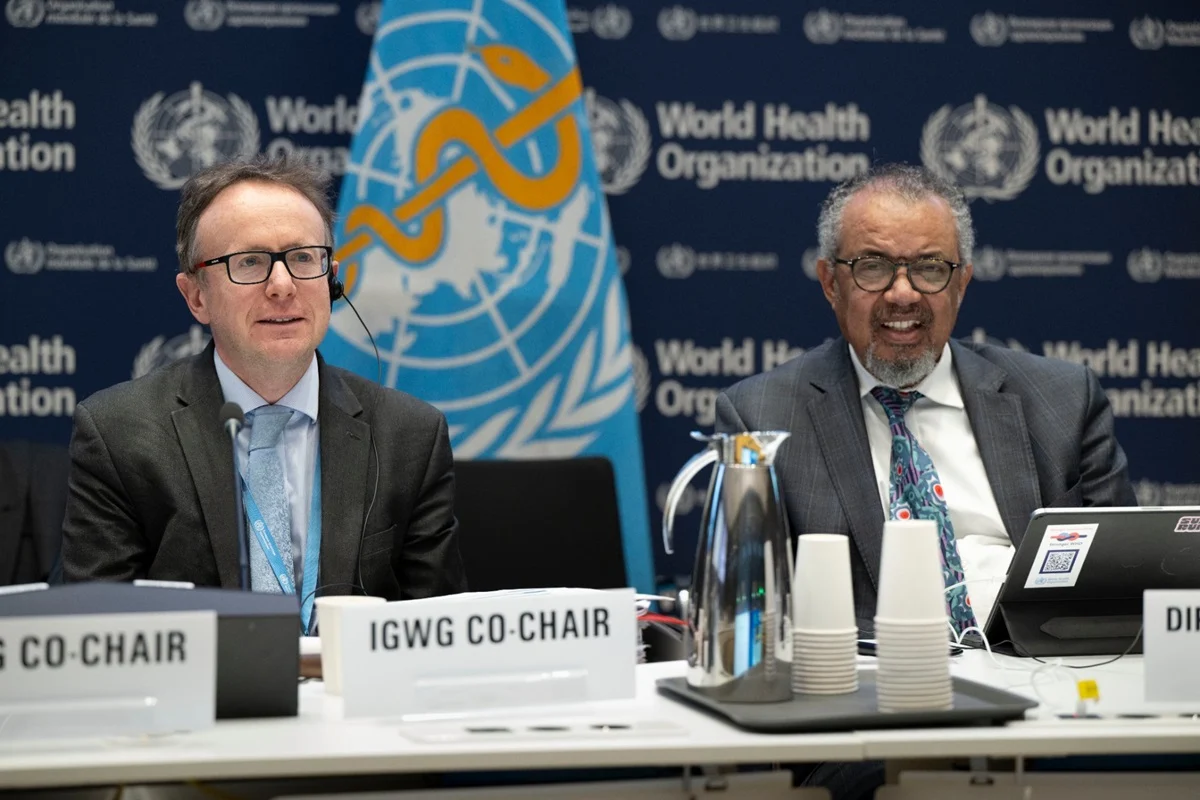
Member States of the World Health Organization (WHO) have reached a consensus to extend high-stakes negotiations regarding the Pathogen Access and Benefit Sharing (PABS) annex, a cornerstone of the proposed WHO Pandemic Agreement. This decision comes after intensive deliberations revealed that while significant progress has been made, further diplomatic efforts are required to finalize the technical and legal frameworks before the 77th World Health Assembly (WHA) convenes in May 2024. The upcoming round of negotiations is scheduled to take place from April 27 to May 1, preceded by a series of informal intersessional discussions designed to bridge remaining gaps between diverse national interests.
The PABS system is widely regarded as the "engine room" of the broader Pandemic Agreement. It seeks to establish a standardized global framework where countries rapidly share information and samples of pathogens with pandemic potential in exchange for guaranteed, equitable access to the "benefits" derived from that research—namely vaccines, diagnostics, and therapeutics. The extension of these talks underscores the complexity of reconciling the commercial interests of the global pharmaceutical industry with the public health imperatives of developing nations, many of whom were left behind during the peak of the COVID-19 pandemic.
The Core Mandate of the PABS Annex
At its heart, the PABS annex aims to solve a fundamental imbalance in global health security. Historically, researchers and pharmaceutical companies have utilized pathogen samples and genetic sequence data (GSD) provided by sovereign nations to develop profitable medical countermeasures. However, the countries that provided the original biological material often lacked the financial means or manufacturing capacity to secure the resulting vaccines or treatments.
The proposed PABS system intends to codify a "grand bargain." Under this arrangement, Member States agree to share biological materials and sequences through a WHO-coordinated network in real-time. In return, manufacturers who utilize these materials would be required to provide a specific percentage of their production—currently debated at a baseline of 20% (10% as a donation and 10% at affordable non-profit prices)—to the WHO for distribution to countries based on public health need rather than purchasing power.
This system is designed to replace the ad hoc and often chaotic procurement processes seen in 2020 and 2021, replacing "vaccine nationalism" with a predictable, legally binding multilateral framework.
Chronology of the Pandemic Agreement Negotiations
The journey toward a global pandemic treaty began in the wake of the catastrophic socio-economic disruptions caused by COVID-19. The timeline reflects an unprecedented level of diplomatic activity within the health sector:
- May 2021: During the 74th World Health Assembly, Member States agreed to hold a special session to consider the benefits of a new international instrument on pandemic preparedness.
- December 2021: The World Health Assembly established the Intergovernmental Negotiating Body (INB) to draft and negotiate a WHO convention, agreement, or other international instrument.
- 2022–2023: Multiple rounds of public hearings and regional consultations were held to gather input from civil society, the private sector, and international organizations.
- Early 2024: Negotiations shifted focus toward the Intergovernmental Working Group (IGWG) to refine the most contentious elements, specifically the PABS annex and sustainable financing.
- March 2024: Following a week of intensive sessions, Member States acknowledged that while the "Zero Draft" had evolved into a more mature text, disagreements over intellectual property, technology transfer, and the specifics of benefit-sharing necessitated an extension into late April.
Supporting Data: The Cost of Inequality
The urgency behind the PABS negotiations is fueled by the stark data emerging from the COVID-19 pandemic. According to various reports from the United Nations and the WHO, the "equity gap" resulted in significant avoidable mortality:
- Vaccine Distribution Disparity: By mid-2022, while over 75% of people in high-income countries had received at least one dose of a COVID-19 vaccine, the figure remained below 15% for low-income countries.
- Economic Impact: The International Monetary Fund (IMF) estimated that the pandemic would cost the global economy upwards of $12.5 trillion through 2024. Proponents of the Pandemic Agreement argue that a functional PABS system would drastically reduce these costs by shortening the duration of future outbreaks.
- Pathogen Sharing Speed: During the initial weeks of the COVID-19 outbreak, the rapid sharing of the SARS-CoV-2 genetic sequence allowed for the development of diagnostic tests within days. However, the lack of a formal agreement led to subsequent delays in sharing variants of concern, as some nations feared that sharing data would lead to travel bans without any guaranteed access to vaccines.
Official Responses and Diplomatic Perspectives
The leadership of the WHO and the co-chairs of the negotiating bodies have emphasized the historical significance of these talks, urging Member States to move past parochial interests in favor of global solidarity.
Dr. Tedros Adhanom Ghebreyesus, WHO Director-General, expressed his gratitude for the continued commitment of the delegates. "The Pathogen Access and Benefit Sharing system lies at the heart of the WHO Pandemic Agreement and I thank WHO Member States for their commitment to work to bring it to life," Dr. Tedros stated. He further emphasized the role of "trust" as the essential currency of these negotiations, urging nations to transcend differences for the "common public good."
Ambassador Tovar da Silva Nunes of Brazil, serving as the IGWG Bureau Co-Chair, highlighted the intensity of the current phase. "Member State negotiators are working intensively towards having an ambitious and equitable Pathogen Access and Benefits Sharing annex ready for adoption at the World Health Assembly in May," he noted. Brazil has been a vocal advocate for the interests of the Global South, emphasizing that access to pathogens must be legally linked to the sharing of benefits.
Representing the perspective of developed economies, IGWG Bureau Co-Chair Mr. Matthew Harpur of the United Kingdom welcomed the progress made in finding consensus on outstanding areas. The UK and other nations with large pharmaceutical sectors have focused on ensuring that the PABS system does not stifle innovation or undermine intellectual property rights, which they argue are essential for the rapid development of new technologies.
Analysis of Remaining Obstacles and Implications
Despite the optimistic tone of official statements, several "red line" issues remain that could complicate the April sessions.
Intellectual Property and Technology Transfer
One of the most significant points of contention involves the transfer of technology and "know-how." Developing nations are pushing for provisions that would require pharmaceutical companies to waive certain intellectual property rights during a pandemic to allow for local manufacturing. Conversely, many industrialized nations argue that voluntary licensing and technology hubs are a more effective and less disruptive approach.
Governance and Transparency
The nature of the contractual arrangements underpinning the PABS system is also under scrutiny. Negotiators are debating whether the system should be governed by a centralized WHO entity or through a network of bilateral contracts. There is a strong push for transparency to ensure that the public interest is protected and that the distribution of benefits is not subject to political favoritism.
Defining "Pathogens with Pandemic Potential"
Technical experts are still refining the scope of the annex. Defining exactly which pathogens trigger the PABS requirements is a delicate task. If the scope is too broad, it could overwhelm the system; if it is too narrow, the world might be caught unprepared for a "Disease X" scenario—an unknown pathogen that could cause a serious international epidemic.
The Path Forward to the World Health Assembly
The late-April sessions represent the final opportunity for negotiators to produce a document that can be presented to the 194 Member States at the World Health Assembly in May. Failure to reach an agreement on the PABS annex could potentially jeopardize the adoption of the entire Pandemic Agreement, as many developing nations have signaled that they will not sign a treaty that does not include a robust and fair benefit-sharing mechanism.
The international community is watching closely. Civil society organizations and global health advocates argue that the PABS annex is a test of whether the world has truly learned the lessons of 2020. If successful, the agreement would mark a paradigm shift in international law, moving from a system of voluntary charity to one of structured, legal obligations.
As the world remains vulnerable to zoonotic spillovers and the evolution of infectious diseases, the stakes for the upcoming April negotiations could not be higher. The goal is clear: to create a safer, more equitable global health architecture where the speed of science is matched by the speed of justice. The coming weeks will determine if the "power of trust" mentioned by Dr. Tedros is sufficient to overcome decades of institutionalized inequality in global health.
