
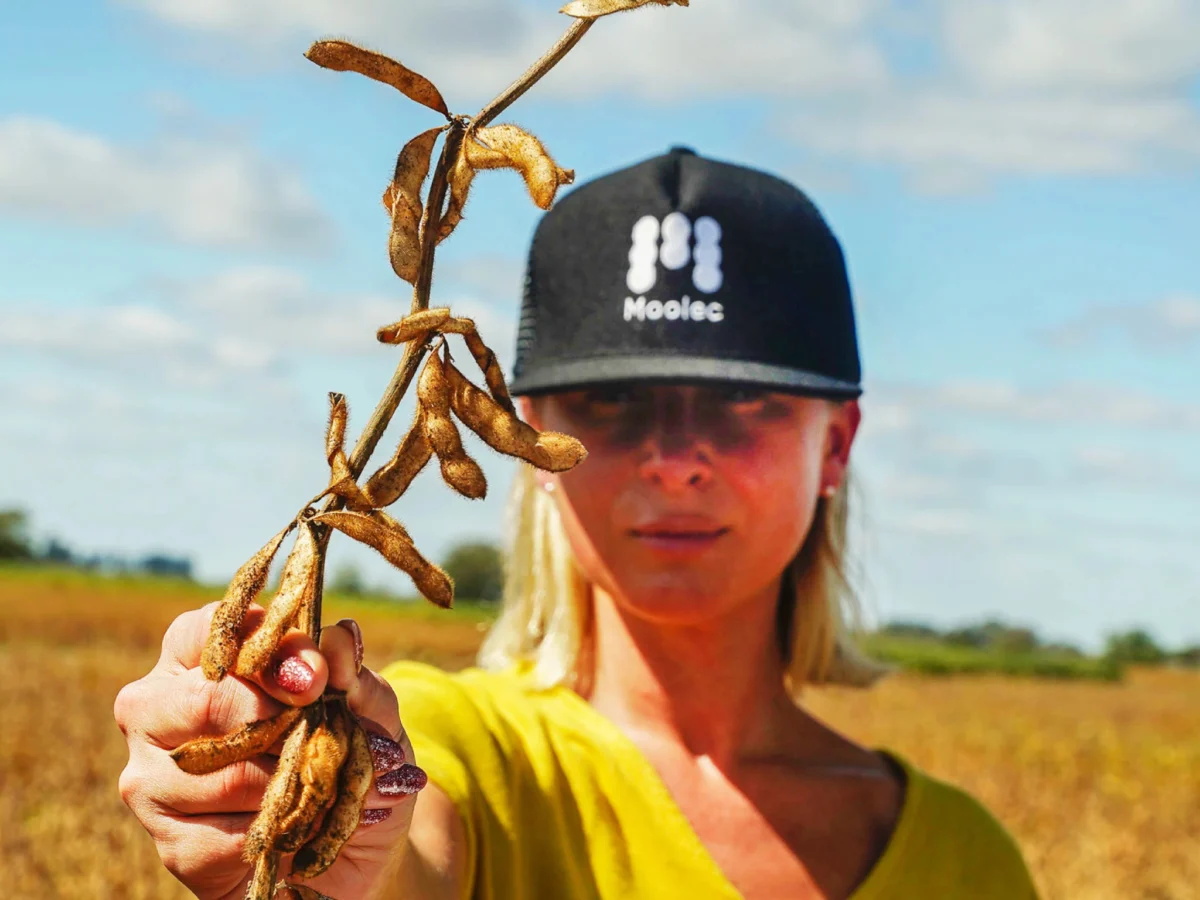
Moolec Science, a prominent innovator in the field of molecular farming, has announced a significant scientific achievement: the successful and stable production of bovine myoglobin, a crucial heme-containing protein, within genetically engineered pea seeds. This breakthrough marks a pivotal moment for the company and the broader alternative protein industry, demonstrating the potential of plant-based platforms to yield complex animal proteins with significant nutritional and functional benefits. The development comes nearly a year after Moolec Science finalized a substantial merger with three other entities, solidifying its position as a leader in the burgeoning molecular farming sector.
The Nasdaq-listed company’s achievement was realized through a 28-month collaborative research project with a leading academic institution in the United States. This initiative has culminated in the stable expression of bovine myoglobin in pea seeds, a feat that has not been previously accomplished. The newly developed ingredient, branded as PEEA1, represents a significant expansion of Moolec Science’s innovative product portfolio, which already includes Piggy Sooy (soybeans engineered to produce pork proteins) and a nutritionally enhanced GLASO safflower oil.
The Science Behind PEEA1: Myoglobin Production in Peas
Myoglobin is a vital protein found in the muscle tissue of mammals. Its primary role is to store and facilitate the diffusion of oxygen within muscle cells, ensuring a steady supply for energy production. Beyond its physiological importance, myoglobin is also responsible for the characteristic red color and rich iron content of meat and seafood. This makes it a highly sought-after ingredient for a variety of applications, particularly in the food industry, where it can enhance the sensory appeal and nutritional profile of plant-based alternatives.
The implications of this breakthrough are particularly relevant given the global challenge of iron deficiency anemia. According to the World Health Organization, approximately two billion people worldwide, or about a quarter of the global population, suffer from anemia. This condition is disproportionately affecting vulnerable groups, including women, expectant mothers, young girls, and children under the age of five. Iron deficiency is linked to a range of serious health issues, such as heart failure, complications during pregnancy, Attention Deficit Hyperactivity Disorder (ADHD), autism, and impaired motor development in children. By enabling the production of a highly bioavailable source of iron-rich protein in plants, Moolec Science’s PEEA1 offers a promising avenue to address this widespread nutritional deficiency with a more sustainable and ethically sourced alternative.
Moolec Science employs molecular farming, a cutting-edge technology that involves the genetic modification of plant cells to express animal proteins. Unlike other alternative protein production methods such as cultivated meat or precision fermentation, which rely on animal or microbial cells, molecular farming utilizes the inherent biological machinery of plants. This approach offers distinct advantages, including potentially lower environmental impact, reduced land and water usage compared to traditional animal agriculture, and a more scalable production process. The company has identified peas as an ideal host for producing bovine myoglobin due to their status as a globally significant, protein-rich crop with an established and robust supply chain and widespread industrial adoption. This familiarity and integration into existing agricultural systems facilitate the scalability and commercial viability of their innovations.
A critical aspect of this scientific milestone is the achievement of stable myoglobin expression across multiple generations of pea plants. This ensures the reproducibility of the trait and confirms the genetic stability of the engineered peas, a crucial factor for commercial development and regulatory approval. Furthermore, the successful deployment of Moolec Science’s proprietary genetic constructs in a new legume crop, the pea, validates the flexibility and adaptability of their molecular farming platform. This opens the door for the production of a wider array of high-value recombinant proteins in various plant species.
A Year of Transformation and Resilience
The announcement of the PEEA1 breakthrough follows a period of significant corporate transformation and strategic repositioning for Moolec Science. In 2023, the company underwent a complex merger, bringing together Argentina’s Bioceres Group (from which Moolec Science originally spun off in 2020), precision fermentation specialist Nutrecon, and farm equipment manufacturer Gentle Tech. Moolec Science emerged as the parent entity from this consolidation.
This period of growth and integration was not without its challenges. In December 2023, Bioceres Group initiated bankruptcy proceedings, a development that led to Moolec Science relinquishing control of that particular business segment. Subsequently, in January 2024, Moolec Science received an extension from Nasdaq, allowing it until June 29, 2026, to demonstrate compliance with the stock exchange’s minimum stockholders’ equity requirement. This extension provided the company with crucial breathing room to focus on its strategic initiatives and technological advancements.
Despite these corporate hurdles, the scientific progress has been unwavering. In early 2024, Moolec Science secured approval from the U.S. Department of Agriculture’s Animal and Plant Health Inspection Service (APHIS) to plant its genetically engineered peas. This regulatory milestone, mirroring previous approvals for its Piggy Sooy and GLASO ingredients, signifies a critical step toward commercialization. The next essential regulatory gate will be clearance from the Food and Drug Administration (FDA) for the commercial sale of these innovative ingredients.
Industry Validation and Future Prospects
Alejandro Antalich, CEO of Moolec Science, emphasized the significance of the PEEA1 development. "This is not just a scientific milestone; it is a clear signal of the scalability and versatility of our platform," Antalich stated. "Successfully expressing a heme protein in pea is a powerful validation of our ability to expand our technology across crops and product categories. This is how we build a pipeline, not just a product, and how we translate innovation into long-term, scalable value for our shareholders."
The success of the pea-derived myoglobin project serves as a strong validation of Moolec Science’s extensive patent portfolio and reinforces the applicability of its technology for large-scale deployment across diverse food and biotechnology applications. The company continues to be recognized as a frontrunner in the molecular farming space, alongside other notable players such as Mozza Foods, Alpine Bio, Miruku, NewMoo, Finally Foods, and PoLoPo.

The broader molecular farming sector is gaining significant momentum, underscored by initiatives like the Global Stewardship Group’s Animal Protein Crop Stewardship (APCS) program. Launched in February 2024, this program welcomed the first five companies, including several from Moolec Science’s peer group, with the explicit aim of accelerating the development and market introduction of molecular farming technologies. Such collaborative efforts highlight a growing industry consensus on the transformative potential of this agricultural innovation.
The Broader Impact of Molecular Farming
The implications of Moolec Science’s breakthrough extend far beyond the company itself. The ability to produce complex animal proteins like myoglobin in plants has the potential to revolutionize the food industry, offering sustainable and ethical alternatives to traditional animal agriculture. This can lead to a significant reduction in the environmental footprint associated with food production, including greenhouse gas emissions, land degradation, and water consumption.
For consumers, this means access to foods that are not only nutritious but also produced with greater environmental responsibility and without the ethical concerns associated with animal farming. The potential to combat widespread nutritional deficiencies, such as iron deficiency anemia, with plant-derived ingredients presents a powerful public health benefit.
Moreover, the diversification of protein sources can enhance global food security by reducing reliance on conventional agricultural systems, which are often vulnerable to climate change and other disruptions. As Moolec Science continues to navigate its regulatory pathway and scale its production capabilities, the PEEA1 innovation stands as a testament to the power of scientific ingenuity in addressing some of the world’s most pressing challenges in food production, nutrition, and sustainability. The company’s resilience in the face of corporate restructuring, coupled with its consistent scientific progress, positions it as a key player to watch in the evolving landscape of alternative proteins.
