
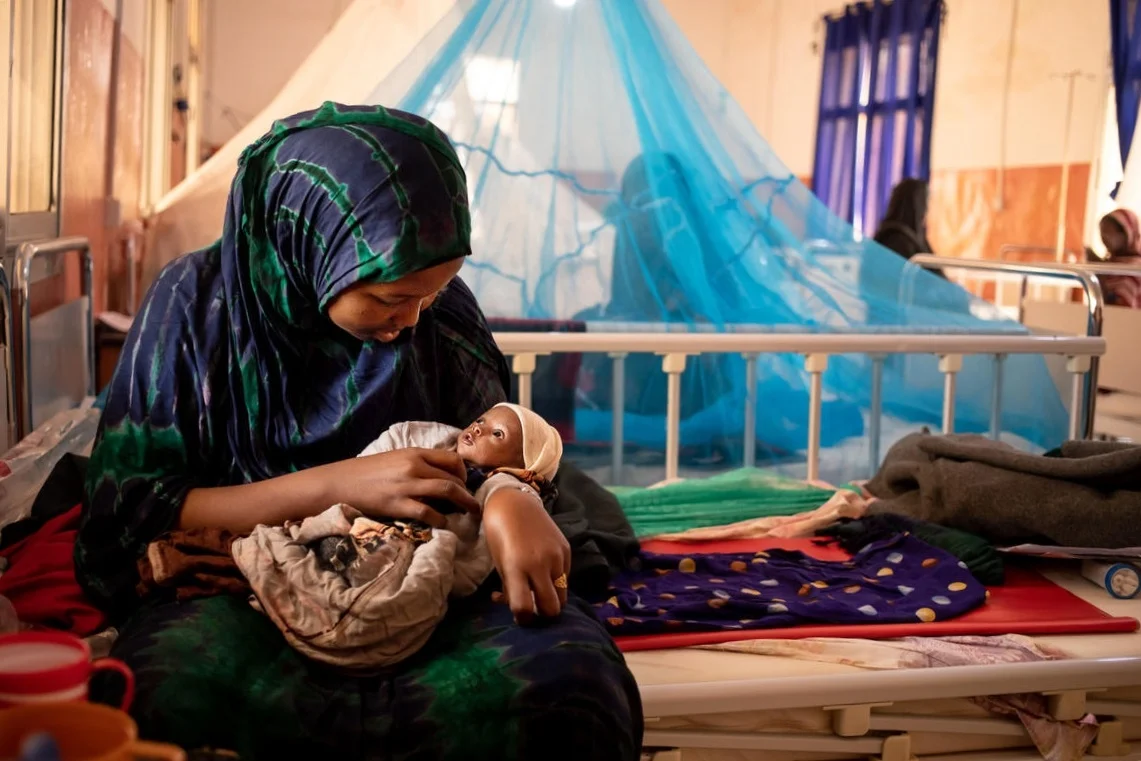
The United Nations Inter-agency Group for Child Mortality Estimation (UN IGME) released a comprehensive report today revealing that an estimated 4.9 million children died before reaching their fifth birthday in 2024. Among these fatalities, approximately 2.3 million were newborns, representing nearly half of the total under-five mortality. While the report highlights significant historical progress, it also serves as a stark warning: the global momentum to end preventable child deaths is slowing at a critical juncture. For the first time, this year’s estimates fully integrate cause-of-death data, providing a more granular look at the biological and environmental factors claiming young lives, including a groundbreaking analysis of deaths directly linked to severe acute malnutrition.
The data, compiled in the flagship report titled Levels & Trends in Child Mortality 2025, indicates that the world has successfully reduced under-five deaths by more than 50 per cent since the start of the millennium. However, this success is overshadowed by a worrying trend observed over the last decade. Since 2015, the annual rate of reduction in child mortality has decelerated by more than 60 per cent. This slowdown suggests that without a massive reinvestment in primary health care and maternal services, many nations will fail to meet the Sustainable Development Goals (SDGs) related to child survival by 2030.
A Decelerating Global Progress and the SDG Challenge
The chronology of child survival over the past quarter-century is a tale of two eras. Between 2000 and 2015, the global community witnessed a rapid expansion of life-saving interventions. The roll-out of routine immunizations, the distribution of insecticide-treated bed nets, and improved access to clean water led to a dramatic decline in deaths from infectious diseases. During this period, the international community was galvanized by the Millennium Development Goals, which prioritized child health as a core pillar of global development.
However, the transition to the Sustainable Development Goal era in 2015 marked the beginning of a plateau. While the total number of deaths continues to fall, the pace is no longer sufficient to reach the target of reducing under-five mortality to at least as low as 25 per 1,000 live births in all countries. The report suggests that the "low-hanging fruit"—the easiest-to-reach populations and the most straightforward interventions—have largely been addressed. What remains is the "hardest mile": reaching children in conflict zones, fragile states, and remote rural areas where health infrastructure is either non-existent or has been decimated by economic shocks and climate change.
The Hidden Toll of Severe Acute Malnutrition
One of the most significant additions to the 2024 report is the direct estimation of deaths caused by severe acute malnutrition (SAM). Historically, malnutrition has been viewed primarily as a contributing factor rather than a direct cause of death on mortality certificates. This year, the UN IGME found that more than 100,000 children aged 1 to 59 months died directly from SAM in 2024, accounting for approximately 5 per cent of deaths in that age bracket.
The report emphasizes that this figure is likely a conservative estimate, as mortality data frequently fail to capture SAM as the underlying cause. Furthermore, the indirect toll is exponentially higher. Malnutrition acts as a catalyst for other fatal conditions; a malnourished child is significantly more likely to succumb to common illnesses like pneumonia or diarrhea because their immune system is too compromised to mount a defense. The burden of SAM-related deaths is particularly concentrated in countries facing overlapping crises of food insecurity and violence, most notably Pakistan, Somalia, and Sudan. In these regions, the disruption of agricultural cycles and the displacement of populations have created a lethal environment for the youngest and most vulnerable.
Regional Disparities and the Geography of Risk
The 2024 estimates expose a world divided by the lottery of birth. A child’s chance of survival remains heavily dictated by their geographic location. Sub-Saharan Africa remains the region with the highest burden, accounting for 58 per cent of all global under-five deaths. In this region, infectious diseases are responsible for 54 per cent of all child fatalities. By contrast, in Australia and New Zealand, infectious diseases account for only 6 per cent of under-five deaths, and in Europe and Northern America, that figure is 9 per cent.
Southern Asia accounts for the second-largest share of child mortality, representing 25 per cent of the global total. In this region, the primary driver of mortality is not necessarily infectious disease in older toddlers, but complications occurring within the first 28 days of life. This includes preterm delivery, birth asphyxia, and neonatal infections. These disparities underscore a fundamental inequality in access to quality antenatal care and skilled birth attendants. While many infectious diseases can be managed through community-based programs, neonatal survival requires a higher level of clinical infrastructure, including specialized care for small and sick newborns, which remains scarce in many parts of Southern Asia and Sub-Saharan Africa.
The report also highlights the disproportionate impact of fragility and conflict. Children born in conflict-affected settings are nearly three times more likely to die before their fifth birthday than children born in stable environments. Conflict not only destroys hospitals but also creates "health deserts" where vaccination campaigns are suspended and humanitarian aid is blocked, leading to outbreaks of preventable diseases like measles and polio.
Leading Causes of Death Across the Life Course
The integration of cause-of-death data allows for a clearer understanding of the specific threats facing different age groups. Among newborns (those in the first month of life), the leading causes of death were complications from preterm birth (36 per cent) and complications during labor and delivery (21 per cent). These deaths are often the result of a lack of emergency obstetric care or the absence of simple, low-cost technologies like thermal regulation (kangaroo mother care) and basic respiratory support.
For children aged 1 to 59 months, malaria remains a formidable killer, responsible for 17 per cent of deaths in this age group. Most of these deaths occur in sub-Saharan Africa. The report notes that progress in reducing malaria mortality has stalled due to several biological and logistical threats, including the spread of drug-resistant parasites, the emergence of invasive mosquito species that thrive in urban environments, and the impact of climate-driven flooding which creates new breeding grounds for vectors.
As children grow into adolescence and young adulthood (ages 5–24), the risk profile shifts from biological threats to external and behavioral risks. An estimated 2.1 million individuals in this age group died in 2024. For girls aged 15–19, self-harm has emerged as the leading cause of death, a finding that highlights a growing global mental health crisis. For boys in the same age bracket, road traffic injuries remain the primary cause of mortality.
Official Responses and the Economic Case for Investment
Global health leaders have responded to the report with a mixture of urgency and resolve. UNICEF Executive Director Catherine Russell emphasized that the tools to prevent these deaths already exist. "No child should die from diseases that we know how to prevent," Russell stated. "But we see worrying signs that progress in child survival is slowing—and at a time where we’re seeing further global budget cuts. History has shown what is possible when the world commits to protecting its children."
Dr. Tedros Adhanom Ghebreyesus, Director-General of the World Health Organization (WHO), echoed these sentiments, focusing on the vulnerability of those in crisis zones. "Children living amid conflict and crisis are nearly three times more likely to die before their fifth birthday. We must protect essential health and nutrition services and reach the most vulnerable families so every child has the chance not only to survive, but to thrive," he said.
From a financial perspective, the report argues that investing in child health is not merely a moral imperative but one of the most cost-effective development strategies available. Research suggests that every dollar invested in child survival can generate up to twenty dollars in social and economic benefits. By preventing child deaths and improving early childhood nutrition, nations can improve long-term productivity, strengthen their domestic economies, and reduce the future burden on public health systems.
Monique Vledder, Health Director at the World Bank Group, noted that the organization has set a target to reach 1.5 billion people with quality primary health services. "These findings are a collective call to speed up implementation of the proven, scalable solutions we know are within reach," Vledder said.
Implications and the Path Forward
The findings of the 2024 UN IGME report suggest that the global development financing landscape is at a crossroads. As donor nations face domestic economic pressures, funding for maternal and child health programs is coming under increasing scrutiny. However, the report warns that cutting these budgets now would not only jeopardize the progress made over the last 24 years but would also lead to a resurgence of preventable deaths.
To accelerate progress, the UN IGME recommends a three-pronged approach:
First, there must be a renewed focus on primary health care that integrates nutrition, immunization, and maternal services into a single, accessible system.
Second, governments must invest in "data resilience"—improving civil registration and vital statistics systems so that every birth and death is recorded, allowing for targeted interventions.
Third, there must be a specific focus on "equity-based" programming that prioritizes the most marginalized children, particularly those in conflict zones and those suffering from severe acute malnutrition.
As the world approaches the 2030 deadline for the Sustainable Development Goals, the 4.9 million lives lost in 2024 serve as a reminder that the mission is far from over. The science and the solutions are available; the remaining challenge is the political will and the sustained financial commitment required to ensure that no child’s life is cut short by a preventable cause.
