
As the mercury rises, the sartorial challenge for many professionals is to maintain a polished business casual appearance without succumbing to the discomfort of sweltering temperatures. The traditional approach of simply opting for lighter fabrics often leads to a relaxation of standards, resulting in ensembles that prioritize survival over style. However, a more strategic approach, focusing on the judicious selection of colors and materials, allows for a sophisticated and comfortable transition into warmer business attire. This guide explores how to achieve this balance, emphasizing breathable fabrics, light-reflecting neutrals, and considered styling that elevates everyday workwear.
The core principle of effective summer business casual lies in understanding fabric composition and color palettes. While cotton and linen are the undisputed champions of warm-weather breathability, their application requires careful consideration to maintain a professional aesthetic. The goal is to create outfits that exude sharpness and intentionality, distinguishing those who dress with purpose from those who merely don clothing. This involves a nuanced understanding of texture, fit, and subtle color variations that add depth and sophistication.
The Precision of Linen: A Foundation of Cool Comfort
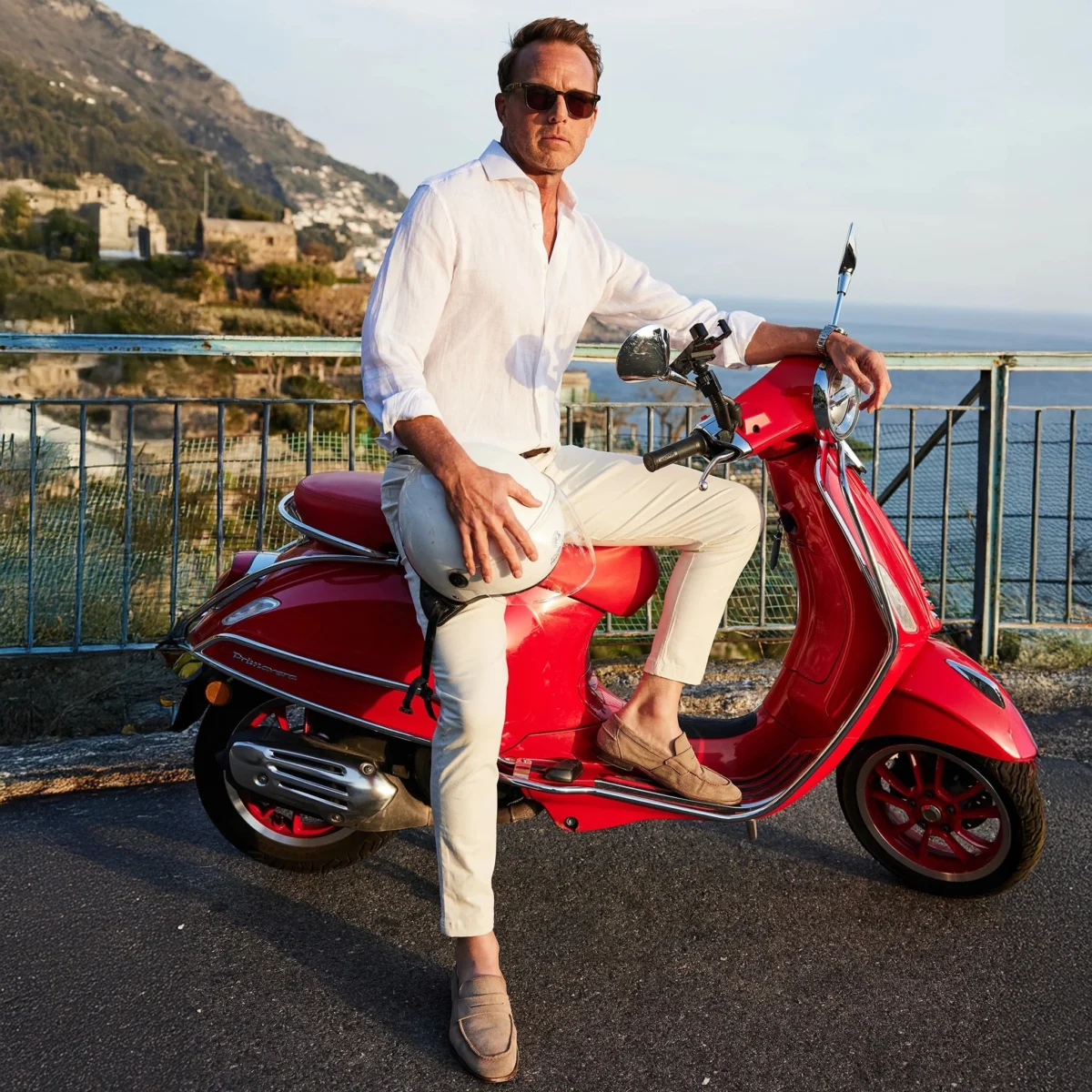
Linen, with its inherent breathability and natural texture, stands as a cornerstone of summer business casual. Its ability to wick moisture and allow air circulation makes it an indispensable fabric for warmer climates. When employed in a crisp white hue, as seen in one exemplary ensemble, it forms a clean and versatile base. This is effectively paired with off-white trousers, creating a subtly monochromatic effect. The key to this particular look’s success lies in the nuanced variation of shades within the white and cream spectrum. Instead of a stark, uniform match, the slight differences in tone lend the outfit a desirable depth and visual interest.
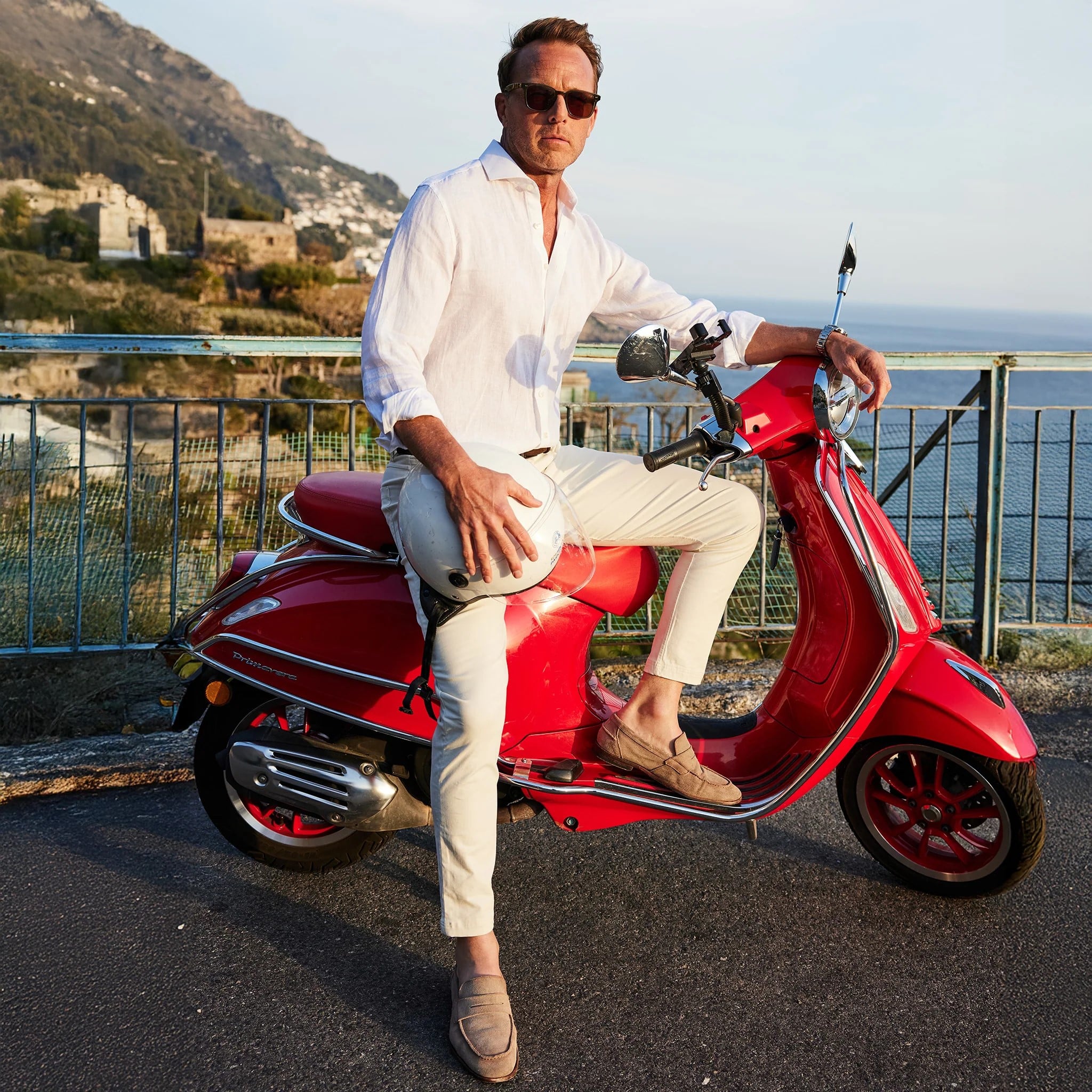
A tan suede loafer provides the necessary contrast, grounding the light-colored ensemble without introducing unnecessary visual weight. Linen’s natural tendency to wrinkle is a characteristic to be managed rather than avoided entirely. In this context, the tailored fit of the trousers ensures that any creasing remains an indication of relaxed elegance rather than dishevelment. For environments that lean towards a more formal business setting, the inclusion of socks or a switch to darker-hued trousers can further enhance the professional impression. This approach demonstrates that even with a relaxed fabric like linen, a structured and polished outcome is achievable.
Tonal Depth Through Texture: Embracing Earthy Hues
Beyond crisp whites, summer business casual can also embrace the richness of earthy tones, adding a layer of sophisticated warmth. An outfit featuring a brown linen shirt paired with stone-colored chinos exemplifies this approach. The earthy hue of the linen shirt offers a refined alternative to the more common blues and whites, while the stone chinos provide a neutral backdrop. Dark chocolate leather loafers and a matching belt serve to anchor the look, creating a visual frame that prevents the lighter trousers from appearing too casual for a professional setting.
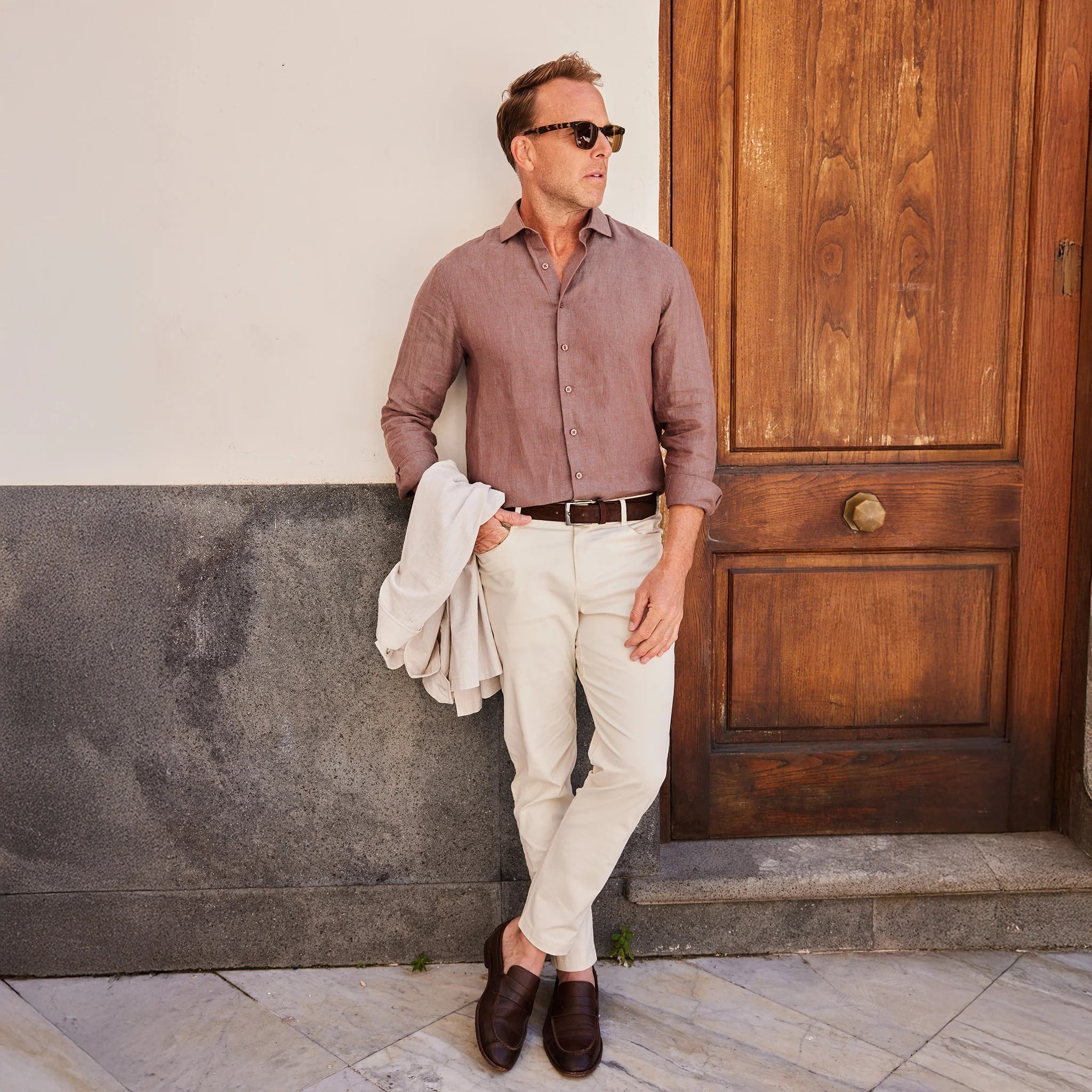
The strategic advantage of this combination lies in the inherent formality of brown as a color, which is balanced by the lightweight and breathable nature of the linen fabric. This creates an outfit that is both visually substantial and exceptionally comfortable. The rich color of the shirt, coupled with the relaxed texture of the linen, strikes an ideal chord between approachable and professional. This ensemble is particularly well-suited for environments where business casual is the norm but a touch of personality is encouraged.
The Structured Light Layer: Introducing the Summer Blazer
For occasions demanding a more structured silhouette, the summer blazer offers a solution that doesn’t compromise on comfort. A blazer crafted from a linen-cotton blend in a pale sage or oatmeal hue provides the necessary professional polish while ensuring adequate ventilation. This is expertly layered over a sky-blue shirt, a classic choice that adds a touch of traditional corporate style. The ensemble is completed with white trousers, a quintessential summer staple that remains formal enough for office environments.
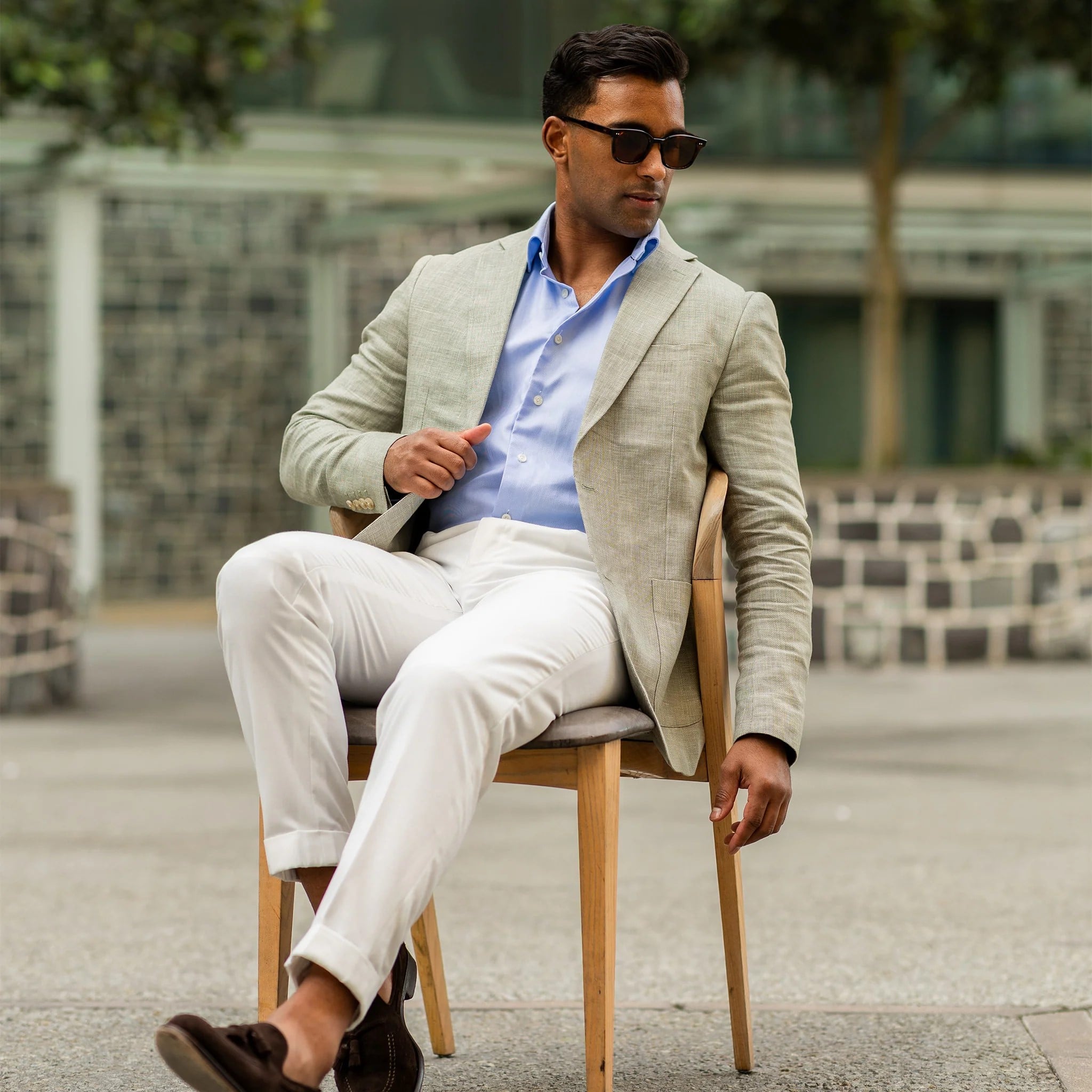
The brilliance of this outfit lies in its ability to bridge the gap between formal requirements and the practicalities of warm weather. The blazer, while adding structure, is designed with breathable materials, preventing overheating. The sky-blue shirt offers a familiar and professional touchpoint, while the white trousers provide a clean, summery aesthetic. This combination is particularly effective for navigating formal business settings during a heatwave, projecting an image of composed professionalism.
Navy and Light Blue Contrast: A Timeless Combination
A classic pairing of navy and light blue offers enduring appeal and a sharp, authoritative presence. This ensemble features a deep navy blazer paired with light tan trousers and a crisp white shirt. The high-contrast nature of this color combination creates a visually striking and professional appearance. Navy, a perennial favorite in menswear, adapts seamlessly to warmer months when contrasted with lighter trousers and a shirt worn without a tie.
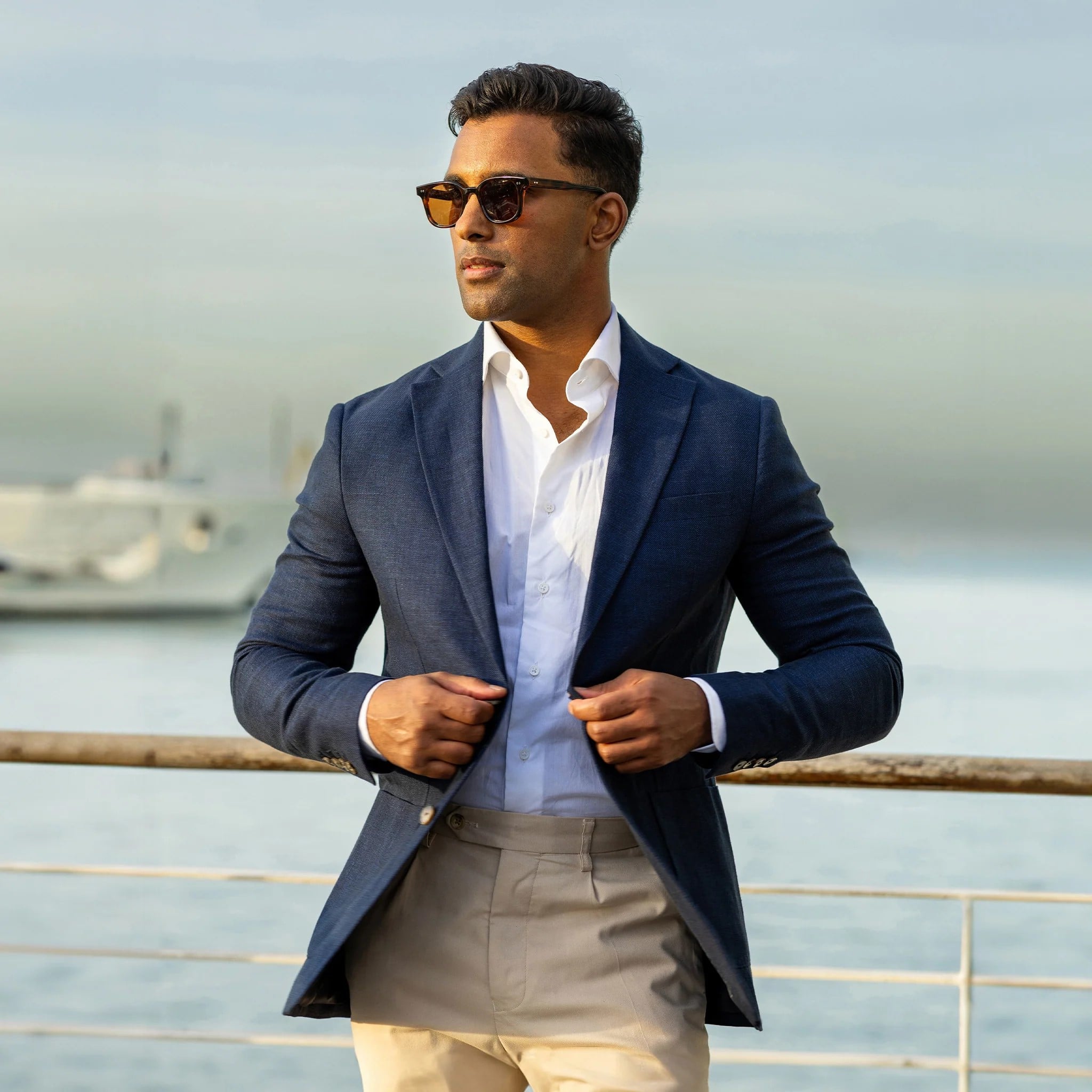
The success of this look hinges on impeccable fit. The blazer should hug the shoulders and maintain a clean, professional line, ensuring it doesn’t appear overly relaxed despite the warmer fabric choices. The light tan trousers provide a modern counterpoint to the traditional navy, creating a balanced and sophisticated aesthetic suitable for a range of professional environments.
The Elevated Knit: Redefining the Polo Shirt
The humble polo shirt can be elevated to business casual status with the right fabric and styling. A dark knit polo, crafted from a luxurious silk blend, offers a superior drape and a subtle sheen compared to standard pique cotton. This sophisticated alternative to a traditional shirt pairs effectively with white denim or five-pocket trousers, creating a look that is both relaxed and ready for business. A brown leather belt adds a touch of classic refinement.

The advantage of a silk-blend polo lies in its refined texture and flattering silhouette. Opting for a dark color, such as black or charcoal, creates a slimming and modern effect, which contrasts sharply with lighter lower garments. This approach offers a stylish and comfortable alternative for more casual office days or creative industries.
Neutral Cohesion: Minimalism in Style
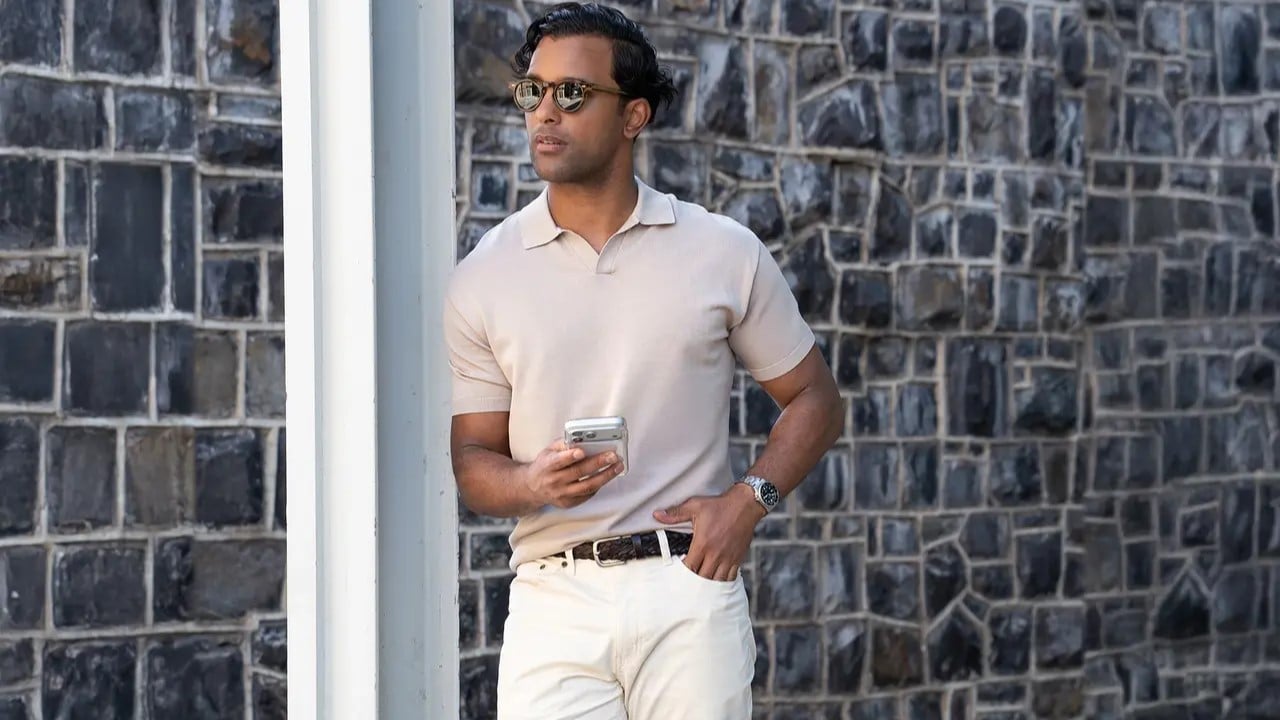
Minimalism and clean lines are often hallmarks of sophisticated summer dressing. An outfit featuring a buttonless placket polo shirt exemplifies this principle. The absence of buttons creates a streamlined, minimalist neckline that enhances the overall clean aesthetic. This is paired with white trousers and brown suede loafers, resulting in an exceptionally light and airy ensemble.
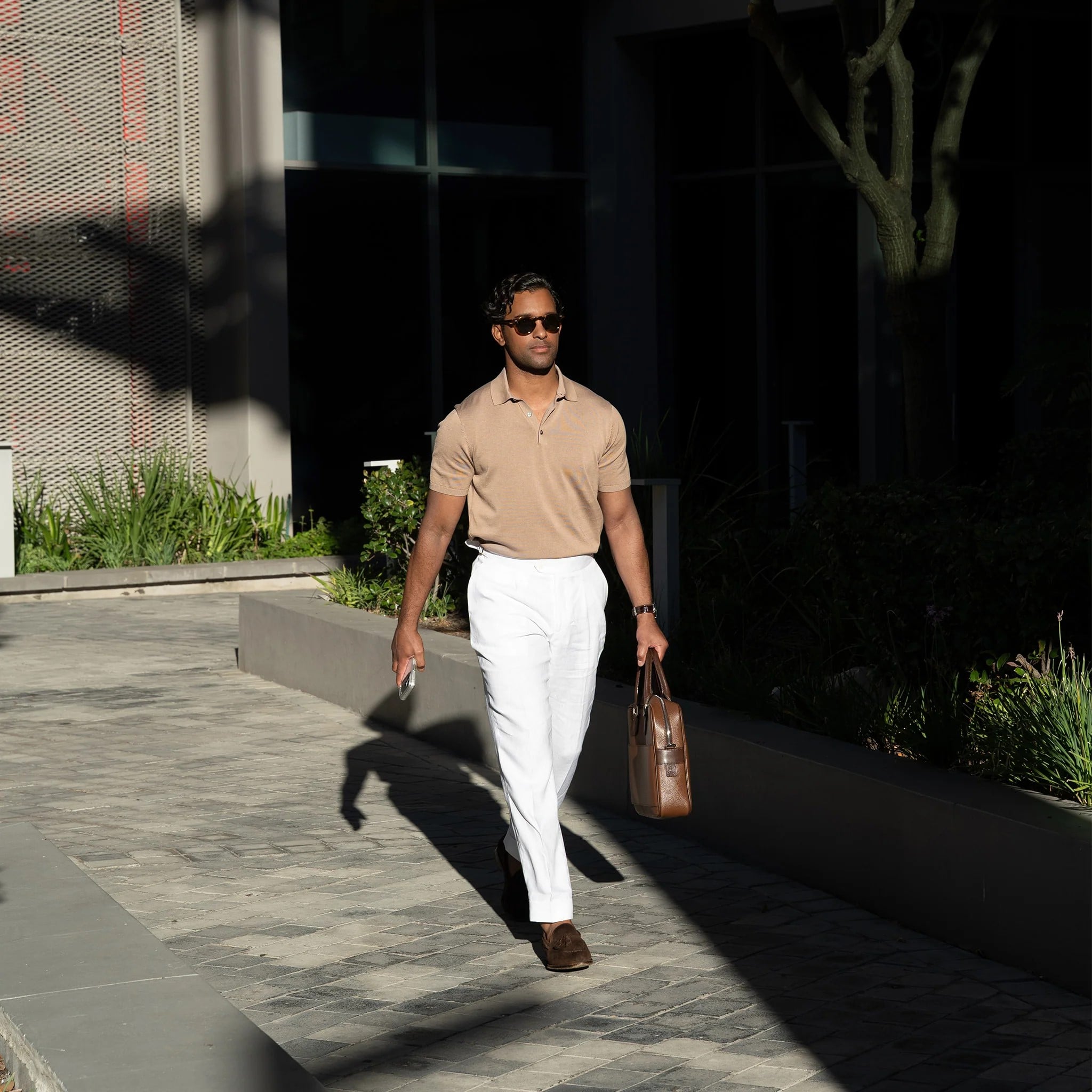
The visual simplicity of the buttonless polo reduces clutter, allowing the wearer to project an image of understated elegance. The sand tone of the polo is universally flattering and inherently feels cooler than darker shades. The inclusion of suede textures in the footwear adds a subtle yet effective finishing touch, providing textural contrast without disrupting the overall lightness of the outfit.
The Linen Suit: A Statement of Summer Sophistication
For a more formal approach to summer business casual, a linen suit offers unparalleled elegance and breathability. An ensemble featuring a light blue, textured linen blazer paired with a micro-check shirt and navy trousers showcases a masterful use of tonal blues. This creates a cohesive and layered appearance that is both sophisticated and appropriate for professional settings.
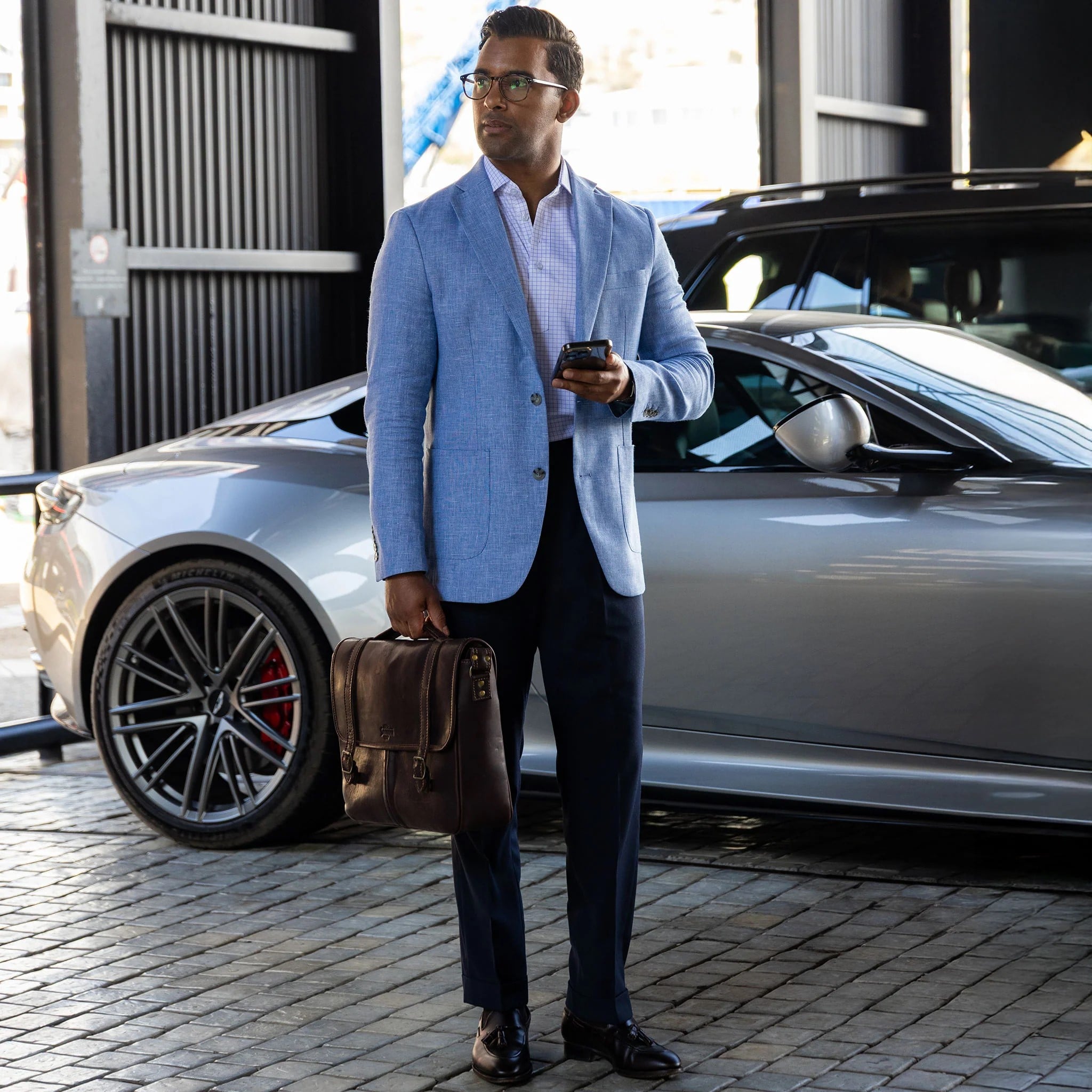
The strategy here involves leveraging different shades and patterns within the same color family. This technique, known as tonal dressing, adds depth and visual interest to an outfit without appearing overly complex. The light blue blazer, with its subtle texture, provides a refreshing alternative to traditional wool suits, while the micro-check shirt adds a touch of pattern without being overwhelming. The navy trousers ground the look, ensuring it remains firmly within the bounds of business attire.
Heatwave Summer Office Outfit: The Breathable Basics
During peak heatwaves, the focus must remain squarely on breathable fabrics and strategic color choices. A blue linen shirt paired with cream trousers offers a simple yet highly effective combination. This pairing is not only comfortable but also universally appropriate for office environments throughout the year, with fabric choice being the primary seasonal differentiator.
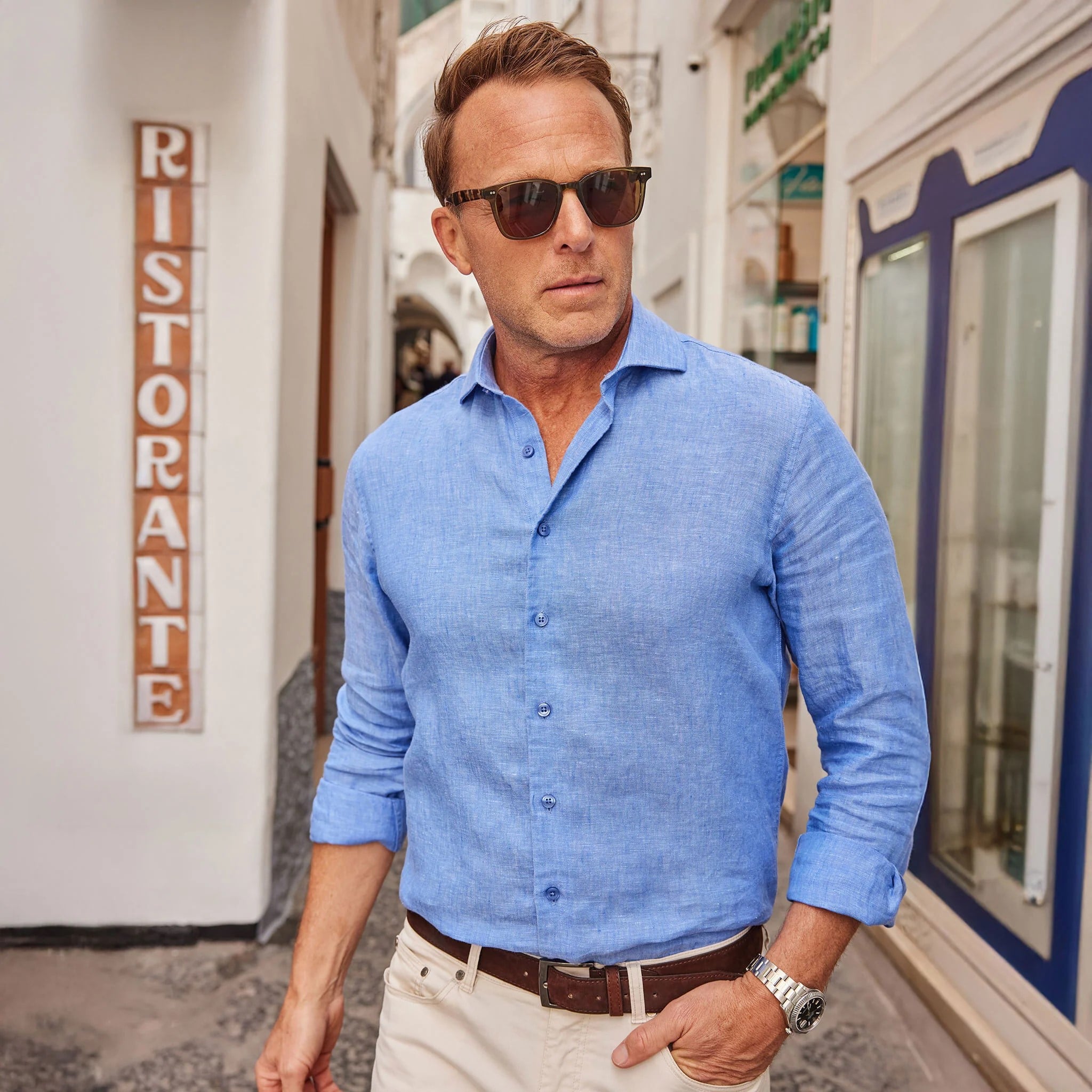
The enduring appeal of this color combination lies in its versatility. Blue and cream create a harmonious and professional look that transcends seasonal trends. The key is to select linen or lightweight cotton for the shirt and a breathable fabric like cotton or a linen blend for the trousers. This ensures comfort without sacrificing professional presentation.
Navy Polo Office Outfit: A Versatile Staple
The navy polo shirt is an undisputed staple in any man’s summer wardrobe, easily adaptable for the office. When paired with light-colored trousers, such as chinos or linen pants, and dark loafers, it provides a composed and stylish approach to business casual during warmer months.

The inherent versatility of the navy polo is its greatest asset. It bridges the gap between a t-shirt and a dress shirt, offering a more refined yet relaxed option. The contrast created by pairing it with lighter trousers and dark footwear ensures a polished and put-together appearance. This outfit is a reliable choice for navigating the challenges of maintaining a professional standard amidst rising temperatures.
Final Words on Summer Business Casual
Mastering summer business casual can indeed feel like a sartorial challenge, but the key lies in embracing the right fabrics and understanding how to combine them effectively. The transition to linen and 100% cotton trousers, in particular, can revolutionize one’s approach to warm-weather professional attire. By utilizing the same color palettes that work year-round and adapting them with breathable materials, men can ensure they remain both comfortable and impeccably dressed. The examples provided highlight how linen and lightweight cotton pieces are not merely alternatives but essential components for navigating the hottest days of the year with confidence and style. The focus on fabric, color, and considered styling empowers professionals to maintain a sharp appearance, proving that comfort and sophistication can indeed coexist.
