
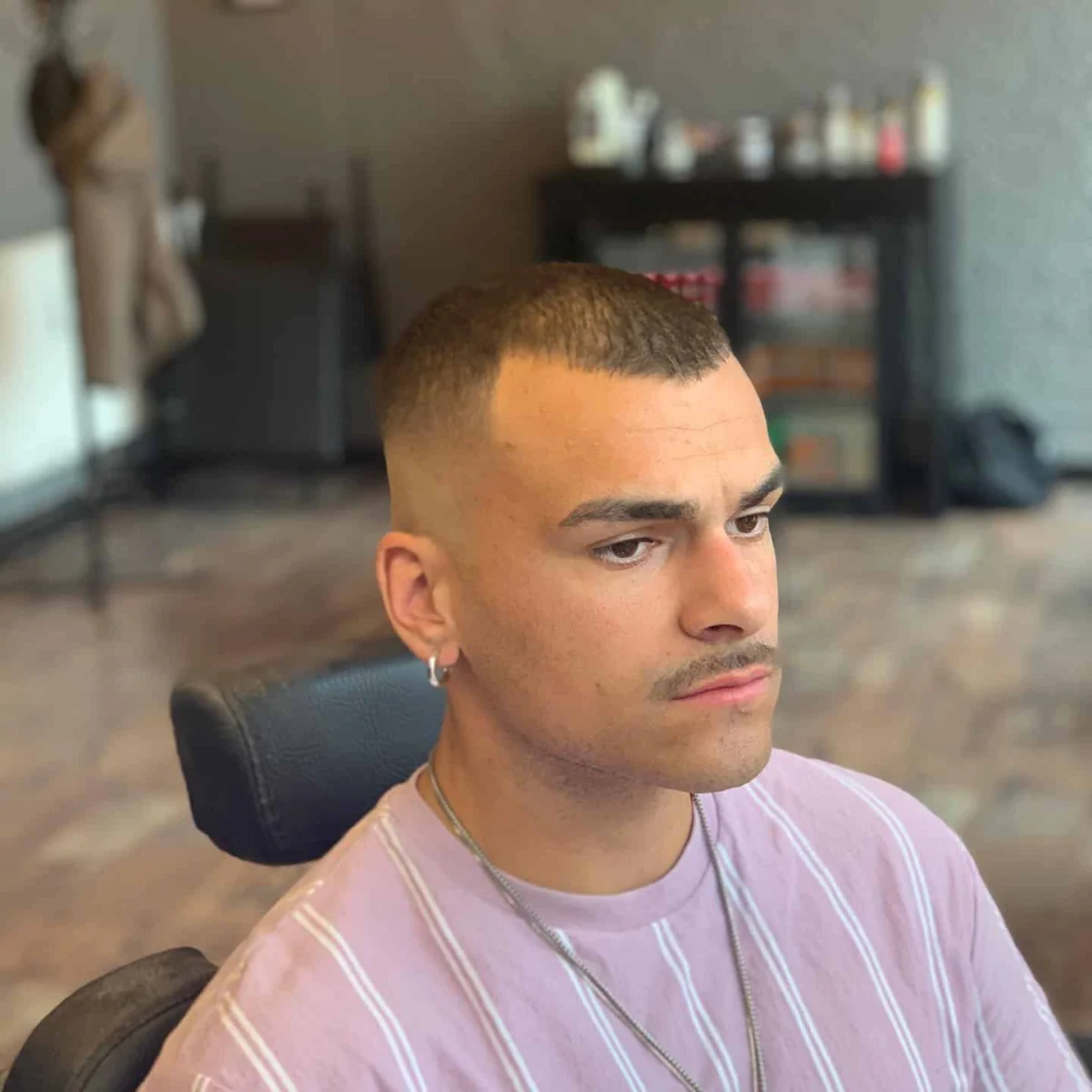
The number 1 haircut has cemented its status as a cornerstone of modern men’s grooming, representing a pinnacle of minimalist design and high-utility styling. Defined by a blade length of exactly one-eighth of an inch—or approximately 3 millimeters—this cut has transitioned from its origins as a utilitarian military standard to a contemporary fashion staple. As of 2026, the resurgence of high-contrast grooming trends has placed the number 1 clipper setting at the center of barbershop culture, serving as the foundational element for everything from buzz cuts to sophisticated, layered fades.
Historical Context and Evolution of the Buzz Cut

The standardization of haircutting via numbered guards emerged in the mid-20th century, largely influenced by the rigorous grooming requirements of military personnel. The "number 1" guard was designed to provide a uniform, low-maintenance appearance that could be executed with speed and precision, essential for large-scale operations. However, the 21st century saw a paradigm shift. In the early 2000s, subcultures ranging from punk to hip-hop began adopting the ultra-short look as an aesthetic statement rather than a requirement.
By 2026, the style has reached a level of refinement that balances this historical grit with high-end grooming standards. The current iteration of the number 1 cut is no longer just about removing length; it is about the architecture of the head. Barbers now utilize the 3mm baseline to create geometric precision, framing the face in a way that highlights bone structure rather than masking it.
Technical Specifications and Barber Communication
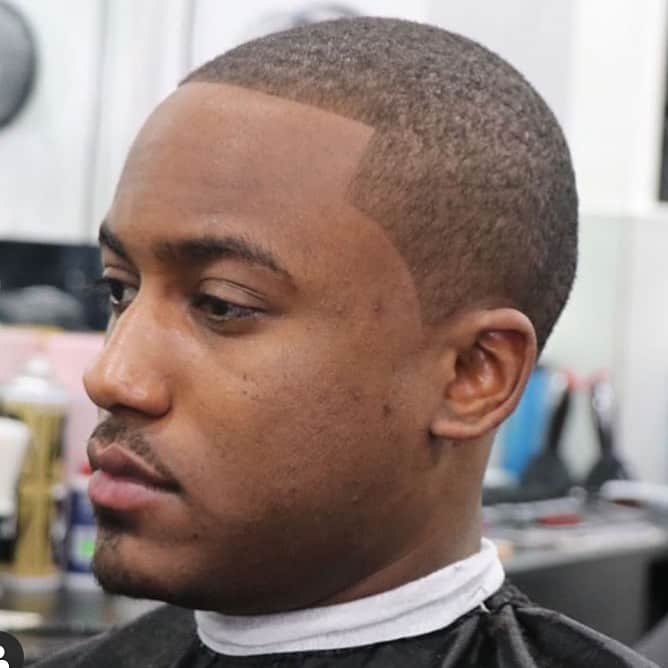
To achieve a consistent result, understanding the technical language of the barbershop is paramount. A "number 1" refers specifically to the plastic guard attached to a professional-grade hair clipper. When a barber executes a "number 1 all over," the result is a uniform, 3mm length that follows the natural contours of the skull.
However, the modern application of the number 1 often involves a multi-step process:
- The Baseline Sweep: The barber begins by establishing the primary length, often using a high-RPM rotary clipper to ensure the hair is cut cleanly without pulling.
- The Taper Integration: To move beyond a basic "military" look, stylists incorporate a taper or fade. This involves transitioning from the 3mm base into shorter, skin-level lengths (or "zero" guards) at the neckline and temple.
- Edge Alignment: The final polish is provided by professional trimmers, which sharpen the hairline, temple, and nape, providing the crisp finish that defines the 2026 aesthetic.
Data-Driven Grooming: Why Short Hair Remains Dominant

Market research in the men’s grooming sector suggests that the demand for low-maintenance, high-impact styles has grown by 15% annually since 2023. This trend is attributed to a shift in lifestyle priorities, where time-efficiency in morning routines has become a premium for the modern urban professional.
The number 1 cut is statistically one of the most requested styles in metropolitan barbershops. It offers a unique value proposition: it is inherently "wash-and-wear." Unlike longer hairstyles that require specialized pomades, texturizing sprays, or time-consuming blow-drying, the number 1 cut requires only a clean scalp and minimal product. This efficiency does not equate to a lack of effort; rather, it suggests a strategic choice to invest in the quality of the cut rather than the complexity of daily maintenance.
Scalp Health and Maintenance Protocols
The primary implication of adopting an 8th-inch length is the increased exposure of the scalp. While a longer style provides natural thermal protection and UV shielding, the number 1 cut requires a more disciplined approach to skincare.
Professional dermatological advice for those adopting this style focuses on three pillars:
- Exfoliation: Because the scalp is more exposed to environmental pollutants, regular, gentle exfoliation is necessary to prevent the accumulation of dead skin cells that can lead to irritation.
- UV Protection: A common oversight for those transitioning to a buzz cut is the neglect of scalp-specific sunscreen. The scalp is susceptible to actinic damage, and practitioners now recommend the use of non-greasy, broad-spectrum SPF to preserve skin elasticity and prevent long-term damage.
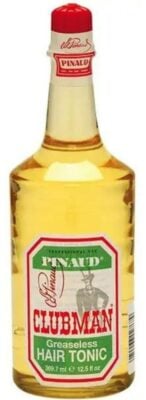
- Hydration: The use of tonics, such as those formulated with witch hazel or botanical extracts, helps in balancing the pH of the scalp, which can be disrupted by frequent shaving or trimming.
The Role of Precision Tools

The democratization of professional-grade grooming tools has allowed the number 1 cut to thrive at home. Equipment like the BaBylissPRO GOLDFX Clipper has become a benchmark in the industry. These devices feature high-torque motors and precision-ground blades that allow for a "flush" cut—meaning the blades stay sharp longer and pull less, which is vital when the margin for error is as small as 3 millimeters.
When choosing equipment, experts note that the blade material—often DLC (Diamond-Like Carbon) coated steel—is critical. These materials generate less friction and heat, which is essential for maintaining comfort during the frequent, recurring trims required to keep a number 1 cut looking fresh.
Face Shape Analysis and Styling Versatility
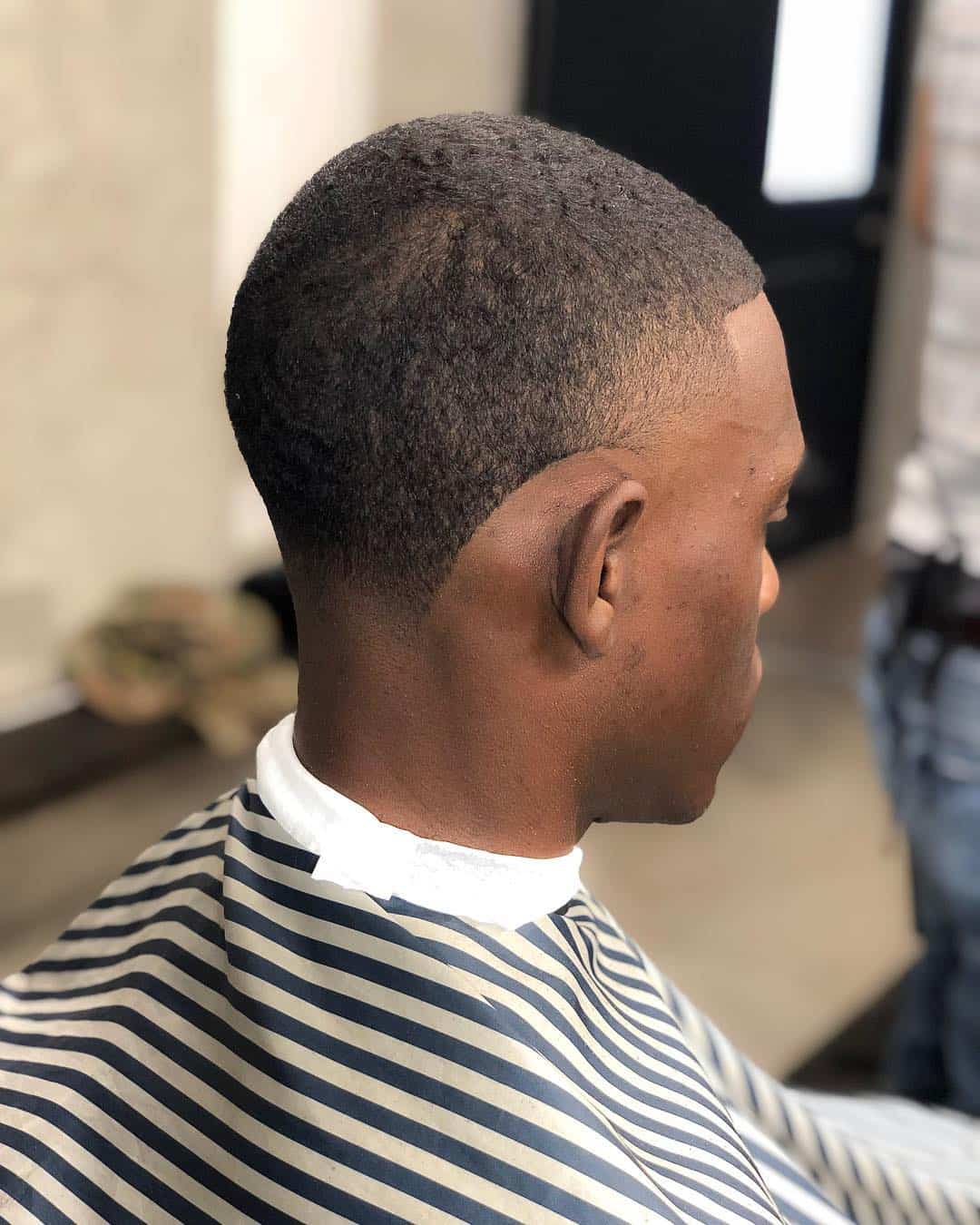
The effectiveness of the number 1 cut is heavily dependent on the wearer’s facial geometry. Because the style removes the "frame" of hair that usually surrounds the face, it emphasizes the jawline, the width of the cheekbones, and the shape of the brow.
- Oval and Rectangular Faces: These face shapes are the most versatile for the number 1. The lack of volume on the sides and top prevents the face from appearing elongated, allowing for a balanced, masculine profile.
- Chiseled Jawlines: The style is frequently utilized by men with strong bone structures to further highlight the definition of their jaw, creating a sharp, clean-cut aesthetic.
- Facial Hair Integration: The 2026 trend heavily emphasizes the "faded transition." A number 1 on the head, when blended seamlessly into a well-groomed beard, creates a cohesive look that is both aggressive and sophisticated. The beard acts as the "weight" at the bottom of the face, balancing the lightness of the hair on the scalp.
Celebrity Influence and Cultural Impact
The cultural endurance of the number 1 cut is evidenced by its adoption across diverse fields, from professional sports to global entertainment. Figures like Dwayne "The Rock" Johnson have normalized the look for those seeking to project strength and efficiency. Meanwhile, musicians like Zayn Malik have utilized the cut to pivot away from more ornate, styled looks, signaling a maturation in their personal brand.

This, however, is not merely a celebrity trend. The adoption of the style by high-profile athletes like LeBron James underscores a functional aspect of the cut: it is the choice of the high-performance individual. It is a style that performs under pressure, whether on the court or in the boardroom.
Implications for the Future of Men’s Grooming
As we move through 2026, the trajectory of men’s hair trends points toward a bifurcation. On one hand, there is a rise in complex, longer styles; on the other, the number 1 cut remains the standard for those who value clarity, discipline, and aesthetic precision.
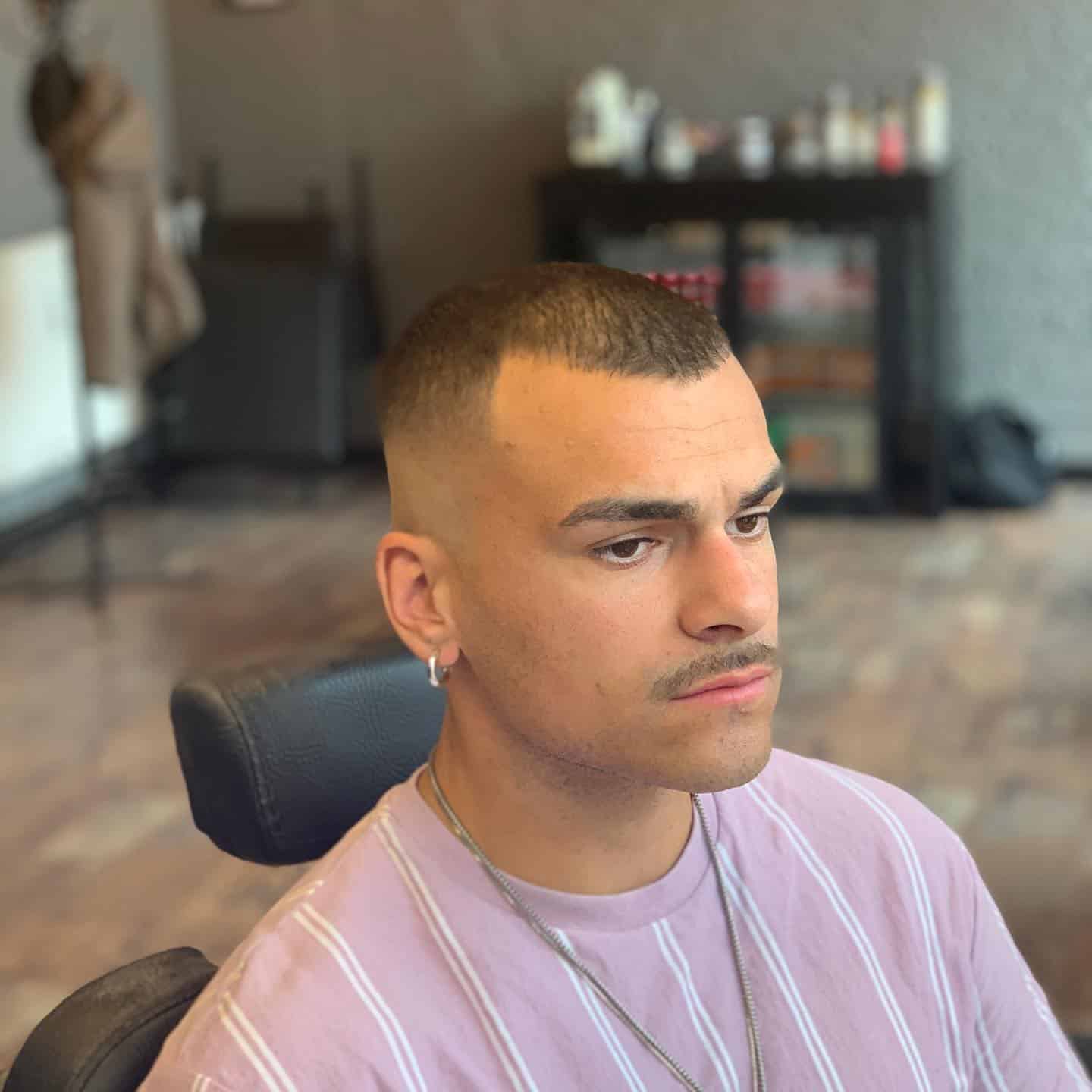
The implications of this trend are clear: the future of grooming is not just about the hair itself, but the relationship between the hair, the scalp, and the face. The number 1 cut is the ultimate test of a barber’s skill. Because there is so little hair to work with, there is nowhere to hide an uneven line or a poor blend. It is a demanding style that forces a standard of excellence, both from the practitioner and the client.
In conclusion, the number 1 haircut is far more than a simple buzz. It is a deliberate aesthetic choice that requires an understanding of one’s own facial structure, a commitment to scalp health, and a reliance on quality grooming equipment. Whether one is looking to streamline their morning routine or make a bold, modern statement, the 3mm cut remains an unrivaled option in the contemporary men’s style landscape. By treating the scalp as skin and the hair as a frame, the wearer can leverage this ultra-short style to achieve a look that is both timeless and strikingly current.
