
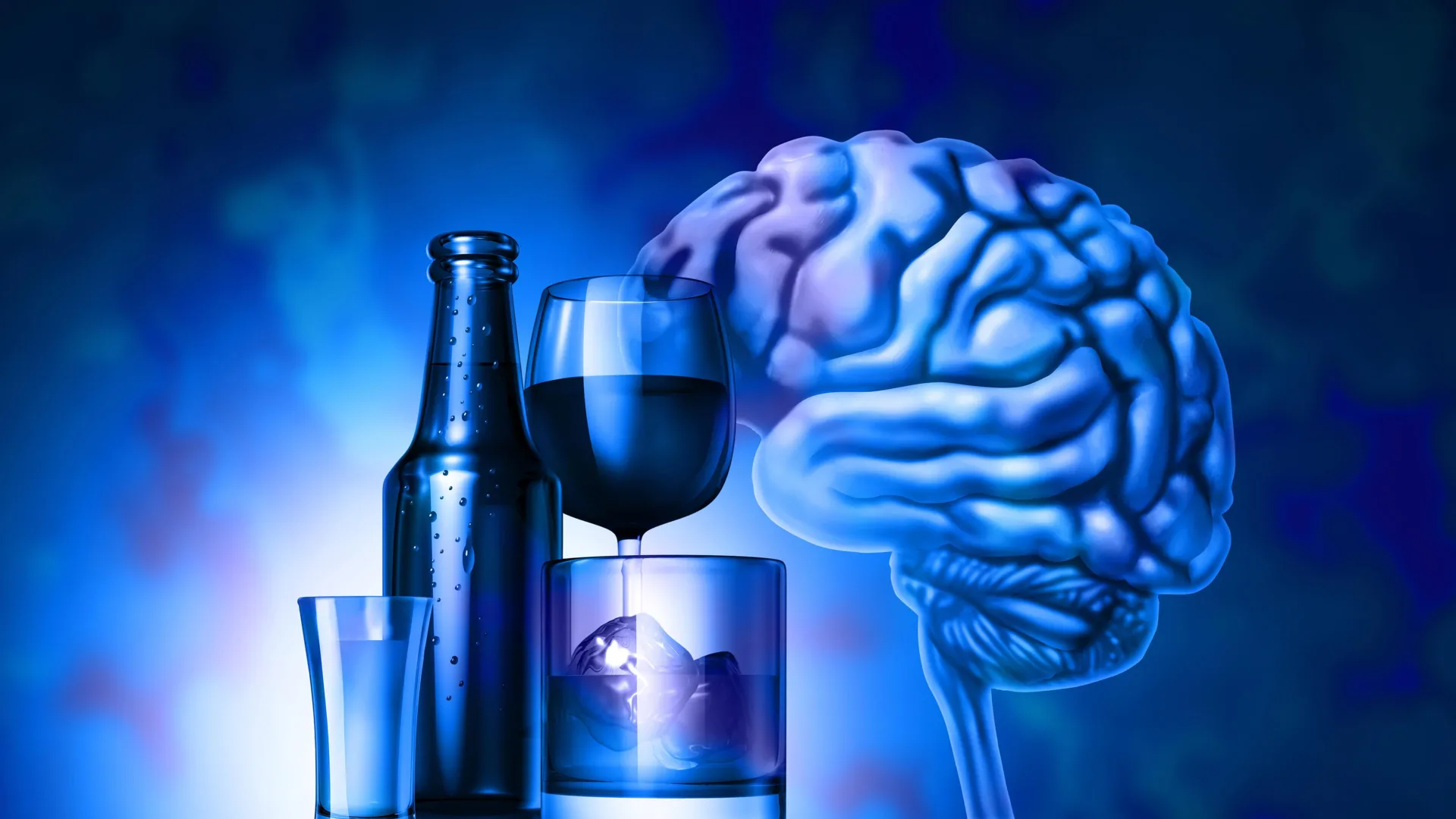
Recent groundbreaking research from the University of Massachusetts Amherst suggests that the use of alcohol as a coping mechanism for stress during early adulthood can inflict lasting damage on the brain, alterations that persist even after extended periods of sobriety. These neurobiological shifts, which can begin to manifest by middle age, have been linked to a significant reduction in mental flexibility, an increased propensity to revert to alcohol consumption during subsequent stressful periods, and a heightened risk of cognitive decline mirroring patterns observed in dementia and Alzheimer’s disease. The study, published in the esteemed journal Alcohol Clinical and Experimental Research, offers a critical new perspective on the intricate interplay between alcohol and stress, revealing how their combined impact can fundamentally reshape brain circuits.
The Vicious Cycle: How Stress and Alcohol Entwine
Scientists have long acknowledged the synergistic relationship between stress and alcohol consumption. While alcohol may offer a transient reprieve from feelings of stress, its repeated use can undermine the brain’s inherent capacity to manage stress autonomously. This erosion of natural coping mechanisms can foster a dependence on alcohol, leading individuals to consume more of it, and in larger quantities, to achieve the same perceived relief. Concurrently, increased alcohol consumption can itself become a source of stress. The poor decisions and subsequent negative consequences often associated with heavy drinking can create a feedback loop, exacerbating stress levels and making the cycle of dependence increasingly difficult to break. The brain, in its adaptive efforts, becomes accustomed to this dual onslaught of stress and alcohol, undergoing changes that can have profound long-term implications.
Elena Vazey, an associate professor of biology at UMass Amherst and the senior author of the study, articulated the core of their investigation: "My lab studies the neurocircuitry that underlies how we make decisions. We all know that drinking can often lead to poor decision-making, but we wondered how early adulthood drinking combined with stress affects that circuitry, especially as we grow older. If we can figure out how alcohol and stress change the brain’s circuitry, then we can help figure out how best to help people." This research endeavor aimed to elucidate the enduring neural consequences of this early-life coping strategy.
Unveiling the Magnitude of Combined Impact
To meticulously investigate these long-term effects, Vazey and her team, supported by grants from the National Institute on Alcohol Abuse and Alcoholism (NIAAA), employed a model system using mice. The choice of mice was informed by the significant homology between their brain circuits and those found in humans, allowing for robust extrapolation of findings. The study’s results unequivocally demonstrated that the combined presence of alcohol and stress exerted a far more substantial and detrimental impact on brain function than either factor acting in isolation.
A key finding revealed that heavy alcohol use undertaken as a stress-coping mechanism during early adulthood significantly amplified the likelihood of the mice returning to alcohol consumption when faced with stress in middle age. This phenomenon persisted even after prolonged periods of complete abstinence, suggesting that the synergistic effects of alcohol and stress can instigate lasting neurological changes that endure well beyond the cessation of drinking.
Intriguingly, the researchers observed minimal differences in basic learning abilities between middle-aged mice with a history of stress-related drinking and those who had engaged in lighter drinking patterns. The most pronounced divergence was observed in cognitive flexibility – the crucial capacity to adapt swiftly to evolving circumstances and to formulate new decisions when environmental conditions shift.
"Middle age is when problems start to add up," Vazey noted. "We know that alcohol is a risk factor for early cognitive decline, and we saw that this alcohol-stress combination creates the kind of trouble adapting to changing situations that also happens in the early stages of dementia." This observation highlights a critical vulnerability in cognitive function, directly linked to the early-life pattern of using alcohol to manage stress.
The Locus Coeruleus: A Key Decision-Making Hub Under Siege
To delve deeper into the underlying mechanisms responsible for these persistent detrimental effects, the research team focused their attention on a small but vital region within the brainstem known as the locus coeruleus (LC). This area plays a pivotal role in adaptive decision-making processes in both rodents and humans, orchestrating the brain’s response to novel and potentially challenging situations.
Under normal physiological conditions, the LC exhibits heightened activity during stressful events, enabling the organism to orient and respond effectively. Once the stressor subsides, the LC typically returns to a baseline state. However, in the mice that had been exposed to both alcohol and chronic stress during their early adulthood, the LC displayed a significant impairment. The researchers discovered a loss of crucial molecular machinery within the LC that is essential for its normal "shut-off" mechanism. This disruption meant that the LC remained in a state of dysregulation, profoundly compromising its ability to guide adaptive and effective decision-making.
Furthermore, the study identified elevated levels of oxidative stress within the LC of these mice. Oxidative stress is a form of cellular damage characterized by an imbalance between free radicals and antioxidants, and it is a well-established pathological hallmark observed in the brains of individuals afflicted with Alzheimer’s disease. This cellular damage can have widespread deleterious effects on neuronal function and integrity throughout the brain. Alarmingly, even after extended periods of abstinence, the middle-aged brains of the mice that had previously engaged in heavy drinking showed scant evidence of repair to this accumulated oxidative damage.
"The brain can really struggle to recover from a history of chronic stress and drinking in early adulthood," Vazey explained. "We think that the oxidative damage might be one of the things that keeps the heavy drinking going, that can lead to someone going back to alcohol even after long-term abstinence. It’s these persistent changes in the brain that also impair decision making and lead to the kinds of early cognitive decline associated with dementia and Alzheimer’s. The brain’s wiring system is damaged, which means quitting drinking or making better decisions isn’t a matter of willpower. After a history of stress and drinking, the brain simply works differently, and our treatment strategies need to able to address these long-lasting differences."
Broader Implications and Future Directions
The findings from the UMass Amherst study carry significant implications for public health and clinical practice. They underscore the critical importance of addressing alcohol use as a coping mechanism for stress, particularly during the formative years of early adulthood. The long-term consequences extend beyond immediate behavioral patterns, impacting fundamental cognitive functions and increasing vulnerability to neurodegenerative diseases later in life.
Supporting Data and Chronology:
While specific quantitative data points from this particular mouse study are not detailed in the provided text, the underlying biological mechanisms of oxidative stress and neuronal pathway disruption are well-documented in human neuroscience. Research on Alzheimer’s disease, for instance, consistently highlights increased oxidative damage in key brain regions, including those involved in memory and cognition. The timeline implied by the study is crucial: early adulthood (developmental period), followed by middle age (manifestation of effects), and then potentially progressing into older age (further cognitive decline). This suggests a critical developmental window where interventions could be most impactful.
Inferred Reactions and Expert Commentary:
While direct quotes from external parties are not available, the implications of this research would likely be met with keen interest and concern from organizations dedicated to mental health, addiction research, and neurological disorders. Experts in these fields would likely emphasize the need for early intervention strategies that promote healthy stress management techniques in young adults, moving away from maladaptive coping mechanisms like excessive alcohol consumption. The findings also lend support to the growing body of evidence suggesting that early life experiences can have profound and lasting impacts on brain health throughout the lifespan.
Analysis of Implications:
The study’s revelations have several critical implications:
- Shifting Treatment Paradigms: The research suggests a need to move beyond solely focusing on abstinence and to develop therapeutic approaches that specifically target the neurobiological changes induced by the combined effects of stress and alcohol. This could involve interventions aimed at repairing oxidative damage or restoring the functionality of crucial brain circuits like the locus coeruleus.
- Public Health Messaging: Enhanced public health campaigns are warranted to educate young adults and their support networks about the potential long-term risks associated with using alcohol to cope with stress. Emphasizing alternative, healthier coping strategies is paramount.
- Early Intervention: Identifying individuals who engage in stress-related drinking during early adulthood could allow for targeted interventions to mitigate the risk of future cognitive decline. This highlights the importance of mental health support and addiction services accessible to young people.
- Understanding Cognitive Decline: The study provides a potential pathway for understanding how certain patterns of early life substance use might contribute to the development of cognitive impairments, including those characteristic of dementia and Alzheimer’s disease, beyond genetic predispositions.
In conclusion, the UMass Amherst research provides compelling evidence that the use of alcohol to navigate stress in early adulthood is not a benign coping strategy. The lasting alterations it instigates in brain circuitry, particularly within critical decision-making centers, can have profound and enduring consequences, increasing vulnerability to cognitive decline and hindering the brain’s ability to adapt and function optimally throughout life. This underscores the urgent need for proactive approaches to mental health and substance use prevention, focusing on building resilience and promoting healthy coping mechanisms from an early age.
