
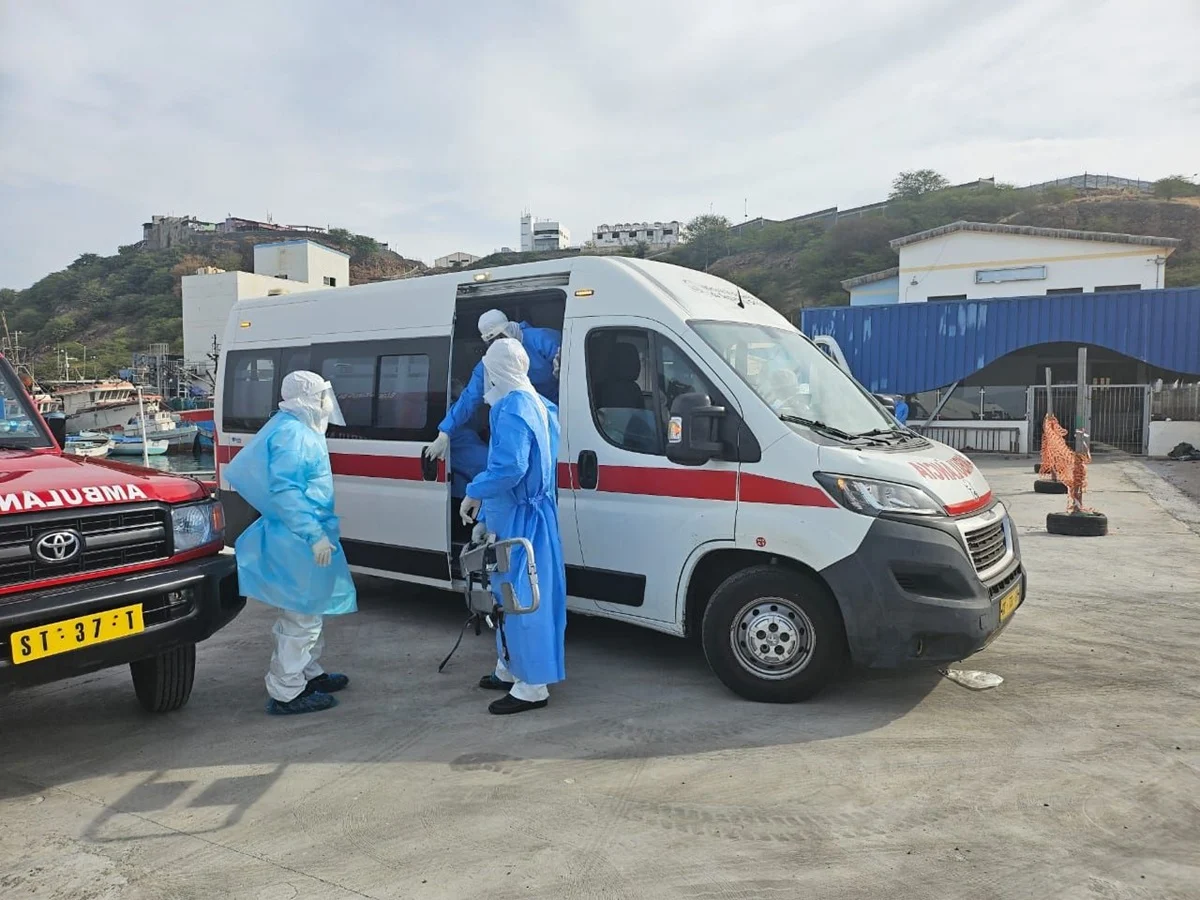
The World Health Organization (WHO) has officially launched a coordinated international response following a cluster of hantavirus cases identified among passengers and crew on the MV Hondius, a prominent polar expedition vessel. During a media briefing held today at the WHO headquarters in Geneva, Director-General Dr. Tedros Adhanom Ghebreyesus confirmed that eight individuals have been affected by the outbreak so far. Among these cases, three fatalities have been recorded, underscoring the severity of the pathogen involved. Of the eight reported cases, five have been laboratory-confirmed as the Andes virus (ANDV), a specific strain of hantavirus that carries significant public health implications due to its unique transmission characteristics.
The emergence of the Andes virus on a cruise ship presents a complex challenge for global health authorities. While hantaviruses are typically transmitted to humans through contact with the excreta of infected rodents, the Andes strain is the only known species within the hantavirus family capable of person-to-person transmission. This transmission usually occurs through close and prolonged contact, making the confined environment of a maritime vessel a point of particular concern for epidemiologists. Despite the fatalities and the potential for transmission, Dr. Tedros noted that the WHO currently assesses the overall public health risk as low, though he cautioned that the situation remains fluid.
Clinical Profile of the Andes Virus and Current Case Statistics
The Andes virus is a member of the Orthohantavirus genus and is primarily endemic to South America, particularly Argentina and Chile. It is the leading cause of Hantavirus Pulmonary Syndrome (HPS), a severe and often fatal respiratory disease. The clinical progression of HPS typically begins with a prodromal phase characterized by fever, chills, and myalgia, which can rapidly transition into acute respiratory distress and cardiogenic shock.
In the current outbreak aboard the MV Hondius, the mortality rate among the reported cases stands at 37.5%, a figure consistent with historical data regarding HPS, which often sees case fatality rates ranging between 30% and 40%. The five confirmed cases were identified through molecular testing, while the remaining three are being treated as suspected cases pending laboratory results. Because the incubation period for hantavirus can range from several days to as long as six weeks, health officials are bracing for the possibility of additional cases surfacing in the coming days as the monitoring period continues.
Chronology of the Outbreak and Immediate Response
The timeline of the incident began on Saturday, May 2, 2026, when the WHO was first notified of a cluster of unexplained respiratory illnesses on the MV Hondius. The vessel, known for its excursions to remote polar regions, was transitioned into a controlled health environment immediately following the notification.
Upon receiving the alert, the WHO activated its emergency protocols under the International Health Regulations (IHR). The IHR serves as a legally binding framework for 196 countries, designed to prevent, protect against, and provide a public health response to the international spread of disease. By Monday, May 4, 2026, the WHO had already coordinated the deployment of a specialized medical expert to board the ship. This expert is currently leading a comprehensive medical assessment of all passengers and crew members, focusing on symptom screening and the collection of epidemiological data to determine the precise origin of the initial infection.
The source of the primary infection remains under investigation. While person-to-person transmission is a hallmark of the Andes virus, the index case likely contracted the virus through environmental exposure to infected rodents, possibly during a shore excursion or via contaminated supplies. The expert team on board is tasked with environmental sampling and reviewing the ship’s recent itinerary to identify potential exposure sites.
Strengthening Global Diagnostic Capacity
A critical component of the WHO’s strategy involves the rapid scaling of diagnostic capabilities across the region. To facilitate this, the Organization has arranged for the immediate shipment of 2,500 diagnostic kits from Argentina to specialized laboratories in five neighboring countries. Argentina is a global leader in hantavirus research and diagnostics, given that the Andes virus was first identified there in the mid-1990s.
The distribution of these kits is intended to ensure that any passengers who may have already disembarked or any secondary contacts in the region can be tested swiftly. "Ensuring that laboratories have the tools to identify this virus is essential for containment," a WHO technical officer stated. "The speed of diagnosis directly impacts the speed of isolation and the quality of supportive care, which are the only tools we have against HPS in the absence of a specific antiviral treatment or vaccine."
Operational Guidance for Safe Disembarkation
One of the most sensitive aspects of the current operation is the management of the remaining passengers and crew. The WHO is currently developing step-by-step operational guidance to manage the disembarkation process. This guidance focuses on three core pillars: safety, dignity, and the prevention of further transmission.
The protocol includes:
- Risk Stratification: Categorizing individuals based on their level of contact with confirmed cases.
- Quarantine Measures: Establishing monitored isolation for high-risk individuals either on board or at designated land-based facilities.
- Onward Travel Logistics: Coordinating with the home countries of international passengers to ensure they are monitored upon return, preventing the virus from spreading to new geographic areas.
Dr. Tedros emphasized the humanitarian aspect of the response, stating, "Our priorities are to ensure the affected patients receive care, that the remaining passengers on the ship are kept safe and treated with dignity, and to prevent any further spread of the virus." This approach reflects lessons learned from previous maritime health crises, where the mental health and basic rights of quarantined passengers were sometimes overlooked.
Broader Implications for the Cruise Industry and Global Health
The incident on the MV Hondius serves as a stark reminder of the vulnerabilities inherent in the cruise and expedition travel industry. High-density living conditions and the diverse geographic origins of passengers create a unique environment for the rapid spread of infectious diseases. While the industry has significantly overhauled its health protocols since the COVID-19 pandemic, the emergence of a rare pathogen like the Andes virus presents a different set of challenges, particularly regarding specialized diagnostics and the management of high-fatality-rate diseases.
From a global health security perspective, this event underscores the vital importance of the International Health Regulations. The rapid notification and subsequent international cooperation—specifically the sharing of resources from Argentina—demonstrate a level of solidarity that the WHO has been advocating for in the wake of recent global health emergencies.
"This event demonstrates why the IHR exist," Dr. Tedros remarked during the briefing. "It shows the importance of global cooperation and solidarity in responding to health threats that know no borders."
Technical Analysis of Potential Spread
Public health experts are closely analyzing the "limited human-to-human transmission" aspect of the Andes virus. Unlike respiratory viruses like influenza or SARS-CoV-2, which can spread through aerosols over wider distances, ANDV transmission typically requires very close contact, often involving shared respiratory droplets or direct physical contact during the symptomatic phase.
This characteristic makes the outbreak "self-limiting" if proper isolation measures are implemented quickly. However, the high mortality rate necessitates an abundance of caution. The WHO’s decision to keep the risk assessment at "low" for the general public reflects the difficulty the virus has in sustaining long chains of transmission in a general population setting, unlike its behavior in the confined quarters of a ship or within a single household.
Future Outlook and Monitoring
As the investigation continues, the WHO will provide regular updates through its Disease Outbreak News (DON) portal. The next 14 to 21 days will be a critical window, as this period covers the most common timeframe for symptoms to manifest following exposure.
The international community is also looking toward the potential for therapeutic interventions. Currently, treatment for HPS is primarily supportive, involving intensive care and mechanical ventilation where necessary. The data gathered from the MV Hondius cases may contribute to a better understanding of the early clinical markers of the disease, potentially aiding in earlier intervention for future cases.
For now, the focus remains on the MV Hondius and the welfare of its occupants. The coordinated effort between the WHO, the ship’s operators, and the governments of Argentina and other involved nations stands as a test case for modern outbreak management in the maritime sector. The successful resolution of this incident will depend on continued transparency, rapid diagnostic deployment, and the strict adherence to the international health protocols currently being established.
