
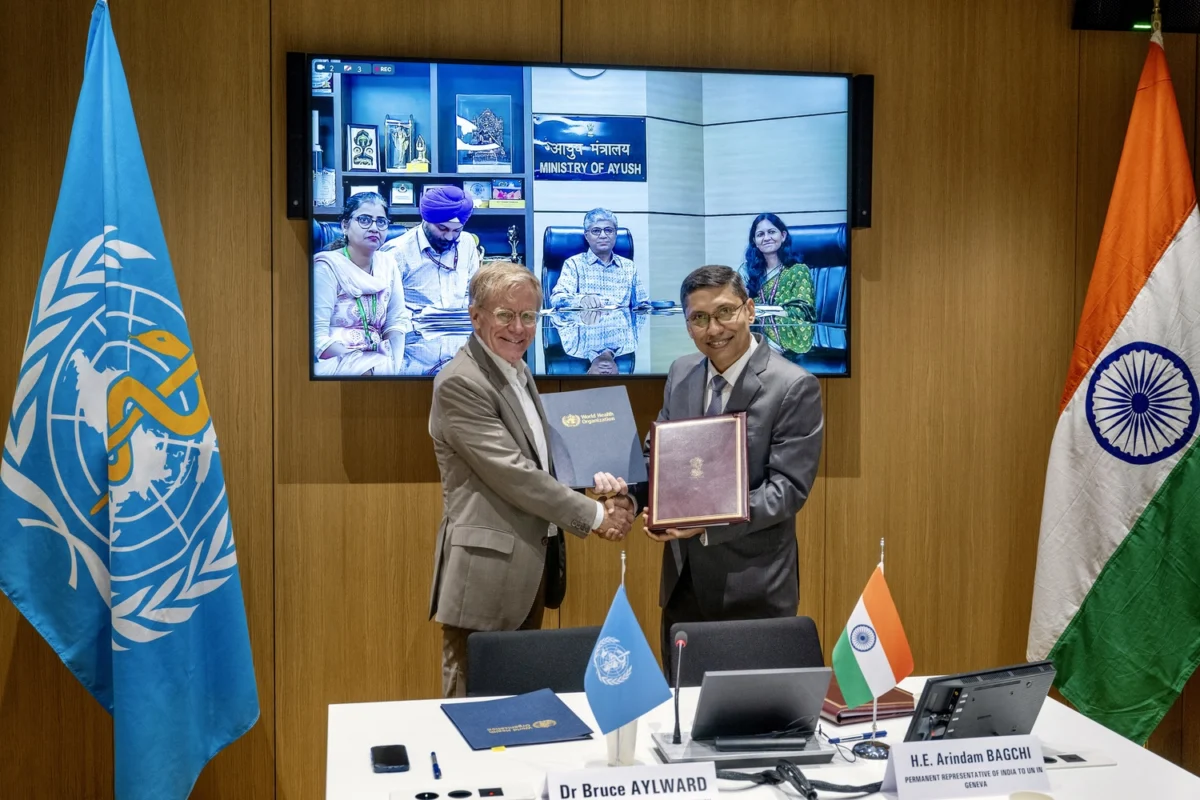
Traditional medicine remains a cornerstone of health and well-being for billions of people across the globe, serving as a primary source of primary care in many developing nations and a growing complementary field in industrialized ones. In a significant move to formalize and scientifically validate these practices, the Government of India has committed US$ 85 million over a ten-year period, spanning from 2022 to 2032, to bolster the operations of the World Health Organization (WHO) Global Traditional Medicine Centre (GTMC). This funding, formalized at a signing ceremony in Geneva, marks a pivotal chapter in the intersection of ancient therapeutic wisdom and modern clinical rigor.
A Strategic Investment in Global Health
The US$ 85 million contribution is a vital component of a broader US$ 250 million investment pledged by India to support the establishment and long-term sustainability of the WHO Global Centre for Traditional Medicine, which was officially inaugurated in 2022. This financial commitment is designed to do more than simply fund infrastructure; it is earmarked for a cross-sectoral work program aimed at strengthening the global evidence base for traditional medicine.
By providing robust data on policies, clinical practices, product safety, and public usage patterns, the GTMC aims to transition traditional medicine from the periphery of national health systems into the mainstream. Furthermore, a portion of these funds will be integrated into the WHO’s Investment Round for 2025–2028, ensuring that traditional medicine remains a central pillar of the organization’s core mandate to achieve universal health coverage (UHC).
The Evolution of the WHO Global Traditional Medicine Centre: A Chronology
The path toward the current partnership between India and the WHO is rooted in a series of strategic milestones:
- 2022: The WHO Global Centre for Traditional Medicine is established in Jamnagar, Gujarat, India, with an initial US$ 250 million investment from the Indian government to support interim premises and a new, permanent facility.
- August 2023: The inaugural WHO Traditional Medicine Global Summit is held in Gujarat, bringing together policymakers, practitioners, and scientists. The summit concludes with the adoption of the "Gujarat Declaration," a landmark document prioritizing the inclusion of traditional, complementary, and integrative medicine in national health systems.
- 2023: India signs a five-year agreement to provide technical support to the WHO’s Traditional, Complementary and Integrative Medicine (TCI) unit.
- May 2025: The anticipated launch of the 2025–2034 Global Strategy for Traditional Medicine at the 78th World Health Assembly.
- November 2025: The second WHO Global Traditional Medicine Summit is scheduled to take place, building on the action agenda established in 2023.
The Five Pillars of the Knowledge Hub
The WHO Global Traditional Medicine Centre operates as a central knowledge hub, focusing on five interconnected domains that serve as the foundation for its global operations:
- Research and Evidence: Compiling high-quality data to validate traditional practices through rigorous clinical trials and observational studies.
- Primary Health Care and Universal Health Coverage: Integrating traditional, complementary, and integrative (TCI) medicine into national health insurance and service delivery models.
- Indigenous Knowledge and Biodiversity: Protecting the intellectual property of indigenous communities while ensuring the sustainable use of medicinal plants.
- Digital Health Applications: Utilizing artificial intelligence and machine learning to map traditional medicine usage and improve access to evidence-based information.
- Global Collaboration and Summits: Facilitating biennial summits and international networks to foster cross-border exchange and the standardization of protocols.
Official Perspectives on the Partnership
The signing ceremony in Geneva underscored the collaborative spirit between the Indian government and international health authorities. Dr. Bruce Aylward, Assistant Director-General of the Universal Health Coverage and Life Course division at the WHO, emphasized the timing and necessity of this investment. "India’s commitment and leadership in expanding the evidence-based contribution of traditional medicine to the health and well-being of all people and the planet comes at an opportune moment," Dr. Aylward stated. He noted that traditional medicine, when properly integrated into national systems, acts as a bridge to reach populations that have historically been left behind by conventional medical infrastructure.
Vaidya Rajesh Kotecha, Secretary of the Ministry of Ayush, characterized the agreement as a "major milestone" in the shared vision of Prime Minister Narendra Modi and WHO Director-General Dr. Tedros Adhanom Ghebreyesus. Similarly, Ambassador Arindam Bagchi, Permanent Representative of India to the UN in Geneva, reaffirmed India’s commitment to strengthening global health systems, stating that the Jamnagar centre serves as a beacon for member states seeking to utilize traditional medicine as a pathway to achieving universal health coverage.

Evidence-Informed Integration: The Role of the TCI Unit
The synergy between the GTMC and the WHO’s TCI unit is critical to the success of this global initiative. The TCI unit is currently spearheading the development of the "WHO Traditional Medicine Global Strategy (2025–2034)," which will serve as the blueprint for countries looking to regulate and utilize traditional medicine safely.
The unit’s output—including benchmark documents, standardized terminologies, and technical guidance—addresses a major challenge in the field: the lack of uniformity. By establishing global standards, the WHO is reducing the risks associated with unverified products and practices, ensuring that patients receive safe, high-quality care whether they are utilizing conventional or traditional pathways.
Global Impact and Future Implications
The broader implications of this multi-year funding are significant. As the global population ages and the burden of chronic, non-communicable diseases rises, healthcare systems worldwide are under immense pressure to find sustainable, cost-effective solutions. Traditional medicine, which is often more accessible and culturally relevant in many regions, offers a potential solution if—and only if—it is backed by the same clinical rigor applied to pharmaceutical medicine.
The GTMC’s focus on a "One WHO" approach, which aligns headquarters, regional offices, and country offices, ensures that the findings generated in Jamnagar have a direct pathway to implementation at the local level. This structure prevents the silos that often hinder international health initiatives, allowing for a more cohesive application of traditional medicine policies.
Furthermore, by including a portion of the funding in the WHO’s Investment Round for 2025–2028, the partnership signals a shift in institutional priorities. Traditional medicine is no longer viewed as a "supplemental" interest but as an essential component of the global health security architecture.
Challenges and Looking Ahead
Despite the optimism surrounding this initiative, several challenges remain. Integrating traditional practices into modern health systems requires navigating complex regulatory environments, varying legal frameworks across member states, and the need for rigorous, culturally sensitive ethical guidelines. The success of the WHO’s initiative will depend on its ability to maintain the balance between respecting traditional, often ancestral, knowledge and meeting the high evidentiary standards required by modern public health authorities.
As the 2025–2034 Global Strategy approaches, the work of the GTMC will be under increased scrutiny from the scientific community. The focus on digital health and artificial intelligence suggests a forward-thinking approach, aiming to catalog and analyze centuries of medical data to identify new drug candidates and therapeutic interventions.
Ultimately, the US$ 85 million commitment from India provides the WHO with the fiscal runway necessary to transform traditional medicine from a legacy practice into a data-driven, evidence-based asset for the 21st century. As the world moves toward the 2025 Global Summit, the international health community will be watching closely to see how these investments translate into measurable improvements in health outcomes, patient safety, and the democratization of healthcare access across the globe.
