
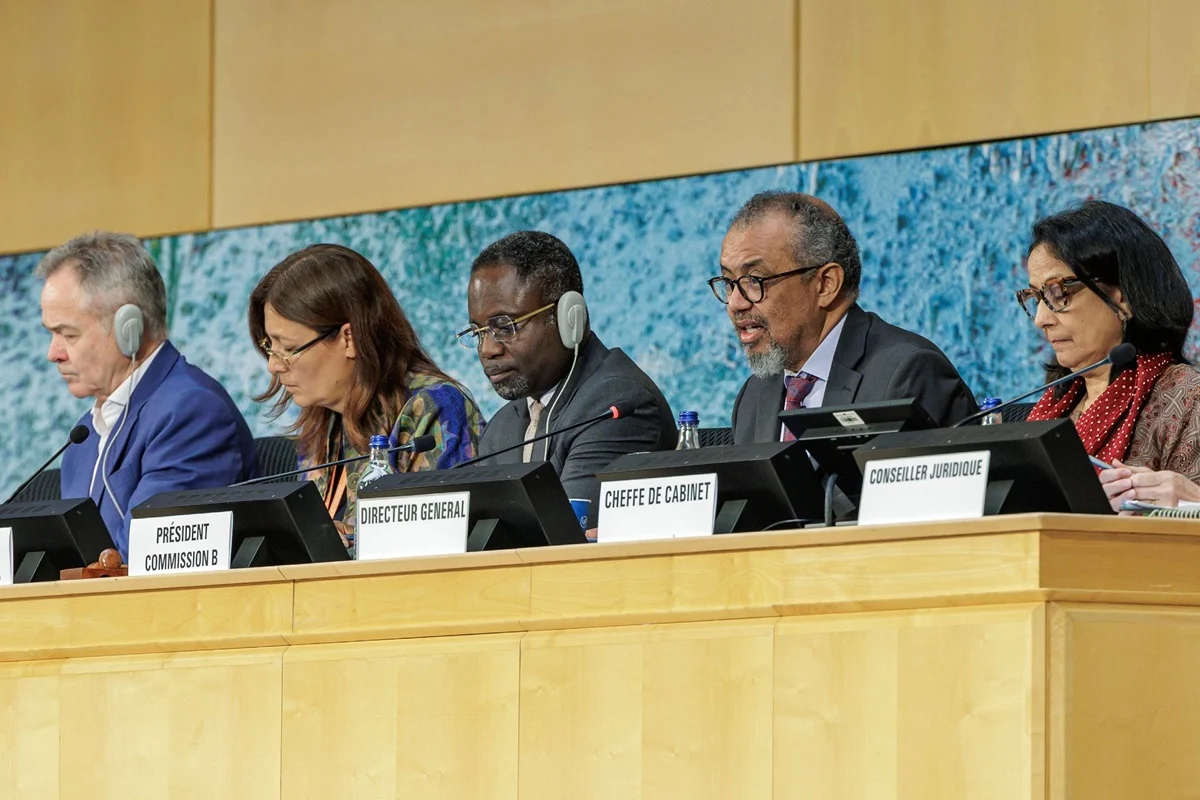
The World Health Assembly, the decision-making body of the World Health Organization (WHO), has concluded a pivotal session marked by the establishment of a Member State-led joint process to overhaul the global health architecture. This initiative, hosted by the WHO and involving a broad spectrum of global health partners, aims to modernize the international framework for health governance to better address the complexities of the 21st century. The decision reflects a collective recognition that while the existing architecture has facilitated significant advancements in disease control and normative standards over the past several decades, it is increasingly ill-equipped to handle the rapid evolution of science, shifting geopolitical landscapes, and the emergence of sophisticated digital technologies such as Artificial Intelligence (AI).
Reforming the Global Health Architecture: A Strategic Shift
The newly established reform process is tasked with developing comprehensive options and recommendations to ensure the global health architecture meets the specific and collective needs of diverse nations and communities. A primary objective is to maximize access, impact, and equity in health outcomes. The Assembly emphasized that this process must draw upon existing reform initiatives and align with the relevant elements of the UN80 Initiative, a broader effort to modernize the United Nations system ahead of its 80th anniversary.
Throughout the deliberations, Member States reaffirmed their strong support for the WHO’s central convening and normative role. However, the proposal adopted by the Assembly noted that the global health landscape has become increasingly fragmented. The proliferation of various health actors and initiatives has occasionally led to power imbalances, duplication of efforts, and a dilution of national health sovereignty. The Assembly highlighted four critical factors necessitating this reform:
- The expansion of national and regional health capacities and the demand for greater health sovereignty.
- The changing nature of global disease burdens, including the rise of non-communicable diseases (NCDs) and emerging infectious threats.
- The rapid acceleration of AI, digital health tools, and biotechnological science.
- Recent contractions in global health financing that threaten the sustainability of essential programs.
The Director-General of the WHO has been requested to submit a final report detailing the transformation strategy to the next World Health Assembly in 2025. This timeline underscores the urgency felt by the international community to create a more resilient and integrated global health system.
Addressing the Global Burden of Stroke: A Historic First
In a landmark move, delegates approved the first-ever World Health Assembly resolution dedicated specifically to stroke. Titled "Reducing the burden of stroke: strengthening prevention, acute care, rehabilitation and health-system readiness," the resolution was proposed by Egypt and co-sponsored by a diverse coalition including Chile, Georgia, Palestine, Paraguay, and Tunisia.
The adoption of this resolution comes at a time of escalating crisis. Statistical data presented to the Assembly revealed that the lifetime risk of stroke has increased by 50% over the last two decades. Currently, one in four adults is expected to experience a stroke in their lifetime. In 2021, stroke stood as the third leading cause of death and disability globally, with approximately 93.8 million cases recorded, including nearly 12 million new incidents.
The resolution provides a framework for national and global action, focusing on the entire continuum of care—from primary prevention through lifestyle changes and hypertension management to emergency acute care and long-term rehabilitation. Furthermore, it reinforces reporting accountability by integrating stroke targets into the WHO Global NCD Action Plan 2023–2030 and the Intersectoral Global Action Plan on Epilepsy and Other Neurological Disorders 2022–2031. Analysts suggest this resolution will trigger increased investment in specialized stroke units and telestroke services, particularly in low- and middle-income countries where the burden is highest.
The Digital Frontier: Precision Medicine and Teleradiology
The Assembly also took significant steps toward integrating advanced technology into public health. A landmark resolution on precision medicine was approved, setting a global path toward personalized healthcare. Precision medicine utilizes molecular, genomic, and clinical data to tailor medical interventions to individual patients. While the potential for improved cancer survival rates and quicker diagnosis of rare diseases is immense, the Assembly expressed concerns regarding the "genomic divide." Many developing nations currently lack the laboratory capacity and skilled workforce required to implement these technologies, leading to fears that precision medicine could exacerbate global health inequities.
To mitigate this risk, the WHO has been tasked with developing a global strategy and a framework for self-assessment of country readiness. This will ensure that as the science advances, the benefits are shared equitably across all regions.
In a related development, Member States endorsed a resolution to scale up access to diagnostic imaging through teleradiology. In many remote and underserved areas, a shortage of trained radiologists remains a primary barrier to healthcare. Teleradiology allows for the secure transmission and remote interpretation of medical images, such as X-rays and MRIs. The resolution encourages the integration of teleradiology into national digital health strategies while emphasizing the need for robust data protection, ethical standards, and clinical oversight.
Strengthening Medicine Safety and Emergency Care
Reflecting on the lessons learned from the COVID-19 pandemic, the Assembly approved a resolution to modernize global pharmacovigilance systems. Pharmacovigilance—the science of detecting, assessing, and preventing adverse effects of medicines and vaccines—was tested severely during the rapid rollout of pandemic-related countermeasures. The new resolution focuses on:
- Risk-based prioritization: Focusing resources on the most critical safety signals.
- Digital integration: Utilizing real-world data and AI to identify safety concerns faster than traditional reporting methods.
- Combating Misinformation: Strengthening public trust in science by providing transparent, evidence-based safety data.
Simultaneously, the Assembly approved the "Global Strategy for Integrated Emergency, Critical and Operative (ECO) Care 2026–2035." ECO services address conditions that account for an estimated 38 million deaths annually. This strategy provides a ten-year roadmap for countries to strengthen their health systems’ ability to provide timely and affordable emergency care. The WHO will develop an implementation action plan with specific targets by the end of 2026, focusing on addressing the chronic shortage of health workers and equipment in emergency settings.
Geopolitical Considerations: Argentina and the Middle East
The Assembly also addressed sensitive geopolitical issues impacting the WHO’s operations. One such matter involved Argentina’s notification of withdrawal from the Organization. Following deliberations in Committee B, a compromise text was reached by consensus. The Assembly took note of the communication from the United Nations Secretary-General as the depositary of the WHO Constitution and decided that while the WHO remains open to full cooperation with Argentina, no further action is required at this stage. This decision effectively keeps the door open for Argentina’s continued participation in global health initiatives despite previous notifications.
The humanitarian situation in the occupied Palestinian territory (oPt), including east Jerusalem, was another focal point. A report from the Director-General detailed a catastrophic collapse of healthcare services due to ongoing conflict and repeated attacks on medical facilities. Since October 2023, 1,947 attacks on healthcare have been recorded across the territory. The economic impact is equally staggering, with health sector losses estimated at US$ 6.78 billion.
In response, the Assembly agreed to continue reporting on these health conditions and approved a resolution addressing the public health impact of the escalation in the Middle East, specifically regarding Gulf Cooperation Council countries and Jordan. These measures signify the Assembly’s commitment to monitoring health outcomes in conflict zones and advocating for the protection of medical neutrality under International Humanitarian Law.
Implications for the Future of Global Health
The resolutions adopted during this session of the World Health Assembly represent a comprehensive attempt to recalibrate global health priorities. By focusing on structural reform, the Assembly is attempting to move away from a "siloed" approach toward a more integrated, Member State-led model. The emphasis on AI and precision medicine suggests that the WHO is preparing for a future where technology is central to healthcare delivery, while the focus on stroke and ECO care addresses the immediate, tangible causes of global mortality.
The true test of these resolutions will lie in their implementation. The transition from high-level policy to "on-the-ground" health improvements requires sustained funding and political will. As the WHO prepares its final report on the global health architecture for 2025, the international community remains cautiously optimistic that these reforms will create a more equitable and resilient framework for health for all. The focus on equity, particularly in the precision medicine and teleradiology resolutions, serves as a vital reminder that technological progress must not leave the world’s most vulnerable populations behind.
