
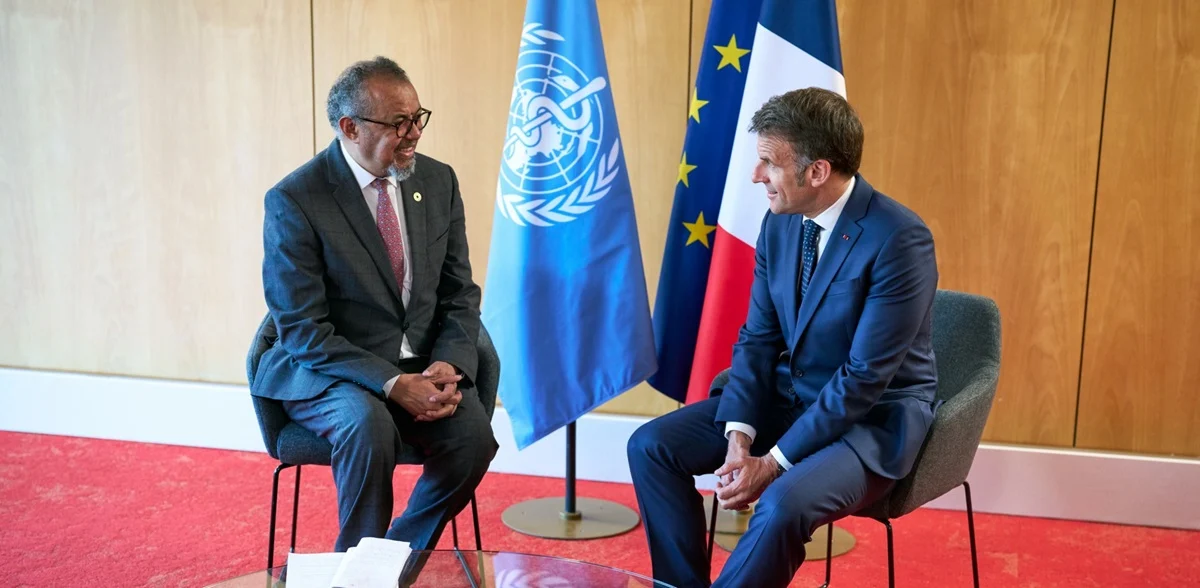
In a decisive move to fortify global defenses against emerging biological threats and environmental degradation, the World Health Organization (WHO) and international heads of state convened in France on World Health Day to inaugurate the One Health Summit. This high-level gathering serves as a pivotal turning point in global health policy, shifting the "One Health" concept from a theoretical framework into a series of coordinated, well-funded, and actionable global strategies. The summit, hosted by the French Republic, arrived under the theme "Together for health. Stand with science," emphasizing a commitment to evidence-based policymaking in an era of increasing climate instability and zoonotic risk.
The primary objective of the summit was to address the growing realization that human health cannot be viewed in isolation. As the world continues to recover from the socio-economic devastation of the COVID-19 pandemic, the One Health approach recognizes that the well-being of humans is inextricably linked to the health of animals and the integrity of the ecosystems they share. This holistic perspective is no longer a peripheral scientific interest but has become a central pillar of national security and global economic stability.
The Context of Global Vulnerability and Zoonotic Threats
The urgency underlying the France Summit is supported by a sobering array of epidemiological data. Scientific research indicates that approximately 60% of all known infectious diseases in humans are zoonotic, meaning they originate in animals. Furthermore, an estimated 75% of new or emerging infectious diseases—including Ebola, HIV/AIDS, and various strains of influenza—have jumped the species barrier from animals to humans. The drivers of these "spillover" events are largely anthropogenic, rooted in climate change, deforestation, intensive agriculture, and the illegal wildlife trade.
The economic and human costs of failing to address these links were laid bare during the 2020-2021 period. The COVID-19 pandemic resulted in an estimated 15 million excess deaths globally and triggered a contraction in the global economy that ran into the trillions of dollars. Beyond viral pandemics, the summit addressed "silent" crises: antimicrobial resistance (AMR), which is exacerbated by the overuse of antibiotics in livestock, and the contamination of water systems by industrial and agricultural runoff. By integrating the expertise of physicians, veterinarians, environmental scientists, and ecologists, the One Health Summit aims to identify these risks at their source before they escalate into global emergencies.
A Chronology of the One Health Movement
The One Health Summit in France represents the culmination of decades of evolving scientific thought. While the concept of "One Medicine" was popularized in the 19th century by Rudolf Virchow, it was not until the early 2000s that the modern "One Health" terminology gained traction within the WHO and the Food and Agriculture Organization (FAO).
The timeline of this evolution has accelerated significantly in recent years:
- 2004: The Manhattan Principles were established, outlining the interdependency of human and animal health.
- 2010: The "Tripartite" alliance (WHO, FAO, and the World Organisation for Animal Health) was formalized to address health risks at the human-animal-ecosystem interface.
- 2021: The United Nations Environment Programme (UNEP) joined the alliance, creating the "Quadripartite," ensuring that environmental health was no longer the missing piece of the puzzle.
- 2022: The One Health Joint Plan of Action (2022–2026) was launched, providing a five-year roadmap for integrated health systems.
- 2024: The France Summit marks the transition into the "implementation phase," where theoretical plans are converted into a Global Network of One Health Institutions and specific disease-elimination targets.
Four Strategic Actions for a Resilient Future
The summit was characterized by the announcement of four major initiatives led by the WHO and its Quadripartite partners, designed to create a more responsive and unified global health architecture.
1. The Global Network of One Health Institutions
The WHO announced the formation of a Global Network of One Health Institutions, a centralizing body designed to bridge the gap between international policy and local implementation. This network will serve as a repository for multidisciplinary expertise, allowing countries to access specialized knowledge in veterinary science, ecology, and public health simultaneously. By utilizing the WHO Academy, the network will focus on training a new generation of health workers capable of working across traditional silos. This initiative aims to streamline the "translation" of complex scientific guidance into practical, on-the-ground tools for rural and urban health systems alike.
2. Expansion of the One Health High-Level Expert Panel (OHHLEP)
To ensure that global action remains rooted in the latest scientific findings, the WHO confirmed the extension and expansion of the One Health High-Level Expert Panel. Originally established to provide advice on zoonotic risks, the panel’s mandate has been extended through 2027, with a secondary phase planned through 2029. The OHHLEP will now take a more active role in shaping the global research agenda and advocating for evidence-based responses to environmental degradation and its impact on human pathology.
3. The 2030 Rabies Elimination Initiative
In a specific application of the One Health model, the WHO, the World Organisation for Animal Health (WOAH), and the Institut Pasteur launched a renewed push to eliminate dog-mediated human rabies deaths by 2030. Despite being 100% preventable, rabies continues to claim nearly 60,000 lives annually, predominantly among children in underserved communities. This initiative treats rabies as a "litmus test" for One Health; by improving dog vaccination programs and community surveillance, health systems will simultaneously build the infrastructure needed to monitor and respond to other, more complex zoonotic threats.
4. Unified Strategy for Avian Influenza
The threat of H5N1 and other avian influenza strains remains a top priority for global security. The summit introduced a Strategic Framework for Collaboration on avian influenza, which shifts the focus from fragmented poultry management to a unified strategy. This framework integrates surveillance of wild birds, domestic poultry, and human populations to provide a comprehensive risk assessment. The goal is to protect not only public health but also global food security and the livelihoods of millions of small-scale farmers who are disproportionately affected by outbreaks.
Official Responses and Diplomatic Leadership
The summit’s success was underpinned by strong diplomatic support, particularly from the French government. President Emmanuel Macron emphasized that the One Health approach is an essential evolution of the modern state’s duty to protect its citizens. "One Health is not just about protecting health; it is about recognizing that we live as one system," Macron stated. He reaffirmed France’s commitment to moving from "ambition to implementation," stressing that international cooperation is the only viable defense against borderless biological threats.
Dr. Tedros Adhanom Ghebreyesus, Director-General of the WHO, echoed these sentiments, noting that the "inextricable interweaving" of human, animal, and environmental health means that "we cannot protect one without protecting all three." Under Dr. Tedros’s leadership, the WHO has now assumed the Chairmanship of the Quadripartite collaboration, a move that signals a more assertive role for the organization in coordinating global environmental and agricultural health policies.
Other global leaders, including health ministers from Germany, Indonesia, and South Africa, participated in the concurrent Global Forum of WHO Collaborating Centres. Their presence highlighted the multilateral nature of the initiative, ensuring that the One Health framework is not merely a Western priority but a global mandate that includes the perspectives of the Global South, where the majority of biodiversity—and therefore the majority of zoonotic risk—resides.
Broader Implications and Socio-Economic Analysis
The shift toward One Health has profound implications for global governance and economic policy. Analysts suggest that the "prevention at source" model promoted at the summit is significantly more cost-effective than the "reactive" model seen during the COVID-19 pandemic. By investing in environmental surveillance and animal vaccination today, governments can avoid the multi-trillion-dollar losses associated with future lockdowns and healthcare collapses.
Furthermore, the summit’s outcomes are expected to influence the upcoming G7 discussions and the ongoing negotiations for a global Pandemic Treaty. The integration of the United Nations Environment Programme (UNEP) into the core of health planning suggests that future international law may include stricter regulations on land use and biodiversity protection as a matter of public health.
However, challenges remain. Implementing One Health requires unprecedented cooperation between ministries that have historically competed for funding, such as Ministries of Agriculture, Environment, and Health. The success of the "Global Network of One Health Institutions" will depend on whether national governments are willing to break down these domestic silos and share data transparently.
Conclusion: A New Era of Multilateral Cooperation
The One Health Summit in France has set a high bar for international health policy. By combining scientific rigor with high-level political will, the WHO and its partners have laid the groundwork for a more resilient global system. The focus now turns to the "Global Forum of WHO Collaborating Centres," where over 800 institutions from 80 countries will begin the technical work of data sharing and capacity building.
As World Health Day concludes, the message from France is clear: the era of fragmented health policy is over. The path forward requires a unified front that respects the biological reality of our planet. In the words of the summit’s theme, the world must "stand with science" to ensure that the next global health crisis is stopped before it ever begins. Through the One Health approach, the international community is finally acknowledging that the safety of a child in a metropolitan city is fundamentally linked to the health of a forest and the well-being of the animals within it.
