
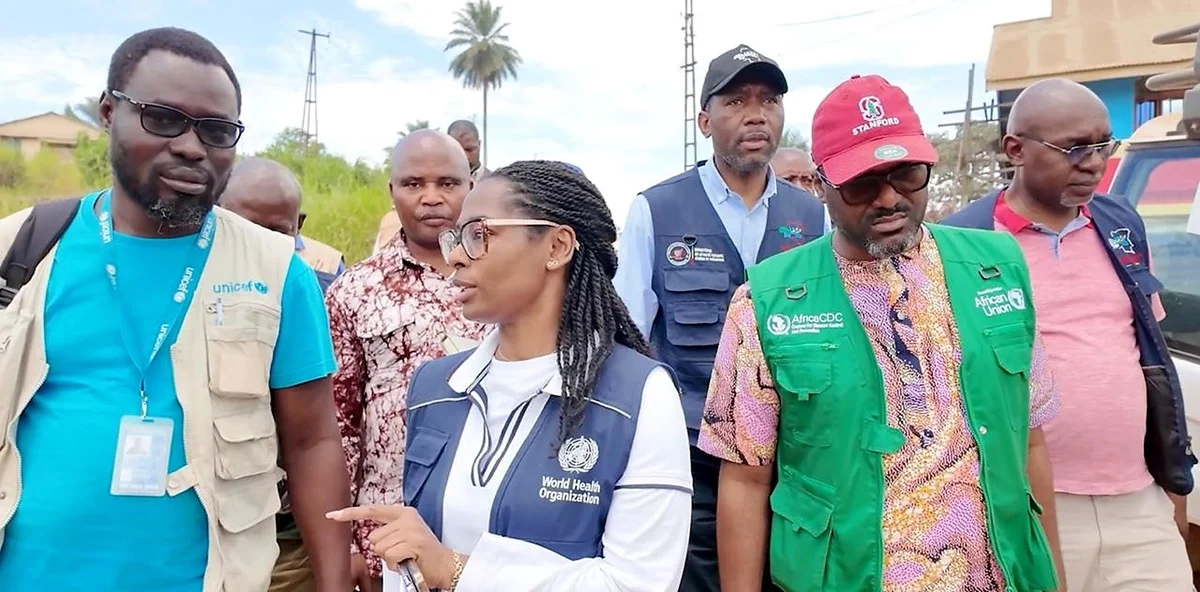
The Africa Centres for Disease Control and Prevention (Africa CDC) and the World Health Organization (WHO) have formally launched a comprehensive continental preparedness and response plan to address the escalating Ebola outbreak caused by the Bundibugyo virus species. This strategic initiative, which seeks to mobilize US$ 518 million in emergency funding, represents a unified front against a pathogen that has historically posed significant challenges to public health infrastructure in East and Central Africa. Spanning a critical six-month window from June to November 2026, the plan is designed to synchronize the efforts of national governments, international health partners, and local communities to prevent a regional catastrophe.
The "One Response" approach at the heart of this strategy aims to eliminate the fragmented nature of previous emergency responses. By consolidating resources under a single budgetary and operational framework, the Africa CDC and WHO intend to streamline emergency coordination, bolster disease surveillance, and accelerate laboratory testing capabilities across the continent. The plan arrives at a pivotal moment, as the Democratic Republic of the Congo (DRC) and Uganda continue to battle localized clusters of the virus, necessitating a more robust, cross-border intervention to prevent the pathogen from breaching international boundaries.
Scientific Context and the Bundibugyo Challenge
The Bundibugyo Ebola virus (BDBV) is one of six species within the genus Ebolavirus. First identified in 2007 during an outbreak in the Bundibugyo District of Western Uganda, the virus is known for its high case-fatality rate, which has historically ranged between 25% and 50%. While this is statistically lower than the Zaire Ebola virus, which can see mortality rates as high as 90%, the Bundibugyo species presents a unique set of clinical and logistical hurdles.
One of the most pressing concerns addressed in the new joint plan is the current lack of licensed vaccines or therapeutics specifically approved for the Bundibugyo species. While the global health community successfully deployed the Ervebo vaccine during Zaire Ebola outbreaks, those countermeasures do not provide cross-protection against the Bundibugyo strain. Consequently, the response must rely heavily on traditional public health interventions: early detection, rigorous contact tracing, isolation of cases, and high-quality supportive care. This reality underscores why the WHO and Africa CDC are prioritizing health system resilience and community-led interventions over pharmaceutical solutions in the immediate term.
Strategic Framework: The "One Response" Architecture
The joint plan is structured around several core pillars designed to create a "shield" of preparedness across ten priority countries identified as being at the highest risk of transmission. These pillars include:
- Emergency Coordination and Logistics: Establishing centralized command centers to manage the flow of medical supplies, personnel, and data. This includes the deployment of rapid response teams to remote areas where the virus often first emerges.
- Surveillance and Laboratory Strengthening: Enhancing the ability of local clinics to identify potential cases and ensuring that samples can be transported to and processed by high-security laboratories within 24 to 48 hours.
- Infection Prevention and Control (IPC): Providing essential personal protective equipment (PPE) and training to healthcare workers who are frequently the most vulnerable during the early stages of an outbreak.
- Community Engagement and Risk Communication: Working with traditional leaders, religious figures, and local influencers to dispel myths and build trust. Historical data from the 2014-2016 West Africa outbreak proved that without community "buy-in," even the most advanced medical interventions can fail.
- Clinical Care and Research: Supporting the delivery of standardized supportive care to reduce mortality while simultaneously facilitating ethical research into potential new treatments and vaccines for the Bundibugyo species.
Chronology of the 2026 Response
The development of this continental plan follows a series of escalating events that began in early 2026. In the first quarter of the year, health authorities in the DRC reported a surge in unexplained febrile illnesses in provinces neighboring Uganda. By April 2026, genomic sequencing confirmed the presence of the Bundibugyo virus.
Recognizing the potential for a repeat of the devastating 2018-2020 Kivu Ebola outbreak, the governments of the DRC and Uganda launched independent national response plans in May. However, the porous nature of the borders in the Great Lakes region quickly made it apparent that national efforts alone would be insufficient. In late May 2026, technical experts from the Africa CDC and WHO convened in Addis Ababa to merge these national strategies into the continental framework released today. The June launch marks the transition from reactive containment to proactive, region-wide suppression.
Financial Requirements and Resource Allocation
The US$ 518 million price tag reflects the high cost of maintaining health security in regions with limited infrastructure. According to the joint report, a significant portion of these funds will be allocated to "priority countries"—nations that share borders with the DRC and Uganda or have high volumes of trade and travel with the affected zones. These include South Sudan, Rwanda, Burundi, and Tanzania, among others.
The funding is not merely for Ebola-specific interventions but is also intended to safeguard essential health services. Past outbreaks have shown that when health systems pivot entirely toward Ebola, deaths from malaria, maternal complications, and vaccine-preventable diseases like measles often skyrocket. By investing in a resilient response, the Africa CDC and WHO aim to ensure that the fight against Ebola does not come at the cost of the broader public health landscape.
Leadership and Official Perspectives
The launch of the plan was accompanied by strong calls for international solidarity. Dr. Tedros Adhanom Ghebreyesus, WHO Director-General, emphasized that the success of the mission hinges on political will and financial consistency. He noted that the plan’s focus on community trust is not a secondary concern but the primary engine of the response. "Containing Ebola depends on political commitment, sustained financing, and the trust and engagement of communities," Dr. Tedros stated, warning that without participation, contact tracing efforts would inevitably falter.
Echoing this sentiment, Dr. Jean Kaseya, Director-General of Africa CDC, highlighted the need for speed. "Ebola moves fast. Africa must move faster," Kaseya remarked. He positioned the joint plan as a clear roadmap for the continent to act with unity, transforming the African Union’s "New Public Health Order" from a theoretical framework into a practical, life-saving reality.
Broader Implications for African Health Security
The implementation of this plan carries implications far beyond the current Ebola outbreak. It serves as a litmus test for Africa’s ability to manage major health crises independently while collaborating with global partners. The plan specifically mentions the need to maintain focus on other concurrent emergencies, such as the ongoing mpox epidemic, cholera outbreaks in Southern Africa, and measles clusters in the Sahel.
By integrating the Ebola response with these existing challenges, the Africa CDC is attempting to build a "multi-pathogen" defense system. This approach acknowledges that the era of dealing with one outbreak at a time is over; African health systems must now be capable of managing multiple, overlapping biological threats simultaneously.
Furthermore, the emphasis on cross-border coordination marks a significant shift in regional diplomacy. Historically, border closures have been a common, yet often ineffective, response to disease. The new plan advocates for "smart" border measures—enhanced screening and information sharing—rather than total shutdowns, which can cripple local economies and drive the movement of people underground, making the virus harder to track.
Analysis of Potential Challenges
Despite the robust nature of the plan, several challenges remain. The first is the volatility of the security situation in eastern DRC. Continued conflict between various armed groups and government forces makes it extremely difficult for health workers to reach isolated communities. In previous outbreaks, "red zones" (areas with active conflict) became reservoirs for the virus, allowing it to persist long after it had been cleared from more stable regions.
The second challenge is "donor fatigue." Following the COVID-19 pandemic and the global economic downturn, securing US$ 518 million in a short timeframe is an ambitious goal. The Africa CDC and WHO will need to demonstrate immediate results to maintain the flow of international capital.
Finally, the lack of a vaccine for Bundibugyo remains a significant tactical disadvantage. While the plan focuses on health system resilience, the absence of a "silver bullet" pharmaceutical intervention means the margin for error in contact tracing and isolation is razor-thin. A single missed contact could lead to a new chain of transmission in a densely populated urban center, such as Goma or Kampala.
Conclusion: A Path Toward Resilience
The Africa CDC and WHO joint continental preparedness and response plan is more than an emergency budget; it is a blueprint for a more self-reliant and coordinated African health architecture. By drawing on the painful lessons of the past—from the 2014 West Africa tragedy to the 2018 Kivu crisis—the plan seeks to replace panic with preparation and isolation with integration.
As the response operations accelerate in the DRC and surrounding nations, the global health community will be watching closely. The success of this six-month initiative will likely determine the template for how future outbreaks of high-consequence pathogens are managed, not just in Africa, but across the globe. For now, the focus remains on the "One Response": one plan, one budget, and one team working to protect the lives and livelihoods of millions across the African continent.
