
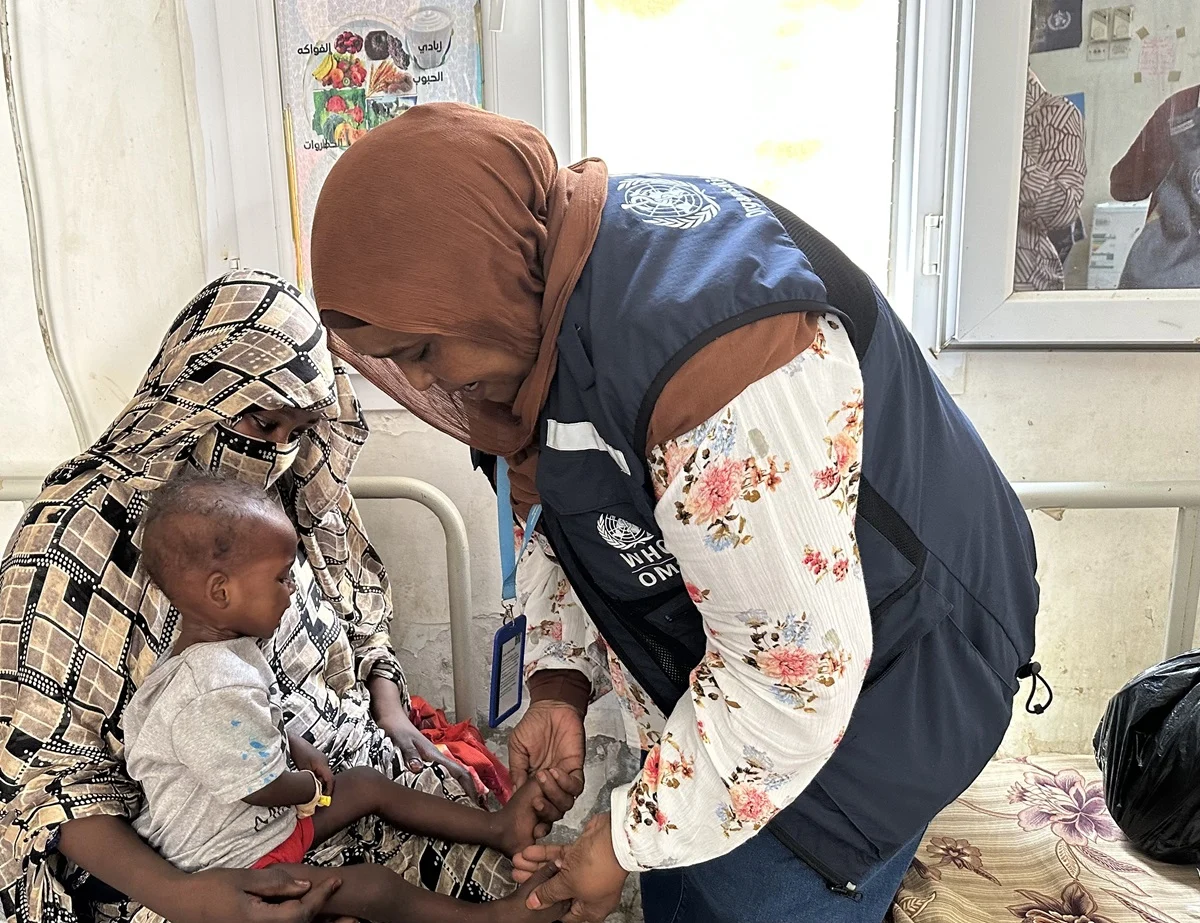
Three years of unrelenting civil war have transformed Sudan into the site of the world’s largest and most complex humanitarian emergency, leaving 34 million people in desperate need of life-saving assistance. According to the latest assessments from the World Health Organization (WHO) and international monitoring bodies, the conflict has systematically dismantled the nation’s social and physical infrastructure, leaving 21 million citizens without access to basic health services. As the war enters its fourth year in April 2026, the intersection of widespread violence, mass displacement, and a collapsing economy has created a perfect storm of disease and malnutrition, pushing the medical system to the brink of total annihilation. While some regions have seen marginal improvements in stability, the health crisis continues to intensify in active combat zones, where the targeted destruction of hospitals and the killing of medical personnel have become grim hallmarks of the struggle for power between rival factions.
The scale of the suffering is underscored by the rapid erosion of human rights and the denial of fundamental necessities. Dr. Tedros Adhanom Ghebreyesus, Director-General of the WHO, recently emphasized that the war is not merely a political or military struggle but a direct assault on the survival of the Sudanese people. He noted that the conflict is denying millions their basic rights to health, water, food, and safety. The health system, already fragile before the outbreak of hostilities, has been crippled to the point where essential care is a luxury few can afford or access. Dr. Tedros reiterated that while doctors and health workers are performing heroically under fire, their efforts are hamstrung by a lack of safe environments and a critical shortage of medicines. His conclusion remains stark: while medical interventions are necessary, the only lasting cure for the nation’s suffering is an immediate and sustained peace.
A Chronology of Conflict and Systemic Decay
The current catastrophe trace its origins to April 15, 2023, when tensions between the Sudanese Armed Forces (SAF) and the Rapid Support Forces (RSF) erupted into full-scale urban warfare in Khartoum. What was initially characterized as a power struggle between two military leaders quickly expanded into a nationwide conflagration, drawing in various ethnic militias and reopening old wounds in regions like Darfur and Kordofan. By the end of 2023, the conflict had effectively bifurcated the country, with supply lines severed and the capital’s once-robust medical sector reduced to rubble.
Throughout 2024, the war transitioned from a battle for territory to a war of attrition, with significant impacts on the country’s agricultural heartlands, such as Al Jazirah state. The disruption of planting seasons and the looting of grain silos led to the first major warnings of a looming famine. By early 2025, the displacement crisis had reached record levels, with millions of Sudanese fleeing into neighboring Chad, South Sudan, and Egypt, while even more remained internally displaced in overcrowded camps with no access to sanitation or clean water.
As the conflict reached the three-year mark in April 2026, the international community’s ability to intervene has been consistently hampered by bureaucratic hurdles, security risks, and a significant shortfall in humanitarian funding. The Integrated Food Security Phase Classification (IPC) issued a dire alert in February 2026, estimating that over 4 million people are now suffering from acute malnutrition. This nutritional deficit has left the population, particularly children and the elderly, highly vulnerable to a host of secondary medical complications and infectious diseases that would otherwise be treatable in a functional society.
The Systematic Dismantling of the Healthcare Infrastructure
The physical toll on Sudan’s healthcare system is unprecedented in modern conflict. Across the country’s 18 states, approximately 37% of health facilities are entirely non-functional. In regions directly impacted by the fighting, such as Greater Darfur and Khartoum, this figure is significantly higher, with some districts reporting a 100% loss of specialized medical services. The WHO has verified 217 distinct attacks on healthcare facilities, ambulances, and personnel since the start of the conflict. These attacks have resulted in at least 2,052 deaths and 810 injuries among patients and staff, creating a climate of fear that deters the sick from seeking care.
A recent and particularly devastating example of this trend was the attack on the El Daein Teaching Hospital in East Darfur. As a critical referral center for hundreds of thousands of residents, its destruction has left a massive vacuum in the regional health network. The assault resulted in 64 deaths, including children and medical professionals, and rendered the facility completely non-functional. Such incidents are not isolated; they represent a broader pattern where hospitals, which should be protected under international humanitarian law, are instead treated as strategic targets or collateral damage.
In the Kordofan regions, similar patterns of destruction have been observed. The movement of humanitarian supplies is frequently restricted by shifting front lines and the presence of armed groups who utilize aid as a weapon of war. When hospitals close or are destroyed, patients are forced to undertake perilous journeys across active battlefields to reach the nearest functioning facility, which is often hundreds of miles away. For those requiring chronic care—such as dialysis, insulin, or maternal health services—these disruptions are often a death sentence.
Epidemiological Crisis and the Resurgence of Preventable Disease
The vacuum left by the collapsing health system has allowed infectious diseases to proliferate at an alarming rate. Sudan is currently grappling with multiple concurrent outbreaks, including malaria, dengue fever, measles, and hepatitis E. The lack of clean water and sanitation has also fueled the spread of meningitis and diphtheria, particularly in the states of Al Jazirah, Gedaref, and the White Nile.
The WHO and the Sudanese Federal Ministry of Health have worked tirelessly to contain these threats, but the challenges are immense. A notable success was the declaration of the end of a protracted cholera outbreak in March 2026. This response lasted over a year and involved a massive oral vaccination campaign that reached 24.5 million people. However, the risk of recurrence remains high as long as the conflict continues to displace populations into unsanitary conditions.
Furthermore, Sudan has faced a resurgence of polio (cVDPV2), a significant setback for regional eradication efforts. The disruption of routine immunization programs during the first two years of the war created large "immunity gaps" in the population. In response, the WHO has facilitated vaccination campaigns reaching more than 46 million children and adults for various diseases, including a groundbreaking effort to introduce malaria vaccines into the routine immunization program—making Sudan the first country in the region to do so despite the ongoing violence.
Malnutrition and the Vulnerability of the Next Generation
The IPC Alert from February 2026 paints a harrowing picture of the nutritional status of the Sudanese people. With over 4 million people acutely malnourished, the country is facing a generational crisis. Malnutrition does not just cause hunger; it suppresses the immune system, making common ailments like diarrhea or respiratory infections fatal.
The WHO has focused heavily on the treatment of complicated severe acute malnutrition (SAM), providing care for over 118,000 children who were on the brink of death. These children require specialized therapeutic milk and round-the-clock medical supervision, resources that are increasingly scarce. The long-term implications of this nutritional crisis include stunted growth, cognitive impairment, and a permanent increase in the population’s vulnerability to chronic illness, which will burden the country for decades to come.
The International Response and the Path Forward
Despite the immense danger, the WHO and its partners have maintained a continuous presence on the ground. Since the outbreak of the war in April 2023, the organization has delivered over 3,300 metric tons of medicines and medical supplies. These shipments include essential kits for cholera, malaria, and trauma care, as well as equipment to restore national and state reference laboratories. WHO-supported services have provided essential care to more than 4.1 million people through a network of primary healthcare centers, mobile clinics, and surviving hospitals.
Dr. Hanan Balkhy, WHO Regional Director for the Eastern Mediterranean, highlighted the gravity of the situation, noting that three years of conflict have turned Sudan into the world’s most pressing health emergency. She emphasized that while the WHO remains committed to the people of Sudan, the deepening crisis requires more than just emergency aid; it requires a global commitment to long-term solutions and the restoration of the country’s sovereign health capabilities.
The WHO Representative to Sudan, Dr. Shible Sahbani, noted that as access to certain areas becomes available, the focus is shifting toward early recovery and the rehabilitation of the health system. This involves not only rebuilding physical structures but also strengthening the health workforce, many of whom have fled the country or been displaced. Supporting the supply chain for essential medicines remains a top priority, as does the coordination of the various international and local NGOs working in the field.
Conclusion: The Urgent Need for Peace and Funding
The humanitarian community is calling for three immediate actions to prevent a total collapse: unrestricted and safe access to all areas of Sudan, the absolute protection of healthcare facilities and workers, and sustained, flexible funding for both immediate relief and long-term recovery. The generosity of international donors has been vital, but the requirements of the 2026 humanitarian response plan remain significantly underfunded.
The situation in Sudan is a stark reminder that health cannot be separated from peace. Without a cessation of hostilities, every medical intervention is merely a temporary measure against an overwhelming tide of suffering. As the war enters its fourth year, the resilience of the Sudanese people and the courage of their medical professionals continue to be tested. The international community faces a moral and logistical challenge to ensure that Sudan does not become a forgotten crisis, and that the "best medicine"—peace—is finally delivered to a nation in agony. The cost of inaction is not just measured in statistics or metric tons of aid, but in the millions of lives that hang in the balance in the world’s largest humanitarian disaster.
