
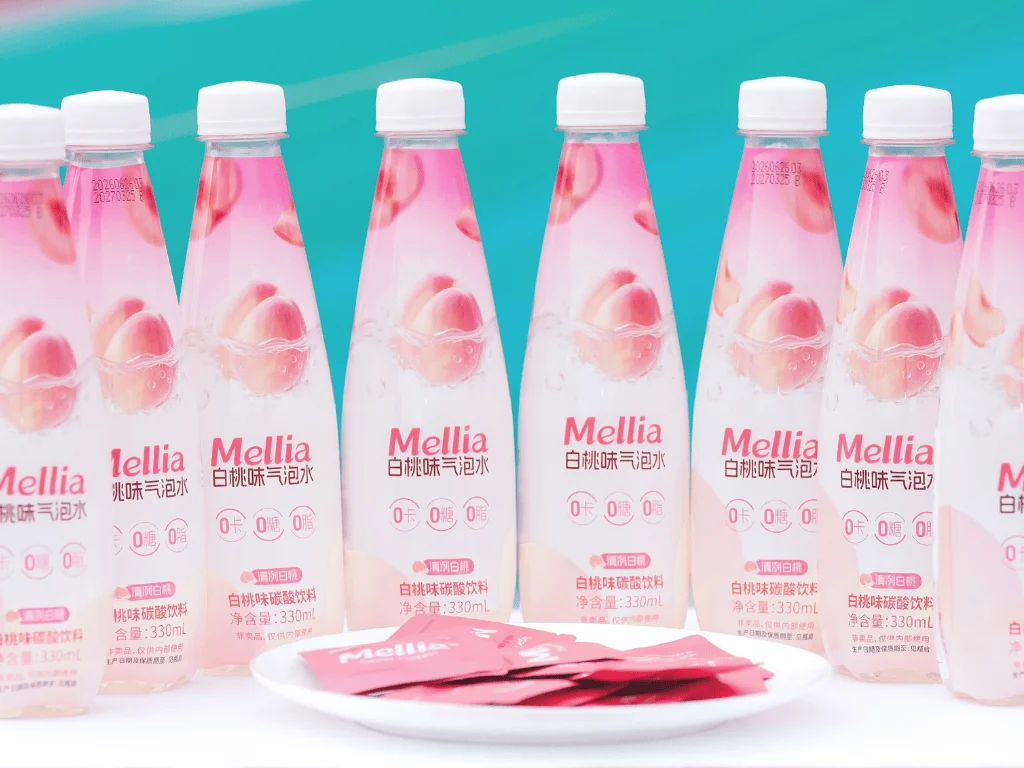
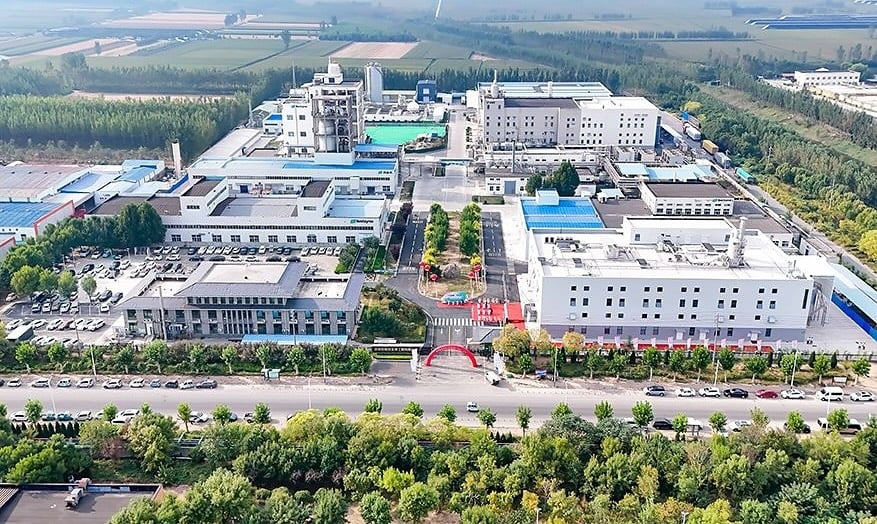
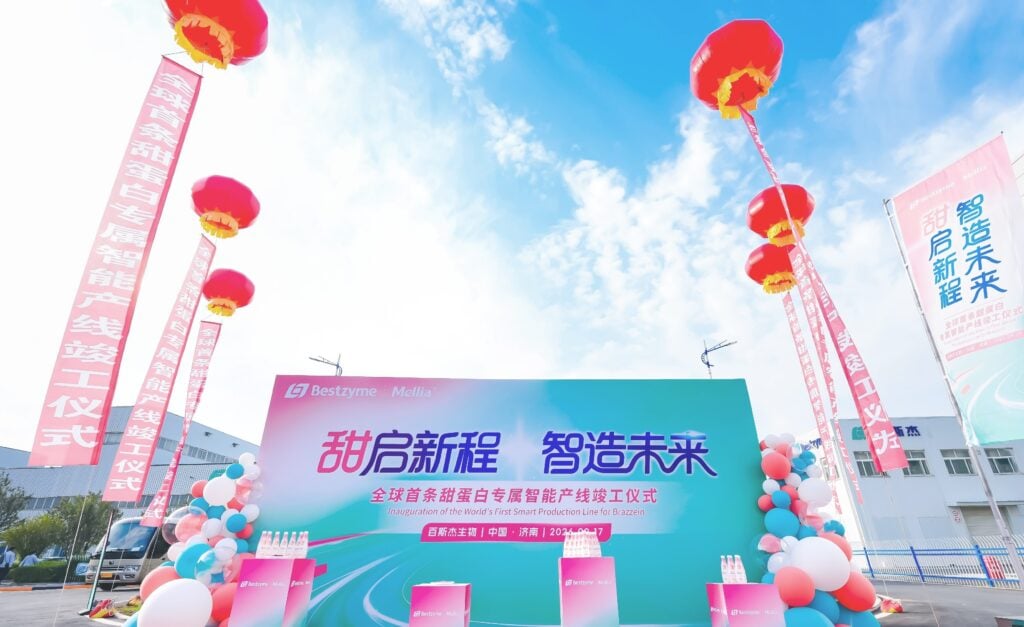
The global synthetic biology and sugar-reduction landscape has reached a significant commercial milestone following the completion of a dedicated manufacturing facility in Jinan, China. Bestzyme, a specialized synthetic biology subsidiary of GenScript Biotech, has officially commissioned what it asserts is the world’s first fully automated, intelligent production line specifically engineered for the large-scale manufacturing of sweet proteins. Unveiled at a 5,000-square-meter facility, the infrastructure is designed to commercialize brazzein, a rare, zero-calorie sweet protein originally sourced from the West African Oubli fruit.
This technological leap addresses a long-standing bottleneck in the alternative sweetener industry: the inability to transition high-potency sweet proteins from laboratory bench scales to cost-effective, high-yield commercial volumes. With an initial design capacity of 100 tonnes of brazzein annually—marketed under the brand name Mellia—the facility intends to bridge the gap between burgeoning consumer demand for health-conscious food products and the supply chain constraints that have historically limited novel proteins.
The Chronology of Synthetic Sweet Proteins and Scaling Hurdles
The scientific quest to harness sweet proteins as viable commercial sugar alternatives spans several decades, though the practical implementation of precision fermentation has only recently matured. Natural brazzein is found in the pulp of the Oubli fruit (Pentadiplandra brazzeana), native to remote regions of West Africa. Traditional harvesting is ecologically and economically unviable due to the plant’s geographic limitations, low natural extraction yields, and the laborious extraction process required to isolate the active compound.
To bypass these agricultural limitations, biotechnology firms increasingly rely on precision fermentation. This methodology involves introducing specific DNA sequences into host microorganisms—such as yeasts or bacteria—effectively instructing them to synthesize target proteins during standard fermentation cycles. Despite its theoretical promise, early attempts at commercializing precision-fermented sweet proteins frequently stalled. Low host expression levels, intricate separation processes, high purification costs, and batch-to-batch instability traditionally restricted production to pilot-scale laboratories.

Bestzyme’s recent infrastructural rollout represents the culmination of years of targeted process optimization. By applying industrial enzyme manufacturing principles and biocatalytic engineering to its synthetic biology platforms, the company reports overcoming key scaling barriers. The Jinan facility incorporates end-to-end automated capabilities, seamlessly integrating high-yield strain development, high-density precision fermentation, high-purity crystallization separation, and freeze-drying within cleanroom environments that adhere to strict international manufacturing standards.
Data, Market Projections, and Strategic Capacity Targets
The newly established production line is slated to generate 100 tonnes of Mellia brazzein per year once operating at full capacity. According to Bestzyme’s technical metrics, this output possesses a sweetening equivalence matching approximately 300,000 tonnes of traditional sucrose. Brazzein itself is recognized for an exceptionally high sweetness profile, measuring between 500 and 2,000 times sweeter than standard table sugar, while exerting virtually no glycemic impact or metabolic burden on consumers.
Looking ahead, Bestzyme has outlined an aggressive expansion roadmap. The firm plans to double its current manufacturing capacity within the next two years. This projected scaling will rely on continuous strain iteration, genetic optimization, and further refinement of downstream purification protocols, ensuring a stable, uninterrupted supply chain for global food and beverage manufacturers.
The facility’s unveiling coincides with shifting consumer demographics and public health crises linked to excessive sugar consumption. In markets like the United States, where adult obesity affects approximately 42% of the population and type 2 diabetes impacts over 11% of citizens, public health initiatives increasingly advocate for severe dietary sugar reduction. Recent consumer data highlights that sugar reduction remains a primary dietary objective, with nearly half of surveyed consumers actively seeking to limit intake, and younger demographics—including Gen Z and millennials—displaying high receptivity toward novel, precision-fermented sweeteners.
Industry Perspectives and Executive Insights
The commercial viability of sweet proteins extends beyond mere bulk powder supply. Industry analysts emphasize that sweet proteins function as complex macromolecules with distinct physicochemical properties. Their sweetness release curves, temporal profiles, and flavor interactions vary significantly depending on the food matrix—ranging from carbonated beverages and dairy alternatives to baked goods and confectionery. Consequently, companies offering integrated formulation and application support hold distinct competitive advantages.
Aixi Bai, general manager of Bestzyme, addressed the technical nuances of sugar reduction during the facility’s inauguration. “The true challenge of sugar reduction is never simply removing sugar, but perfectly replicating the pure, full-bodied, and natural taste of sucrose while eliminating calories and metabolic burden,” Bai stated. He characterized the Mellia sweet protein as a critical missing element capable of satisfying consumer demand for authentic flavor profiles without health compromises.
Echoing these sentiments, Hua Mao, senior partner and managing director of Frost & Sullivan Greater China, noted that the complexity of modern product formulation requires end-to-end expertise. Because sweet proteins behave differently in varied liquid and solid matrices, suppliers must provide comprehensive application R&D and sensory evaluation platforms to shorten product development cycles for client brands.
Global Regulatory Landscape and Competitive Environment
Bestzyme’s commercialization strategy unfolds amid a rapidly evolving global regulatory framework for alternative sweeteners. In 20th-century markets, novel proteins faced arduous approval pathways, but recent years have seen progressive clearance of precision-fermented sweet proteins across multiple jurisdictions.
Bestzyme achieved a significant regulatory milestone in 2025 by securing a “no questions” letter from the United States Food and Drug Administration (FDA) for Mellia brazzein, authorizing its commercial sale to American food and beverage manufacturers. The company has already established a commercial partnership with an established U.S. sparkling water brand to distribute zero-sugar beverages formulated with the ingredient. Simultaneously, Bestzyme has submitted regulatory filings in other regions, including an application for a new food additive variety currently undergoing review by China’s National Health Commission.
The competitive arena for precision-fermented sweeteners is increasingly crowded with international innovators. Competitor Oobli has secured regulatory clearances for multiple sweet proteins in the United States. MycoTechnology has gained approval for a sweet protein derived from Hungarian honey truffles. Amai Proteins has successfully navigated regulatory hurdles for monellin—a sweet protein sourced from serendipity berries—achieving approvals in the US, Singapore, and Israel. Additional sector participants, including Perfect Day, Sweegen, and Microfarmtory, continue to advance alternative sweeteners, while infrastructural investments are expanding globally, exemplified by Pentasweet’s development of a $76 million brazzein production facility in Lithuania.
Implications for the Global Food and Beverage Sector
The operational launch of Bestzyme’s Jinan plant highlights broader structural shifts in global manufacturing. Analysts note that China is increasingly leveraging its sophisticated pharmaceutical and biomanufacturing infrastructure to establish long-term leadership in the future food sector. By successfully translating complex biological synthesis into reliable, industrial-scale production, Chinese biotechnology firms are positioning themselves as central nodes in the international supply chain for sustainable ingredients.
For food and beverage conglomerates, the availability of industrial-scale sweet proteins offers a viable pathway to reformulate popular consumer products. As regulatory bodies continue to review and approve precision-fermented ingredients worldwide, the commercial pressure on traditional cane and beet sugar producers is expected to intensify. By offering a clean label, zero-calorie profile that mimics the physical and sensory characteristics of sucrose, ingredients like Mellia brazzein may permanently alter the formulation strategies of the world’s largest consumer goods companies.
