
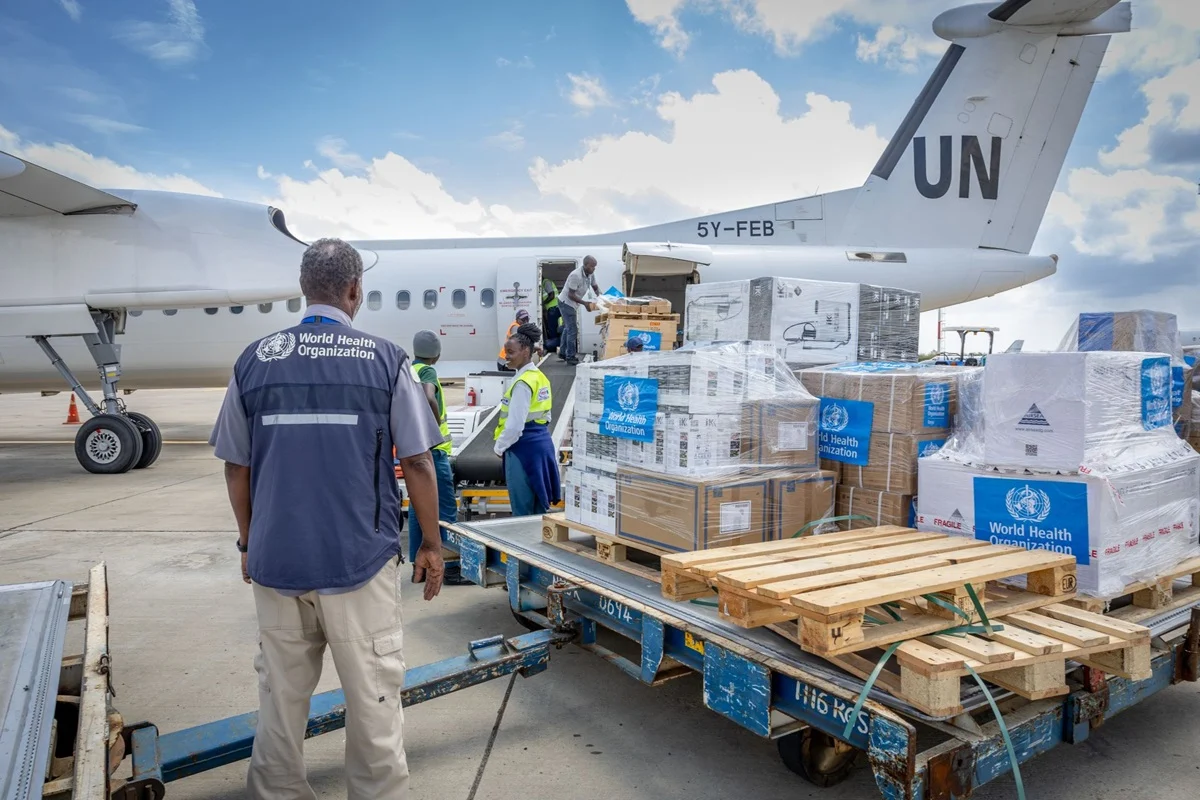
The Director-General of the World Health Organization (WHO) officially determined on May 17, 2026, that the ongoing epidemic of Ebola disease caused by the Bundibugyo virus (BDBV) in the Democratic Republic of the Congo (DRC) and Uganda constitutes a Public Health Emergency of International Concern (PHEIC). This declaration, made under the legal framework of the International Health Regulations (IHR 2005), followed extensive consultations with the affected States Parties. While the situation has been elevated to the highest level of international health alarm, the Director-General noted that the event does not currently meet the specific criteria for a "pandemic emergency," a distinction that underscores the localized though severe nature of the current transmission patterns.
The decision was reinforced on May 19, 2026, during the inaugural meeting of the IHR Emergency Committee regarding this specific BDBV epidemic. The Committee concurred with the Director-General’s assessment, highlighting that the outbreak is unfolding within one of the most complex operational environments in the world. The intersection of regional instability, high population mobility, and infrastructure deficits necessitates a response that is not only medically robust but also deeply integrated with local contextual intelligence. Consequently, the WHO has issued a series of temporary recommendations aimed at containing the spread, optimizing patient care, and accelerating the development of medical countermeasures for a strain of Ebola that currently lacks approved vaccines or treatments.
Chronology of the 2026 Bundibugyo Outbreak
The current crisis began to take shape in early 2026, following a cluster of unexplained hemorrhagic fever cases in the northeastern provinces of the Democratic Republic of the Congo. By late April, genomic sequencing confirmed the presence of the Bundibugyo virus, a relatively rare species of the Orthoebolavirus genus. Unlike the more frequent Zaire ebolavirus outbreaks, BDBV has historically appeared less often, with the last major occurrences recorded in 2007 and 2012.
On May 17, 2026, after observing a steady increase in case counts and the identification of cross-border transmission, the WHO Director-General issued the formal PHEIC declaration. Two days later, the Emergency Committee met to review the epidemiological data and the efficacy of current containment measures. As of May 22, 2026, the risk assessment remains "Very High" for the DRC and "High" for Uganda. The regional risk is similarly classified as "High," while the global risk is currently maintained at "Low," pending further developments in international travel-related cases.
In Uganda, the situation is characterized by two confirmed cases of BVD as of May 22. Both cases have been epidemiologically linked to known transmission chains in the DRC, indicating that while the virus has crossed the border, sustained community transmission within Uganda has not yet been documented. Public health officials are currently monitoring dozens of contacts to prevent a wider domestic outbreak.
Understanding the Bundibugyo Virus: A Unique Clinical Challenge
The Bundibugyo virus presents a distinct set of challenges for the global health community. First identified in 2007 in the Bundibugyo District of Western Uganda, the virus is known to cause severe viral hemorrhagic fever. While it shares many clinical features with other Ebola species—such as fever, fatigue, muscle pain, headache, and sore throat followed by vomiting, diarrhea, and internal or external bleeding—it possesses a unique genetic profile.
A critical factor in the current PHEIC declaration is the total absence of approved therapeutics or vaccines for the Bundibugyo strain. The highly effective Ervebo vaccine and the monoclonal antibody treatments (such as Ebanga and Inmazeb) used to combat the Zaire strain do not provide protection against BDBV. This "prevention gap" means that control of the epidemic relies almost exclusively on traditional public health interventions: early detection, rigorous contact tracing, isolation, and supportive care.
The WHO Secretariat has emphasized that while candidate vaccines and therapeutics are in various stages of development, they have not yet passed the clinical trials necessary for general deployment. The current recommendations include a fast-track mandate for research and development to evaluate these candidates within the context of the current outbreak, potentially utilizing "ring vaccination" trial designs if feasible.
Risk Assessment and Categorization of States Parties
The WHO’s temporary recommendations are tailored to the level of risk faced by different nations. The organization has categorized States Parties into three distinct groups:
1. States with Documented Detection (DRC and Uganda)
For these primary nations, the focus is on aggressive containment. The WHO has called for high-level government engagement and the activation of emergency management systems. Recommendations include:
- Surveillance and Laboratory Capacity: Enhancing active case finding at the community level and ensuring that laboratory results are returned within 24 hours to facilitate rapid isolation.
- Infection Prevention and Control (IPC): Strengthening protocols in health facilities to prevent nosocomial (healthcare-acquired) transmission, which has historically been a major driver of Ebola outbreaks.
- Safe and Dignified Burials: Implementing burial protocols that respect local customs while preventing contact with highly infectious remains.
2. Adjoining States at High Regional Risk
Countries sharing land borders with the DRC and Uganda—including Rwanda, South Sudan, Burundi, and Tanzania—are urged to heighten their readiness. The WHO recommends increased cross-border collaboration, sharing of surveillance data, and the establishment of screening protocols at major points of entry. These nations are advised to conduct simulation exercises to test their readiness for an imported case.
3. All Other States Parties
For countries with no direct geographical link to the outbreak, the risk is assessed as "Low." However, the WHO advises these nations to remain vigilant and ensure that medical professionals are aware of the symptoms of BVD and the travel history of patients. The emphasis here is on maintaining international transport links while avoiding unnecessary interference with international travel and trade, as per the principles of the IHR.
Operational Realities in the Democratic Republic of the Congo
The "challenging operational environment" cited by the Emergency Committee refers to a confluence of factors that make this outbreak particularly dangerous. The northeastern regions of the DRC have been plagued by decades of armed conflict, resulting in significant internal displacement. Displaced populations often live in crowded conditions with limited access to clean water and sanitation, creating an environment where infectious diseases can spread rapidly.
Furthermore, community mistrust of official interventions remains a hurdle. Past outbreaks have shown that without deep community engagement and the involvement of local leaders, public health measures can be met with resistance. The WHO’s advice explicitly states that all interventions must be implemented with "full respect for the dignity, human rights, and fundamental freedoms of persons." This includes transparent communication about why certain measures, such as the isolation of suspected cases, are necessary.
Global Health Security and Economic Implications
The declaration of a PHEIC is a significant legal and economic event. It signals to international donors that immediate funding is required to support the frontline response. The WHO Contingency Fund for Emergencies (CFE) has already been tapped, but the scale of the required intervention in the DRC and Uganda is expected to require hundreds of millions of dollars in international aid.
Economically, the region faces the threat of reduced trade and tourism. The WHO has consistently advised against the closing of borders or the imposition of blanket travel bans, noting that such measures often do more harm than good by driving the movement of people underground and disrupting the supply chains of essential medical goods. Instead, the focus remains on "exit screening" at airports and border crossings in the affected areas to ensure that symptomatic individuals do not travel.
From a global health security perspective, the 2026 BDBV outbreak is a test of the revisions made to the International Health Regulations following the COVID-19 pandemic. The speed of the PHEIC declaration and the specific nuances regarding the "pandemic emergency" definition reflect a more refined approach to global health governance, aiming to provide a proportional response that matches the specific threat level of the pathogen.
Conclusion and Future Outlook
The determination of the Bundibugyo Ebola outbreak as a Public Health Emergency of International Concern serves as a call to action for the global community. While the number of cases in Uganda remains low, the "Very High" risk in the DRC suggests that the epidemic is far from contained. The lack of medical countermeasures makes this a race against time to implement traditional public health measures effectively while simultaneously pushing the boundaries of clinical research.
The WHO Secretariat will continue to update its evidence-based guidance as the situation evolves. The success of the response will depend on the ability of the international community to provide the necessary resources to the DRC and Uganda, the speed at which candidate vaccines can be moved into the field, and the degree to which local communities are empowered to lead the fight against the virus. As of late May 2026, the priority remains clear: stop the transmission at the source to prevent a regional crisis from becoming a global one.
