

Polycystic Ovary Syndrome (PCOS) remains the most prevalent endocrine disorder among women of reproductive age globally, affecting an estimated 8% to 13% of the female population. Central to the pathology of this condition is insulin resistance, a metabolic state that affects up to 75% of women diagnosed with the syndrome, regardless of their Body Mass Index (BMI). As healthcare providers and patients seek effective long-term management strategies, the debate between the use of the pharmaceutical staple Metformin and the nutritional supplement Inositol has gained significant clinical attention. Both substances function as insulin sensitizers, yet they possess distinct mechanisms of action, side effect profiles, and secondary benefits that influence their suitability for various patient profiles.
The Pathophysiology of Insulin Resistance in PCOS
To understand the utility of Metformin and Inositol, it is necessary to examine the role of insulin in the female reproductive system. Insulin resistance occurs when the body’s cells—specifically in the muscle, fat, and liver—become less responsive to insulin, the hormone responsible for regulating blood glucose levels. To compensate, the pancreas produces higher amounts of insulin, leading to hyperinsulinemia.

In the context of PCOS, excess insulin acts as a co-gonadotropin. It stimulates the theca cells in the ovaries to overproduce androgens, such as testosterone. High levels of circulating androgens disrupt the follicular development process, leading to ovulatory dysfunction, irregular menstrual cycles, and physical symptoms such as hirsutism (excess hair growth), persistent acne, and androgenic alopecia. Furthermore, hyperinsulinemia inhibits the production of Sex Hormone-Binding Globulin (SHBG) in the liver, which further increases the amount of "free" or active testosterone in the bloodstream. Consequently, treatments that improve insulin sensitivity are considered foundational to managing the root cause of the disorder.
Metformin: The Pharmaceutical Gold Standard
Metformin, a biguanide originally derived from the French lilac plant, has been the frontline pharmacological treatment for Type 2 diabetes for decades. Its application in PCOS management is considered "off-label" in many jurisdictions, yet it is widely supported by clinical practice guidelines.
Mechanism of Action
Metformin addresses insulin resistance through three primary pathways. First, it suppresses hepatic gluconeogenesis, reducing the amount of glucose produced by the liver. Second, it increases the insulin sensitivity of peripheral tissues, particularly skeletal muscle, by activating adenosine monophosphate-activated protein kinase (AMPK), which enhances glucose uptake. Third, it slows the absorption of glucose in the intestinal tract. By lowering the overall glucose load and improving cellular response, Metformin effectively reduces the stimulus for the pancreas to overproduce insulin.

Clinical Efficacy and Research Data
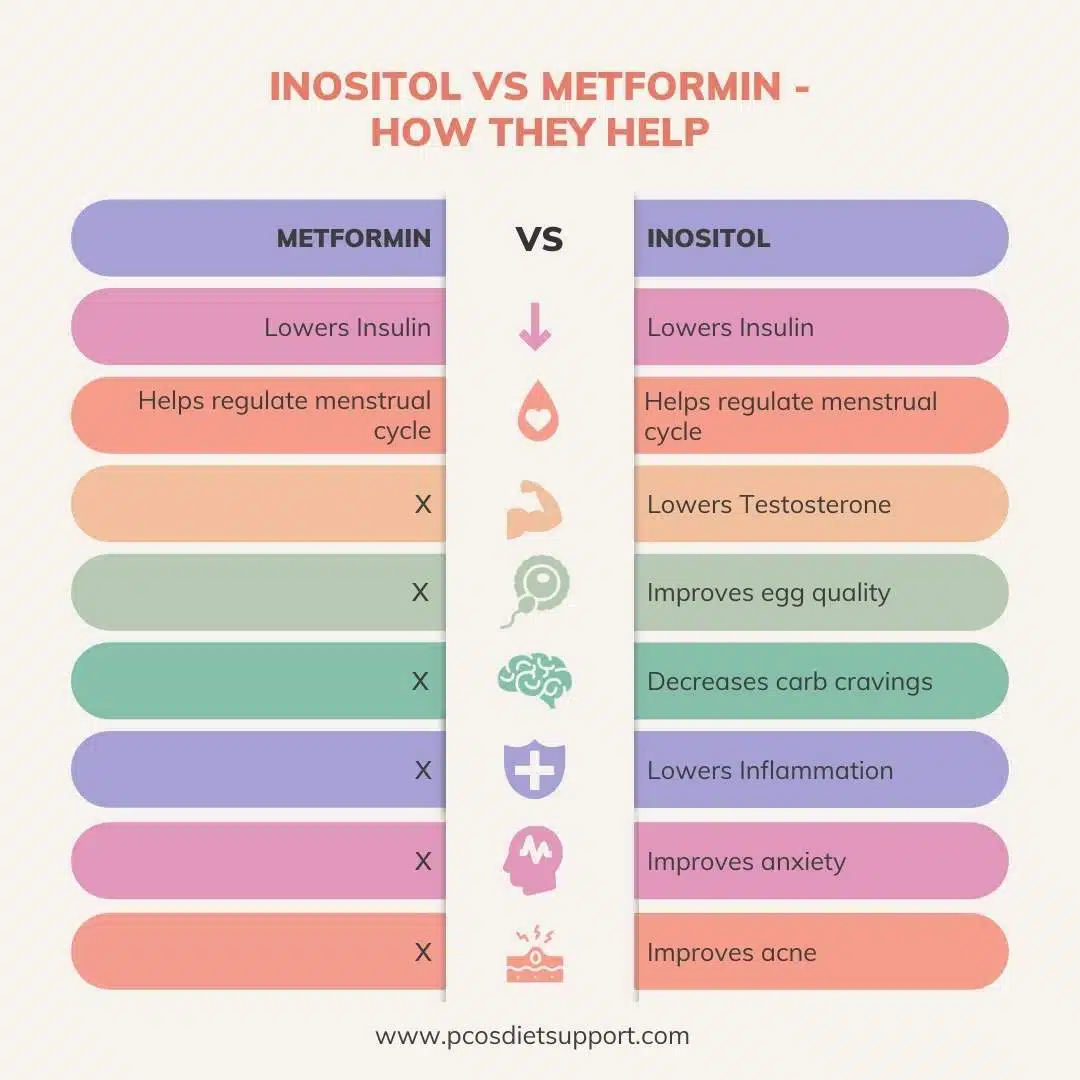
Extensive randomized controlled trials have validated Metformin’s role in improving the clinical features of PCOS. Research indicates that Metformin can successfully restore regular menstrual cycles in approximately 50% to 60% of women with PCOS who previously experienced amenorrhea or oligomenorrhea. Furthermore, a landmark study published in the journal Human Reproduction Update noted that Metformin significantly improves ovulation rates and can be an effective adjunct in fertility treatments, particularly for women who are resistant to Clomiphene Citrate.
Inositol: The Emergence of Nutritional Signaling Agents
Inositol is a carbocyclic sugar that was historically classified as part of the Vitamin B complex (Vitamin B8), though it is now recognized as a nutrient that the body can synthesize from glucose. In the human body, inositol exists in several isoforms, with Myo-inositol (MI) and D-chiro-inositol (DCI) being the most relevant to PCOS.
Mechanism of Action
Unlike Metformin, which acts primarily on metabolic pathways and enzyme activation, Inositol functions as a "second messenger" in the insulin signaling cascade. When insulin binds to its receptor on the cell wall, it triggers the release of inositol phosphoglycans. These molecules are responsible for carrying the insulin signal into the cell to activate glucose transporters.
In women with PCOS, there is often a defect in this signaling pathway. Myo-inositol is crucial for glucose uptake and the FSH (Follicle-Stimulating Hormone) signaling at the oocyte level, while D-chiro-inositol is involved in glycogen synthesis and the regulation of androgen production. Clinical evidence suggests that a physiological ratio of 40:1 (MI to DCI) is optimal for restoring metabolic balance and improving egg quality.
Comparative Efficacy
Recent systematic reviews and meta-analyses have compared Inositol directly with Metformin. A study published in the European Review for Medical and Pharmacological Sciences found that Myo-inositol was as effective as Metformin in improving insulin resistance, reducing androgen levels, and restoring ovulation. Crucially, Inositol showed superior results in terms of oocyte quality and pregnancy rates in women undergoing assisted reproductive technology (ART), suggesting a specific advantage for those pursuing fertility.
A Chronology of Treatment Evolution
The shift from purely pharmacological interventions to integrated approaches has occurred over several decades:

- 1994-1998: Early clinical trials began exploring the use of Metformin in PCOS, primarily focusing on its ability to lower testosterone and restore cycles.
- 1999: The first major studies on D-chiro-inositol were published, showing significant improvements in ovulatory function and metabolic markers.
- 2010s: A surge in comparative research emerged. Scientists began to identify that while Metformin was powerful for metabolic control, its side effect profile led to high patient dropout rates.
- 2018-2023: International evidence-based guidelines for PCOS started to acknowledge Inositol as an experimental but promising therapy, with many clinicians now recommending it as a first-line alternative for those who cannot tolerate Metformin.
Side Effect Profiles and Patient Compliance
The primary differentiator between these two treatments for many patients is the experience of adverse effects.
Metformin Side Effects
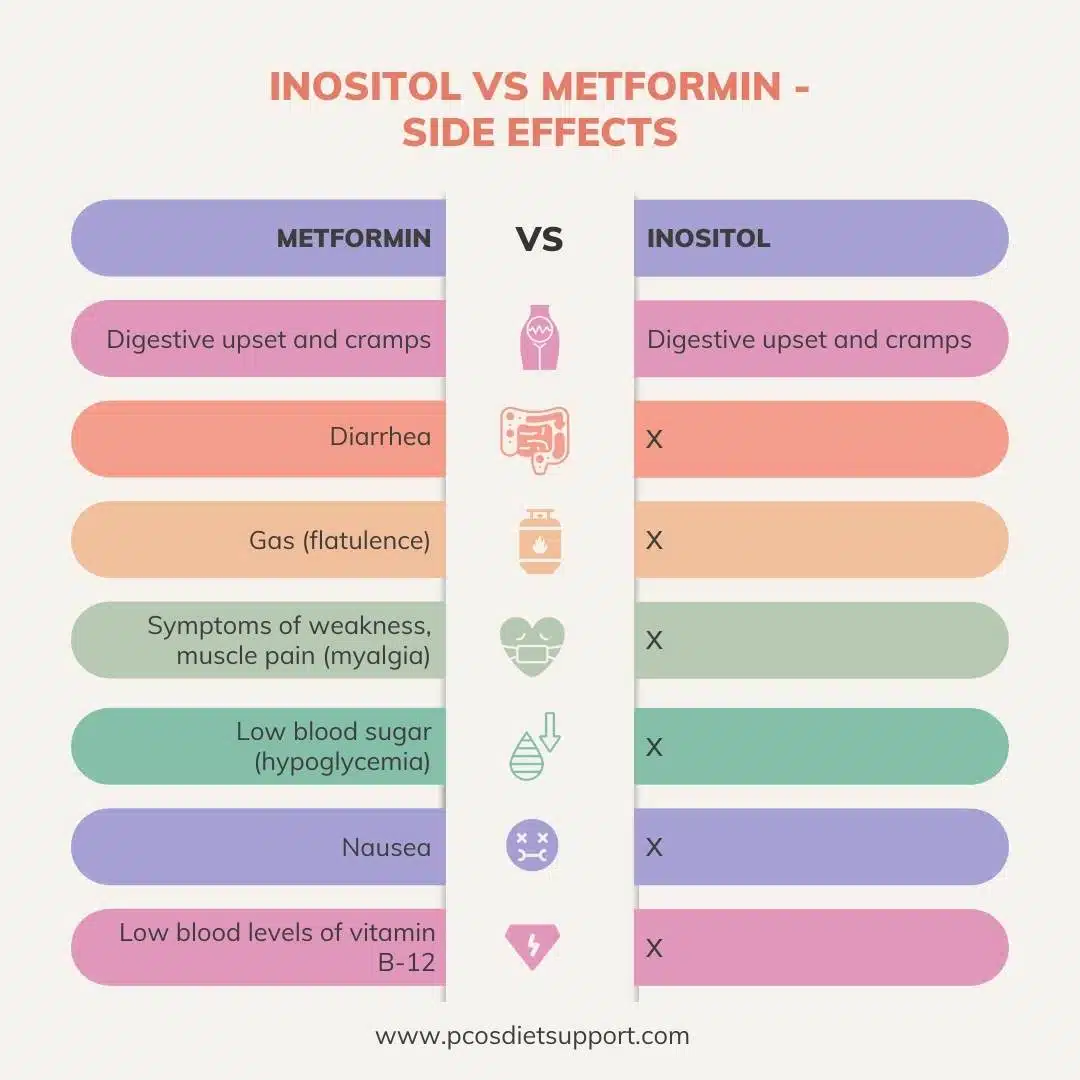
Metformin is notorious for gastrointestinal distress. Clinical data suggests that up to 30% of patients experience nausea, vomiting, abdominal cramping, or diarrhea. These symptoms are often dose-dependent and can be mitigated by using extended-release (ER) formulations or gradual dose titration. However, long-term Metformin use is also associated with Vitamin B12 deficiency, necessitating regular monitoring and supplementation. In rare cases, more severe complications like lactic acidosis can occur, though this is generally limited to patients with underlying renal or hepatic impairment.
Inositol Side Effects
In contrast, Inositol is remarkably well-tolerated. As a naturally occurring substance found in fruits, beans, and nuts, it has a high safety profile. Reported side effects are rare and typically mild, including slight nausea or headaches at very high dosages. Because it does not cause the significant gastrointestinal upheaval associated with Metformin, patient compliance tends to be significantly higher.

Broader Impact and Clinical Implications
The choice between Metformin and Inositol carries broader implications for public health and individualized medicine.
Metabolic Syndrome and Long-term Health
While both agents manage PCOS symptoms, Metformin has a more robust body of evidence regarding the prevention of Type 2 diabetes. For women with PCOS who are already pre-diabetic or have a high BMI, clinicians often prioritize Metformin due to its proven track record in long-term glucose management and potential for modest weight loss.
Fertility and Ovarian Health
For patients whose primary goal is conception, Inositol may offer a distinct advantage. By improving the microenvironment of the ovarian follicle, Myo-inositol has been shown to reduce the risk of Ovarian Hyperstimulation Syndrome (OHSS) during IVF and improve the maturity and quality of embryos. Furthermore, some studies suggest that Inositol supplementation during pregnancy may reduce the incidence of Gestational Diabetes Mellitus (GDM) in women with PCOS.
Integrative Approaches
A growing trend in reproductive endocrinology involves the co-administration of Metformin and Inositol. Since they work through different pathways—Metformin on glucose production and peripheral uptake, and Inositol on intracellular signaling—they can have a synergistic effect. However, medical professionals caution that combining two insulin-sensitizing agents requires careful monitoring of blood glucose levels to prevent hypoglycemia.
Expert Perspectives and Future Outlook
Medical organizations, including the Androgen Excess and PCOS Society, emphasize that neither Metformin nor Inositol should be viewed as a "magic pill." Both treatments are most effective when paired with lifestyle modifications, such as a low-glycemic diet and regular physical activity.
The consensus among reproductive specialists is shifting toward a tiered approach. Metformin remains a powerful tool for those with severe metabolic disturbances, while Inositol is increasingly viewed as a viable, low-risk alternative for women focusing on fertility or those seeking to avoid the gastrointestinal side effects of pharmaceuticals.
As research continues, the focus is moving toward "phenotyping" PCOS patients to determine which treatment fits their specific hormonal profile. Future clinical trials are expected to provide more clarity on the long-term cardiovascular benefits of Inositol, potentially placing it on equal footing with Metformin in standard care guidelines. For now, the decision remains a collaborative one between patient and provider, weighing the potency of Metformin against the tolerability and oocyte-protective benefits of Inositol.
