
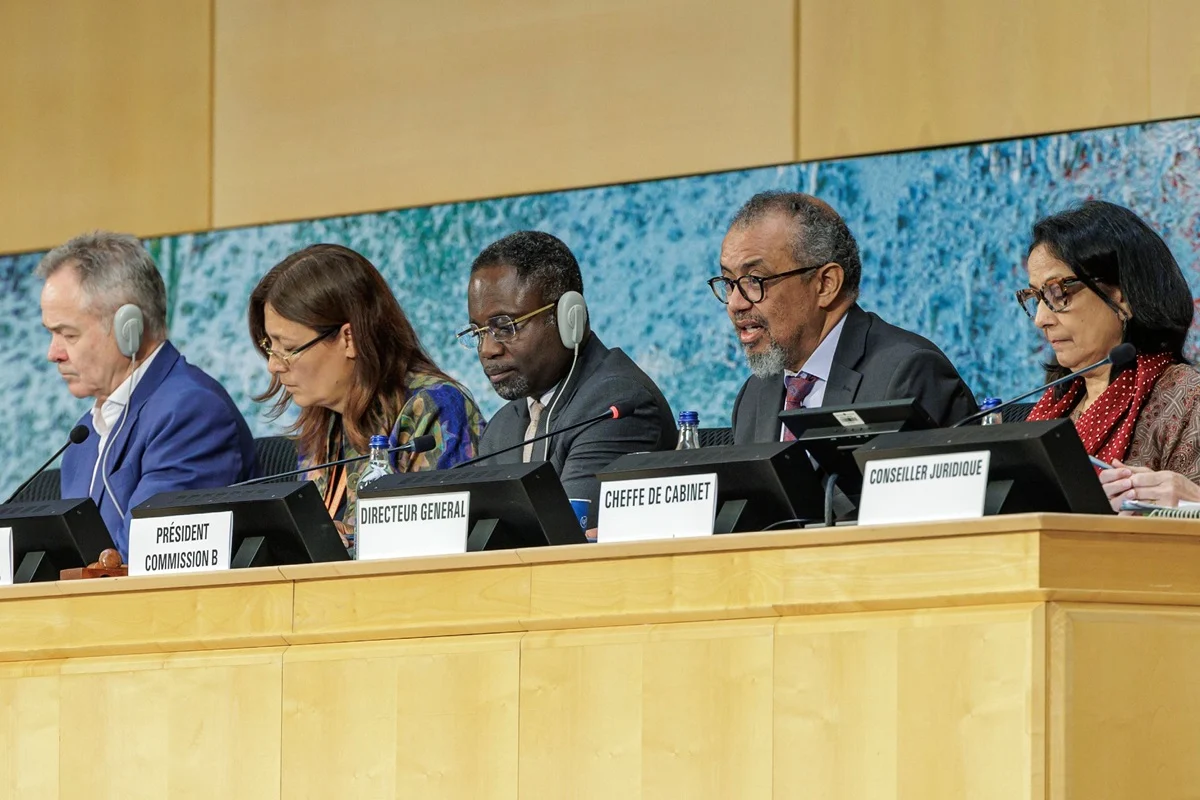
The World Health Assembly has formalised a comprehensive series of measures aimed at restructuring the global health landscape, marking a decisive shift toward more inclusive, technologically advanced, and equitable healthcare systems. In a high-level session hosted by the World Health Organization (WHO), Member States agreed to establish a joint process to reform the global health architecture, reflecting a collective recognition that existing frameworks must evolve to address the complexities of the 21st century. This process, led by Member States and supported by global health partners, aims to develop a roadmap for reforms that prioritize access and impact, drawing upon the foundational elements of the UN80 Initiative. The decision underscores a global consensus that while the current architecture has facilitated significant gains in disease control and normative standards over the past several decades, it is no longer fully equipped to handle the rapid evolution of health risks, the expansion of national health sovereignty, and the disruptive potential of artificial intelligence and digital technologies.
Reimagining the Global Health Architecture
The newly established joint process represents a strategic pivot toward addressing the fragmentation and power imbalances that have historically hindered global health responses. During the deliberations, Member States expressed overwhelming support for the WHO’s central convening role, while emphasizing that the reform process must be inclusive of civil society, youth organizations, and diverse global health initiatives. The proposal adopted by the Assembly acknowledges that the global health environment has shifted dramatically. Factors such as the contraction of traditional health financing and the rise of regional health capacities have created a landscape where "business as usual" is no longer viable.
Observers note that this reform process is particularly timely given the lessons learned from the COVID-19 pandemic, which exposed critical gaps in coordination and equity. By requesting the Director-General to submit a final report with specific transformation recommendations to next year’s Assembly, the WHO is setting a strict timeline for institutional change. This initiative is expected to address duplication of efforts among health actors and strengthen country ownership, ensuring that global interventions are aligned with local needs and sovereign health priorities.
A Historic Milestone in Stroke Prevention and Care
In a move hailed by neurologists and public health advocates worldwide, the Assembly approved the first-ever resolution dedicated specifically to stroke. Titled "Reducing the burden of stroke: strengthening prevention, acute care, rehabilitation and health-system readiness," the resolution was proposed by Egypt and co-sponsored by a diverse coalition including Chile, Georgia, Palestine, Paraguay, and Tunisia. The urgency of this resolution is underscored by alarming epidemiological data: over the last two decades, the lifetime risk of stroke has surged by 50%. Today, one in four adults is expected to suffer a stroke during their lifetime, making it the third leading cause of death and disability globally.
The resolution establishes a framework for national and global action, focusing on the entire continuum of care—from early prevention and acute intervention to long-term rehabilitation. By integrating stroke reporting into the WHO Global Non-Communicable Disease (NCD) Action Plan 2023–2030 and the Intersectoral Global Action Plan on Epilepsy and Other Neurological Disorders, the Assembly has created a mechanism for accountability. Experts suggest that this resolution will likely lead to increased investment in stroke units and emergency response systems, particularly in low- and middle-income countries where the burden is disproportionately high and access to life-saving thrombolytic therapies remains limited.
Modernizing Pharmacovigilance and Vaccine Safety
The Assembly also reached a key milestone in patient safety by approving a resolution to strengthen pharmacovigilance systems. This measure is a direct response to the "infodemic" and the regulatory challenges encountered during the COVID-19 pandemic. Member States committed to modernizing national safety monitoring systems by integrating real-world data, artificial intelligence, and patient-led reporting mechanisms. The resolution recognizes that as medical technologies become more complex, the systems used to monitor their safety must become "smarter" and more collaborative.
A significant portion of the resolution addresses the erosion of public trust caused by mis- and disinformation. By enhancing transparency and data governance, the WHO aims to rebuild confidence in scientific interventions. The resolution also highlights the need to bridge the gap in regulatory capacities between nations, ensuring that safety signals detected in one region are rapidly communicated and acted upon globally. Progress on these pharmacovigilance reforms will be monitored and reported to the World Health Assembly through a series of updates scheduled between 2028 and 2032.
The Global Strategy for Integrated Emergency, Critical, and Operative Care
Recognizing that emergency, critical, and operative (ECO) services are the backbone of any resilient health system, the Assembly approved the Global Strategy for Integrated ECO Care 2026–2035. This ten-year roadmap addresses conditions that account for an estimated 38 million deaths and 1.3 billion disability-adjusted life years annually. The strategy is designed to provide a framework for countries to deliver timely and affordable care across all levels of the health system, from primary care clinics to advanced surgical centers.
The implementation of this strategy comes at a time when health systems are under increasing pressure from conflicts, natural disasters, and climate-related health threats. The WHO has been tasked with providing technical and strategic support to Member States to overcome persistent challenges, such as chronic shortages of specialized health workers and inadequate infrastructure. By late 2026, a detailed action plan with specific implementation targets will be developed, marking a significant step toward making emergency and surgical care a universal right rather than a luxury of the developed world.
Precision Medicine and the Pursuit of Health Equity
In one of the most forward-looking decisions of the session, the Assembly adopted a landmark resolution on precision medicine. This approach, which uses molecular, genomic, and clinical data to tailor treatments to individual patients, has already shown transformative results in oncology and the treatment of rare diseases. However, the Assembly voiced strong concerns regarding the potential for a "genomic divide." Currently, genomic data is heavily skewed toward populations in high-income countries, which could lead to treatments that are less effective for individuals in under-represented regions.
The resolution requests the WHO to map existing guidance and, if necessary, develop a global strategy on precision medicine that puts equity at its center. Key priorities include building laboratory capacity in low-income settings and ensuring ethical data use. By creating a framework for country readiness self-assessment, the WHO intends to help Member States integrate these high-tech interventions into their universal health coverage goals without diverting essential resources from basic primary care.
Expanding Diagnostic Reach through Teleradiology
Complementing the push for precision medicine, the Assembly endorsed a resolution to scale up teleradiology services. Diagnostic imaging is essential for nearly every aspect of modern medicine, from maternal health to trauma care, yet many remote communities lack access to trained radiologists. Teleradiology allows for the secure transmission of medical images to experts located anywhere in the world, providing a cost-effective solution to professional shortages.
The resolution emphasizes that while digital health and AI can significantly enhance radiology, they must be governed by strict ethical standards and data protection laws. Member States agreed to integrate teleradiology into their national digital health strategies, focusing on secure infrastructure and regional collaboration. This move is expected to drastically reduce the time to diagnosis for patients in underserved areas, thereby improving clinical outcomes and reducing the overall cost of care.
Diplomatic Deliberations: Argentina and the Middle East
The Assembly also navigated complex geopolitical issues, including the status of Argentina’s relationship with the WHO. Following a notification of withdrawal from the organization, Committee B considered several proposals before reaching a consensus compromise. The Assembly took note of Argentina’s communication but decided that "no further action at this stage is desirable," while reiterating that the WHO remains open to Argentina’s full cooperation. This diplomatic stance reflects the WHO’s preference for maintaining broad membership and stability within its governing ranks.
Furthermore, the Assembly addressed the ongoing humanitarian and health crisis in the occupied Palestinian territory (oPt), including east Jerusalem. A report by the Director-General detailed a catastrophic situation: since October 2023, there have been 1,947 recorded attacks on healthcare across the territory. In Gaza alone, infrastructure damage to the health sector is estimated at US$ 1.39 billion, with total sector losses reaching US$ 6.78 billion. Despite a ceasefire announcement in late 2025, the report noted that healthcare services remain under severe strain due to shortages of fuel, medicine, and basic supplies. Delegates voted to continue reporting on these conditions to the next Assembly, reaffirming the WHO’s commitment to sustaining life-saving services in conflict zones. In a related move, a resolution was also approved concerning the public health impact of regional escalations on Gulf Cooperation Council countries and Jordan.
Conclusion and Future Outlook
The decisions made at this World Health Assembly signal a robust commitment to systemic reform and clinical innovation. By tackling the structural weaknesses of global health governance while simultaneously setting new standards for stroke care, precision medicine, and emergency services, Member States have laid the groundwork for a more resilient global health ecosystem. The emphasis throughout the sessions remained on equity—ensuring that the benefits of science and technology, from AI-driven pharmacovigilance to genomic medicine, are accessible to all, regardless of geography or economic status. As the WHO moves toward its 80th anniversary, the implementation of these resolutions will serve as a litmus test for the world’s ability to act collectively in the face of evolving health threats.
