
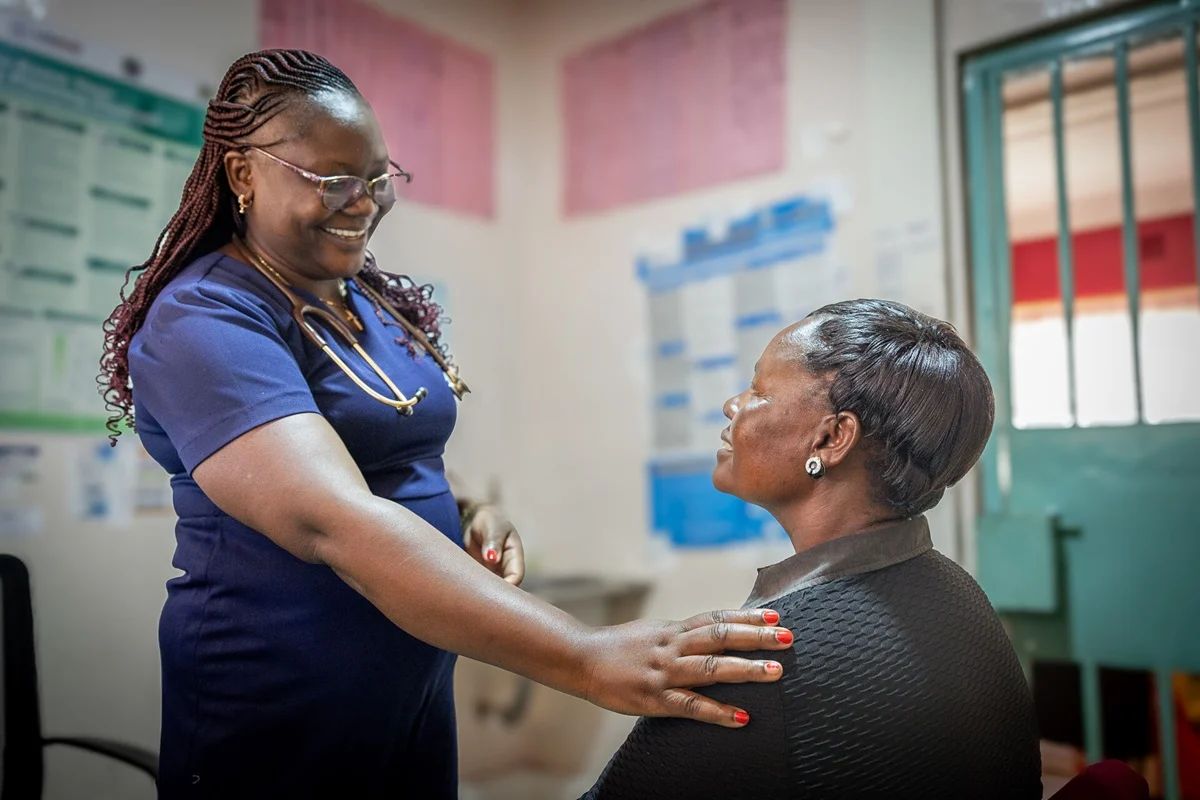
The global health landscape is facing an unprecedented challenge as cancer continues its trajectory as a leading cause of mortality, claiming more than 26,000 lives every day. According to the WHO Global Status Report on Cancer 2026, released today in coordination with the International Agency for Research on Cancer (IARC), the world is witnessing approximately 20.6 million new cancer cases and nearly 10 million deaths annually. These figures solidify cancer’s position as the second leading cause of death worldwide, trailing only cardiovascular disease. However, the report warns that without immediate and systemic intervention, the annual incidence is expected to surge by 77%, reaching nearly 35 million new cases by the middle of the century.
This comprehensive analysis serves as a critical pulse check on the global response to oncology, evaluating progress in political commitment, prevention strategies, and treatment investments. While the report acknowledges significant milestones in tobacco control and vaccination, it simultaneously exposes a deepening chasm of inequity. The data suggests that a person’s likelihood of surviving a cancer diagnosis remains heavily dictated by their geographic location and socioeconomic status, a reality that the World Health Organization (WHO) describes as a consequence of policy choices rather than an inevitability of biology.
A Growing Global Crisis: The Statistical Reality
The 2026 report provides a sobering look at the scale of the cancer burden. The projection of 35 million new cases by 2050 is driven by several converging factors, including an aging global population and the continued prevalence of risk factors in rapidly developing economies. Currently, lung cancer remains the primary driver of cancer-related mortality on a global scale. Among men, lung, prostate, and colorectal cancers are the most frequently diagnosed, while women are most heavily impacted by breast, lung, and colorectal cancers.
The report highlights a "prevention paradox" where nearly 40% of all cancer cases are linked to modifiable risk factors. These include tobacco use, alcohol consumption, high body mass index (BMI), and physical inactivity. Furthermore, infections such as human papillomavirus (HPV), hepatitis B and C, and Helicobacter pylori continue to account for a significant portion of the preventable burden, particularly in low- and middle-income countries (LMICs).
Geographic Disparities and Regional Burdens
One of the most striking revelations in the WHO report is the uneven distribution of the cancer burden across the globe. In 2024, Asia accounted for 50.7% of all new cancer cases and a staggering 56.5% of global cancer deaths. This is largely attributed to the region’s massive population size and the high prevalence of specific risk factors, such as liver cancer linked to hepatitis and gastric cancer linked to dietary patterns and infection.
Europe, meanwhile, carries a burden that is disproportionately high relative to its population. Despite representing only 9% of the global population, Europe accounts for 21% of all cancer cases and 20% of deaths. This trend is often linked to the region’s older demographic profile and high rates of historical tobacco and alcohol use. In contrast, many nations across Africa and parts of Asia report lower incidence rates but suffer from disproportionately high mortality. In these regions, a lack of early detection infrastructure means that patients often present with advanced-stage disease, leading to lower survival rates regardless of the cancer type.
The "survival gap" is most visible in breast cancer outcomes. The report finds that while 87% of women diagnosed with breast cancer in high-income countries survive at least five years, that figure plummets to just 42% in low-income countries. This 45-percentage-point difference underscores the lethal impact of delayed diagnosis and limited access to essential therapies.
The Human and Financial Toll: Beyond the Diagnosis
For the first time, the WHO has integrated a survey of people directly affected by cancer into its global status report. The findings reveal that the impact of the disease extends far beyond physical health, creating a cycle of financial and social devastation. According to the survey, 45% of respondents experienced significant financial hardship due to the costs of treatment and loss of income.
The psychological impact is equally profound, with more than 50% of patients reporting mental health challenges, including anxiety and depression. The burden also falls heavily on caregivers, who report high levels of social isolation and physical strain. Most caregivers provide unpaid services that are essential to the patient’s survival but are often overlooked by formal health systems.
Clarissa Schilstra, a childhood cancer survivor and a lead contributor to the WHO survey, emphasized that cancer indefinitely alters every facet of a person’s life. She advocated for a "people-centered" approach, urging policymakers to move beyond clinical metrics and address the lived experiences of those in the oncology community.
Progress in Prevention and Policy
Despite the daunting statistics, the report identifies areas of significant progress. Since 2010, global tobacco use has declined by 27%, a trend that has already begun to manifest in falling lung cancer rates in several regions. This success is largely credited to the implementation of the WHO Framework Convention on Tobacco Control (FCTC), which has prompted higher taxes, public smoking bans, and more effective warning labels.
Furthermore, there has been a notable increase in political commitment to oncology. As of 2026, 82% of countries have established national cancer control plans, a significant rise from 50% in 2010. Vaccination programs have also expanded; HPV vaccines, which prevent the primary cause of cervical cancer, are being integrated into more national immunization schedules, though coverage remains inconsistent in the hardest-hit regions.
Innovation in the field is also accelerating. The report notes that registered clinical trials for cancer treatments increased at an annual rate of 7.3% between 2005 and 2021. However, the benefits of this scientific progress are not being shared equally. While high-income countries have seen the introduction of groundbreaking immunotherapies and targeted treatments, many low-income nations still struggle to provide basic chemotherapy and radiotherapy.
The Innovation and Access Gap
A primary concern raised by the WHO and IARC is the persistent lack of access to essential medicines. The availability of the top 20 priority cancer medicines—those deemed most essential for saving lives—ranges from 68% to 94% in high-income countries. In stark contrast, these same medicines are available in only 9% to 54% of facilities in low- and lower-middle-income countries.
This gap extends to diagnostic services. While 74% of women in high-income countries have access to cervical cancer screening, the majority of women in low-income nations have never been screened. This lack of early detection means that even cancers that are highly curable if caught early, such as cervical and breast cancer, remain death sentences for millions.
Dr. Elisabete Weiderpass, Director of the IARC, noted that the cancer profile is evolving. While infection-related cancers are decreasing in some areas due to better sanitation and vaccination, they are being replaced by cancers driven by "lifestyle" factors such as obesity and air pollution. She stressed that cancer prevention must remain a top-tier political priority to counter these emerging threats.
Recommendations for a People-Centered Agenda
To address these systemic failures, the WHO Global Status Report on Cancer 2026 outlines seven key recommendations aimed at creating a more equitable global response. These recommendations focus on:
- Integrating Cancer Care into Universal Health Coverage (UHC): Currently, fewer than one in three countries include comprehensive cancer care in their UHC packages. The WHO calls for cancer services to be viewed as an essential right rather than a luxury.
- Strategic Investment in Primary Care: Strengthening the primary healthcare level to ensure early detection and referral, which is significantly more cost-effective than treating late-stage disease.
- Expansion of Vaccination and Screening: Scaling up HPV and Hepatitis B vaccinations and implementing population-based screening programs.
- Closing the Medicine Gap: Implementing international mechanisms to lower the cost of essential cancer drugs and improve supply chain stability in LMICs.
- Prioritizing Mental Health and Supportive Care: Moving toward a holistic model that treats the psychological and social needs of patients and their families.
- Enhancing Data Collection: Utilizing platforms like the Global Cancer Observatory to provide real-time data that can inform localized policy decisions.
- Meaningful Engagement with Affected Communities: Ensuring that survivors and caregivers have a seat at the table when national cancer strategies are developed.
Implications for the Future
The release of this report coincides with the lead-up to World Health Day 2026, themed "Together for health. Stand with science." This campaign aims to highlight science as the foundation for global health, but the WHO emphasizes that science alone cannot solve the cancer crisis. Without the political will to address economic and geographic inequities, the gap between those who survive cancer and those who do not will only continue to widen.
Dr. Tedros Adhanom Ghebreyesus, WHO Director-General, remarked that the inequities documented in the report are not an inevitable part of the human condition. Instead, they are the result of specific policy choices and investment priorities. He called for "stronger and unified action" to ensure that the progress made in oncology labs is felt in the clinics of the world’s most vulnerable communities.
As the world looks toward 2050, the choices made today by governments and international bodies will determine whether the projected 35 million cases result in a global catastrophe or a manageable health challenge. By shifting toward a people-centered approach and maintaining an unwavering commitment to equity, the WHO believes it is possible to reverse current trends and improve outcomes for everyone, regardless of where they live or what they earn.
