
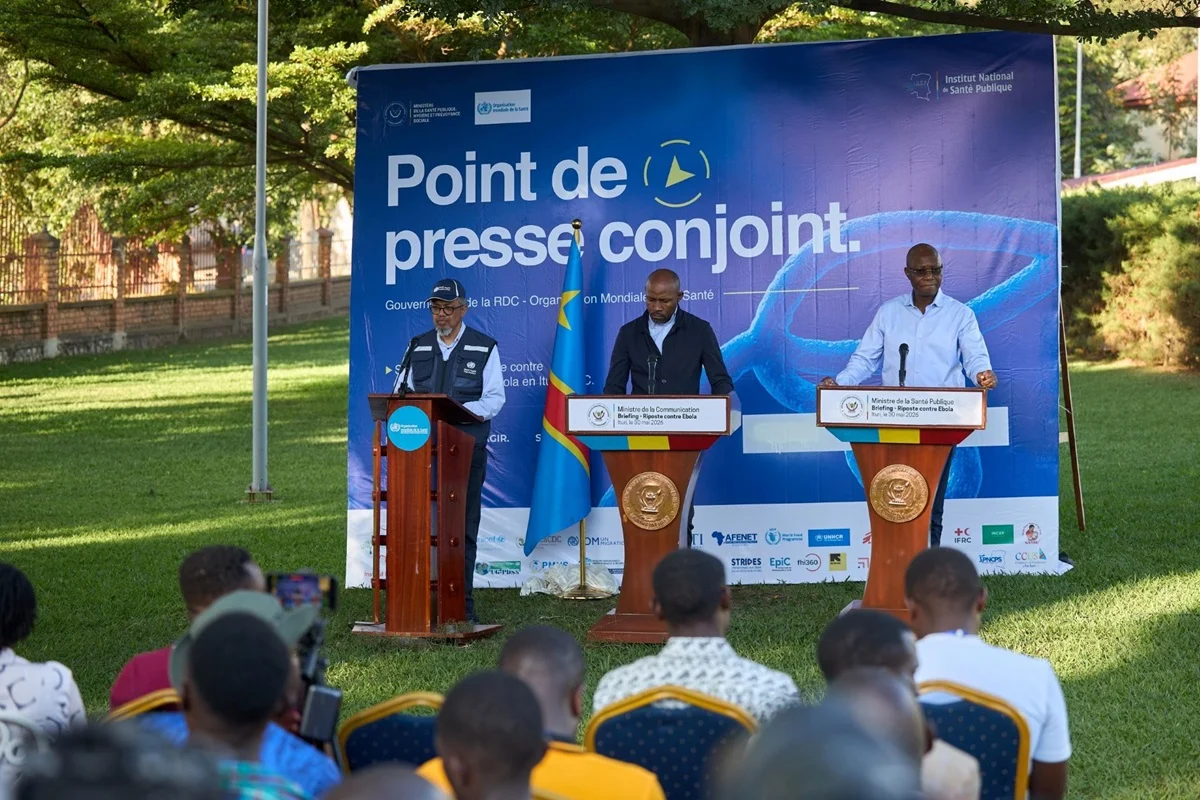
The Government of the Democratic Republic of the Congo (DRC) and the World Health Organization (WHO) have officially reaffirmed their strategic partnership and shared commitment to safeguarding the health and well-being of the population in Ituri Province and across the nation, following a high-level joint mission to Bunia. This mission, led by the DRC Minister of Health, Dr. Samuel Roger Kamba, and the Minister of Communication and Media, Mr. Patrick Muyaya Katembwe, featured the prominent participation of WHO Director-General Dr. Tedros Adhanom Ghebreyesus. The visit serves as a critical juncture in the national and international response to the current outbreak of Ebola virus disease, specifically caused by the Bundibugyo virus (BDBV) strain. As the situation continues to evolve, the Ministry of Health has reported a rise in notified cases and fatalities across several health zones in the provinces of Ituri, North Kivu, and South Kivu, necessitating a rapid escalation of containment efforts and cross-sectoral cooperation.
Current Situation and Geographic Scope of the Outbreak
The current epidemiological landscape in the eastern regions of the DRC remains complex and demanding. Unlike the more frequent Zaire ebolavirus outbreaks that have historically affected the country, the Bundibugyo strain presents a unique set of clinical and logistical hurdles. The Ministry of Health’s latest surveillance data indicates that the virus has moved beyond its initial clusters, with transmission chains now identified in multiple health zones across Ituri and the Kivus. This geographical spread is particularly concerning due to the high mobility of populations in these regions, driven by both commercial activities and the ongoing security challenges that have long characterized the eastern DRC.
In response, the DRC government has assumed firm leadership of a comprehensive national response. This effort is being executed in close coordination with provincial authorities in Ituri and neighboring administrative divisions. The strategy is built upon the pillars of intensified surveillance, rapid laboratory confirmation, and specialized patient care. By mobilizing domestic resources and aligning them with international support, the government aims to interrupt the transmission of the virus as quickly as possible to prevent a wider regional escalation.
The Bundibugyo Virus: Biological Context and Historical Significance
The identification of the Bundibugyo virus strain in this outbreak adds a layer of complexity to the public health response. First identified in 2007 in the Bundibugyo District of western Uganda, which borders the DRC, BDBV is one of the six species within the genus Ebolavirus. While historically associated with a lower case-fatality rate compared to the Zaire strain—ranging from approximately 25% to 50% in past outbreaks—it remains a highly virulent pathogen capable of causing severe hemorrhagic fever and significant mortality.
A major challenge noted by both the Ministry of Health and the WHO is the current absence of a licensed vaccine or specific therapeutic treatment for the Bundibugyo strain. This stands in contrast to the Zaire strain, for which the Ervebo vaccine and various monoclonal antibody treatments (such as Ebanga and Inmazeb) have been successfully deployed in recent years. In the absence of these specific biomedical tools, the response must rely heavily on classic public health interventions, including early isolation, rigorous contact tracing, and optimized supportive care. Furthermore, the WHO and the DRC government have announced plans to rapidly initiate randomized control trials (RCTs) for candidate vaccines and experimental treatments to build the evidence base for future interventions against this specific strain.
Chronology of the Response and the Joint Mission
The timeline of the current response reflects an accelerated effort to get ahead of the virus. Following the initial notification of suspected cases in Ituri, the Ministry of Health immediately deployed rapid response teams to conduct investigations and establish decentralized testing capacities. The involvement of the WHO was sought early to provide technical guidance and logistical support.
The recent visit to Bunia by Dr. Samuel Roger Kamba, Mr. Patrick Muyaya Katembwe, and Dr. Tedros Adhanom Ghebreyesus represents the highest level of political and technical engagement. During the mission, the delegation met with provincial leaders, frontline healthcare workers, and community representatives to assess the ground-level reality of the response. The mission emphasized that while the DRC has unparalleled experience in managing Ebola—having successfully contained more than a dozen outbreaks since the virus was first discovered near the Ebola River in 1976—the unique characteristics of the Bundibugyo strain and the volatile security environment in Ituri require a bespoke approach.
Community Engagement as the Cornerstone of Containment
One of the primary lessons learned from the massive 2018–2020 Ebola outbreak in North Kivu and Ituri is that medical interventions alone are insufficient if they lack community trust. The joint delegation underscored that local communities are at the heart of the solution. Success in the current mission depends on the active engagement and leadership of local stakeholders, including community leaders, women’s groups, youth representatives, religious figures, and the private sector.
Authorities are currently intensifying a "bottom-up" dialogue strategy. This involves not only disseminating information but also listening to local concerns regarding the response measures. Misinformation and mistrust have historically hindered efforts such as safe and dignified burials (SDB) and the isolation of suspected cases. By co-developing solutions that are culturally sensitive and respectful of local traditions, the government and the WHO hope to foster an environment where the population feels empowered to participate in surveillance and early care-seeking behaviors.
Technical Pillars: Surveillance, Laboratory Capacity, and Infection Control
The operational response is currently focused on several key technical areas to ensure a robust defense against the virus:
- Enhanced Surveillance and Contact Tracing: Health workers are being trained to identify symptoms early and map out contact networks with high precision. Given the incubation period of Ebola (up to 21 days), consistent monitoring of contacts is essential to breaking the chain of transmission.
- Laboratory Strengthening: Rapid diagnosis is critical for effective triage. The government, with WHO support, is working to ensure that laboratory facilities in Bunia and surrounding areas are equipped with the necessary reagents and technology to provide quick turnaround times for Bundibugyo-specific testing.
- Infection Prevention and Control (IPC): Preventing nosocomial (hospital-acquired) transmission is a top priority. This includes the provision of personal protective equipment (PPE), training for health workers on strict hygiene protocols, and the establishment of dedicated Ebola Treatment Centers (ETCs) that meet international safety standards.
- Safe and Dignified Burials: Because the bodies of deceased Ebola patients remain highly infectious, the response teams are working with communities to ensure that burials are conducted safely while still respecting the emotional and spiritual needs of the families.
Long-term Health System Resilience and Primary Care
Both the DRC government and the WHO have emphasized that the Ebola response must not exist in a vacuum. It is vital that the mobilization of resources for the outbreak does not lead to the neglect of other essential health services. Maintaining primary healthcare, including maternal and child health services, immunization programs, and the treatment of endemic diseases like malaria and measles, is a core component of the current strategy.
Furthermore, the investment being made today is intended to leave a lasting legacy. The infrastructure being built—including upgraded laboratories, trained health workforces, and enhanced surveillance systems—will serve to strengthen the long-term resilience of the health system in Ituri and across the DRC. This "build back better" philosophy aims to ensure that the country is better prepared for future public health emergencies, whether they be viral outbreaks or other health crises.
International Solidarity and Regional Coordination
The global health community has been called upon to maintain and increase its support for the DRC. The joint statement from the mission expressed sincere gratitude to international partners who have already contributed funds, supplies, and expertise. However, sustained solidarity is required to bring the current outbreak under control.
A significant aspect of this international cooperation involves the Africa Centres for Disease Control and Prevention (Africa CDC), which is working alongside the WHO and the DRC authorities to harmonize the regional response. This is particularly important for cross-border coordination. The government and the WHO have made a clear appeal for borders to remain open for the flow of essential medical supplies and personnel, urging that entry controls at border crossings be based on scientific evidence rather than fear, to avoid obstructing the humanitarian response.
Analysis of Implications and Future Outlook
The current outbreak serves as a stark reminder of the persistent threat posed by zoonotic diseases in the Congo Basin. However, the DRC’s response infrastructure is more sophisticated now than at any point in its history. The rapid deployment of high-level officials to the epicenter of the outbreak signals a degree of political will that is essential for effective crisis management.
The successful implementation of randomized control trials for Bundibugyo vaccines and treatments could be a global milestone, potentially providing the world with new tools to combat a strain that has previously lacked specific medical countermeasures. Moreover, the focus on community-led solutions suggests that the hard-won lessons of previous years are being integrated into current policy, potentially reducing the friction between responders and the population.
While the challenges—including security, the absence of a vaccine, and the geographic spread—are significant, the combination of unparalleled local experience and renewed international solidarity provides a firm foundation for the path ahead. The Government of the DRC and the WHO remain committed to a transparent, science-driven, and community-focused response that prioritizes the lives and dignity of the people of Ituri and the wider nation. Together, through coordinated action and sustained investment, the goal remains the total interruption of Bundibugyo virus transmission and the continued strengthening of the nation’s public health defenses.
