
The pervasive concept of "hair porosity" has long served as a cornerstone of popular haircare advice, influencing countless product choices and styling routines. However, a growing body of scientific evidence suggests that the widely adopted DIY hair porosity tests, such as the float test and the drop test, are fundamentally misleading. Far from accurately measuring the internal capacity of hair to absorb moisture, these tests primarily reveal the condition of the hair’s surface, specifically its integrity and hydrophobicity, rather than its true internal porosity. This revelation challenges deeply ingrained beliefs within the beauty community and underscores the critical importance of science-backed understanding in effective haircare.
The notion of hair porosity gained significant traction, particularly within communities focused on natural hair and damaged hair, as a seemingly straightforward way to categorize hair types and tailor product selection. Consumers were encouraged to identify their hair as "low porosity," "medium porosity," or "high porosity" based on how quickly a strand of hair sank in water or how a water droplet behaved on its surface. Products were then marketed specifically for each porosity type, promising optimal hydration, sealing, or penetration. For instance, "high porosity" hair, often associated with damage and rapid water absorption, was advised to use heavier butters and oils to "seal" moisture in, while "low porosity" hair, believed to repel water, was recommended lighter products and heat treatments to encourage absorption. While many individuals reported positive outcomes from following such advice, scientific scrutiny reveals that these perceived successes are largely coincidental, stemming from the fact that these tests inadvertently indicate the level of surface damage rather than a direct measure of porosity.
Deconstructing the DIY Porosity Tests: Surface Tension as the Real Culprit
Two primary DIY tests dominate the porosity discussion: the float test and the drop test. Both are deeply flawed in their interpretation.
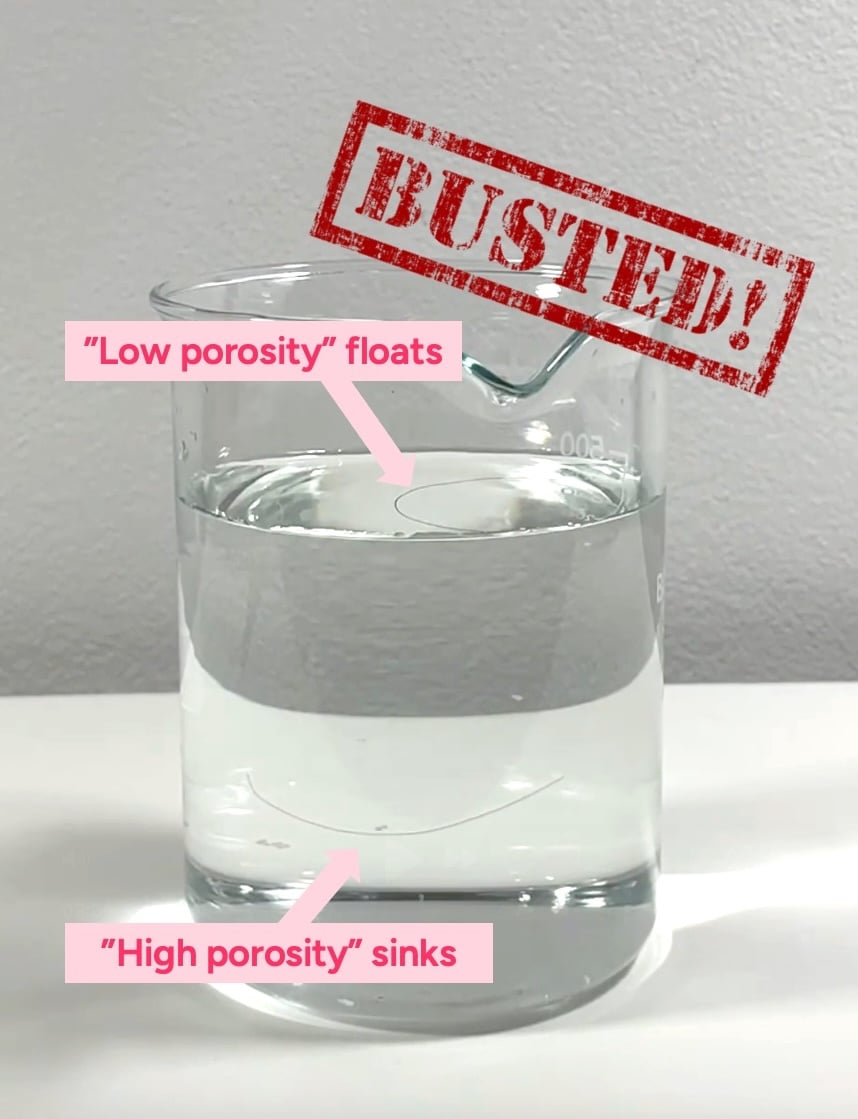
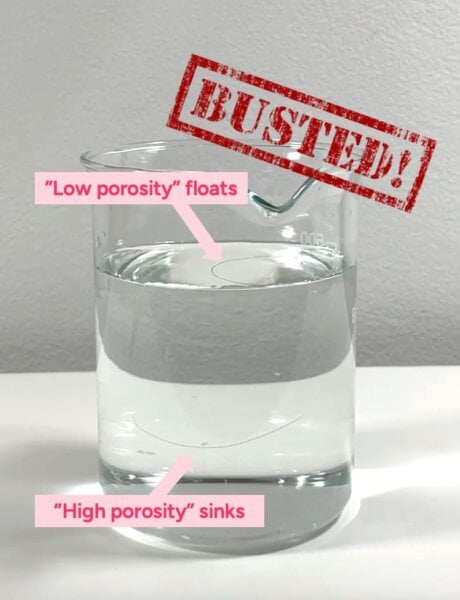
The Float Test instructs individuals to place a single strand of clean hair into a glass of water. If the hair floats, it is deemed "low porosity"; if it sinks quickly, it’s "high porosity"; and if it slowly submerges, it’s "medium porosity." The popular explanation attributes sinking to "high porosity" hair rapidly absorbing water through numerous "holes," making it denser. Conversely, floating is attributed to "low porosity" hair, which supposedly repels water due preventing absorption.
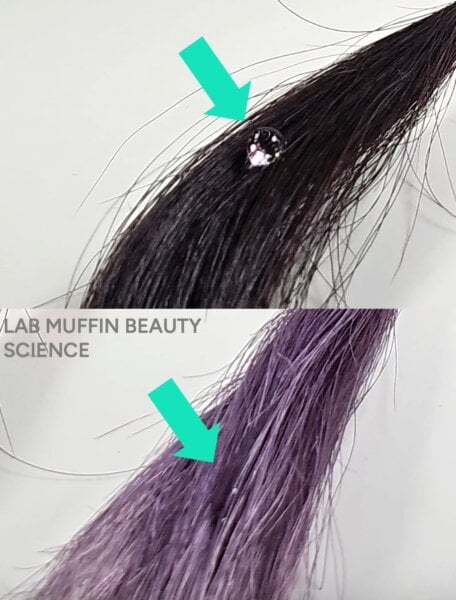
The Drop Test involves placing a single drop of water onto a section of hair. If the water bead remains round and sits on the surface, the hair is labeled "low porosity." If it flattens and appears to be quickly absorbed, it’s labeled "high porosity." The common narrative suggests that "high porosity" hair has an open cuticle that allows water to penetrate easily, while "low porosity" hair has a tightly sealed cuticle that resists water.
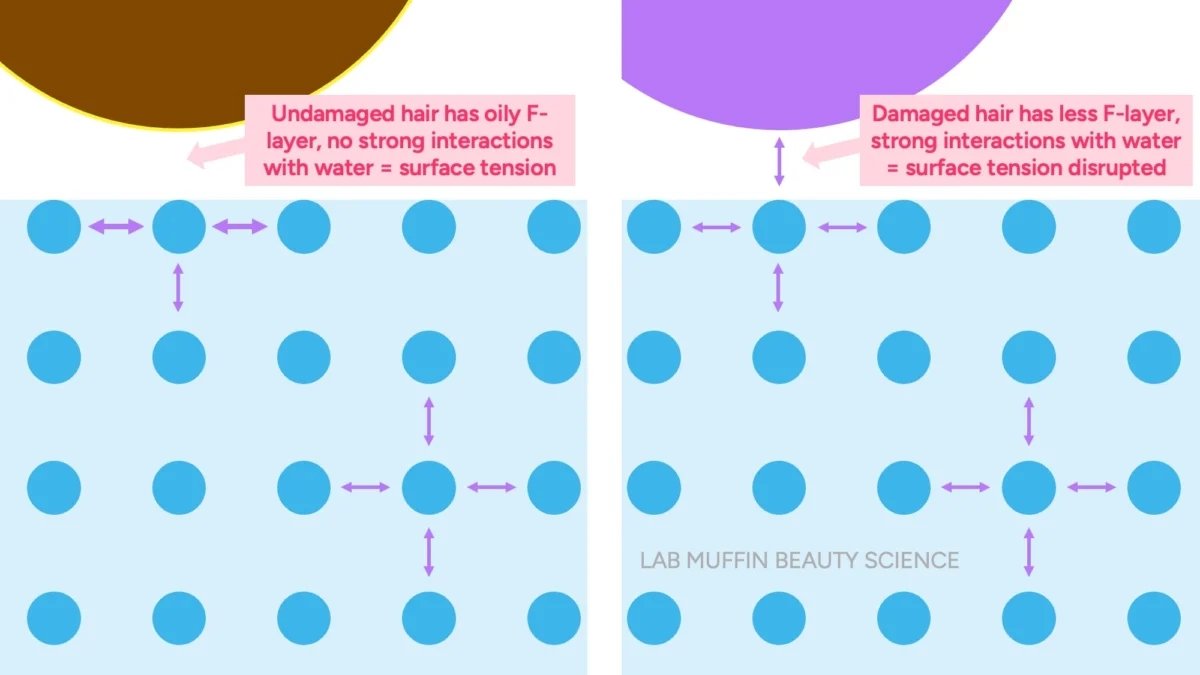
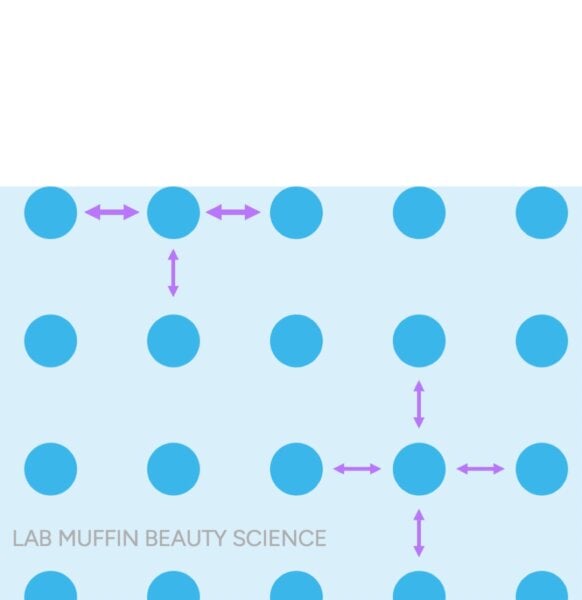
The fundamental flaw in both these interpretations lies in overlooking a crucial physical phenomenon: surface tension. Water molecules exhibit strong cohesive forces, particularly at the liquid-air interface, forming a resilient "skin" known as surface tension. This "skin" is strong enough to support objects denser than water, such as insects or a paperclip, provided the surface tension is not disrupted. Hair, like a paperclip, is inherently denser than water. Therefore, its ability to float or sink is not initially determined by how much water it absorbs internally, but rather by how it interacts with the water’s surface tension.
Hair’s True Interaction with Water: A Complex Hydrophilic-Hydrophobic Dance
Contrary to the "waterproof" myth, human hair is inherently hygroscopic, meaning it readily absorbs moisture from its environment, even in an undamaged state. Scientific studies confirm that undamaged hair can absorb a significant amount of water, up to approximately 30% of its own weight, within minutes when exposed to liquid water. More importantly, hair’s water content constantly fluctuates with ambient humidity. Data from Robbins CR’s Chemical and Physical Behavior of Human Hair illustrates this clearly:
| Relative humidity (%) | Weight of water absorbed (%) |
|---|---|
| 0 | 0 |
| 8 | 3.9 |
| 40 | 10.2 |
| 63 | 14.8 |
| 86 | 22.6 |
| 100 | 31.2 F |
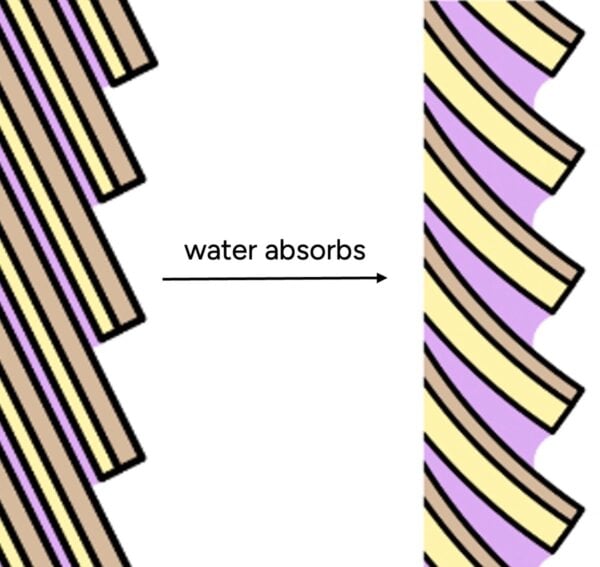
This absorption occurs not because hair is full of macroscopic "holes" that liquid water rushes into, but because individual water vapor molecules (from humidity) are small enough to "wiggle" between the overlapping cuticle scales and into the hair’s cortex without encountering the resistance of surface tension.
The outermost layer of healthy hair, the cuticle, is covered by a natural conditioning layer known as the F-layer (18-methyl eicosanoic acid, or 18-MEA). This F-layer is a thin, covalently bonded lipid layer that makes the surface of healthy hair naturally hydrophobic (water-repelling). When a strand of healthy, undamaged hair with an intact F-layer is placed gently on water, the hydrophobic surface repels the water molecules, allowing the hair to rest on the water’s surface tension and float.
However, various forms of damage—chemical treatments (coloring, perming, relaxing), excessive heat styling, mechanical abrasion (vigorous brushing, tight hairstyles), and UV exposure—can degrade or remove the F-layer. This exposes the underlying cuticle scales, which are more hydrophilic (water-attracting). When the F-layer is compromised, the hair surface becomes more amenable to forming hydrogen bonds with the water molecules. This interaction disrupts the water’s surface tension, causing the hair to "break through" the surface and sink. The sinking in the float test, therefore, is an indicator of surface damage and a loss of hydrophobicity, not an inherent "high porosity" due to internal holes.
Similarly, the drop test is explained by surface chemistry. On healthy, hydrophobic hair, a water droplet maintains its spherical shape due to its own high surface tension, minimally interacting with the hair surface. On damaged, hydrophilic hair, the water molecules are more attracted to the hair surface than to each other at the droplet-hair interface. This causes the droplet to spread out and flatten, appearing to be "absorbed" into the hair, when in reality it is spreading along the surface due to altered surface energy. This phenomenon is identical to how a drop of water behaves on a waxed car (beads) versus an unwaxed, dusty surface (spreads).
The Limited Role of Conditioners in "Sealing" Hair
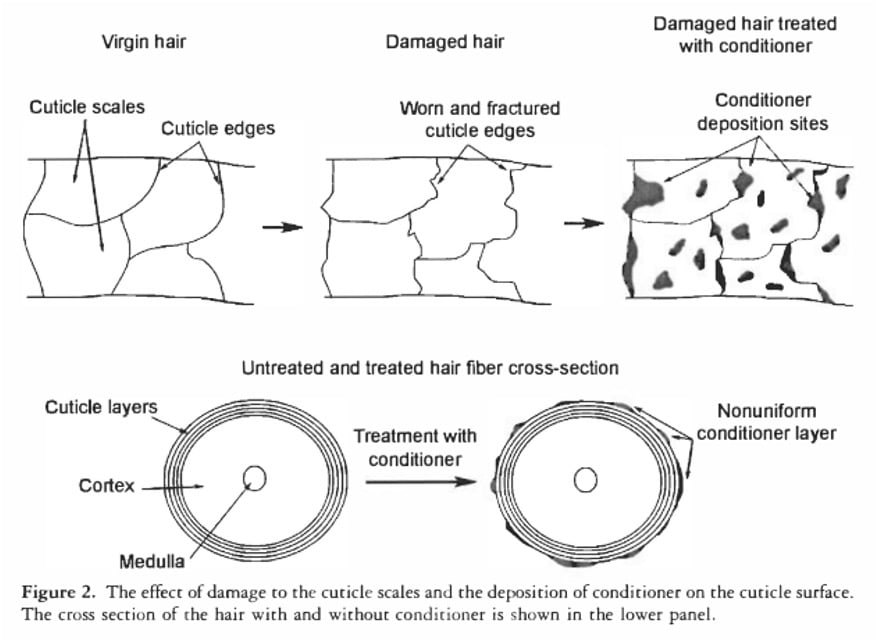
Another misconception addressed by scientific analysis pertains to the role of conditioners. While conditioners are essential for managing hair, improving feel, and reducing friction, they do not create an impermeable, waterproof seal on the hair shaft. Microscopic analyses, such as those by La Torre and Bhushan (2006), show that conditioning agents, typically cationic surfactants and polymers, deposit onto the hair surface in "blobs" or discontinuous patches, rather than forming a smooth, continuous, water-tight layer.
These deposits are sufficient to smooth the cuticle scales, reduce tangling, and impart a soft, silky feel. However, individual water molecules are infinitesimally small. Even a well-conditioned hair shaft presents numerous microscopic gaps and pathways through which water molecules can pass. Therefore, the idea that conditioners "seal" hair against water penetration, particularly liquid water, is not scientifically accurate. Their primary function is to modify the hair’s surface properties, enhancing its manageability and feel, not to make it waterproof.
Why "Porosity" Advice Sometimes Works: An Indirect Correlation with Damage
Given that these tests do not measure true porosity, why have many people found that following "porosity-based" advice has improved their hair? The answer lies in the indirect correlation between the test results and the actual condition of the hair’s surface.
"High porosity" hair, as diagnosed by these tests, typically signifies hair with significant surface damage (a compromised F-layer and lifted cuticle scales). This type of hair is often prone to dryness, frizz, and breakage because its protective outer layers are compromised. Products recommended for "high porosity" hair—such as richer creams, butters, and oils—are often heavy and occlusive. These products work effectively on damaged hair by providing external lubrication, reducing friction, temporarily smoothing the cuticle, and forming a protective barrier that slows down moisture loss, thereby mitigating symptoms of damage.
Conversely, "low porosity" hair, which generally indicates a relatively intact F-layer and healthy cuticle, might be weighed down by heavy products. The lighter formulations recommended for "low porosity" hair are often more suitable for hair that doesn’t require extensive external conditioning or occlusion.
Thus, while the diagnostic method (the float or drop test) is scientifically flawed, the resulting product recommendations often align with the actual needs of damaged versus relatively undamaged hair. The tests inadvertently categorize hair by its level of surface integrity, which happens to correlate with certain haircare needs, rather than by its internal water absorption capacity.
Implications for Consumers and Haircare Professionals
The debunking of DIY hair porosity tests has significant implications for both consumers and professional hairstylists.
For consumers, it means shifting focus from a simplistic "porosity" label to a more nuanced understanding of hair health. Instead of relying on flawed tests, individuals should observe their hair’s behavior, feel, and appearance:
- Feel: Does it feel rough or smooth?
- Elasticity: Does it stretch and return, or snap easily?
- Breakage: Is there excessive breakage?
- Response to products: Does it feel dry quickly after washing, or does it become greasy easily?
- Visual cues: Does it appear dull, frizzy, or have split ends?
These observations, combined with an understanding of one’s hair texture, density, and styling habits, provide a more accurate basis for selecting appropriate products. Hair that feels rough, breaks easily, or dries out quickly is likely damaged and will benefit from conditioning treatments, protein, and products that help to smooth the cuticle.
For haircare professionals, this scientific clarification is even more critical. Hairdressers frequently rely on client-reported porosity or quick visual assessments when performing chemical treatments such as coloring, perming, or relaxing. These processes depend heavily on the hair’s ability to allow chemicals to penetrate the cuticle and reach the cortex. Misjudging the hair’s condition based on a "porosity" test that actually indicates surface damage can lead to suboptimal results, over-processing, or further damage. For instance, hair with extensive surface damage (which would be deemed "high porosity" by the float test) might require gentler chemical formulations or shorter processing times, not necessarily faster penetration. The most reliable method for professionals remains a thorough tactile and visual assessment, coupled with a strand test using the actual chemical product to gauge its reaction and processing time on a small, inconspicuous section of hair.
The Broader Impact: Science Communication in the Beauty Industry
The persistence of the hair porosity myth highlights a broader challenge in science communication within the beauty industry. Simplified explanations, even if scientifically inaccurate, can quickly gain traction due to their ease of understanding and actionable advice. Disentangling these myths requires concerted efforts from beauty scientists, dermatologists, and science communicators to provide accessible, accurate information. As scientific understanding of hair biology continues to evolve, it becomes imperative for the industry to embrace evidence-based practices and for consumers to seek information from credible scientific sources.
Ultimately, while the term "porosity" may continue to be used in common parlance, understanding that the DIY tests primarily indicate surface damage rather than a precise measure of internal absorbency is key. By focusing on hair health, cuticle integrity, and the actual mechanisms of water interaction, consumers and professionals alike can make more informed decisions, leading to genuinely healthier and more beautiful hair. The path to effective haircare is paved with scientific accuracy, not misleading shortcuts.
References:
La Torre C, Bhushan B. Nanotribological effects of silicone type, silicone deposition level, and surfactant type on human hair using atomic force microscopy. J Cosmet Sci. 2006;57(1):37-56.
Robbins CR. Chemical and Physical Behavior of Human Hair. 5th ed. Springer Berlin Heidelberg 2012.
