
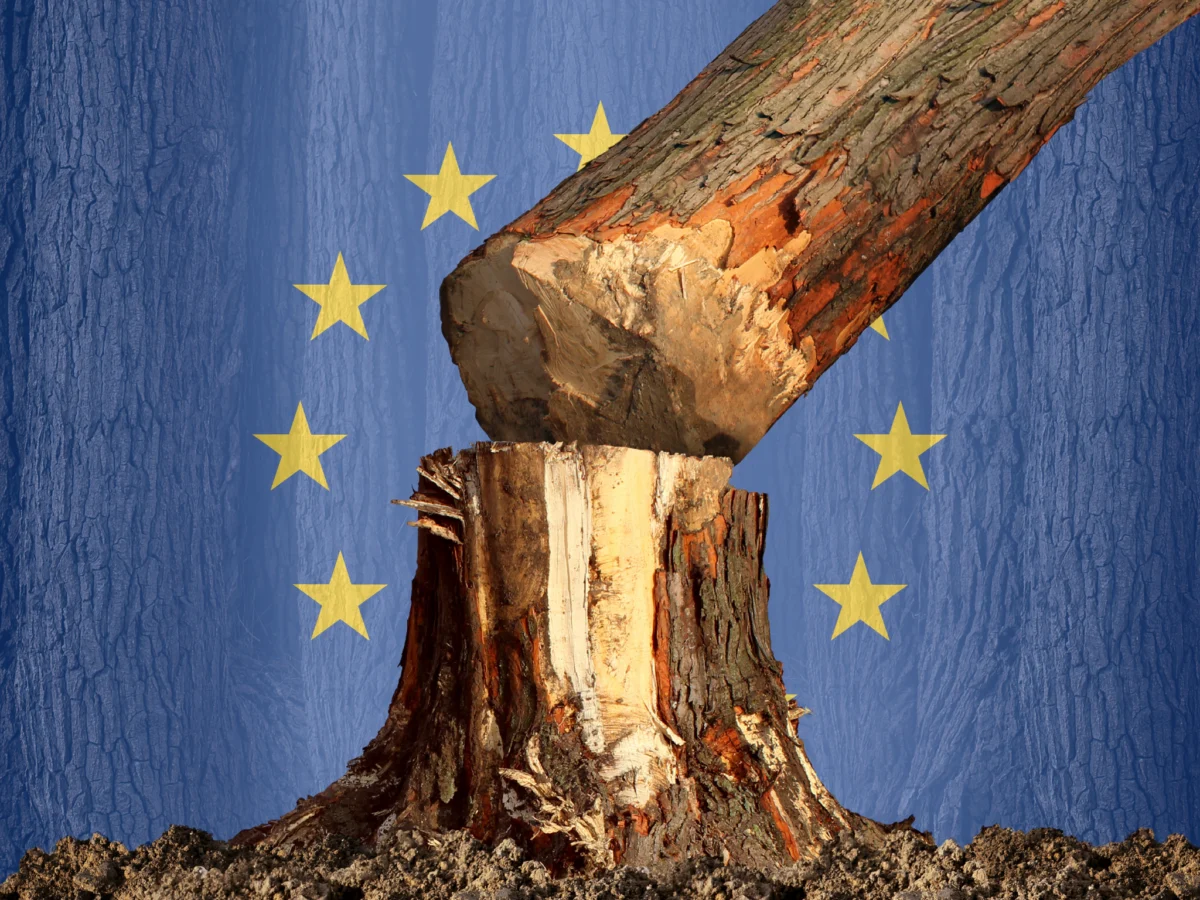
The European Union’s executive arm has firmly signaled its intention to uphold the December 30, 2026, deadline for the full enforcement of its groundbreaking Regulation on Deforestation-free Products (EUDR). This assertion comes at a critical juncture, following a week in which a significant bloc of U.S. policymakers urged the European Commission to implement the regulation as currently drafted, resisting calls for amendments. The EUDR, a landmark piece of legislation aimed at curbing the import of commodities linked to deforestation, has navigated a complex path since its inception, facing both internal and external pressures for adjustments.
EUDR Enforcement Timeline Confirmed Amidst International Scrutiny
In an updated Frequently Asked Questions (FAQ) document, the European Commission has unequivocally stated that the EUDR "will be enforceable from 30 December 2026." This confirmation addresses lingering uncertainties that have permeated the market and among stakeholders. Furthermore, the document clarifies that the implementation for "most micro and small operators" will commence six months later, on June 30, 2027. This phased approach aims to provide smaller businesses with additional time to adapt to the stringent requirements of the regulation. The FAQ also notes that "2027 will be the first year for which the EUDR applies, the first report (covering the year 2027) will have to be published after 30 December 2027," outlining the initial reporting cycle under the new framework.
This definitive timeline follows two prior postponements of the regulation’s effective date. Initially slated to enter into force at the close of 2024, the EUDR encountered considerable pushback from various business sectors and national governments. Concerns were primarily raised regarding the perceived high compliance costs and the brevity of the initial implementation timeline. These objections, coupled with a desire for more comprehensive guidance and technical readiness, led to the first delay. The subsequent postponement was influenced by ongoing dialogues with international partners and the need for further refinement of the digital systems designed to facilitate compliance.
The latest confirmation of the EUDR’s enforcement date arrives on the heels of a forceful appeal from 32 members of the United States Congress. These lawmakers penned a letter to European Commission President Ursula von der Leyen, imploring her to "hold the line and implement the EUDR as currently written." Their plea is directly linked to reported efforts by elements within the Trump administration to lobby for the weakening of the regulation, particularly by introducing a "no risk" classification for certain countries.
U.S. Lawmakers Criticize Trump Administration’s Stance on EUDR
The U.S. Department of Agriculture (USDA) has reportedly been engaged in discussions with stakeholders in European capitals, advocating for EU member states to reconsider the EUDR and to establish a "no risk" classification for a select group of countries, including the United States. This diplomatic push has drawn sharp criticism from a bipartisan group of U.S. congressional representatives.
Data from the United Nations highlights the significant environmental impact of deforestation globally. Over the past decade, the United States has been responsible for an annual loss of approximately 120,000 hectares of forest. On a global scale, the situation is far more dire, with over 10 million hectares of land being deforested each year. This extensive land degradation contributes substantially to global greenhouse gas emissions, accounting for up to 21% of the total.
In their letter to President von der Leyen, Democratic representatives from 17 U.S. states articulated a strong argument against the proposed "no risk" designation. They contend that such an exemption would not only "encourage forest loss and degradation" but would also "disadvantage companies" that have already invested considerable resources in preparing for compliance with the EUDR. Furthermore, they warned that it would "create uncertainty, inefficiencies, and inconsistencies across covered industries."
The lawmakers’ concerns extend to the integrity of accountability mechanisms. They stated, "A ‘no risk’ designation exempting certain countries’ operators from traceability requirements and enforcement checks would prevent accountability and impede enforcement. It would create significant loopholes for forest degradation and create disadvantages for countries from the Global South." This sentiment underscores the perception that such exemptions could disproportionately benefit developed nations while undermining efforts to support developing countries in their sustainable land management practices.
The letter unequivocally frames the EUDR as an indispensable tool in the fight against the "existential climate crisis." The representatives asserted, "We must use every tool in our toolbox to protect our planet, and in doing so, we must acknowledge that many countries pose at least some risk of deforestation." This statement emphasizes the universal nature of the threat posed by deforestation and the need for a comprehensive, globally applied regulatory framework.
Led by Representatives Lloyd Doggett and Rashida Tlaib, the letter also draws a parallel between the Trump administration’s past actions and its current stance on the EUDR. They point to the repeal of domestic forest protections under the Trump administration, suggesting that its approach indicates it "cannot be seen as a credible negotiator on the EUDR as it seeks to undermine both EU and US forest protections." This assertion positions the U.S. administration’s lobbying efforts as potentially counterproductive and inconsistent with its own stated environmental goals.
Implications of Further Delays: Market Uncertainty and Environmental Harm
The EUDR, initially unveiled in 2023, establishes a prohibition on the import and sale of commodities such as cocoa, coffee, soy, palm oil, and derived products like chocolate, furniture, and tires, if these goods originate from land that has been deforested or degraded after December 31, 2020. The regulation mandates that companies must exercise due diligence to ensure their supply chains are free from deforestation and illegal logging.
The initial enforcement date of December 2024 was postponed by one year following significant backlash from both EU member states and a coalition of international partners. The Biden administration in the U.S. also formally requested a two-year delay, signaling concerns about the readiness of international supply chains and the complexity of compliance.

Businesses operating within the affected sectors cited the challenging timeline as a primary obstacle to compliance. Many argued that the period allotted was insufficient to implement the intricate requirements of the EUDR, especially given what they perceived as a lack of adequate guidance from regulatory bodies. The regulation’s demand for detailed supply chain mapping, extending down to the farm level, even in remote or rural areas, through methods such as satellite monitoring, presented a significant logistical and technological challenge.
The planned enforcement of the EUDR in December 2025 also failed to materialize. The European Commission cited technical glitches within the IT system designated for companies to submit their due diligence documentation as the reason for this further postponement. This technical impediment led to another year-long delay in the compliance deadline.
The U.S. Congress members warned that "A third delay risks continued harm to our planet and creates further market uncertainty." They emphasized the urgency of moving forward, stating, "Now, it is time to move forward. Any additional delays will pose challenges on business leaders navigating global trade rules and regulations, particularly those who have already invested in compliance." This highlights the economic impact of prolonged uncertainty on businesses that have already allocated resources towards meeting the regulation’s demands.
Jennifer Skene, global forest policy director at the U.S. environmental non-profit Natural Resources Defense Council (NRDC), echoed these sentiments. She criticized the Trump administration’s advocacy for carve-outs and exceptions, drawing a parallel to its past policies regarding public lands. Skene stated, "The Trump administration’s push for carveouts and exceptions, just like its designs around gifting public lands to logging interests, is an effort to hold the world back from the safe, sustainable supply chains we’ve now seen are possible."
Skene concluded by emphasizing the positive impact the EUDR has already had and urged the EU to remain steadfast. "The EUDR has already helped open up that better future – we need the EU to stand strong, despite the Trump administration’s pressure and threats," she added. This statement underscores the view that the EUDR represents a progressive step towards more responsible global trade practices and that wavering in its implementation would undermine these advancements.
Background and Context of the EUDR
The EUDR is a cornerstone of the European Green Deal, an ambitious package of policy initiatives aiming to make the EU climate-neutral by 2050. The regulation’s overarching goal is to reduce the EU’s contribution to global deforestation and forest degradation by ensuring that commodities and products placed on the EU market do not contribute to the destruction of forests. This includes a wide array of goods, from agricultural products like soy, palm oil, beef, and coffee, to timber and its derivatives.
The core of the EUDR lies in its due diligence requirements. Companies that import or place these commodities on the EU market are obligated to collect and submit "due diligence declarations." These declarations attest that the products are deforestation-free and legally harvested. Companies are required to conduct thorough checks of their supply chains, identifying and mitigating any risks of deforestation or illegal logging. This involves gathering detailed information about the production areas, ensuring traceability from the origin of the raw material to the final product.
The timeline for the EUDR’s implementation has been a subject of intense negotiation and debate since its initial proposal. The European Commission first presented its legislative proposal in November 2021. Following the legislative process, it was adopted in April 2023. The original plan was for the regulation to become fully applicable on December 30, 2024. However, the complexity of the requirements, the need for robust IT infrastructure for reporting, and concerns raised by various stakeholders, including producing countries and industry associations, led to the initial postponement.
The subsequent delay was intended to provide more time for companies to adapt their systems and for the Commission to finalize the necessary technical and legal frameworks. The development of the due diligence framework, the establishment of a benchmarking system for country risk assessment, and the creation of an information system for reporting have all been crucial but time-consuming elements. The fact that the EU has now reiterated its commitment to the December 2026 deadline suggests that significant progress has been made on these fronts, and that further delays are viewed as detrimental to both environmental objectives and market stability.
Analysis of Implications
The EUDR’s enforcement represents a significant shift in global commodity trade, placing increased responsibility on businesses to ensure the sustainability of their supply chains. For companies that have proactively invested in traceability and deforestation-free sourcing, the regulation offers a competitive advantage and a chance to demonstrate leadership in environmental stewardship. Conversely, those who have been slower to adapt may face significant disruption and financial penalties.
The U.S. lawmakers’ intervention highlights the geopolitical dimension of the EUDR. The resistance from certain U.S. political factions, particularly those aligned with the Trump administration’s policy priorities, underscores the tension between environmental regulations and economic interests. The U.S. Congress members’ advocacy for the regulation’s current form suggests a recognition within parts of the U.S. government of the global imperative to address deforestation and the potential for the EUDR to set a new international standard.
The potential for a "no risk" classification for countries like the U.S. raises questions about fairness and equity. Critics argue that such exemptions could create a two-tiered system, where some nations are held to higher standards than others, potentially disadvantaging countries that are more dependent on agricultural exports and may have fewer resources to implement advanced traceability systems. The EU’s commitment to the current draft suggests a desire to avoid such loopholes and to ensure a level playing field for all actors in the global market.
The continued commitment to the December 2026 deadline is likely to spur further investment in sustainable agriculture and forestry practices worldwide. As companies scramble to meet the regulation’s requirements, there will be increased demand for sustainable raw materials and for technologies that can enhance supply chain transparency. This, in turn, could accelerate the transition towards more environmentally responsible production methods, benefiting both the planet and the long-term viability of global supply chains. The EUDR, despite its challenging implementation, is poised to become a powerful driver of positive change in the fight against deforestation.
