
The World Health Organization (WHO) and the International Agency for Research on Cancer (IARC) have released a landmark report detailing the escalating global cancer crisis, revealing that the disease now claims more than 26,000 lives every day. According to the WHO Global Status Report on Cancer 2026, the world is currently grappling with an estimated 20.6 million new cases and nearly 10 million deaths annually. As the second leading cause of death worldwide, trailing only cardiovascular disease, cancer remains a formidable challenge to global health systems. However, the report warns that without immediate and unified intervention, the annual incidence of cancer is projected to surge to approximately 35 million cases by the year 2050, representing a staggering 77% increase from current levels.
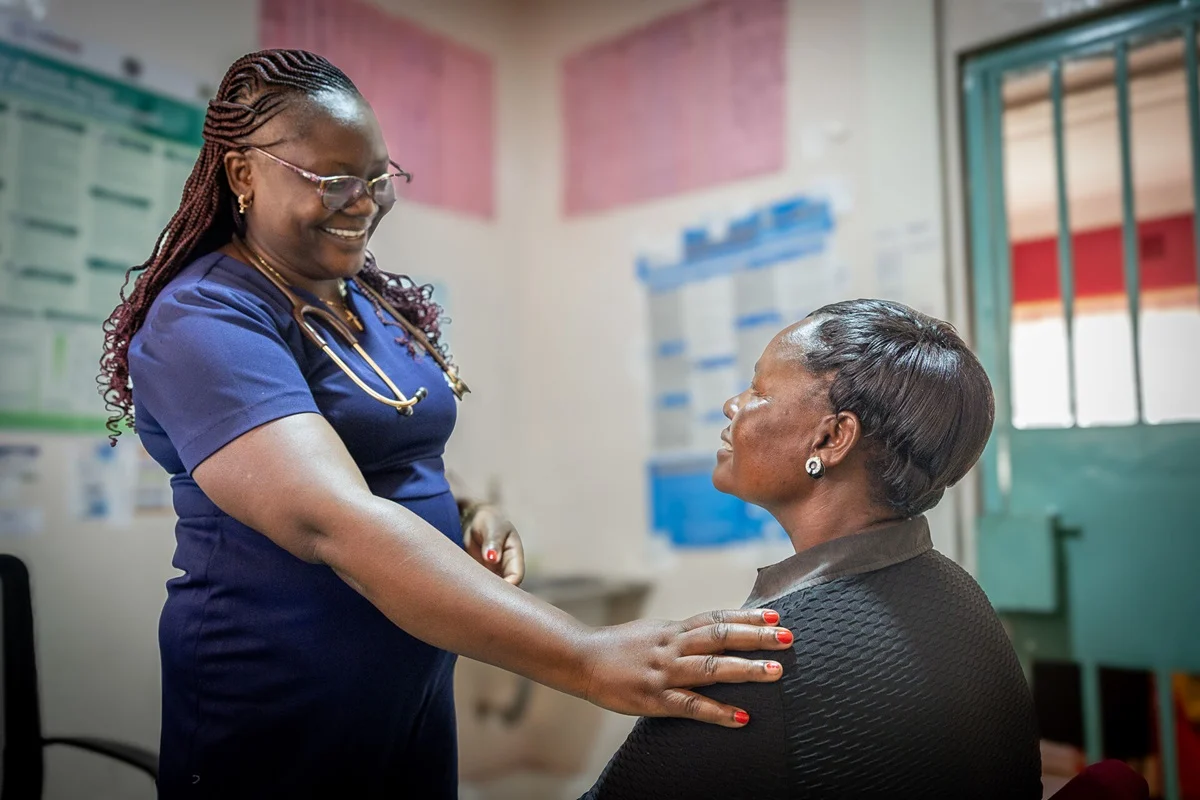
This projected rise is attributed to several converging factors, including an aging global population and the continued prevalence of key risk factors. The report emphasizes that reversing this trajectory requires more than just clinical advancements; it demands a fundamental shift toward a "people-centred approach." This strategy prioritizes the health needs and lived experiences of patients and their communities, ensuring that the human element of the disease is not lost in the pursuit of technical solutions. The findings underscores a sobering reality: while scientific innovation is accelerating, the benefits of these breakthroughs are not being distributed equally, leaving millions in low- and middle-income countries to face the disease with insufficient resources.
The Widening Chasm of Healthcare Inequity
One of the most striking revelations in the 2026 report is the persistent and widening gap in cancer outcomes based on geography and national income. The data illustrates a "survival lottery" where a patient’s life expectancy is dictated more by their socioeconomic environment than by the biology of the disease itself. For instance, the five-year survival rate for women diagnosed with breast cancer stands at a robust 87% in high-income countries. In sharp contrast, that figure plummets to just 42% in low-income nations. This discrepancy highlights a failure in the global delivery of early diagnosis and effective treatment.
The inequity extends to the very foundation of health policy. The WHO analysis found that fewer than one in three countries currently include comprehensive cancer care within their universal health coverage (UHC) packages. This lack of systemic support forces families to pay out of pocket for life-saving treatments, often leading to financial ruin. Dr. Tedros Adhanom Ghebreyesus, WHO Director-General, noted that these inequities are a direct consequence of policy choices rather than inevitable biological outcomes. He emphasized that the global community possesses the tools to reverse these trends through stronger, unified action and a commitment to health as a human right.
The availability of essential medicines further exemplifies this divide. The report tracks the "top 20" priority cancer medications and finds that their availability in low- and lower-middle-income countries ranges from a dismal 9% to 54%. In high-income countries, these same medicines are available at rates between 68% and 94%. This "access gap" means that even when a diagnosis is made, the means to treat the patient are often missing in the regions that need them most.
Regional Disparities and the Evolving Cancer Profile
The global burden of cancer is not distributed evenly across the map. In 2024, Asia accounted for the largest share of the crisis, representing 50.7% of all new cases and 56.5% of global cancer deaths. While these figures reflect the region’s massive population, they also point to the need for scaled-up infrastructure in rapidly developing economies. Europe, meanwhile, carries a disproportionately heavy burden. Despite housing only 9% of the world’s population, the continent accounts for 21% of global cancer cases and 20% of deaths. This is largely attributed to an older demographic and higher historical rates of certain lifestyle-related risk factors.
In Africa and parts of South-East Asia, the report identifies a different but equally troubling pattern: lower incidence rates compared to the West, but significantly higher mortality rates. This suggests that while fewer people may be developing cancer, those who do are far more likely to die from it due to late-stage presentation and a lack of radiotherapy and surgical facilities.
The types of cancer dominating the global landscape are also shifting. Lung cancer remains the leading cause of cancer death globally for both sexes combined. Among men, lung, prostate, and colorectal cancers are the most frequent diagnoses. For women, breast cancer remains the most prevalent, followed by lung and colorectal cancers. However, the report notes an "epidemiological transition" where cancers linked to infections—such as cervical cancer (HPV) and liver cancer (Hepatitis B and C)—are being joined by a rising tide of cancers driven by lifestyle factors, including obesity, physical inactivity, and poor diet.
A Chronology of Progress and Persistent Barriers
Despite the daunting statistics, the 2026 report acknowledges significant milestones achieved over the past decade and a half. Since 2010, there has been a noticeable shift in political commitment toward cancer control.
- 2010: Only 50% of countries had a functional national cancer control plan.
- 2015: The adoption of the Sustainable Development Goals (SDGs) placed a renewed focus on non-communicable diseases (NCDs).
- 2021: Clinical trial registrations for cancer treatments showed an annual growth rate of 7.3% since 2005, signaling a boom in scientific research.
- 2024: Tobacco use has declined by 27% globally since 2010, a victory for public health policy that is already resulting in lower lung cancer rates in countries with strict tobacco control.
- 2026: Currently, 82% of countries have established national cancer control plans, and vaccination programs for HPV and Hepatitis B are expanding worldwide.
Dr. Elisabete Weiderpass, Director of the IARC, remarked that while these reductions are encouraging, the pace of progress remains too slow to offset the impact of an aging population and environmental factors like air pollution. The report suggests that while the "policy framework" is largely in place in many nations, the "implementation phase" is stalled by a lack of funding and healthcare personnel.
The Human Toll: Beyond the Clinical Diagnosis
For the first time, the WHO conducted a comprehensive survey of people directly affected by cancer, including survivors and caregivers. The results paint a harrowing picture of the "financial and emotional toxicity" associated with the disease. The survey found that at least 45% of households affected by cancer experience significant financial hardship, often involving the sale of assets or the accumulation of debt to cover medical costs.
The mental health impact is equally profound. More than half of the respondents reported experiencing depression or anxiety following their diagnosis. Furthermore, the burden on caregivers—often overlooked in traditional medical reports—was highlighted as a major social issue. Nearly all caregivers surveyed reported intense strain, citing social isolation and the physical toll of providing unpaid, around-the-clock care.
Clarissa Schilstra, a childhood cancer survivor who helped lead the WHO survey, argued that these lived experiences must inform future policy. "Cancer is not just a medical diagnosis; it indefinitely affects every aspect of a person’s life," she stated. The report calls for "supportive care" to be integrated into standard treatment protocols, addressing the psychological and social needs of the family unit, not just the biological needs of the patient.
Prevention: The Most Cost-Effective Strategy
The report reinforces the fact that nearly 40% of all cancer cases are preventable. The primary drivers of preventable cancer include tobacco use, alcohol consumption, high body mass index (BMI), and infections. Specifically, the report identifies human papillomavirus (HPV), hepatitis B and C, and Helicobacter pylori as critical targets for public health interventions.
Investment in "WASH" (water, sanitation, and hygiene) and expanded vaccination coverage are cited as the most effective ways to reduce infection-related cancers in developing regions. Meanwhile, in high-income countries, the focus is shifting toward "environmental oncology," addressing the links between air pollution, microplastics, and cancer incidence. The WHO advocates for "triple-win" policies—such as taxes on sugar-sweetened beverages and tobacco—which generate revenue for health systems while simultaneously reducing the prevalence of cancer risk factors.
Strategic Recommendations for a People-Centred Future
To address the projected rise to 35 million cases by 2050, the WHO Global Status Report on Cancer 2026 outlines seven key recommendations aimed at creating a more equitable global response. Central to these is the "strategic shift" toward holistic care.
- Integrate Cancer Care into UHC: Governments must ensure that cancer screening, diagnosis, and treatment are covered under national health insurance schemes to prevent financial catastrophe for citizens.
- Strengthen Primary Healthcare: Early detection starts at the community level. Training primary care physicians to recognize early signs of cancer can significantly improve survival rates.
- Ensure Equitable Access to Medicines: International cooperation is needed to lower the cost of priority cancer drugs and ensure they reach low-income regions.
- Prioritize Prevention Policies: Strengthening tobacco and alcohol controls and promoting healthy diets through regulation must remain a political priority.
- Invest in Data and Research: Countries need robust cancer registries to understand their specific disease burden and allocate resources effectively.
- Empower Patients and Caregivers: Health systems should formally recognize the role of caregivers and provide them with the necessary social and mental health supports.
- Foster Scientific Innovation for All: Research and development should not only focus on "blockbuster" drugs for wealthy markets but also on affordable diagnostic tools and treatments suitable for resource-limited settings.
The report concludes with a call for "unified action." The choices made by policymakers today will determine whether the 2050 projections become a reality or whether the global community can bend the curve toward better outcomes. By placing the person at the center of the clinical and political agenda, the WHO aims to ensure that a cancer diagnosis is no longer a sentence of poverty or despair, regardless of where a person lives. The theme of World Health Day 2026, "Together for health. Stand with science," serves as a reminder that while the foundation of cancer control is scientific, its success depends on the collective political will to make that science accessible to all.
