
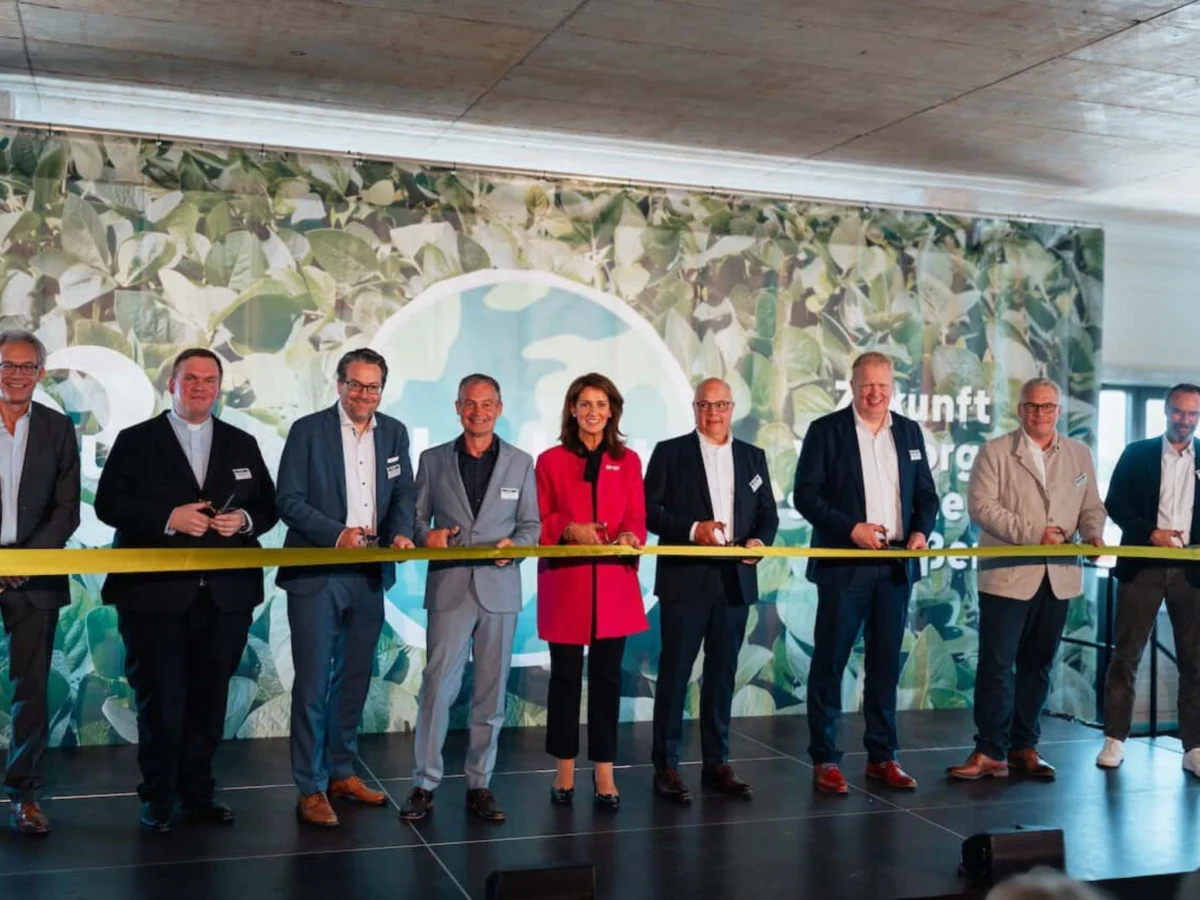
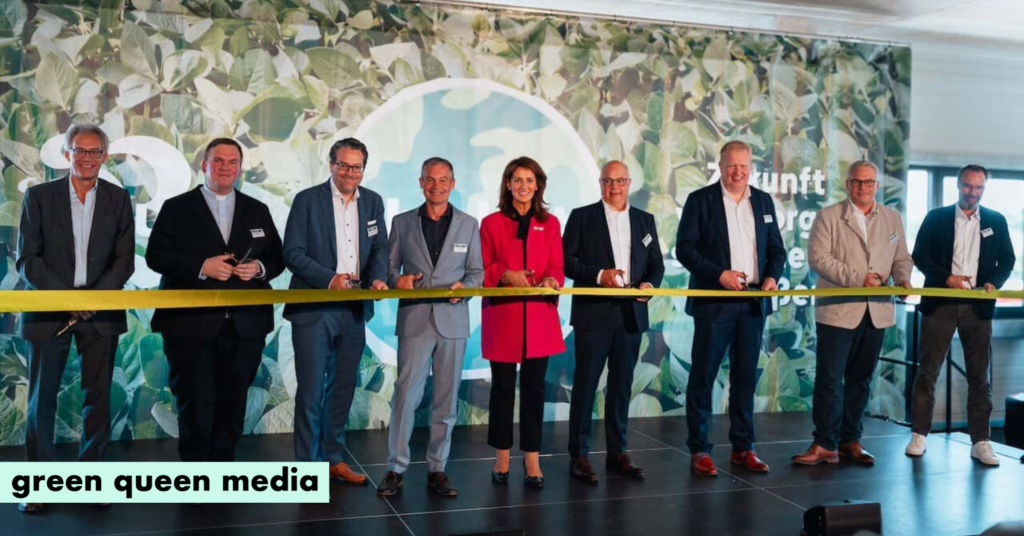
Germany’s Bauer Group has inaugurated a significant new production and innovation facility in Wasserburg am Inn, Bavaria, marking a strategic move to bring the manufacturing of its plant-based dairy alternatives in-house. This development underscores the company’s commitment to leveraging Germany’s robust local infrastructure and its sophisticated raw material supply chain to meet the escalating global demand for dairy-free products. The new hub is designed to streamline operations, enhance product development, and solidify Bauer’s position in the burgeoning plant-based food market.
The facility represents a substantial investment by Bauer Group, aimed at achieving greater control over its production processes and ensuring the consistent quality of its plant-based milk and yogurt offerings. Previously, the company relied on external sourcing for key ingredients, particularly the soy base essential for many of its non-dairy products. By establishing this integrated hub, Bauer can now produce its soy base internally, a move that promises to shorten the supply chain significantly. This vertical integration is also expected to contribute to a reduction in transportation emissions, aligning with the company’s broader sustainability goals.
A cornerstone of Bauer’s strategy is its emphasis on regional sourcing. The company is actively collaborating with farms in the surrounding Bavarian region to cultivate the necessary raw materials, primarily soybeans. This initiative not only aims to create a more resilient and localized supply chain but also fosters closer relationships with agricultural partners. By encouraging its supplier farms to incorporate crops like soybeans into their existing operations, Bauer is reinforcing its commitment to a production model that is deeply rooted in its immediate geographical area. This approach is gaining traction across the food industry as companies seek to mitigate supply chain disruptions and enhance their environmental credentials.
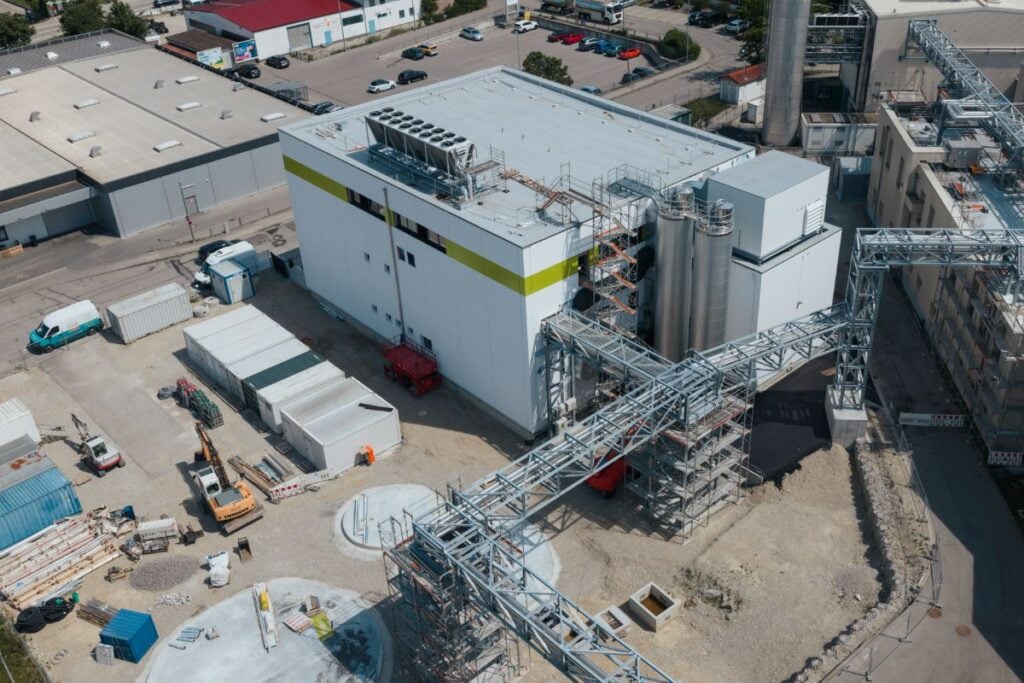
The technical backbone of this ambitious project was provided by GEA, a global leader in food processing and engineering solutions. GEA was responsible for the turnkey delivery of the facility’s core processing technology, a complex undertaking that spanned approximately 15 months from conception to near-completion. The collaboration between Bauer and GEA highlights the growing importance of specialized engineering expertise in the rapid expansion of the plant-based food sector. Production at the Wasserburg am Inn facility is slated to commence next month, marking a new era for Bauer’s plant-based dairy operations.
GEA’s Engineering Expertise Drives In-House Production Capabilities
GEA’s role in the Wasserburg am Inn project was comprehensive, encompassing the supply and implementation of the entire process technology required for the production of the soy base. This includes the intricate journey from the intake of raw soybeans to the creation of a finished concentrate that will serve as the foundation for Bauer’s diverse range of milk and yogurt alternatives. For GEA, this project represents a significant milestone, being their first undertaking of this magnitude for in-house plant-based base production for a major food manufacturer.
The engineering giant acted as a single-source provider for Bauer, guiding the project from its nascent conceptual stages through process development and ultimately to the commissioning of an operational plant. GEA’s involvement covered a multitude of critical steps. This included the meticulous reception and storage of raw soybeans, followed by precise mixing and grinding processes. Advanced decanter technology was employed for efficient solids separation, ensuring optimal yield and purity. Thermal inactivation, utilizing sophisticated heating technologies, was implemented to ensure product safety and stability. The process also incorporates dedicated tank storage for intermediates and finished concentrates, along with comprehensive water treatment systems and integrated cleaning-in-place (CIP) solutions to maintain stringent hygiene standards. While GEA provided the foundational soy base production, Bauer will independently manage the subsequent fermentation and filling processes to transform this base into finished plant-based dairy products.
The contract between Bauer and GEA was awarded in May 2025, with installation commencing in January of the following year. This accelerated timeline was made possible by GEA’s integrated approach, which brought together multiple expert teams. These included seasoned dairy processing specialists from Munich and process development experts from GEA’s technology centers in Ahaus and Oelde. These teams collaborated closely to refine initial process concepts and generate crucial performance data, laying a solid groundwork for the project’s success.
Sebastian Bodmeier, technical project manager at Bauer, expressed strong satisfaction with the collaborative effort. "Because GEA brought together testing, process design, engineering, and implementation under one roof, our project was able to move full steam ahead," Bodmeier stated. "We had a single point of contact for the entire process chain – that saved us time in every phase of the project without having to compromise on quality." This streamlined approach minimized communication overhead and ensured a cohesive and efficient execution of the complex engineering task.
Bauer Capitalizes on Regional Strengths to Lead Germany’s Plant-Based Market
The strategic decision by Bauer to establish this advanced facility in Bavaria is closely tied to Germany’s prominent position as Europe’s leading market for plant-based foods. Consumer adoption of dairy alternatives has seen sustained growth, driven by increasing awareness of health, environmental, and ethical considerations. In 2025 alone, purchases of milk and yogurt alternatives in Germany experienced robust growth of 8% and 10% respectively, collectively accounting for a significant 47% of the entire plant-based sector’s sales within the country. This market dynamism presents a fertile ground for companies like Bauer to expand their offerings and solidify their market share.
Michael Klamt, a project manager at GEA, underscored the significance of this collaboration within GEA’s broader strategic vision. "The fact that we were able to support Bauer as a single-source partner from the initial feasibility study all the way to a fully operational plant was essential to reliably meeting such an ambitious timeline," Klamt remarked. This sentiment highlights GEA’s dedication to offering end-to-end solutions and its recognition of the plant-based food sector as a key area for future growth.
GEA has been making substantial investments in advancing alternative protein manufacturing technologies. Since 2023, the company has allocated significant capital towards establishing state-of-the-art Application and Technology Centers in Germany and the United States. These centers serve as crucial hubs for food, ingredient, and biotechnology companies, providing them with the resources and expertise to develop and test pilot-scale production processes for emerging areas such as precision fermentation, cell cultivation, and other advanced biomanufacturing applications.
Beyond these primary centers, GEA’s global footprint in food technology includes specialized hubs located in Skanderborg, Denmark, focusing on bioreactors; Oelde, Germany, concentrating on cell separation technologies; and Bakel, Netherlands, dedicated to plant-based food processing. Furthermore, GEA is actively collaborating with the Biotechnology Fermentation Factory, an open-access facility situated within the Nizo Food Innovation Campus in Ede, Netherlands. This partnership aims to develop and deliver a precision and biomass fermentation upscaling line, further solidifying GEA’s commitment to innovation in the alternative protein space.
Heiko Modell, CEO of Bauer Group, articulated the company’s forward-looking perspective. "From both a sustainability and a business perspective, I am convinced that the opening of our production and innovation center is a crucial step toward moving forward in a future-oriented way," Modell stated. "We firmly believe that regional production of plant-based milk alternatives is the future." This statement encapsulates Bauer’s dual focus on environmental responsibility and long-term business viability, positioning regional production as a strategic imperative for sustained growth and market leadership in the evolving food landscape.
The strategic establishment of this in-house production and innovation hub in Bavaria signifies more than just an expansion of manufacturing capacity for Bauer. It represents a profound commitment to enhancing supply chain resilience, reducing environmental impact, and fostering closer ties with local agriculture. By bringing soy base production under its direct control, Bauer is not only optimizing its operational efficiency but also reinforcing its brand promise of quality and sustainability. This move is expected to have a ripple effect, potentially influencing other food manufacturers to re-evaluate their sourcing and production strategies in the rapidly expanding plant-based sector. The integration of cutting-edge technology from GEA further solidifies Bauer’s position as a forward-thinking leader, poised to capitalize on the sustained growth of the plant-based dairy market in Germany and beyond. The company’s emphasis on regional sourcing and local production aligns with a growing consumer preference for transparency and sustainability in their food choices, a trend that is likely to shape the industry for years to come.
