
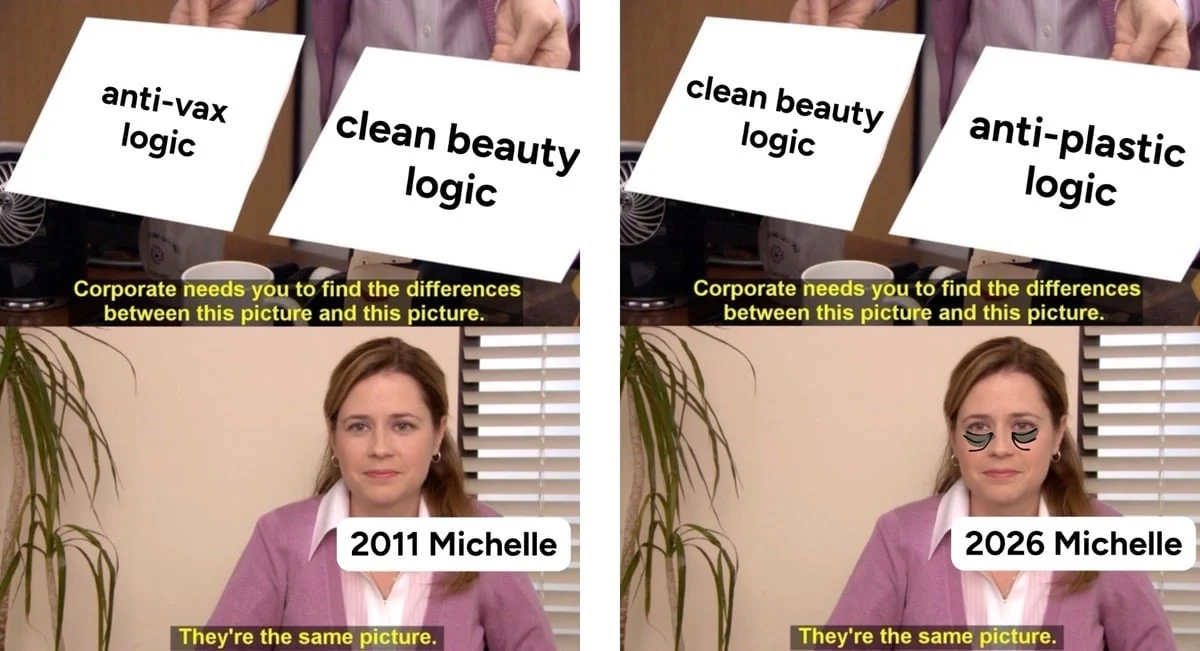
A growing concern among science communicators and experts is the observation that the "plastic-free" movement, despite its commendable environmental intentions, is increasingly mirroring the problematic, pseudoscientific approaches previously seen within the "clean beauty" sphere. This parallel raises significant concerns that well-meaning efforts to reduce plastic waste could inadvertently lead to counterproductive environmental outcomes and a broader erosion of scientific literacy. The phenomenon was recently highlighted by Michelle Wong of Lab Muffin Beauty Science, who drew attention to a Threads post from @idea.soup speculating that "the anti-polyester movement is about to become a right-wing pipeline." This assertion resonated deeply with Wong, who initiated her science communication work in 2011 precisely because she recognized the "non-toxic" clean beauty movement’s potential to serve as a conduit to anti-vaccination beliefs. The underlying logical fallacies and the demonization of specific, often benign, substances such as aluminum and formaldehyde were strikingly similar across both movements.
The Clean Beauty Precedent: A History of Misinformation
The clean beauty movement, which gained significant traction in the 2010s, is characterized by its emphasis on "natural," "non-toxic," and "free-from" ingredients. While ostensibly promoting safer products, critics, including scientists and dermatologists, have consistently pointed out its reliance on the appeal to nature fallacy and a fundamental misunderstanding of toxicology. The movement often cherry-picks scientific data, misinterprets study findings, and perpetuates fear-mongering around synthetic ingredients, many of which are proven safe and effective. For example, parabens, widely used as preservatives, have been erroneously linked to cancer based on misinterpreted studies that failed to establish causation or consider relevant dosages. This narrative, built on anxiety and a distrust of conventional science, fostered an environment where unproven claims thrived, often to the benefit of brands marketing "clean" alternatives at premium prices. Wong’s early work specifically aimed to debunk these myths, recognizing the danger in a movement that, by demonizing specific substances without scientific backing, could lead consumers down a path of distrust towards established scientific consensus, including public health initiatives like vaccination.
The Emergence of the "Plastic-Free" Narrative
Today, the "anti-plastic" trend appears to be following a similar trajectory. Beauty brands and influencers are increasingly promoting "plastic-free" claims, often accompanied by alarming rhetoric about microplastics and the perceived toxicity of all synthetic polymers. This messaging, much like its "clean beauty" predecessor, frequently employs blanket condemnations rather than nuanced, evidence-based discussions. Consumers are urged to switch to "eco-friendly" alternatives, often without a comprehensive understanding of the true environmental impact of these substitutes across their entire life cycle. The focus is almost exclusively on the end-of-life disposal of plastics – landfills, ocean pollution, and the slow degradation – while often overlooking other critical environmental factors such as carbon emissions, water usage, and resource depletion associated with alternative materials.
Key Parallels in Misinformation and Flawed Logic
Several striking parallels exist between the anti-plastic movement and clean beauty, illustrating a pattern of flawed reasoning and selective scientific engagement:
1. Appeal to Nature Fallacy:
Both movements heavily rely on the appeal to nature fallacy, asserting that "natural" is inherently good and safe, while "synthetic" or "man-made" (like plastic) is bad and harmful. In clean beauty, this manifests as the rejection of synthetic preservatives or fragrances in favor of "natural" alternatives, some of which may be less effective, more allergenic, or even toxic in high concentrations (e.g., essential oils). Similarly, the "plastic-free" narrative often champions materials like glass, aluminum, or paper simply because they are "natural" or perceived as traditional, without a thorough assessment of their environmental footprint. Bioplastics, derived from natural sources, are also frequently presented as unequivocally superior, despite many requiring specific industrial composting facilities that are not widely available, or having their own complex environmental trade-offs in terms of land use, water, and energy. This simplistic "plastic = bad, natural = good" dichotomy ignores the fundamental scientific principle that a substance’s origin does not dictate its safety or environmental impact; arsenic, for instance, is entirely natural but highly toxic.
2. Ignoring the Fundamentals of Relevant Science: Life Cycle Assessment (LCA)
Just as clean beauty often disregards basic toxicology principles like "the dose makes the poison," the blanket "plastic-free = better for the environment" claims often ignore the foundational science of sustainability, particularly Life Cycle Assessment (LCA). LCA is the internationally recognized scientific standard for quantifying a product’s environmental impact across its entire existence, from raw material extraction and manufacturing to transportation, consumer use, and end-of-life disposal.
Crucially, for many products, the "end-of-life" stage (e.g., whether it’s recyclable or compostable) is not the most significant contributor to its overall environmental impact. Transportation, manufacturing, and raw material sourcing often carry a much heavier burden. A 2018 study in Journal of Cleaner Production highlighted that consumers tend to overemphasize end-of-life considerations due to a limited understanding of product origins, leading to incorrect judgments about environmentally preferable options.
Most discussions around plastics are almost entirely focused on end-of-life issues like microplastics, recycling rates, landfills, and oceanic "trash islands." This narrow focus often overlooks climate change, which scientists overwhelmingly agree is the most pressing environmental threat. When assessed holistically, plastic packaging frequently demonstrates advantages in terms of carbon emissions. For instance, a 2011 Denkstatt report found that switching from plastic to alternatives like glass, paper, or aluminum would, on average, require 3.6 times more material, 2.2 times more energy, and result in 2.7 times more carbon emissions. This is largely due to plastics’ lightweight nature, which significantly reduces transport-related fuel consumption and emissions, and their efficiency in material usage compared to heavier, bulkier alternatives. While these benefits are not universal, they underscore the necessity of comprehensive LCA rather than emotional appeals.
3. Citing Studies with Serious Methodological Issues: The Microplastics Dilemma
A concerning parallel is the reliance on studies with significant methodological flaws to support fear-based narratives. Much like clean beauty narratives often cite poorly designed studies or misinterpret legitimate research on ingredients like phthalates or parabens, the microplastics discussion frequently leverages studies with critical experimental weaknesses. Measuring minuscule amounts of any substance accurately is challenging, but microplastics present unique difficulties. Many studies suffer from issues that lead to false positives or exaggerated numbers, producing sensational, headline-grabbing results.
For example, pyrolysis-gas chromatography-mass spectrometry (Py-GCMS), a common quantification method, can misidentify fats as polyethylene unless meticulously corrected through additional experiments. This can lead researchers to report significantly higher microplastic concentrations than are actually present. This issue was implicated in a widely circulated study that controversially claimed a "spoon’s worth of microplastics in our brains." Furthermore, contamination is a pervasive problem, given that microplastics are ubiquitous. Many studies inadvertently count microplastics originating from lab equipment, clothing, or even researchers’ gloves as part of the sample, further inflating reported levels. These technical nuances are often lost in public discourse, creating fertile ground for misinformation.
4. Assuming Presence Means Harm: Correlation vs. Causation
A prevalent logical leap in both movements is equating the mere presence of a substance with causation of harm. In clean beauty, the infamous "parabens in breast tumors" study is a prime example. While parabens were detected in tumor tissue, the study failed to measure paraben levels in healthy tissue for comparison, establish a dose-response relationship, or account for numerous other confounding factors. This led to a widespread, unscientific conclusion that parabens cause breast cancer.
Similarly, finding microplastics in diseased tissues, such as arterial plaque or the brains of individuals with dementia, does not automatically imply that microplastics are the cause of the disease. Such correlations can be explained by several factors:
- General exposure: Microplastics are so widespread that their presence in any tissue is not surprising.
- Confounding factors: The individuals with diseased tissue might have other lifestyle factors or genetic predispositions that are the true causes, with microplastics being an incidental finding.
- Reverse causation: The diseased tissue itself might be more prone to accumulating microplastics, rather than the microplastics initiating the disease.
This distinction between correlation and causation is a cornerstone of scientific inquiry, often overlooked in emotionally charged discussions.
5. Ignoring Other Reasons for Material Use: The Unsung Benefits
Both movements frequently overlook the crucial functional benefits of the materials they demonize. Clean beauty’s rejection of parabens, for instance, forced manufacturers to switch to alternative preservatives that often require higher concentrations to be effective, can be more irritating for sensitive skin, or have a narrower spectrum of antimicrobial activity, potentially compromising product safety and shelf-life.
Similarly, the anti-plastic narrative often ignores the multifaceted advantages of plastics beyond their environmental impact (or lack thereof, in some LCA contexts):
- Safety: Plastics are shatterproof, making them ideal for packaging products used in bathrooms or around children, reducing injury risk compared to glass.
- Hygiene and Sterility: In medical applications, plastics are indispensable for sterile packaging, single-use instruments, and critical healthcare devices, preventing contamination and disease transmission.
- Product Stability and Efficacy: Plastics offer excellent barrier properties, protecting sensitive ingredients from oxygen, light, and moisture, thereby extending product shelf life and maintaining efficacy.
- Accessibility and Cost-Effectiveness: Plastic packaging is generally less expensive to produce and transport, making products more accessible to a wider demographic, particularly important for essential goods.
Ignoring these practical, safety, and economic considerations leads to a skewed and incomplete understanding of material choices.
6. Science-Washing and Misguided Expertise:
A significant concern across both movements is the phenomenon of "science-washing" – the deceptive use of scientific jargon, imagery, or selective data to lend credibility to unsubstantiated claims. Many brands and influencers, while professing a commitment to science, promote "plastic-free" products and content based on myths, supported by cherry-picked evidence and convenient "experts" whose qualifications may not align with the claims being made. This practice is not unique to beauty or sustainability; it is prevalent in industries like fitness and wellness.
Regulatory bodies in major regions, including the US Federal Trade Commission (FTC), the UK Competition and Markets Authority (CMA), and the Australian Competition and Consumer Commission (ACCC), have issued guidance deeming unsubstantiated sustainability claims as misleading and deceptive. Responsible brands are expected to engage qualified sustainability experts for claim vetting, yet many prioritize marketing narratives over expert advice.
A common pattern involves misinterpreting relevant expertise. For example, a marketing executive might claim sustainability expertise, or a social media influencer with no background in environmental science might issue pronouncements on complex LCA data. In clean beauty, this manifested as nutritionists offering advice on toxicology or chemists without dermatological expertise dictating skincare formulations. This misuse of authority figures undermines genuine scientific discourse and misleads consumers.
Broader Implications and Societal Impact
The proliferation of misinformation within the anti-plastic movement, mirroring the clean beauty phenomenon, carries significant societal and environmental implications. Firstly, it diverts resources and attention away from genuinely impactful sustainability strategies. Consumers, misled by performative greenwashing, might adopt alternatives that, when viewed holistically, have a greater overall environmental footprint. The Dieux Skin example, where aluminum samples were promoted as "sustainable" alongside limited-edition nylon/polyester tote bags (mistaken by customers for plastic-free), illustrates how brands can capitalize on green narratives while potentially increasing consumption and using materials with their own environmental costs.
Secondly, this trend contributes to a broader erosion of trust in scientific institutions and expertise. When complex scientific issues are reduced to simplistic "good vs. bad" binaries, the public becomes less equipped to critically evaluate information, making them more susceptible to misinformation across various domains, including public health.
Finally, the emotional and often fear-driven rhetoric can foster "eco-anxiety" without providing constructive, evidence-based solutions. While reducing plastic waste is a legitimate goal, blanket demonization without proper evidence assessment leads to misdirected efforts, ultimately hindering progress towards better human and environmental health. As Michelle Wong and Jen Novakovich frequently highlight, many of the same voices that previously propagated fear about parabens and phthalates have now pivoted to microplastics, demonstrating a pattern of opportunistic fear-mongering.
The Challenge of Motivated Reasoning
A critical factor exacerbating this issue is motivated reasoning and confirmation bias, where individuals selectively accept evidence that aligns with their pre-existing beliefs or political/social identities. This phenomenon is deeply embedded in many anti-science movements, including clean beauty, and is increasingly evident in the plastic debate.
A recent example is the reaction to The Guardian‘s article on January 13, 2026, which critically examined methodological issues in microplastic measurement and corrected previous reporting on the "brain microplastic" study. This was a commendable act of journalistic integrity, delving into complex science and rectifying past misinformation. However, the article faced accusations of being "bought by Big Plastic" from some quarters, largely because it quoted a former Dow chemist. This dismissal occurred despite The Guardian also quoting two independent scientists from public institutions who echoed the same concerns, and referencing a response letter penned by nine European scientists working in public research. As cosmetic scientist Jen Novakovich aptly states, "Discounting something solely based on funding source or affiliation is actually the opposite of critical thinking." While financial conflicts of interest are a valid consideration, they should not be the sole basis for dismissing arguments; the arguments themselves must be critically evaluated. The Guardian article, presented in an accessible manner, provided ample opportunity for non-experts to engage with the nuanced scientific arguments.
Towards an Evidence-Based Future
The work of science communicators like Michelle Wong and Jen Novakovich (The Eco Well) is crucial in navigating this landscape of environmental misinformation. Novakovich, currently pursuing a PhD on the impacts of environmental misinformation, provides invaluable resources for understanding microplastics, packaging sustainability, and greenwashing.
Ultimately, moving forward requires a commitment to critical thinking, evidence-based decision-making, and a holistic perspective. While the aspiration to reduce plastic waste and mitigate environmental harm is vital, achieving these goals demands adherence to scientific principles, rigorous data analysis, and an understanding of complex trade-offs. Brands, influencers, and consumers alike must move beyond simplistic narratives and engage with the nuanced realities of sustainability, ensuring that genuine efforts lead to genuinely positive outcomes for both human well-being and the planet.
References
Carrington D. ‘A bombshell’: doubt cast on discovery of microplastics throughout human body. The Guardian. January 13, 2026.
Elias M. Should you be freaking out about microplastics? SBS News. November 6, 2025.
Herbes C, Beuthner C, Ramme I. Consumer attitudes towards biobased packaging – A cross-cultural comparative study. J Clean Prod. 2018;194:203-218. DOI: 10.1016/j.jclepro.2018.05.106.
Novakovich J. Out for 2026: Beauty businesses claiming to be “eco-friendly” because of some buzz word, without any kind of valid proof. Instagram @theecowell. January 7, 2026.
Novakovich J. “Sustainable” Packaging with Dan Coppins Podcast. The Eco Well. January 26, 2022.
Novakovich J. The Truth About Microplastic. Podcast Recap. The Eco Well. May 16, 2025.
Novakovich J. So… we don’t have a spoonful of microplastic in the brain? Instagram @theecowell. January 20, 2026.
Novakovich J, Coppins D. Sustainability in Packaging Fireside Chat. Presentation at: Sustainable Beauty E-Summit; March, 2022.
Symphony Environmental. Denkstatt Report. 2011.
Wong M. Are plastics and petrochemical products bad for the environment? Lab Muffin Beauty Science. June 3, 2023.
Wong M. Plastic Spoon in Your Brain? YouTube @labmuffinbeautyscience. April 14, 2025.
Wong M. “Plastic-free” is the new clean beauty: a treatise. Lab Muffin Beauty Science. January 21, 2026. Accessed March 30, 2026.
