
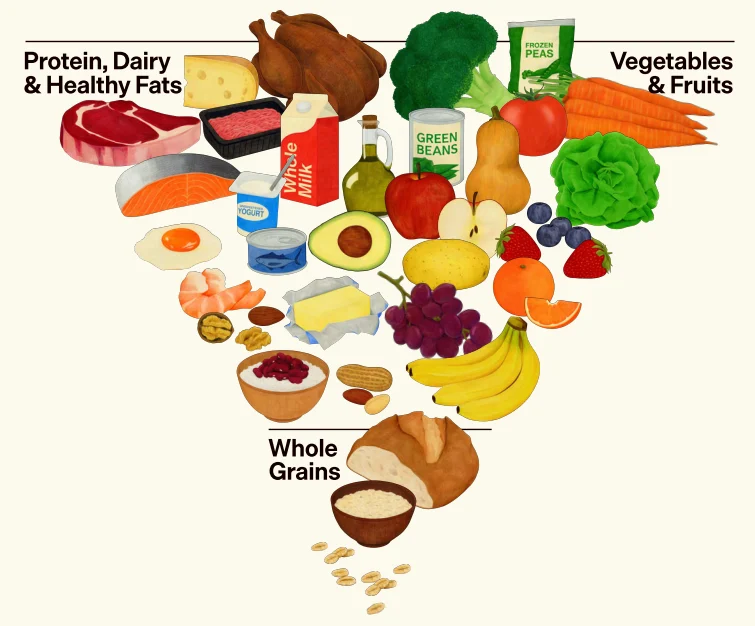
The United States Departments of Agriculture (USDA) and Health and Human Services (HHS) have unveiled the 2025-2030 Dietary Guidelines for Americans (DGAs), a pivotal document that shapes national nutrition policy and public health messaging. This iteration arrives with the prominent tagline "eat real food" and a more assertive stance on curbing added sugars and highly processed foods. However, alongside these progressive shifts, the release has also sparked considerable discussion and scrutiny due to a visually striking, inverted pyramid graphic and nuanced guidance that some experts believe may create confusion.
At the core of the public discourse is the newly introduced pyramid-like graphic. Unlike traditional representations that place grains and plant-based foods at the base, this inverted pyramid prominently features items such as steak, full-fat milk, and butter at its apex. This visual emphasis has led to questions about the guidelines’ recommendations on saturated fat, especially given the continued presence of the long-standing upper limit of 10% of total daily calories from saturated fat within the official text of the DGAs.
Frank Hu, Professor of Nutrition and Epidemiology and Chair of the Department of Nutrition at the Harvard T.H. Chan School of Public Health, acknowledged the positive direction of the guidelines in reinforcing the reduction of added sugars and processed items. "I think the new Guidelines move in the right direction by reinforcing the importance of reducing added sugars and cutting back on refined grains and other highly processed foods," stated Dr. Hu. However, he expressed reservations about potential inconsistencies. "There appear to be several contradictions within the DGAs and between the DGAs and the new pyramid. The mixed messages surrounding saturated-fat-rich foods such as red meat, butter, and beef tallow may lead to confusion and potentially higher intake of saturated fat and increased LDL cholesterol and cardiovascular risk."
Dr. Hu also pointed to the visual hierarchy of the pyramid, noting that while vegetables and fruits occupy a substantial portion, the depiction of whole grains is relatively diminished, despite the written guidance recommending 2-4 servings per day. This disparity between visual communication and detailed text underscores a long-standing challenge in public health messaging: the power of imagery and concise slogans to shape public perception, often overshadowing the complexities of the underlying scientific recommendations. This is precisely why institutions like Harvard’s Nutrition Source have historically developed complementary resources such as the Healthy Eating Plate and its predecessor, the Healthy Eating Pyramid, to offer clearer, more actionable visual guidance.
This analysis delves into key shifts and potential ambiguities within the 2025-2030 DGAs, examining both the written recommendations and the implications of the accompanying visual materials.
Redefining "Highly Processed" Foods: A Broader Scope
A significant evolution in the 2025-2030 DGAs is the explicit identification and recommendation to limit "highly processed foods." While previous editions have implicitly encouraged whole foods and cautioned against excessive added sugar and sodium, this is the first time the guidelines have directly addressed this broader category. The term "highly processed" can be inherently ambiguous, as food processing exists on a spectrum. However, the accompanying text offers specific examples of what to avoid, including sugar-sweetened beverages, salty or sweet packaged snacks, and ready-to-eat meals. Even visual elements, such as an illustrated yogurt container, are specified as "unsweetened," signaling a clear preference for less adulterated products.
In terms of macronutrients, the guidelines strongly advocate for whole, fiber-rich grains while calling for a substantial reduction in highly processed, refined carbohydrates, such as white bread. This emphasis on the quality and processing level of carbohydrates is a crucial step in addressing the health impacts associated with diets high in refined starches, which are often stripped of essential nutrients and fiber during processing.
Escalating Scrutiny on Added Sugars
The new DGAs adopt an unequivocally stringent approach to added sugars. The document states that "no amount of added sugars or non-nutritive sweeteners is recommended or considered part of a healthy or nutritious diet." This represents a more definitive stance than in previous guidelines. In practical terms, the recommendations propose that no single meal should exceed 10 grams of added sugars. While this meal-based metric may be challenging for individuals to track in their daily routines, it signifies a notable reduction from the previous guideline of limiting added sugars to 10% of total daily calories, which for a 2,000-calorie diet equated to approximately 50 grams per day.
Furthermore, the DGAs now advise that children should avoid added sugars entirely until the age of 10, an increase from the previous recommendation that began at age 2. This amplified focus on early childhood sugar intake highlights growing concerns about the long-term health consequences of early exposure to high-sugar diets, including increased risks of obesity, type 2 diabetes, and cardiovascular disease. Despite the clarity in identifying added sugars as a target for reduction, the guidelines offer less specific guidance on practical strategies for implementation in everyday life, leaving a gap for consumers seeking actionable advice.
The Paradox of Healthy Fats: Contradictory Messaging on Saturated Fat
The discourse surrounding dietary fat and its impact on long-term health remains a critical component of nutritional guidance. The consensus within the scientific community, as reflected in the DGAs, continues to emphasize the importance of the type of fat consumed, advocating for reduced saturated fat intake and increased consumption of unsaturated fats. The 2025-2030 DGAs maintain the existing recommendation that saturated fat consumption should not exceed 10% of total daily calories.
However, the messaging surrounding healthy fats becomes a source of confusion when the guidance groups animal-based foods higher in saturated fat—such as certain meats and full-fat dairy products—with plant-based foods lower in saturated fat. The guidelines do not offer clear direction on which of these food groups should be prioritized or limited to help individuals adhere to the upper saturated fat limit. This ambiguity is exacerbated by the visual prominence of foods like steak, cheese, whole milk, and butter in the inverted pyramid graphic, creating a dissonance between the written rules and the visual representation of what constitutes a healthy diet.
Saturated Fat Calculation: A Real-World Illustration
To illustrate the practical implications of the saturated fat guidelines, consider a 2,000-calorie daily diet, where the 10% limit translates to approximately 22 grams of saturated fat. The DGAs’ guidance on daily serving sizes by calorie level suggests three servings of dairy per day. If full-fat versions are chosen, this could include one 8-ounce cup of whole milk (approximately 5 grams of saturated fat), three-quarters of a cup of full-fat Greek yogurt (approximately 6 grams), and one ounce of cheddar cheese (approximately 6 grams). This combination alone accounts for roughly 17 grams of saturated fat.
Adding just one tablespoon of butter (about 7 grams of saturated fat) or beef tallow (about 6 grams), both suggested as cooking fat options, would push an individual over the 22-gram daily limit. This calculation does not even account for saturated fat present in other foods consumed throughout the day, including protein sources. This detailed breakdown highlights how easily the saturated fat limit can be exceeded when consuming common, full-fat animal products, especially when presented prominently in dietary guidance.
While olive oil is depicted in the pyramid and mentioned as a healthy fat option, its description as a source of "essential fatty acids" warrants further clarification. Dr. Hu elaborates on this point: "Olive oil contains mostly oleic acid, but relatively small amounts of essential fatty acids such as alpha-linolenic acid and linoleic acid compared with other oils that are rich sources of these fatty acids, such as soybean oil and canola oil." He further notes, "Importantly, all these plant oils have been shown to lower LDL cholesterol and cardiovascular risk compared with animal fats such as butter or tropical fats such as coconut oil and palm oil." This distinction is critical for consumers aiming to maximize their intake of essential fatty acids while minimizing saturated fat.
Questioning the Hype Around Protein Quantity
The 2025-2030 DGAs propose an increase in recommended protein intake for adults, suggesting 1.2 to 1.6 grams of protein per kilogram of body weight per day. This is a significant escalation from previous recommendations for minimum intake, representing a 50-100% increase. While protein needs are indeed variable—and broader ranges have been established by organizations like the National Academy of Medicine—such individual requirements are best determined in consultation with a healthcare provider or registered dietitian. The concern is that promoting higher protein intake without sufficient emphasis on quality could lead to excessive consumption, where surplus protein is converted to fat, potentially contributing to weight gain.
A notable omission from the guidelines is a clear differentiation in the quality of various protein sources. Given that many Americans already consume more than enough protein, the emphasis shifts to the health implications of different protein "packages"—the accompanying fats, fiber, sodium, and other nutrients inherent to each food.
"Substantially raising overall protein intake without distinguishing between different protein sources may have unintended long-term health implications," warns Dr. Hu. "Evidence continues to suggest that plant-based proteins and fish are associated with more favorable health outcomes than diets high in red meat." The guidelines do recommend a "variety of protein foods" from both animal and plant sources, but they lack explicit messaging on which options should be favored for regular consumption. This becomes particularly important when considering the DGAs’ stated saturated fat limits, as the choice of protein source can significantly influence overall saturated fat intake throughout the day.
A Vague Directive on Alcohol Consumption
The DGAs offer a general recommendation to "consume less alcohol for better health." However, the absence of concrete quantitative limits leaves consumers uncertain about what constitutes "less." This vagueness makes it difficult for individuals to translate the recommendation into actionable dietary changes, potentially undermining the guideline’s effectiveness.
Overlooking Environmental and Socioeconomic Dimensions
A persistent concern with the DGAs is their continued failure to incorporate the environmental and socioeconomic impacts of dietary choices. Food production and consumption have profound effects on the environment, contributing to greenhouse gas emissions, water usage, and land degradation. Conversely, dietary patterns are also heavily influenced by socioeconomic factors, including affordability, accessibility, cultural norms, and food environments. By omitting these crucial considerations, the DGAs may present recommendations that are not universally applicable or sustainable, potentially exacerbating existing health disparities.
Navigating the Complexities: The Bottom Line
The 2025-2030 Dietary Guidelines for Americans present a mixed bag of progress and persistent challenges. While the explicit targeting of added sugars and highly processed foods marks a positive step forward, and the technical adherence to saturated fat limits is acknowledged, certain aspects of the guidelines send conflicting messages. The inverted "New Food Pyramid" graphic, with its prominent display of saturated-fat-rich animal products, is particularly perplexing given the written recommendations.
Historically, adherence to dietary guidelines in the United States has been low, with research indicating that a significant portion of the population does not follow them. The effectiveness of this latest edition in fostering healthier eating habits remains to be seen, especially given the potential for confusion arising from the dual messaging. For individuals seeking clarity amidst these conflicting signals, consulting resources like the Harvard Healthy Eating Plate or seeking personalized advice from a registered dietitian is highly recommended.
A Contentious Path to the 2025-2030 DGAs
The process leading to the release of the 2025-2030 DGAs has been marked by notable controversy. Typically, the DGAs are updated every five years through a rigorous process involving the Dietary Guidelines Advisory Committee (DGAC), an independent panel of nutrition science experts. This committee reviews the latest scientific evidence, free from governmental or industry influence, and produces a Scientific Report. The 2025-2030 DGAC underwent extensive vetting, ethics training, and public comment periods.
However, in a departure from precedent, the current administration reportedly rejected the DGAC’s report. Instead, a supplemental scientific analysis was commissioned through a federal contracting process, involving individuals whose selection and methodology have been questioned by some experts. While the supplemental document asserts that evidence was evaluated based on scientific rigor and underwent internal quality checks and external peer review, concerns have been raised regarding a perceived lack of transparency in this process.
Deirdre Tobias, an assistant professor in the Department of Nutrition at Harvard T.H. Chan School of Public Health and a member of the 2025-2030 DGAC, expressed these concerns in a Q&A with Harvard Chan News. "As of today, there has not been transparency in who wrote the new DGAs," she stated. "Although there are documents included in the appendices by named scientists, there is no transparency in the methodology and rigor that was employed, or why certain topics were selected to be relitigated. The reviews themselves, as well as their overall presentation and integration, deviate significantly from the rigorous process that the HHS developed for the DGAs to ensure the evidence base and its committees’ conclusions were replicable, unbiased, transparent, and free from non-scientific influences."
Further scrutiny has been directed at the financial ties of some reviewers involved in the supplemental analysis to the beef and dairy industries, as disclosed in the supplemental document. Given the prominent placement of meat and dairy products in the final DGAs, these affiliations have raised questions about potential biases influencing the guidelines’ content. This departure from established procedures and the ensuing concerns about transparency and impartiality cast a shadow over the scientific integrity and public trust in the 2025-2030 Dietary Guidelines for Americans.
