
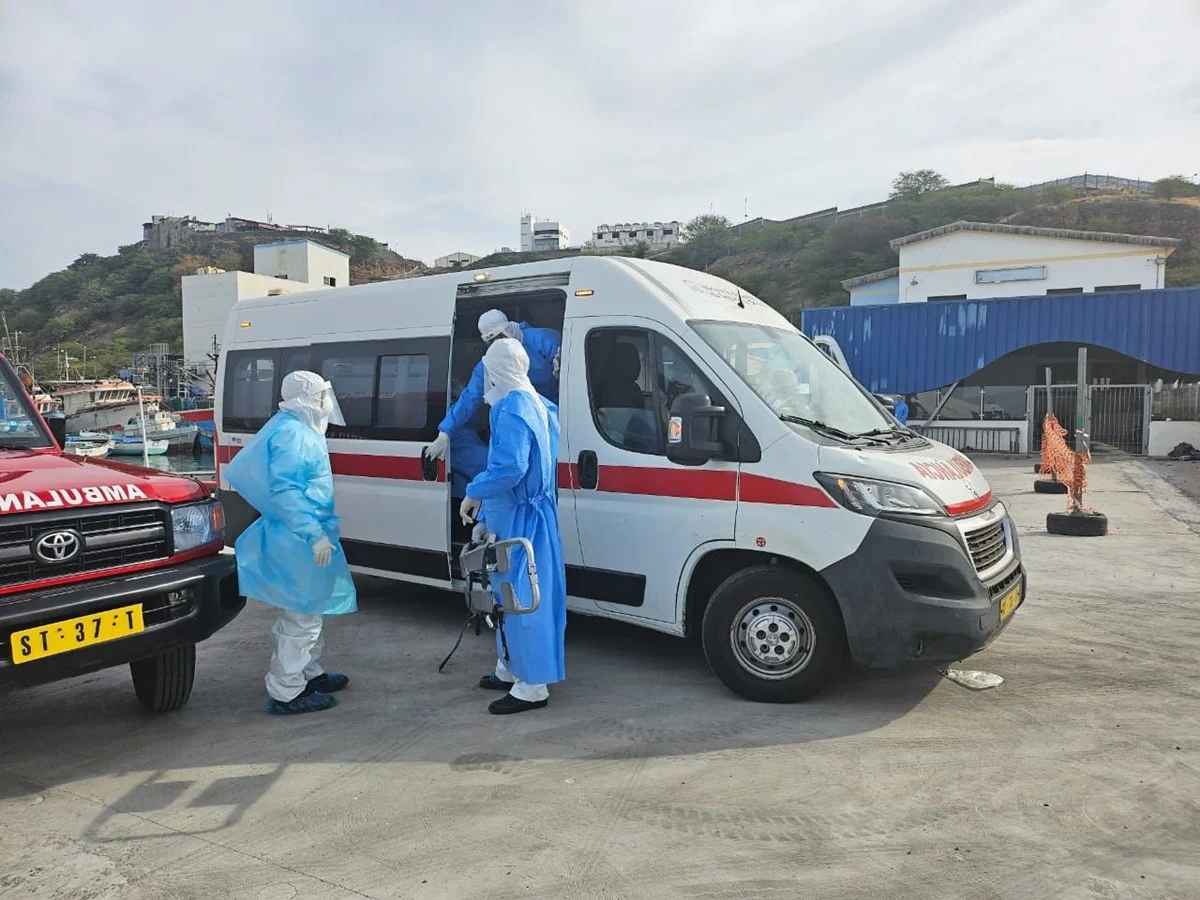
The World Health Organization (WHO) has officially launched a coordinated international response following the discovery of a cluster of hantavirus cases among passengers and crew members on the MV Hondius, a prominent expedition cruise vessel. During a comprehensive media briefing held at the WHO headquarters in Geneva, Director-General Dr. Tedros Adhanom Ghebreyesus confirmed that eight individuals have been affected by the virus to date, resulting in three fatalities. While only five of these cases have been laboratory-confirmed as hantavirus at this stage, the clinical presentation of the remaining three individuals has led health officials to treat the cluster as a singular, related outbreak. The pathogen identified in the confirmed cases is the Andes virus, a specific strain of hantavirus that carries significant public health implications due to its unique transmission characteristics.
The emergence of the Andes virus (ANDV) on a maritime vessel presents a complex challenge for international health authorities. Unlike most other hantavirus strains, which are typically transmitted to humans through the inhalation of aerosolized excreta from infected rodents, the Andes virus is the only known species capable of human-to-human transmission. Dr. Tedros emphasized that such transmission is generally linked to close and prolonged contact, yet its presence in the confined environment of a cruise ship necessitates rigorous containment and monitoring protocols. Despite the severity of the symptoms and the recorded mortality rate in this cluster, the WHO has currently assessed the overall public health risk as low for the general population, though the organization remains on high alert for secondary cases.
The Nature of the Andes Virus and Clinical Profile
The Andes virus is a member of the Orthohantavirus genus and is the primary cause of Hantavirus Pulmonary Syndrome (HPS) in South America, particularly in Argentina and Chile. HPS is a severe, sometimes fatal, respiratory disease. The incubation period for the virus can range from a few days to several weeks, typically averaging between one and six weeks. This delayed onset of symptoms is a primary concern for the WHO, as Dr. Tedros noted that more cases may be reported as passengers who were potentially exposed complete their incubation cycles.
Initial symptoms of the Andes virus infection often mimic the flu, including fever, muscle aches, and fatigue. However, as the disease progresses, it can rapidly evolve into acute respiratory distress. The lungs may fill with fluid, leading to severe breathing difficulties and heart failure. The case fatality rate for HPS caused by the Andes virus is notably high, often ranging between 25% and 40%. In the current MV Hondius cluster, the death of three out of eight suspected cases reflects this high virulence, highlighting the urgent need for the specialized medical interventions the WHO is currently deploying.
Chronology of the Outbreak and Response
The timeline of the incident began on Saturday, May 2, 2026, when the WHO was first notified of a suspected health event on board the MV Hondius. The vessel, known for its polar expeditions and voyages to remote regions, was at sea when the first cluster of respiratory illnesses was identified by the ship’s medical team. Following the notification, the WHO immediately activated its emergency response framework.
Between May 2 and the current briefing, the WHO has worked to establish the scope of the infection. Upon the confirmation of the Andes virus in five of the patients, the organization moved to mobilize resources across South America and Europe. On the ground—and at sea—the response has been swift. An expert infectious disease specialist has been deployed directly to the MV Hondius to conduct a comprehensive medical assessment. This expert is tasked with evaluating the health of all passengers and crew, gathering epidemiological data to trace the source of the initial infection, and determining the extent of potential exposure among those on board.
Simultaneously, the WHO coordinated the logistics for the transport of 2,500 specialized diagnostic kits. These kits were sourced from Argentina, the region where the Andes virus is endemic and where the highest level of diagnostic expertise for this specific strain resides. The kits are being distributed to laboratories in five different countries to ensure that any passengers transitioning through international hubs can be tested rapidly and accurately.
Implementation of International Health Regulations (IHR)
The management of the MV Hondius situation is being conducted under the strict guidance of the International Health Regulations (2005). The IHR is a legally binding instrument of international law that aims to assist the global community in preventing and responding to acute public health risks that have the potential to cross borders and threaten people worldwide.
Dr. Tedros highlighted that this event is a definitive example of why the IHR framework is vital. Because cruise ships involve passengers from multiple nationalities and travel between various jurisdictions, no single country can manage such an outbreak in isolation. The IHR facilitates the sharing of real-time data between the WHO and member states, ensuring that the ship’s flag state, the ports of call, and the home countries of the passengers are all operating with the same information.
“This event demonstrates the importance of global cooperation and solidarity in responding to health threats that know no borders,” Dr. Tedros stated. The WHO’s role is to act as the central coordinating body, ensuring that the rights of the passengers are respected while maintaining the safety of the global public. This includes developing operational guidance for the "safe and respectful disembarkation" of those on board, ensuring that they can return home or receive hospital care without further spreading the virus.
Logistical Challenges and Passenger Welfare
Managing an infectious disease outbreak on a vessel presents unique logistical hurdles. The confined spaces of a ship can facilitate the spread of viruses that have human-to-human transmission capabilities. However, the WHO has reiterated that the priority remains the dignity and safety of the passengers. Current efforts are focused on isolating those who show symptoms while monitoring the remaining population for any signs of fever or respiratory distress.
The WHO is currently drafting step-by-step operational guidance for the eventual arrival of the MV Hondius at a designated port. This guidance covers:
- Medical Screening: Rigorous protocols for testing all individuals before they leave the vessel.
- Quarantine Procedures: Coordination with local health authorities to provide facilities for those who may need to be monitored during the remainder of the incubation period.
- Sanitization: Comprehensive deep-cleaning protocols for the vessel to eliminate any potential environmental reservoirs of the virus.
- Onward Travel: Safe transport arrangements for non-infected passengers to prevent them from becoming vectors in transit hubs.
The deployment of the 2,500 diagnostic kits is central to this plan. By strengthening the testing capacity in the five countries most likely to receive passengers or handle the logistics of the disembarkation, the WHO aims to minimize the "dead time" between a suspected symptom and a confirmed diagnosis.
Broader Implications for the Maritime Industry and Public Health
The MV Hondius incident serves as a stark reminder of the vulnerability of the maritime industry to rare and emerging pathogens. While much of the world’s focus in recent years has been on respiratory viruses like influenza or coronaviruses, the appearance of a hemorrhagic and pulmonary pathogen like hantavirus on a cruise ship introduces a different set of risks.
Industry analysts suggest that this event may lead to a re-evaluation of health screenings for expedition cruises, particularly those operating in regions where zoonotic diseases like hantavirus are endemic. The Andes virus is typically associated with rural and forested areas of the southern Andes; how it was introduced to a maritime environment remains a subject of intense investigation. Potential scenarios being explored include the presence of infected rodents in food supplies or equipment loaded in South American ports, or an initial human infection contracted during a land-based excursion.
For the public health community, the successful containment of this cluster will be a litmus test for the efficacy of the updated IHR protocols. The speed with which Argentina was able to provide diagnostic kits and the WHO was able to deploy experts suggests a high level of preparedness. However, the high mortality rate associated with the Andes virus ensures that the stakes remain incredibly high.
Conclusion and Future Outlook
As the WHO continues to monitor the situation, the focus remains on preventing the "limited transmission" of the Andes virus from escalating into a larger outbreak. The organization has promised continued transparency and regular updates as the medical assessment on board the MV Hondius progresses.
Dr. Tedros concluded the briefing by reinforcing the three pillars of the current mission: providing high-quality care for the sick, ensuring the safety and dignity of the healthy, and preventing any further transmission. While the "low risk" assessment provides some reassurance to the global community, the medical world will be watching the MV Hondius closely over the coming weeks as the incubation period for the remaining passengers concludes. The lessons learned from this incident will likely inform international maritime health policy for years to come, emphasizing that in a globalized world, health security is a collective responsibility.
