
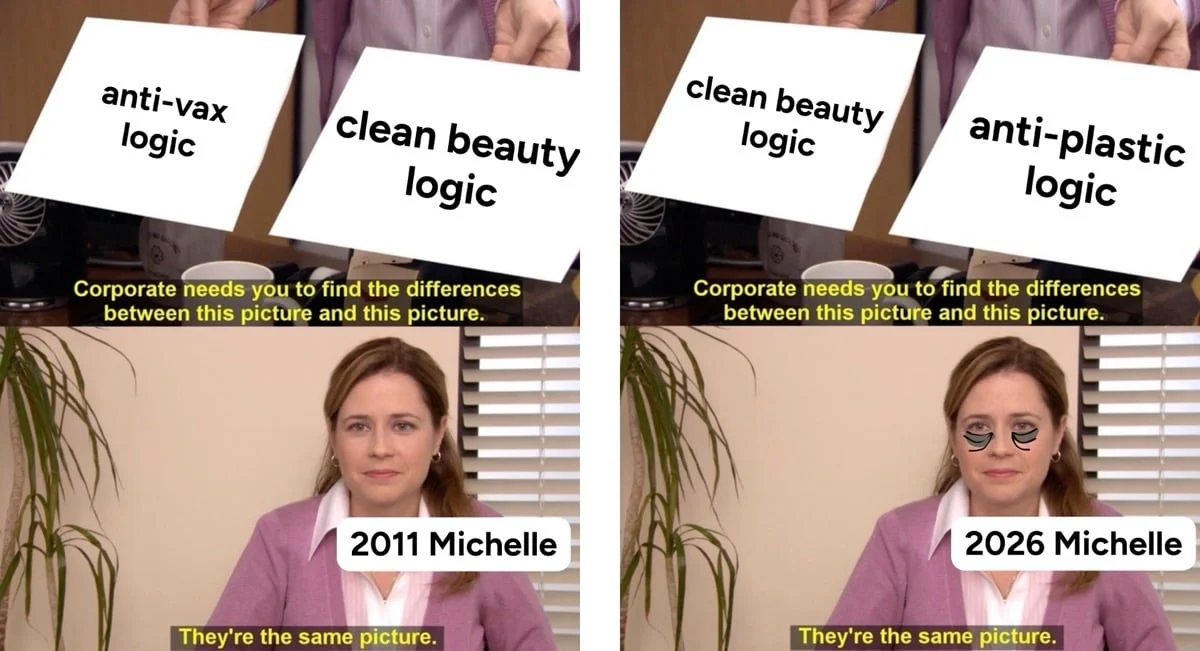
A growing movement advocating for "plastic-free" products and lifestyles is drawing comparisons to the controversial "clean beauty" trend, raising concerns among science communicators and experts about the spread of misinformation and its potential to undermine genuine environmental efforts. The parallel, highlighted by observations on social media platforms, suggests a similar pattern of unscientific claims, fearmongering, and a disregard for established scientific principles, ultimately leading to potentially counterproductive outcomes for both human and environmental health.
The Genesis of a Parallel Observation
The initial spark for this comparison emerged from a social media post on Threads by user @idea.soup, which presciently noted, "I don’t have any evidence for it but I have a weird feeling the anti-polyester movement is about to become a right-wing pipeline." This observation resonated deeply with Dr. Michelle Wong, a prominent science communicator behind Lab Muffin Beauty Science, who founded her platform in 2011 to counter the burgeoning "non-toxic" clean beauty movement. Wong recognized the similar logical fallacies and fear-based rhetoric employed by both movements.
The "clean beauty" movement, which gained significant traction in the 2010s, often demonized common cosmetic ingredients like parabens, sulfates, and phthalates, labeling them as "toxic" without sufficient scientific evidence regarding their safety at typical exposure levels. This rhetoric frequently echoed broader anti-vaccine sentiments, often targeting the same substances like aluminum and formaldehyde, and fostering a general distrust of synthetic ingredients and mainstream science. The striking similarities in messaging, particularly the blanket demonization of plastics and alarmist claims about microplastics, suggest a worrying replication of these patterns within the "plastic-free" discourse.
The Clean Beauty Precedent: A Cautionary Tale
The "clean beauty" phenomenon, driven by a desire for perceived purity and naturalness, capitalized on consumer anxieties about synthetic chemicals. Brands leveraged marketing tactics emphasizing "free-from" lists and "natural" ingredients, often without rigorous scientific backing. This led to a boom in products substituting well-researched, effective ingredients with alternatives that were either less effective, more allergenic, or had a greater environmental footprint, all while being marketed as superior. For example, the vilification of parabens, potent and safe preservatives, led many brands to switch to less effective or more irritating alternatives, potentially compromising product stability and increasing the risk of microbial contamination.
Despite widespread scientific debunking, the "clean beauty" narrative persisted, illustrating the power of emotionally charged messaging over evidence-based information. This historical context serves as a critical backdrop for understanding the current trajectory of the "plastic-free" movement, which, like its predecessor, often prioritizes perceived naturalness and simplicity over complex scientific realities.
Unpacking the Parallels: Six Key Themes
Several core themes highlight the striking similarities between the anti-plastic trend and the clean beauty movement:
1. The Appeal to Nature Fallacy: "Plastic = Bad, Natural = Good"
Central to both movements is the appeal to nature fallacy, the inherent belief that anything "natural" is inherently good or safer, while anything "synthetic" or man-made (like plastic) is inherently bad or dangerous. This oversimplification ignores the fundamental principle that a substance’s origin has no direct bearing on its toxicity or environmental impact. Natural substances can be highly toxic (e.g., arsenic, cyanide, many plant extracts), and synthetic materials can be benign or even beneficial.
In the context of plastics, this fallacy manifests as a blanket condemnation of all plastic materials, often pushing for alternatives like glass, paper, or aluminum, simply because they are "natural" or perceived as such. This ignores the complex lifecycle impacts of these alternative materials, often leading to choices that are less sustainable when viewed holistically.
2. Disregarding Foundational Science: The Case of LCAs and Toxicology
Just as clean beauty often ignores basic toxicology – the principle that "the dose makes the poison" – the anti-plastic movement frequently overlooks the fundamentals of sustainability science, particularly Life Cycle Assessment (LCA). LCA is the internationally recognized scientific standard for quantifying the environmental impact of a product across its entire lifespan, from raw material extraction, manufacturing, transport, use, to its end-of-life disposal or recycling.
Focusing almost exclusively on the end-of-life stage (e.g., plastic waste in landfills, microplastics) leads to a skewed understanding of environmental impact. Many consumers, influenced by visible waste, mistakenly assume end-of-life is the most significant factor. However, for numerous products, the environmental footprint associated with raw material extraction, manufacturing, and transportation far outweighs disposal issues. Studies have repeatedly shown that switching from plastic to heavier alternatives like glass or aluminum can dramatically increase energy consumption, greenhouse gas emissions, and material use during production and transport. For instance, a 2011 Denkstatt report, cited in the original article, found that replacing plastic with glass, paper, or aluminum could, on average, require 3.6 times more material, 2.2 times more energy, and result in 2.7 times more carbon emissions. Plastic’s lightweight nature, durability, and efficiency in packaging often translate to lower emissions during transport and reduced food waste due to extended shelf life, factors frequently ignored in "plastic-free" campaigns.
3. Methodological Flaws and Exaggerated Claims in Research
A significant concern revolves around the citation of studies with serious methodological issues, particularly in the realm of microplastics research. Measuring minute quantities of substances accurately is inherently challenging, and microplastics present unique difficulties. Contamination from lab environments (gloves, equipment, air) is a pervasive problem, leading to false positives or inflated findings. Moreover, certain analytical techniques, such as pyrolysis-GCMS (Py-GCMS), can misidentify other organic compounds (like fats) as polyethylene unless meticulously corrected, leading to exaggerated reports of microplastic presence in biological samples.
The widespread dissemination of studies claiming "a spoon’s worth of microplastics in our brains" often stems from such methodological shortcomings. While the scientific community acknowledges the presence and potential health concerns of microplastics, the interpretation and communication of preliminary or flawed research can lead to undue alarm and misdirected policy. Esteemed publications like The Guardian have begun to retract or qualify earlier sensational reports on microplastics, signaling a growing awareness within mainstream media of these scientific complexities.
4. Assuming Presence Equals Harm: The Correlation vs. Causation Fallacy
A critical fallacy frequently observed in both clean beauty and anti-plastic narratives is the assumption that mere presence of a substance automatically equates to harm. Finding parabens in breast tumors, or microplastics in diseased tissues (e.g., arterial plaques, brains of dementia patients), does not establish a causal link. Correlation is not causation. Such findings could be coincidental, or the presence of the substance might be a symptom rather than a cause, or even a protective factor. Confounding variables, reverse causation, or issues with study design (e.g., not comparing levels in healthy versus diseased tissue) often contribute to these misinterpretations.
This oversimplification bypasses the complex scientific process required to establish causality, including dose-response relationships, mechanisms of action, and epidemiological studies. It fosters a climate of fear by implying danger without providing the necessary context or evidence of actual risk.
5. Overlooking Practical Benefits and Trade-offs
The demonization of plastics often ignores the substantial functional benefits these materials provide, benefits that are often crucial for public health, safety, and accessibility. Plastics are invaluable for:
- Hygiene and Sterility: Essential in medical devices, food packaging, and personal care products, preventing contamination and spoilage.
- Durability and Safety: Protecting products from damage, preventing leaks, and ensuring product integrity.
- Accessibility and Affordability: Often the most cost-effective and lightweight material, making essential products accessible to a broader population.
- Reduced Environmental Impact (in specific contexts): As discussed with LCAs, plastics can offer lower overall environmental footprints than alternatives in terms of resource consumption and greenhouse gas emissions.
Just as parabens are highly effective preservatives that allow for safer product formulations with lower concentrations, plastics offer unparalleled advantages in many applications. A blanket ban or avoidance of plastic without considering these trade-offs can lead to less effective, more expensive, or even less safe alternatives, potentially exacerbating other environmental or social issues.
6. Science-Washing and the Rise of "Convenient Experts"
Both movements extensively employ "science-washing" – the deceptive use of scientific jargon or cherry-picked data to lend credibility to unsubstantiated claims. Brands and influencers often present themselves as champions of science while promoting products based on myths and misinformation. This involves selecting "experts" whose views align with the narrative, often overlooking their lack of relevant expertise or potential biases.
For example, a dermatologist may be an expert in skin physiology but not in toxicology or environmental science, yet their endorsement of "plastic-free" claims might be presented as scientific validation. Regulatory bodies in regions like the US (FTC), UK (CMA), and Australia (ACCC) have issued guidelines against misleading "eco-friendly" claims, emphasizing the need for robust, evidence-based substantiation. However, enforcement remains a challenge, and the public’s trust in seemingly scientific claims from influential figures can be easily exploited.
Broader Implications: Motivated Reasoning and Misdirected Efforts
The parallels extend beyond specific scientific arguments to encompass broader cognitive biases, particularly motivated reasoning and confirmation bias. Individuals tend to accept evidence that aligns with their pre-existing beliefs or identity groups and dismiss information that challenges them. This phenomenon is evident when legitimate scientific corrections, such as The Guardian’s updated reporting on microplastic measurement issues, are met with accusations of being "bought by Big Plastic" simply because one of the quoted experts has industry ties, despite other independent scientists confirming the same findings. Dismissing evidence solely based on perceived funding sources, rather than evaluating the arguments themselves, is a hallmark of uncritical thinking.
This environment of skepticism towards mainstream science and uncritical acceptance of alternative narratives poses significant risks. It can lead to:
- Misallocation of Resources: Efforts and investments are diverted towards addressing perceived threats (e.g., plastic waste as the primary environmental issue) rather than tackling scientifically identified priorities like climate change, which often benefit from plastic’s efficiency.
- Consumer Confusion and Exploitation: Consumers, genuinely wanting to make ethical choices, are misled into purchasing expensive, less effective, or environmentally detrimental "eco-friendly" alternatives.
- Erosion of Trust in Science: The constant stream of conflicting information, often presented with equal weight regardless of scientific rigor, erodes public trust in scientific institutions and expert consensus.
- Hindrance to Genuine Progress: Focusing on easily digestible, albeit often flawed, narratives prevents a nuanced understanding of complex environmental challenges and hinders the development of truly sustainable solutions.
The Call for Nuance and Evidence-Based Solutions
While acknowledging the legitimate need to reduce plastic waste and investigate potential health impacts of microplastics, the scientific community and responsible communicators advocate for a nuanced, evidence-based approach. This requires:
- Holistic Assessment: Utilizing tools like LCA to evaluate the full environmental footprint of materials and products, rather than focusing on isolated aspects.
- Critical Evaluation of Research: Discerning between preliminary, methodologically flawed studies and robust, peer-reviewed science.
- Understanding Risk and Dose: Recognizing that presence does not equal harm and that the dose and context of exposure are crucial in determining risk.
- Promoting Scientific Literacy: Empowering consumers to critically assess claims and understand basic scientific principles.
- Responsible Communication: Brands, influencers, and media outlets have a responsibility to present accurate, balanced information supported by scientific consensus.
The trajectory of the "plastic-free" movement mirrors the "clean beauty" phenomenon in its potential for misinformation and its reliance on emotional appeals rather than scientific rigor. As society grapples with urgent environmental challenges, it is imperative to learn from past mistakes and ensure that solutions are guided by robust scientific evidence, fostering genuine progress rather than misdirected efforts. The ultimate goal of better human and environmental health can only be achieved through critical thinking, transparent communication, and a commitment to scientific integrity.
