
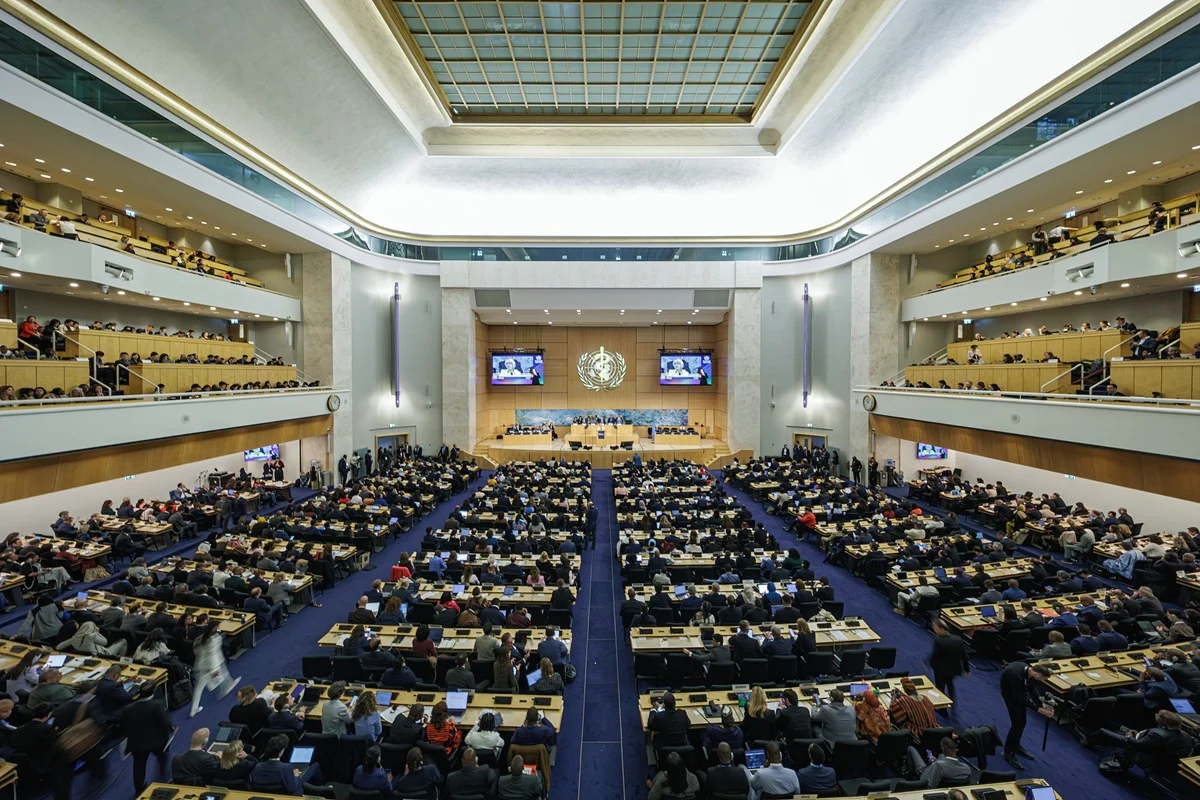
The 79th session of the World Health Assembly officially commenced today at the Palais des Nations in Geneva, Switzerland, marking a pivotal moment for international health diplomacy as member states gather to address the most pressing medical and systemic challenges facing the global population. The opening day was defined by the formal election of new leadership, high-level diplomatic addresses from heads of state, and the recognition of four distinguished individuals whose contributions have fundamentally shaped the landscape of modern public health. In a unanimous show of support, the Assembly elected Dr. Víctor Elías Atallah Lajam, the Minister of Public Health of the Dominican Republic, as the President of the 79th World Health Assembly. Dr. Atallah Lajam, a renowned cardiologist and public health advocate, takes the helm of the world’s highest health policy-setting body at a time when the World Health Organization (WHO) is navigating a complex post-pandemic recovery era and intensifying its efforts to achieve the Sustainable Development Goals (SDGs).
The governance of the 79th session was further solidified with the election of five Vice-Presidents representing the WHO’s diverse geographic regions: Dr. Mohamed Ali Al-Ghouj of Libya, Dr. Assa Badiallo Touré of Mali, Mrs. Katarzyna Drążek-Laskowska of Poland, Mrs. Neesha Mehta of Nepal, and Mr. Elias Kapavore of Papua New Guinea. This regional balance is critical for ensuring that the Assembly’s deliberations reflect the specific health needs and socioeconomic realities of both the Global North and the Global South. Additionally, the Assembly appointed Dr. Timur Sultangaziyev of Kazakhstan as the Chair of Committee A, which typically handles technical and programmatic matters, and Dr. Kwabena Mintah Akandoh of Ghana as the Chair of Committee B, which oversees administrative, financial, and legal affairs. Together, this leadership team will steer the week-long deliberations involving delegates from all 194 WHO Member States.
High-Level Addresses and Diplomatic Engagement
The high-level welcome segment of the Assembly featured a series of addresses from prominent global figures, emphasizing the intersection of health, peace, and sustainable development. H.E. Elisabeth Baume-Schneider, Federal Councillor of the Swiss Confederation, welcomed the delegates on behalf of the host country. In her remarks, she underscored Switzerland’s commitment to multilateralism and the central role of Geneva as a hub for international health governance. She was followed by the Special Guest of Honour, H.E. John Dramani Mahama, President of Ghana, who spoke passionately about the need for greater health equity and the strengthening of primary healthcare systems in Africa. President Mahama highlighted that the lessons learned from previous health crises must be institutionalized to prevent the widening of health disparities between nations.
The Assembly also received digital contributions from world leaders who could not attend in person but wished to signal their political commitment to the WHO’s mission. United Nations Secretary-General António Guterres, in a video message, reminded delegates that global health is a prerequisite for global security. He urged Member States to increase their predictable and sustainable funding for the WHO, noting that the organization’s ability to respond to future threats depends on its financial independence. Other video messages were delivered by H.E. Ahmad Al Sharaa, President of the Syrian Arab Republic, and H.E. Mia Mottley, Prime Minister of Barbados. Prime Minister Mottley, a vocal advocate for the "Bridgetown Initiative," specifically linked the health of the planet to the health of its people, calling for urgent action on the climate crisis, which she described as the greatest public health threat of the 21st century.
The afternoon session concluded with a significant address from H.E. Pedro Sánchez, the Prime Minister of Spain. Prime Minister Sánchez emphasized Spain’s role in global health solidarity, particularly in areas of organ donation, universal health coverage, and the promotion of a "One Health" approach that integrates human, animal, and environmental health. His presence at the Plenary underscored the high-level political importance that European nations are placing on the WHO’s current reform agenda.
Recognizing Excellence: The Global Health Awards
A highlight of the opening day was the presentation of the Awards for Global Health by WHO Director-General Dr. Tedros Adhanom Ghebreyesus. These awards are bestowed upon individuals who have demonstrated extraordinary leadership and a lifetime of dedication to public health. The 2026 recipients represent a broad spectrum of health disciplines and geographic impacts.
- Dr. Tore Godal: Known as a visionary in global immunization and health research, Dr. Godal was instrumental in the founding of Gavi, the Vaccine Alliance. His work has saved millions of lives by ensuring that life-saving vaccines reach the world’s most vulnerable children.
- Dr. Merceline Dahl-Regis: A pioneer from the Bahamas, Dr. Dahl-Regis was recognized for her relentless work in the elimination of vaccine-preventable diseases. She led the regional effort in the Americas to eliminate measles, rubella, and congenital rubella syndrome, providing a roadmap for other regions to follow.
- Dr. Mike Ryan: As the Executive Director of the WHO Health Emergencies Programme, Dr. Ryan has been at the frontlines of nearly every major health crisis of the last two decades, from Ebola to COVID-19. His award recognizes his "courageous leadership" and his ability to coordinate complex international responses under extreme pressure.
- Dr. Heba El Sewedy: An Egyptian philanthropist and founder of the Ahl Masr Foundation, Dr. El Sewedy was honored for her groundbreaking work in providing free treatment and trauma care for burn victims in the Middle East and Africa, a group often overlooked in traditional public health frameworks.
Context and Background of the World Health Assembly
The World Health Assembly is the supreme decision-making body of the World Health Organization. It meets annually in Geneva and is attended by delegations from all WHO Member States. Its main functions are to determine the policies of the Organization, appoint the Director-General, supervise financial policies, and review and approve the proposed program budget. The 79th session arrives at a critical juncture. The world is currently grappling with an "epidemiological transition," where the burden of non-communicable diseases (NCDs) like diabetes and heart disease is rising in developing nations, even as the threat of infectious diseases remains ever-present.
The WHA79 agenda is expected to focus heavily on the 14th General Programme of Work (GPW14), which outlines the WHO’s strategic objectives for the 2025–2028 period. Central to this strategy is the "WHO Investment Round," a new financing mechanism designed to ensure the organization has the flexible, predictable funding required to fulfill its mandate. Currently, a significant portion of the WHO’s budget is derived from voluntary contributions that are often earmarked for specific projects, which can limit the organization’s ability to respond to emerging crises or maintain core functions.
Supporting Data and Global Health Trends
The deliberations at WHA79 are informed by sobering data regarding the current state of global health. According to recent WHO reports, approximately 4.5 billion people—more than half of the world’s population—were not fully covered by essential health services as of the last fiscal year. Furthermore, the global health workforce shortage is projected to reach 10 million workers by 2030, primarily in low- and lower-middle-income countries.
Financially, the WHO is seeking to stabilize its base. The proposed budget for the upcoming biennium emphasizes a shift toward "country-level impact." Data suggests that for every $1 invested in the WHO, there is an estimated economic return of $35. This "return on investment" argument is expected to be a cornerstone of the discussions led by Committee B as they review the financial contributions of Member States.
Analysis of Implications and Broader Impact
The election of Dr. Víctor Elías Atallah Lajam as President of the Assembly is seen by analysts as a strategic nod to the growing influence of Latin American and Caribbean nations in global health policy. Under his presidency, there is expected to be a renewed focus on "health as a bridge for peace," particularly in regions experiencing civil unrest or economic instability.
Furthermore, the inclusion of leaders like Mia Mottley and Pedro Sánchez in the opening day’s proceedings signals a shift in how global health is categorized. It is no longer viewed merely as a technical or medical issue, but as a core component of national security, economic stability, and environmental sustainability. The presence of these leaders suggests that the "Pandemic Accord"—a proposed international treaty to improve prevention, preparedness, and response to future pandemics—remains a top priority, despite the diplomatic complexities involved in its negotiation.
The 79th World Health Assembly will continue over the next several days, with technical sessions covering a wide array of topics, including antimicrobial resistance (AMR), the health impacts of artificial intelligence, and the global strategy for maternal and child nutrition. The decisions made this week in Geneva will set the trajectory for international health efforts for the remainder of the decade. As the delegates move from the ceremonial opening to the rigorous work of the committees, the overarching theme remains clear: the need for a more resilient, equitably funded, and politically prioritized global health architecture.
