
A coalition of prominent civil society organizations, led by the World Wide Fund for Nature (WWF), the World Resources Institute (WRI), Madre Brava, and ProVeg International, has issued a compelling call to action for Europe’s supermarket sector. The initiative, launched under the banner of the "Plant-Rich Europe" campaign, urges retailers to significantly increase the proportion of plant-based food sales, aligning their business practices with the principles of the Planetary Health Diet. This ambitious campaign, supported by 21 additional organizations across 12 European countries, emphasizes the critical role of supermarkets as influential gatekeepers of food environments and calls for transparency and strategic shifts in product offerings to promote healthier, more sustainable dietary patterns.
The core demand of the Plant-Rich Europe campaign is for European supermarkets to publicly disclose the current ratio of sales derived from plant-based versus animal-derived foods. Furthermore, these retailers are implored to actively rebalance this ratio to align with the dietary recommendations outlined by the Eat-Lancet Commission’s Planetary Health Diet. This influential report, released in 2019, advocates for a global shift towards a diet that is both nutritious for humans and sustainable for the planet, recommending a significant increase in the consumption of fruits, vegetables, legumes, nuts, and whole grains, while reducing the intake of animal products.
A Call for Transparency and Tangible Targets
The campaign’s launch coincided with the "What’s in Store: Retail & the Future of Protein" summit held in Berlin, a significant event that brought together key stakeholders from the retail sector and sustainability advocacy groups. This strategic timing underscores the urgency of the message and the desire to engage directly with the decision-makers within Europe’s largest food retailers. Representatives from major supermarket chains, including Ahold Delhaize (Netherlands), Rewe and Lidl (Germany), Tesco (UK), and Migros (Switzerland), were present, indicating a potential for dialogue and future collaboration.
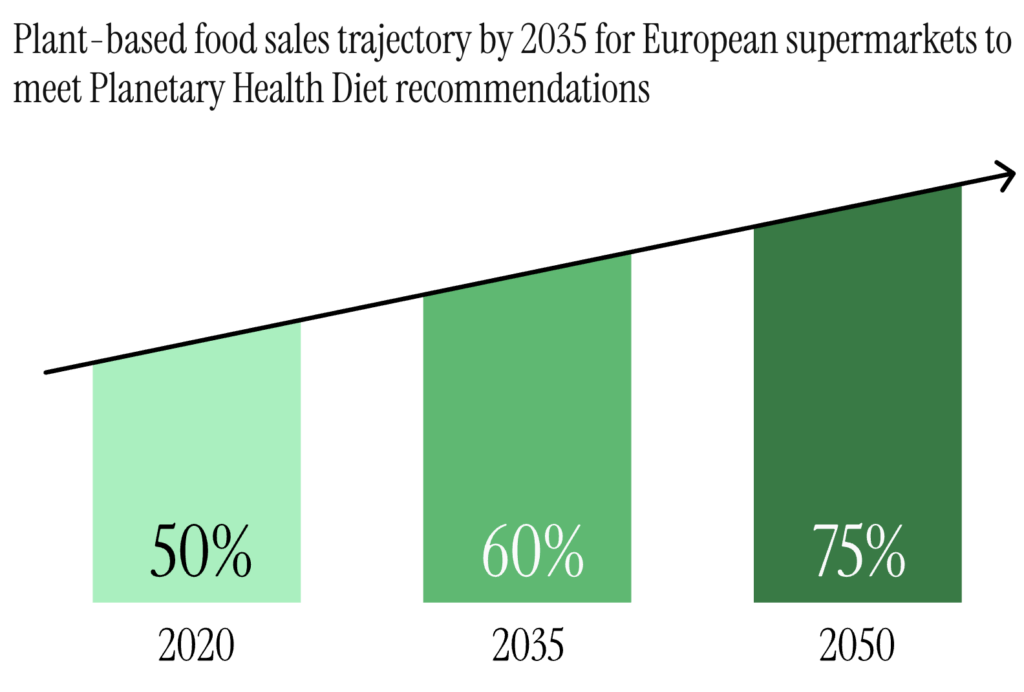
The organizations behind Plant-Rich Europe are not merely asking for a general increase in plant-based options; they are proposing specific, measurable targets. Drawing directly from the Planetary Health Diet framework, which aims for at least 75% plant-based foods by weight globally by 2050, the campaign suggests that European supermarkets should achieve a 60% share of sales from animal-free products by 2035. Crucially, this shift must be most pronounced within the protein category, where plant-based protein sources should constitute at least 33% of sales. Additionally, the campaign highlights the need for a significant reduction in dairy sales, proposing that they should account for no more than 29% of all food sales by the current year.
Mariella Meyer, senior manager of corporate sustainability at WWF Switzerland, articulated the unified sentiment of the civil society coalition: "This is a clear, united call from civil society, asking supermarkets to act now in a way that will provide their customers with healthy, affordable food and bring down the sector’s emissions." This statement encapsulates the multi-faceted benefits envisioned by the campaign: improved public health, economic accessibility of food, and substantial environmental impact reduction.
The Rationale Behind the Protein Transition
The impetus for the Plant-Rich Europe campaign stems from a growing body of scientific evidence highlighting the profound environmental, health, and economic consequences of current global dietary patterns, particularly the heavy reliance on animal agriculture. Supermarkets, as the primary conduits through which consumers access food, are identified as having immense power to shape these patterns. Their decisions regarding product assortment, pricing strategies, in-store placement, and promotional activities can significantly influence consumer purchasing behavior.
Environmental Imperatives:
The environmental footprint of animal agriculture is a central concern for the campaign. Data indicates that animal agriculture is responsible for a disproportionately high percentage of the European Union’s food-related greenhouse gas emissions – between 81% and 86% – despite contributing only 32% of its caloric intake and 64% of its protein. This stark disparity underscores the inefficiency of current protein production systems. The campaign cites research suggesting that a shift towards vegan diets can lead to a remarkable 75% reduction in emissions, water pollution, and land use compared to meat-heavy diets. Therefore, promoting plant-rich diets is presented not just as an environmental improvement but as the "single most effective intervention" to mitigate agrifood emissions and combat biodiversity loss.
Public Health Benefits:
Beyond environmental considerations, the campaign strongly emphasizes the public health advantages of adopting plant-rich diets. Numerous studies have linked plant-forward eating patterns with a reduced risk of chronic diseases such as cardiovascular disease, type 2 diabetes, and premature mortality. The Eat-Lancet Commission estimates that adherence to the Planetary Health Diet could prevent an estimated 15 million premature deaths annually, representing a monumental benefit for global public health and a potential for "immense savings for healthcare systems."
Business Resilience and Economic Stability:
The call to transition towards plant-rich diets is also framed as a strategic imperative for supermarkets themselves. The increasing reliance on animal proteins exposes retailers to significant business and supply chain risks. These risks include the volatility of climate change, which can impact feed availability and livestock health, as well as growing constraints on land and water resources. Furthermore, failure to align with science-based environmental targets could lead to reputational damage and regulatory pressures. By diversifying their protein offerings and increasing plant-based sales, supermarkets can build greater resilience into their operations and mitigate future risks.
Moreover, the organizations highlight the economic benefits for consumers, particularly in the current climate of rising living costs. A transition to diets with less meat and dairy and more plant-based staples can provide an "economic buffer for vulnerable families," as these foods are often more affordable and accessible.
A Chronology of the Protein Transition in Retail
While the Plant-Rich Europe campaign represents a unified push, several European supermarkets have already made significant strides in advancing the protein transition. These pioneering efforts serve as a testament to the feasibility and potential success of such initiatives.
-
Lidl’s Early Successes: Lidl in the UK has been a notable frontrunner. Since 2019, the discount retailer has achieved an 80% increase in the sales of healthy foods, reaching its target two years ahead of schedule. Furthermore, Lidl significantly surpassed its goal of a 400% increase in own-label plant-based sales by 2025, recording an impressive 694% surge over the preceding five years. Globally, Lidl aims to increase the proportion of plant-based foods sold by 20% by 2030.
-
Albert Heijn’s Ambitious Goals: Albert Heijn in the Netherlands has set an ambitious target of 60% plant-based sales by the end of the decade, demonstrating a strong commitment to this dietary shift.
-
Rewe Group’s Strategic Alignment: The Rewe Group, a prominent German retailer, has established a clear target of achieving 60% plant-based protein sales by 2035, aligning its long-term strategy with planetary health objectives.
These examples demonstrate that proactive retailers are already integrating plant-based options more prominently and are setting concrete targets. The Plant-Rich Europe campaign aims to build upon these successes, encouraging other retailers to adopt similar ambitious goals within a similar timeframe, by 2035 at the latest.
Tools and Support for Retailers
To facilitate this transition, the Plant-Rich Europe campaign is promoting the use of various resources and tools designed to assist retailers in measuring, disclosing, and acting upon their "protein split." These include:
-
WWF’s Planet-Based Diets Methodology: This methodology, developed by the WWF, provides a framework for assessing and promoting plant-based diets within retail contexts. It offers guidance on data collection, analysis, and strategy development.
-
Green Protein Alliance and ProVeg Nederland’s Protein Tracker: This tool is designed to help businesses monitor their progress in increasing plant-based protein sales and identify areas for improvement.
-
Other Collaborative Initiatives: Organizations such as the Changing Markets Foundation, the Vegetarian Society of Denmark, the Food Foundation, the Physicians Association for Nutrition Germany, and Compassion in World Farming are lending their expertise and support to the campaign.
Nico Muzi, chief programmes officer at Madre Brava, emphasized the collaborative nature of the initiative: "Civil society groups are challenging the supermarkets, but we’re also saying: ‘We can support you in this shift.’" This dual approach of holding retailers accountable while offering practical assistance is central to the campaign’s strategy.
Broader Implications and Future Outlook
The Plant-Rich Europe campaign represents a significant moment in the ongoing dialogue between civil society, policymakers, and the food industry regarding the urgent need to transition towards more sustainable and healthier food systems. The campaign’s success hinges on the willingness of European supermarkets to embrace transparency, set ambitious targets, and fundamentally reorient their business models to prioritize plant-based foods.
The implications of a widespread shift in supermarket offerings extend far beyond the aisles of grocery stores. It has the potential to reshape agricultural practices, reduce environmental degradation, improve public health outcomes, and contribute to greater economic stability for consumers. As the climate crisis intensifies and public awareness of the links between diet and planetary health grows, the pressure on the food industry to adapt will only increase. The Plant-Rich Europe campaign is a timely and crucial step in accelerating this necessary transformation. The coming years will reveal whether Europe’s leading supermarkets will rise to meet this challenge, thereby contributing to a more sustainable and equitable future for all.
