
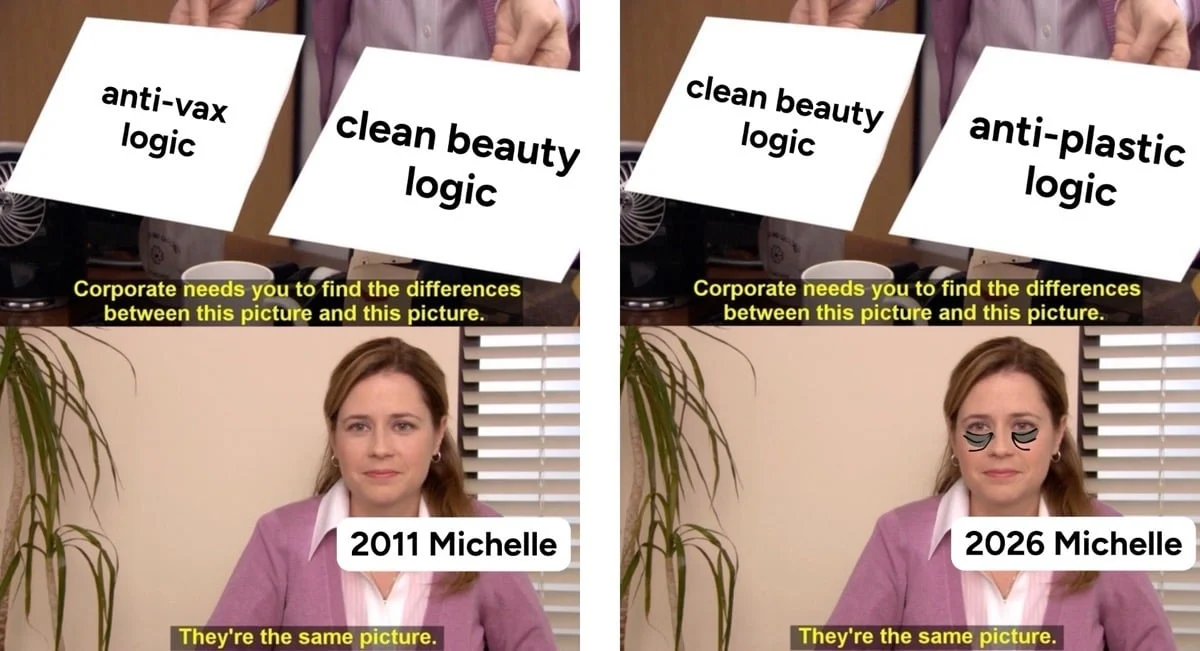
The modern consumer goods landscape is undergoing a significant ideological shift, wherein blanket rejections of synthetic materials are replacing historical anxieties surrounding chemical ingredients in cosmetics. Over the past decade, public discourse has increasingly targeted petrochemicals and polymers, mirroring the rise of the "clean beauty" movement that emerged in the early 2010s. While genuine ecological concerns surround global plastic consumption and the proliferation of microplastics, science communicators and researchers are warning that current anti-plastic rhetoric frequently relies on pseudoscientific tropes, flawed methodologies, and emotional appeals rather than rigorous empirical data.
This convergence of environmentalism and alarmism has drawn comparisons to historical health scares, suggesting that well-intentioned sustainability goals are being compromised by unverified assumptions about safety and environmental impact. To understand how these narratives have evolved, it is necessary to examine the structural parallels between historical clean beauty marketing and contemporary anti-plastic campaigns, particularly how both movements utilize fear-based messaging to influence consumer behavior.
Parallels Between Clean Beauty and Anti-Plastic Rhetoric
The ideological framework driving the anti-plastic movement shares core psychological and rhetorical mechanisms with the clean beauty sector, which historically demonized substances like aluminum and formaldehyde while ignoring the foundational principles of toxicology. Chief among these shared tactics is the appeal to nature fallacy—the unscientific assumption that natural materials are inherently safe and beneficial, whereas synthetic counterparts are intrinsically harmful. This binary worldview ignores the reality of chemical toxicology, where origin plays no direct role in determining biological or environmental impact.
Furthermore, both movements frequently disregard established scientific standards in favor of sensationalized claims. In cosmetics, this manifested as vague warnings regarding "toxins" and "nasties" devoid of context regarding dose and exposure. In the context of plastics, similar oversimplifications dominate public conversations, typically reducing complex environmental challenges entirely to end-of-life scenarios such as litter, landfills, and degradation timelines.
The Role of Life Cycle Assessments in Sustainability Science
A critical omission in many contemporary anti-plastic campaigns is the neglect of comprehensive sustainability science, specifically Life Cycle Assessment (LCA). As the standardized methodology for quantifying the environmental impact of a product, an LCA evaluates every stage of an item’s existence, including raw material extraction, manufacturing, distribution, utilization, and disposal.
While end-of-life waste management is a visible and pressing global issue, focusing exclusively on it often leads to counterproductive outcomes. Climate change remains widely recognized by the scientific community as the most severe systemic environmental threat, and in many sectors, plastic packaging outperforms alternative materials when evaluated across a complete life cycle. Comprehensive industry analyses have frequently demonstrated that replacing plastic packaging with alternative materials such as glass, paper, or aluminum can require significantly greater resource expenditures—often demanding multiple times the raw material mass, energy input, and carbon emissions during transport and production.
Consequently, blanket declarations labeling all plastic packaging as environmentally detrimental fail to account for the functional benefits of plastics, such as food preservation, reduced spoilage, lightweight transport efficiency, and product sterility. Critics of performative sustainability point out that while brands frequently market "eco-friendly" alternatives, the overarching driver of environmental degradation—excessive overall consumption—is rarely addressed, leading to greenwashing strategies that prioritize aesthetic appeal over measurable ecological benefit.
Methodological Flaws in Microplastic Research
The acceleration of anti-plastic sentiment has been heavily fueled by high-profile scientific studies reporting the widespread presence of microplastics in human tissues, including blood, arterial plaque, and brain matter. However, independent replication and methodological evaluations by analytical chemists have revealed profound vulnerabilities in how many of these studies are conducted.
Measuring microscopic particles presents immense technical challenges. A prominent issue involves analytical techniques such as pyrolysis-gas chromatography-mass spectrometry (Py-GCMS), which can misidentify biological lipids as polyethylene unless rigorous calibration and baseline corrections are applied. Additional compounding factors include environmental contamination, where microscopic fibers shed from laboratory equipment, protective gloves, and ambient air skew analytical results toward false positives or artificially inflated quantities.
When studies featuring methodological flaws receive widespread media coverage, they often generate severe public alarm disproportionate to validated evidence. This dynamic mirrors historical safety scares in the personal care industry, where preliminary or poorly controlled findings regarding compounds like parabens were amplified without regard for replication failures or contextual exposure levels.
The Fallacy of Assuming Presence Equals Harm
A recurring theme in both modern toxicology scares and microplastic research is the conflation of detection with causation. The discovery of microplastic particles within diseased or compromised biological tissue is frequently cited as direct evidence of pathology, disregarding the fundamental scientific principle that correlation does not imply causation.
In toxicology, the identification of a foreign substance in a sample indicates exposure or accumulation, but it does not automatically establish a mechanism of disease. Historical parallels include early studies examining the presence of parabens in breast tissue samples, which sparked widespread consumer panic despite failing to measure baseline levels in healthy tissue or establish a causal link to tumorigenesis. Similarly, detecting persistent synthetic particles in human pathology samples requires rigorous epidemiological and mechanistic investigation before definitive health hazards can be attributed to the material.
Science-Washing and Market Incentives
As public demand for sustainable practices intensifies, regulatory bodies in major jurisdictions—including the United States Federal Trade Commission (FTC), the UK Competition and Markets Authority (CMA), and the Australian Competition and Consumer Commission (ACCC)—have increasingly targeted deceptive or unsubstantiated environmental marketing. Despite these oversight efforts, "science-washing" remains prevalent across the consumer goods and beauty sectors.
Brands and influencers frequently utilize selective data, misinterpreted research, and non-expert commentary to validate marketing claims regarding plastic-free formulations or packaging. This phenomenon relies heavily on the halo effect, where consumers assume that a brand’s progressive stance on one environmental metric guarantees holistic sustainability across its entire operation. Analysts note that commercial incentives often favor sensational narratives, as simple dichotomies between "clean" and "dirty" materials resonate more effectively in digital marketing than the nuanced realities of industrial supply chains and environmental science.
Identity-Based Motivated Reasoning
The persistence of unverified environmental and health claims is further sustained by identity-based motivated reasoning and confirmation bias. Sociological and scientific observers have documented a growing tendency among consumers to evaluate information based on ideological alignment rather than methodological rigor.
Recent discourse surrounding media retractions and critical re-evaluations of microplastic research highlights this challenge. When mainstream outlets publish analyses casting doubt on previously sensationalized toxicity claims, polarized reactions often follow. Skeptics of the corrections frequently dismiss critical scientific evaluations by attributing them to industry lobbying or conflicts of interest, overlooking the consensus of independent researchers working within public academic and institutional frameworks. Experts emphasize that evaluating information solely based on funding sources, rather than scrutinizing the underlying data and logic, undermines critical thinking and obstructs constructive environmental policy.
Broader Implications for Environmental Stewardship
Ultimately, the discourse surrounding plastics and modern consumer goods mirrors historical tensions between emotional environmentalism and empirical science. While reducing plastic waste and mitigating long-term ecological impacts remain vital objectives for global sustainability, adopting unverified dogmas or implementing reactionary material bans can result in unintended ecological consequences.
Just as the elimination of effective cosmetic ingredients based on pseudoscientific safety fears has occasionally led to reduced product efficacy and increased microbial contamination risks, abandoning high-performance materials without comprehensive life cycle analysis risks exacerbating carbon emissions and resource depletion. Experts advocate for a holistic, evidence-based approach to sustainability—one that prioritizes reduced overall consumption, relies on standardized life cycle assessments, and distinguishes rigorous scientific inquiry from commercially driven marketing narratives.
