
For decades, the global beauty and haircare industry has relied on a foundational concept known as "hair porosity" to guide consumers through an overwhelming marketplace of conditioners, masks, and styling treatments. Rooted in the premise that hair possesses an inherent, measurable capacity to absorb and retain moisture based on the structural alignment of its outermost layer—the cuticle—hair porosity has spawned a multibillion-dollar subcategory of personalized regimens. Consumers are routinely encouraged to categorize their tresses as low, normal, or high porosity, a classification supposedly dictating everything from molecular hydration strategies to the efficacy of heavy oils versus lightweight serums. However, emerging dermatological science and physical chemistry research indicate that the popular diagnostic tools consumers use at home—most notably the "float test" and the "drop test"—are fundamentally misleading. Rather than measuring internal porosity, these rudimentary assessments merely evaluate surface damage and fluid physics, exposing a widespread scientific misunderstanding within modern beauty culture.
The popularization of hair porosity frameworks accelerated significantly throughout the late 2010s and early 2020s, driven largely by natural hair communities, online beauty educators, and digital content creators seeking systematic approaches to difficult-to-manage hair textures. As consumer interest shifted toward ingredient-conscious, scientifically literate routines, brands integrated porosity-based terminology into product marketing, promising targeted penetration for parched strands or surface-level smoothing for resistant cuticles. Yet, this consumer-facing terminology conflates several distinct chemical and physical phenomena. In materials science and cosmetic chemistry, true porosity refers to the presence of internal voids or channels within a solid structure. While chemically processed, heat-styled, or physically weathered hair undeniably develops structural fractures and localized cuticle loss, the colloquial application of porosity often misinterprets how water interacts with human keratin fibers on both a macroscopic and microscopic scale.
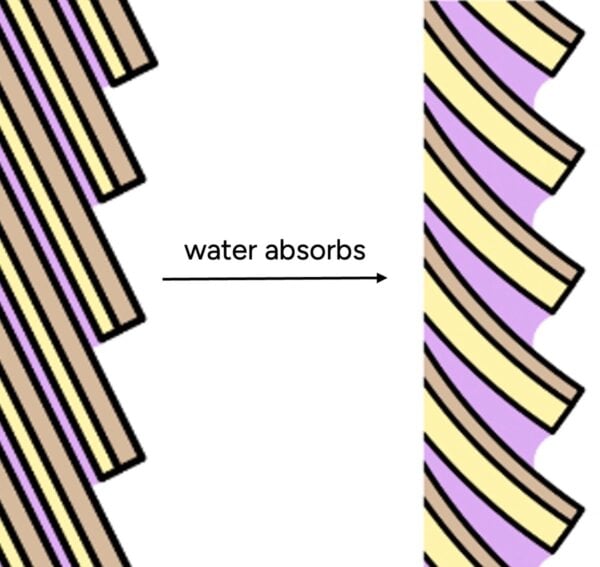
To understand why traditional diagnostics fail, one must examine the baseline mechanics of moisture interaction in healthy versus compromised hair. A pervasive myth underpinning porosity advice is the assumption that undamaged human hair is inherently waterproof. Beauty lore frequently suggests that a tightly sealed, intact cuticle acts as an impenetrable raincoat, preventing moisture from entering, while conditioning agents are designed to artificially mimic this sealing function. Scientific literature firmly disproves this hypothesis. Undamaged human hair is remarkably hygroscopic, capable of rapidly absorbing approximately 30 percent of its dry weight in water within minutes. This dynamic absorption rate fluctuates continuously in direct response to ambient relative humidity. Data compiled in structural studies of human hair demonstrate a linear relationship between atmospheric moisture and fiber hydration: at zero percent relative humidity, hair retains no absorbed water, but at 100 percent relative humidity, undamaged strands absorb up to 31.2 percent of their weight in moisture. This occurs because the natural protective lipid layer coating human hair—specifically the 18-methyleicosanoic acid (18-MEA) F-layer—resides strictly on the exterior surface of individual cuticle scales, leaving microscopic interstitial gaps where water molecules easily infiltrate, rendering the fiber structure structurally analogous to a pinecone rather than a solid waterproof cylinder.
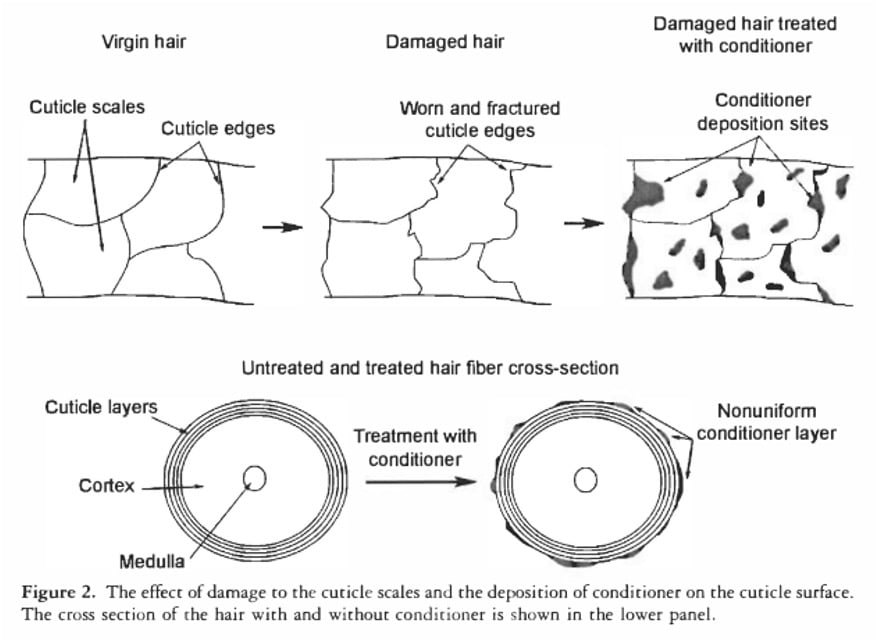
Furthermore, conditioning treatments do not create a uniform, continuous hydrophobic shield over the hair shaft. Microscopic imaging studies, such as atomic force microscopy analyses conducted by researchers like C. La Torre and B. Bhushan, reveal that conditioning agents deposit onto the hair surface in discrete, scattered molecular blobs rather than an unbroken protective film. While these deposits are sufficiently dense to reduce friction and impart a soft, tactile smoothness to the touch, they are wholly ineffective at blocking individual water molecules. Because water molecules are infinitesimally small, they bypass these localized deposits with ease. This reality undermines the rationale behind common diagnostic methods, specifically the float test and the drop test, which have long been championed as definitive indicators of structural porosity.
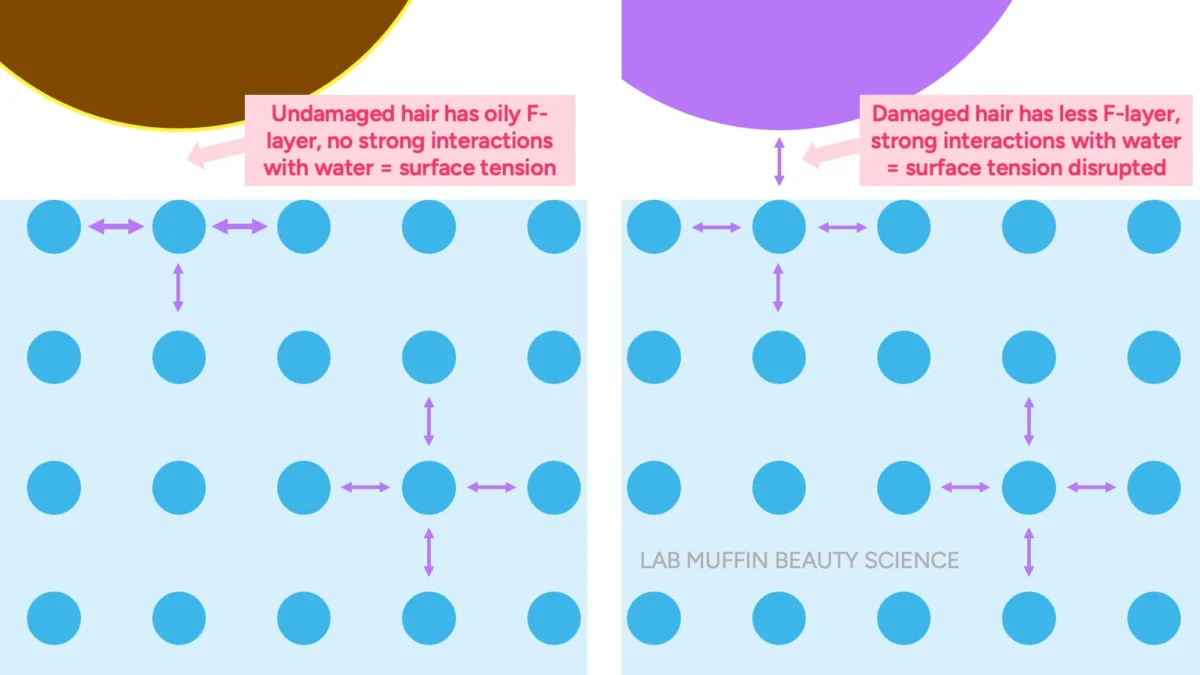
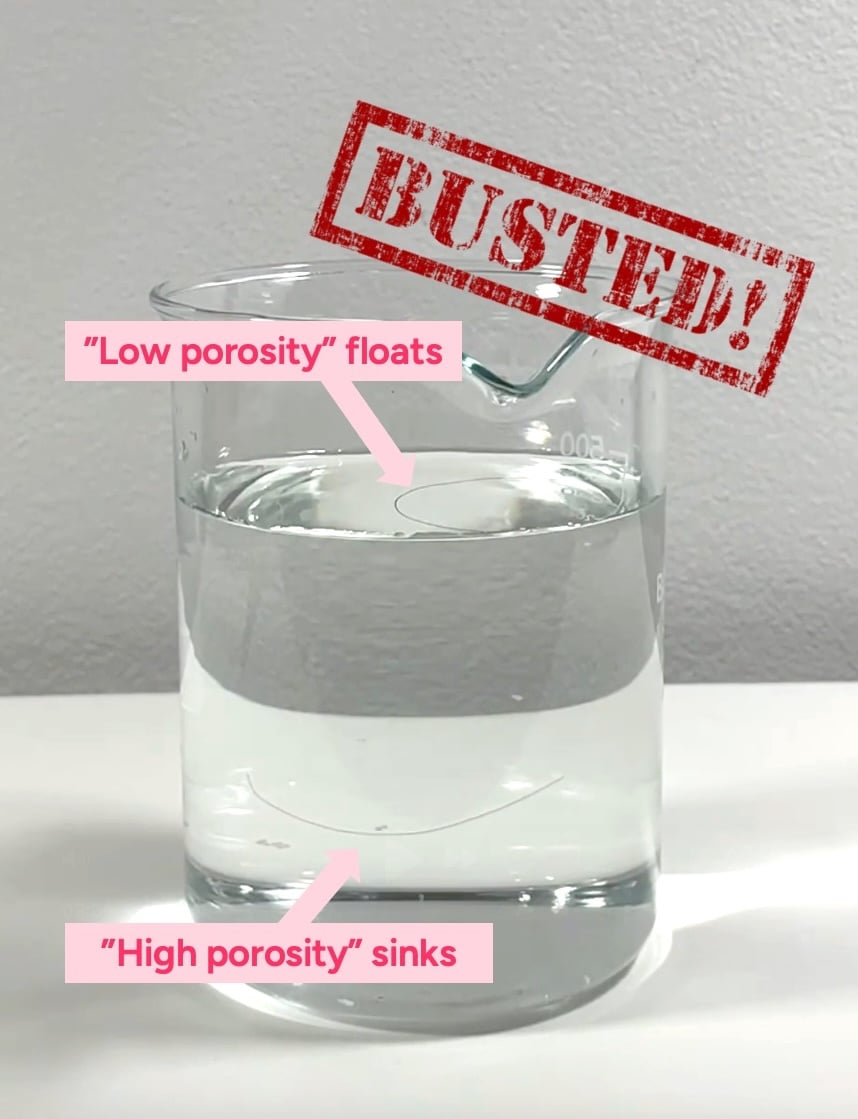
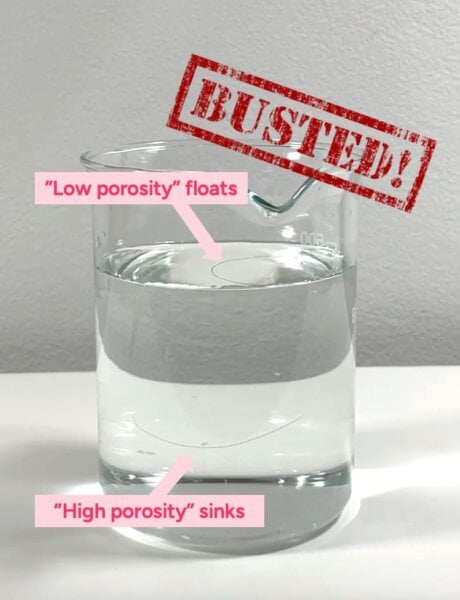
The float test requires an individual to submerge a clean strand of hair in a glass of water, asserting that low-porosity hair floats due to a tightly sealed cuticle preventing absorption, whereas high-porosity hair sinks once its purported internal cavities fill with liquid. Similarly, the drop test involves placing a single droplet of water onto a lock of hair, claiming that undamaged hair repels the droplet into a bead while damaged hair causes the droplet to flatten and absorb rapidly. Physicists and cosmetic chemists point out that these observations are governed entirely by surface tension rather than internal absorption capacity. In liquid water, molecules form an extensive network of hydrogen bonds with one another. Molecules at the liquid-air boundary experience unbalanced attractive forces, creating a strong elastic membrane effect known as surface tension—a phenomenon robust enough to support dense objects like steel paperclips, which possess a density nearly eight times greater than water. Both hair and steel sink effortlessly when this surface tension is mechanically or chemically compromised, regardless of their internal porosity.
In the context of the float test, healthy hair features an intact, hydrophobic F-layer rich in fatty acids. When placed in water, this lipid coating preserves the integrity of the surrounding liquid’s surface tension, allowing the strand to remain buoyant. Conversely, when hair is chemically bleached, thermally damaged, or physically weathered, this protective lipid barrier is stripped away, exposing hydrophilic, water-loving protein substrates beneath. Upon contact with water, these exposed hydrophilic sites readily form hydrogen bonds with the surrounding liquid molecules. This localized bonding disrupts the water’s surface tension, causing the boundary layer to fail and allowing the hair strand to sink. The test is not measuring internal cavities or absorption velocity; it is detecting the presence or absence of a surface lipid layer.
Similarly, the drop test measures surface wetting behavior rather than porosity. Comparative studies demonstrate that heavily damaged hair absorbs only about 45 percent of its weight in liquid water—a marginal increase compared to the 30 percent absorbed by pristine, undamaged hair. The dramatic visual difference in how a water droplet behaves on a damaged versus undamaged lock is caused by surface spreading rather than deep internal uptake. When water does successfully enter undamaged hair to reach its 30 percent threshold, it does so primarily in the vapor phase. In humid environments, individual gaseous water molecules—which lack the cohesive hydrogen-bonded network of liquid droplets—freely navigate the microscopic spaces between cuticle scales without encountering surface tension barriers.
The persistence of these diagnostic tests in salons and digital spaces has prompted reactions from industry professionals, trichologists, and cosmetic formulators. While consumer advocates note that following porosity-based advice often leads individuals to beneficial products—such as recommending heavier emollients for brittle, chemically treated hair or lightweight humectants for resilient virgin hair—the underlying diagnostic logic remains flawed. Cosmetic scientists emphasize that surface damage diagnostics are practically useful for determining hair health, but mislabeling surface damage as "high porosity" creates systematic confusion in professional settings. For instance, chemical processing professionals frequently utilize erroneous porosity assumptions to calculate processing times for permanent waves, relaxers, and hair color formulations. Relying on a float test to judge chemical processing requirements can lead to structural over-processing, hair breakage, or uneven chemical penetration. Industry experts universally recommend direct strand testing under controlled professional conditions rather than relying on unscientific home diagnostics.
As the beauty industry faces mounting pressure to align marketing claims with rigorous scientific validation, the debunking of hair porosity tests marks a significant shift toward evidence-based haircare education. By reframing how consumers and professionals understand the interaction between hair fibers, atmospheric humidity, and surface tension, scientific communicators are helping to dismantle pseudoscientific routines in favor of mechanistic skin and hair science. Ultimately, while understanding the structural integrity of the hair cuticle remains essential for maintaining optimal hair health, consumers can safely abandon glassware, water droplets, and floating strands in favor of direct observational care tailored to actual physical damage and tactile response.
