
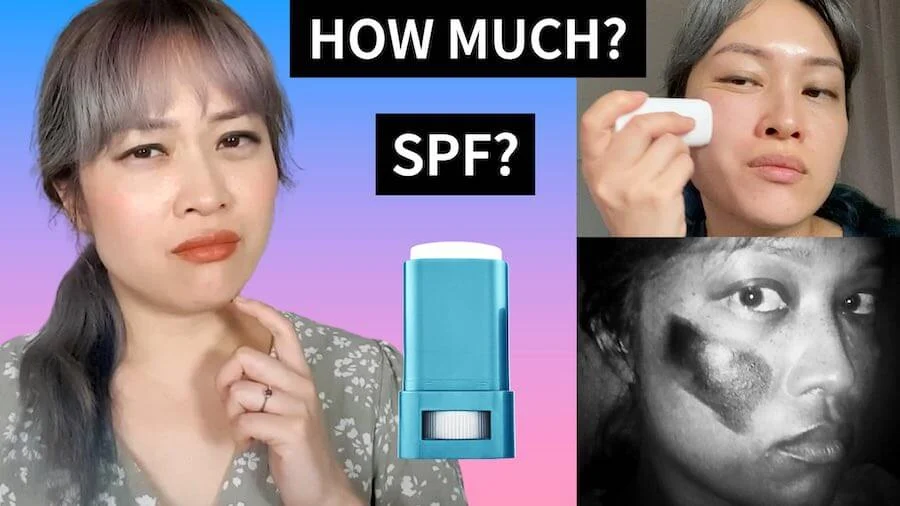
Sunscreen sticks have rapidly captured a significant share of the global skincare market, promoted heavily for their mess-free application, portability, and convenience during outdoor activities. However, a rigorous scientific investigation conducted by cosmetic chemist and science communicator Michelle Wong, widely known as Lab Muffin Beauty Science, has revealed a startling disconnect between consumer application habits and the quantities actually required to achieve a product’s labeled Sun Protection Factor (SPF). The findings raise critical questions regarding the reliability of sunscreen sticks as primary defenses against ultraviolet radiation and highlight potential gaps in standardized public health guidelines.
Background Context of the Sunscreen Stick Phenomenon
The popularity of solid sunscreen formats surged as consumers sought travel-friendly, reapplication-friendly alternatives to traditional liquid lotions and sprays. Unlike conventional fluid formulations, which typically rely on high water content and volatile solvents that evaporate upon contact with the skin, sunscreen sticks are formulated predominantly with waxes, heavy emollients, and organic or mineral UV filters. These solid-phase ingredients are designed to glide smoothly across the epidermis, leaving a continuous protective film.
Despite their widespread adoption, dermatologists and cosmetic scientists have long suspected that everyday consumers apply inadequate amounts of stick formulations. Standardized testing for SPF ratings, governed by international regulatory standards, requires a uniform application rate of 2 milligrams of product per square centimeter of skin ($2text mg/cm^2$). Achieving this exact metric by weight presents a unique logistical challenge for solid sticks, as consumers rarely measure skincare products using laboratory scales. Recognizing this ambiguity, Wong undertook a systematic empirical analysis to determine precisely how much protection average, generous applications of popular sunscreen sticks afford.
Chronology and Experimental Methodology
The investigative process began with precision weighing procedures utilizing high-accuracy jewelry scales calibrated to 0.01 grams. Wong established baseline measurements indicating that an average human face requires approximately 0.76 grams of sunscreen product to attain the standard coverage level necessary for an advertised SPF 50 rating.
Three prominent, high-performance Korean SPF 50+ sunscreen sticks—featuring distinct chemical and mineral formulations from brands including Tocobo, Abib, and Benton—were selected for the initial round of trials. The testing protocol was executed in a controlled sequence:

- Baseline Weighing: Each solid sunscreen stick was weighed prior to application on freshly washed, dried skin.
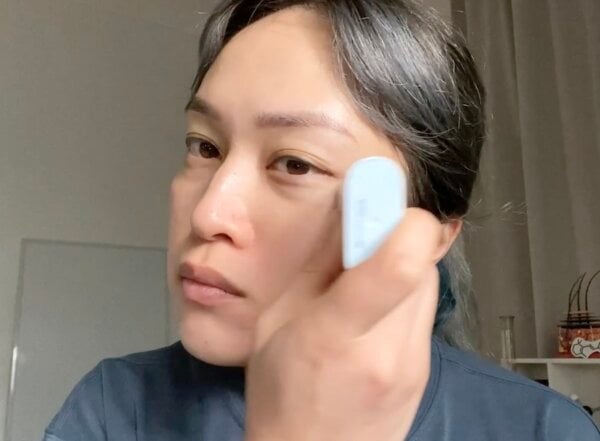
- Initial Generous Application (Layer 1): Wong applied what she subjectively deemed a generous layer while recording the process via a smartphone camera in selfie mode to maintain visual contact with the skin surface.
- Post-Application Weighing: The stick was re-weighed immediately following application to determine the exact mass transferred to the face.
- Subsequent Layers (Layers 2 and 3): Recognizing that initial quantities fell substantially short of regulatory targets, Wong performed successive applications, documenting mass accumulation, visual changes, and precise application durations.
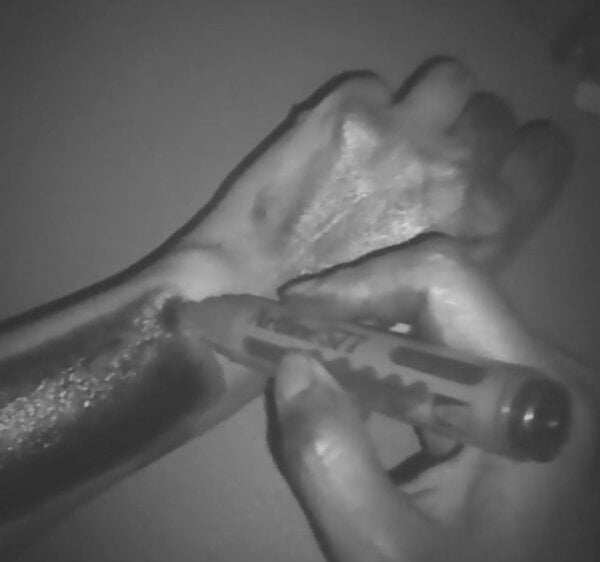
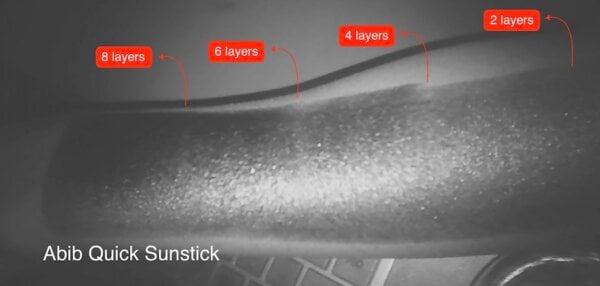
- Arm and Surface Verification: To eliminate facial contours as a variable, supplementary flat-surface tests were conducted on the forearm utilizing ultraviolet (UV) photography, markers, and rulers to quantify surface area and film thickness across structured passes.
Quantitative Data and Empirical Findings
The empirical data gathered during the trials challenged several common assumptions regarding skin coverage and product layering.
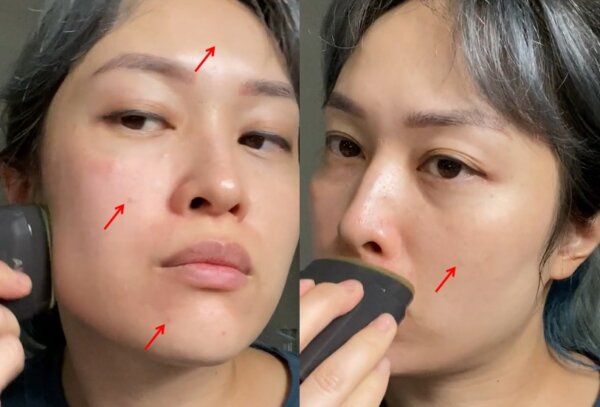
In the primary facial trials, a single "generous" pass of the stick yielded an average mass of approximately 0.29 grams for Tocobo, 0.25 grams for Abib, and 0.33 grams for Benton. Calculated against the required 0.76-gram baseline for an SPF 50 rating, these initial layers achieved estimated SPF equivalents of roughly 19.1, 16.4, and 21.7, respectively. In effect, a thorough, conscientious initial application provided barely one-third of the labeled protection level.
To reach near-adequate coverage, multiple layers were required. However, successive applications introduced severe diminishing returns. By the third layer, cumulative mass totals reached an average of 0.64 grams across the tested products. Achieving this amount required an expenditure of time nearly four times longer than applying an equivalent lightweight fluid lotion. Furthermore, physical endurance limitations of the skin-to-stick interface became apparent: after three layers, the facial skin accumulated a heavy, highly viscous, and slippery residue, effectively causing subsequent passes to lift previously deposited sunscreen away from the epidermis.
Analysis of Application Passes and Official Guidelines
Public health organizations, including the American Academy of Dermatology (AAD), have historically attempted to simplify consumer application by recommending specific numerical benchmarks, such as executing four distinct passes of a sunscreen stick over target facial zones. Wong’s investigation scrutinized the validity of this recommendation.
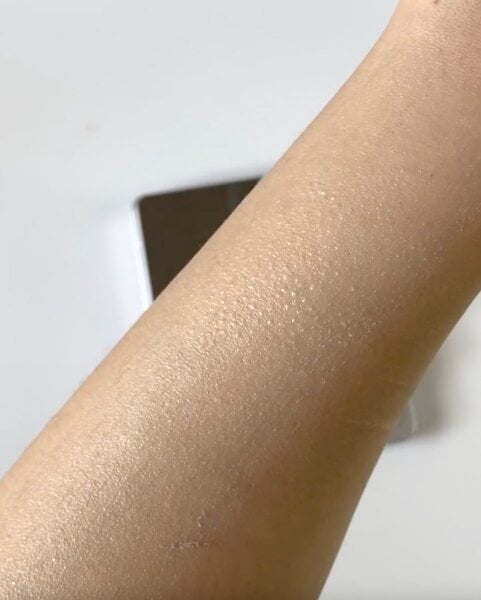
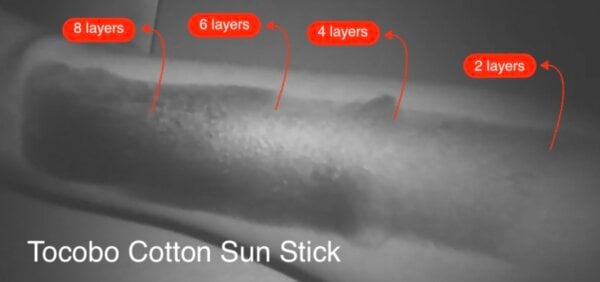
Through frame-by-frame video analysis, the study counted actual passes made across anatomical landmarks such as the cheeks, forehead, and chin. The data indicated that consumers naturally perform varying numbers of passes depending on ergonomics and visual feedback, frequently exhibiting a directional bias toward regions closer to the eye or camera frame. More importantly, arm-surface testing revealed that achieving the mandated $2text mg/cm^2$ threshold required anywhere from 16 to 21 passes for firmer-transfer formulas like Tocobo, and between 40 and 64 passes for highly slick, low-transfer formulas like Abib.
The origin of the "four passes" guideline appears tied to qualitative observations under UV camera imaging, where visual darkness plateaus after a small number of swipes. Wong’s analysis underscores a critical technical caveat: UV cameras are notoriously unreliable for estimating actual SPF values. While UV imaging brilliantly exposes missed spots—such as the nasal bridge, brow bones, hairline, and peri-nasal crevices—it fails to measure film thickness accurately. The study noted that even during careful application, awkward facial topography frequently resulted in substantial uncovered patches that required manual blending with the fingers, thereby negating the primary convenience factor of a touch-free stick format.
Statements, Industry Reactions, and Regulatory Implications
While major regulatory bodies and dermatological associations have not formally updated their procedural guidelines in direct response to these specific findings, independent skincare experts and formulation chemists have echoed the study’s underlying concerns. Industry observers point out that sunscreen sticks are fundamentally engineered for convenience, portability, and touch-ups rather than serving as a primary line of defense during periods of intense, prolonged solar exposure.
Dermatological consensus increasingly emphasizes that while solid sticks are highly effective for reapplying protection over makeup or hard-to-reach areas during casual daily activities, relying on them as a sole source of sun protection introduces severe vulnerability to ultraviolet-induced skin damage. The physical limitations of wax-based matrices prevent adequate deposition without creating an unwearable, heavy cosmetic layer.
Broader Impact and Consumer Recommendations

The implications of this research extend directly to everyday consumer behavior and sun safety education. When evaluated through an objective scientific lens, sunscreen sticks demand a recalibration of how users approach photoprotection.
Key takeaways for consumers include:

- Primary Protection Role: Traditional liquid or lotion sunscreens remain superior and more reliable as primary applications due to the ease of achieving targeted mass coverage.
- The Role of Sticks: Sunscreen sticks are exceptionally well-suited for targeted touch-ups, reapplication over makeup, and protecting small, vulnerable anatomical zones such as the lips, ears, and back of the neck when primary protection has already been established.
- Mechanical Blending: Because sticks lack the ergonomic flexibility of human fingers, consumers must actively rub in the product following application to eliminate hidden gaps revealed by the contours of the face.
- Quantity Awareness: Meeting standard SPF ratings with a stick requires significantly more time, physical pressure, and multiple passes than conventional wisdom suggests, making sensory discomfort an inevitable trade-off for high-level protection.
As public awareness regarding skin cancer prevention evolves, rigorous empirical analyses like those conducted by Lab Muffin Beauty Science provide essential bridging data between laboratory compliance testing and real-world consumer practices.
