
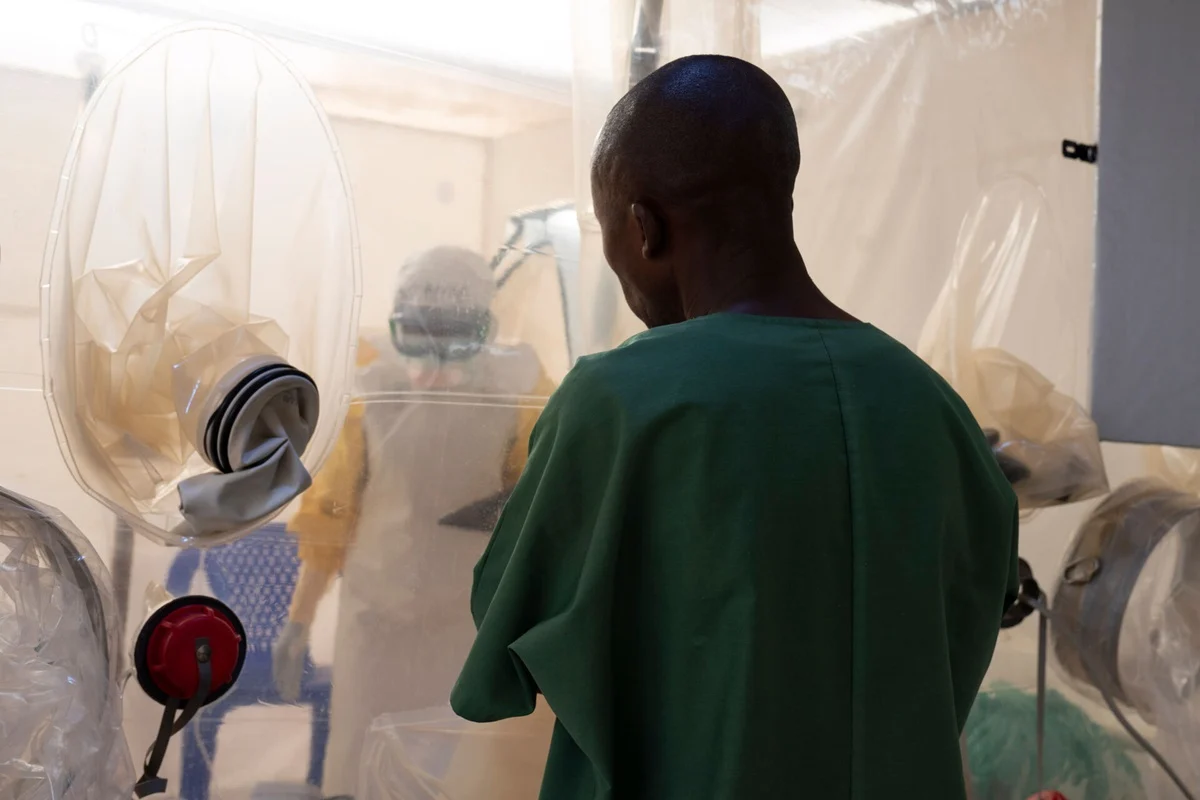
In a landmark advancement for global health and infectious disease research, the PARTNERS clinical trial has officially commenced patient enrollment in the Democratic Republic of the Congo (DRC). This international collaborative effort aims to evaluate the safety and efficacy of potential therapeutic interventions for Ebola disease caused by the Bundibugyo virus (BVD). While the global medical community has made significant strides in treating the Zaire strain of Ebola, the Bundibugyo virus remains a critical threat for which no approved targeted therapies currently exist. The PARTNERS trial, an acronym for Platform Adaptive Randomised Trial for New and Repurposed Filovirus TreatmentS, represents a decisive step toward closing this gap in the medical toolkit and providing evidence-based care to vulnerable populations.
The trial is designed to assess two specific antiviral therapies: a monoclonal antibody known as MBP134 and the broad-spectrum antiviral drug remdesivir. Beyond testing these agents individually against the current standard of care, the study will also investigate whether a combination of the two provides a synergistic effect, potentially improving survival rates more effectively than monotherapy. Sponsored by the World Health Organization (WHO), the trial is the result of a complex coordination between the Institut National de Recherche Biomédicale (INRB) in the DRC, the Institute of Tropical Medicine in Belgium, and the University of Oxford in the United Kingdom. This coalition is further supported by the Africa Centres for Disease Control and Prevention (Africa CDC) and various humanitarian organizations, including ALIMA (The Alliance for International Medical Action) and Médecins Sans Frontiéres (MSF).
Historical Context and the Current Crisis in the DRC
The Bundibugyo virus was first identified in 2007 following an outbreak in the Bundibugyo District of western Uganda. While it is one of the six species within the genus Ebolavirus, it is genetically distinct from the more frequently cited Zaire and Sudan viruses. Historically, BVD has been associated with lower fatality rates than the Zaire strain—which can exceed 80% without treatment—but the current situation in the DRC underscores its devastating potential. Since the onset of the latest outbreak, more than 1,400 individuals have been diagnosed with the disease. The toll has been heavy, with approximately 440 deaths recorded and only 210 confirmed recoveries to date.
The lack of approved treatments for BVD is a significant hurdle for public health officials. During the 2018–2020 Ebola outbreak in the eastern DRC, the PALM (Pamoja Tulinde Maisha) trial successfully identified two monoclonal antibody treatments—Ebanga and Inmazeb—that significantly reduced mortality for the Zaire strain. However, because these antibodies are highly specific to the surface proteins of the Zaire virus, they are ineffective against the Bundibugyo strain. This specificity necessitates the development of a broader or strain-specific therapeutic range, which is the primary objective of the PARTNERS trial.
The Science of the PARTNERS Trial: Investigational Agents
The selection of MBP134 and remdesivir was not arbitrary. The WHO Technical Advisory Group conducted an exhaustive review of preclinical data, safety profiles, and results from prior filovirus research before greenlighting these candidates.
MBP134 is a "cocktail" of two monoclonal antibodies designed to target a highly conserved site on the glycoprotein of the Ebola virus. Unlike earlier antibodies that were strain-specific, MBP134 has shown promise in laboratory settings for its ability to neutralize multiple species of Ebolavirus, including Bundibugyo and Sudan. This makes it a "pan-Ebola" candidate, a holy grail in filovirus research that could simplify outbreak responses by providing a single treatment regardless of the specific strain identified.
Remdesivir, originally developed to treat Ebola, gained global prominence during the COVID-19 pandemic. As a nucleotide analog that inhibits viral RNA polymerase, remdesivir works by preventing the virus from replicating its genetic material. While its efficacy against the Zaire strain in the PALM trial was lower than that of monoclonal antibodies, its broad-spectrum mechanism makes it a valuable candidate for evaluation against Bundibugyo, particularly when used in tandem with antibodies.
Methodology: The Power of the Platform Trial
A defining feature of the PARTNERS trial is its "platform" design. Unlike traditional clinical trials that evaluate a single drug and then conclude, a platform trial is a perpetual framework. It allows researchers to evaluate multiple treatments simultaneously against a common control group. Most importantly, it is "adaptive," meaning that as the trial progresses, the WHO Technical Advisory Group can add new investigational drugs to the study as they emerge from the pipeline or drop treatments that prove to be ineffective or unsafe.
This model is particularly suited for outbreak settings where time is of the essence. By integrating research directly into the clinical response, the PARTNERS trial ensures that patients receive the highest standard of supportive care while simultaneously contributing to the global body of scientific knowledge. Participants in the trial, regardless of their age, will receive early supportive care in line with WHO guidelines. This includes aggressive fluid resuscitation (oral or intravenous), electrolyte replacement, oxygen therapy, blood pressure regulation, and pain management. Following enrollment, patients will be closely monitored for at least 28 days to track their recovery and any potential side effects.
Official Responses and the Urgency of Research
The launch of the trial has drawn praise from global health leaders who emphasize the necessity of conducting rigorous science in the heat of a crisis. Dr. Tedros Adhanom Ghebreyesus, Director-General of the WHO, highlighted the hope this trial brings to affected communities. "Even without approved therapeutics, people are recovering from this disease, but of course, we could save many more lives with safe and effective therapeutics in our toolkit," Dr. Tedros stated. He noted that the trial was established in "record time," reflecting a new era of agility in international health emergencies.
In the DRC, government officials view the trial as a testament to the nation’s growing leadership in biomedical research. Dr. Samuel Roger Kamba, the DRC Minister of Health, remarked that the PARTNERS trial represents a significant step forward for the families and communities currently bearing the brunt of the outbreak. He noted that the findings would not only help save lives today but would also strengthen global preparedness for future filovirus epidemics, including Marburg virus disease.
Professor Jean-Jacques Muyembe-Tamfum, the Director-General of the INRB and a co-discoverer of the Ebola virus in 1976, emphasized the ethical imperative of the study. He noted that by integrating the trial into clinical care, the DRC is providing patients with access to promising treatments that would otherwise be unavailable, while ensuring that the evidence generated is robust enough to change the future of medicine.
Logistical Challenges and Global Collaboration
Executing a clinical trial in the middle of an Ebola outbreak is a monumental logistical challenge. It requires the coordination of international scientists, local health workers, and humanitarian logisticians. The trial sites must maintain a rigorous "cold chain" for temperature-sensitive medications, ensure the safety of healthcare workers through strict infection prevention and control (IPC) measures, and build deep trust with local communities.
The involvement of ALIMA and MSF is crucial in this regard. These organizations have decades of experience operating in high-security and resource-limited environments. Their participation ensures that the trial remains patient-centered and that the research does not interfere with the immediate goal of providing life-saving care. Furthermore, the trial data will be subject to continuous review by an independent Data and Safety Monitoring Board (DSMB) to ensure that the study remains ethical and that any signs of superior efficacy or safety concerns are addressed immediately.
Broader Implications for Global Health Preparedness
The PARTNERS trial is more than just a search for a Bundibugyo treatment; it is a blueprint for future pandemic preparedness. For decades, the "wait and see" approach to outbreak research meant that by the time a trial was organized, the outbreak had often subsided, leaving researchers with inconclusive data. The PARTNERS model flips this script by establishing a "warm" platform that can be activated the moment an outbreak is detected.
Professor Amanda Rojek, the PARTNERS Trial Operations Lead from the University of Oxford’s Pandemic Sciences Institute, explained the shift in philosophy: "One of the key lessons from recent outbreaks is that research needs to happen alongside the response, not after it. The PARTNERS trial gives us an opportunity to evaluate potential treatments during the outbreak itself, so that the evidence generated can help inform patient care when it is needed most—in months rather than years."
As the world continues to grapple with the threat of emerging zoonotic diseases, the PARTNERS trial stands as a beacon of international solidarity. It moves the global health community closer to a reality where no filovirus—whether Zaire, Sudan, Bundibugyo, or Marburg—is considered "untreatable." By combining the expertise of Congolese scientists with international research institutions and the strategic oversight of the WHO, the PARTNERS trial is poised to deliver definitive answers that will protect humanity for generations to come.
