
In recent years, an influx of misleading social media posts, viral TikTok videos, and sensationalized wellness articles has popularized a counterintuitive and scientifically baseless claim: that sunscreen is the actual culprit behind rising skin cancer rates rather than ultraviolet (UV) radiation from the sun. This wave of misinformation has left many health-conscious consumers confused, prompting everyday conversations about how to effectively counter pervasive health myths. Dermatologists, oncologists, and cosmetic scientists emphasize that shifting the blame from the sun to sun protection products ignores decades of rigorous scientific research, misunderstands basic epidemiological data, and puts public health at significant risk.
To understand why these viral claims fail scrutiny, it is essential to examine the primary arguments circulating online, dissect the flaws in misconstrued studies like the UK Biobank report, and review the overwhelming body of experimental evidence confirming that sunscreens successfully prevent skin cancer and photoaging.
Flawed Interpretations of Observational Studies
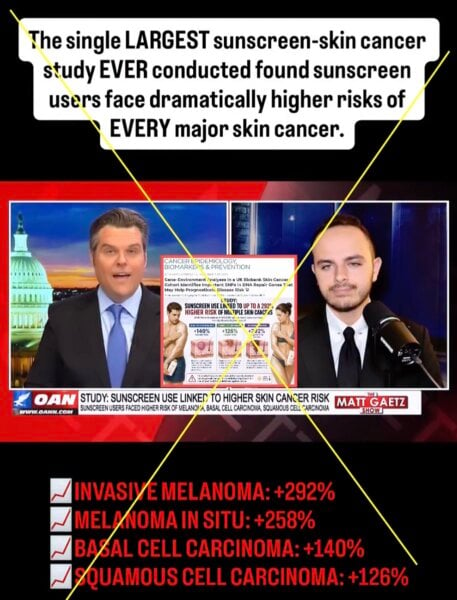
A major driver of online sunscreen skepticism is the misrepresentation of observational research, such as the widely cited UK Biobank study. Sensationalized online posts frequently take data from these large-scale population surveys and invert the conclusions, claiming that individuals who use sunscreen regularly experience higher rates of skin cancer.
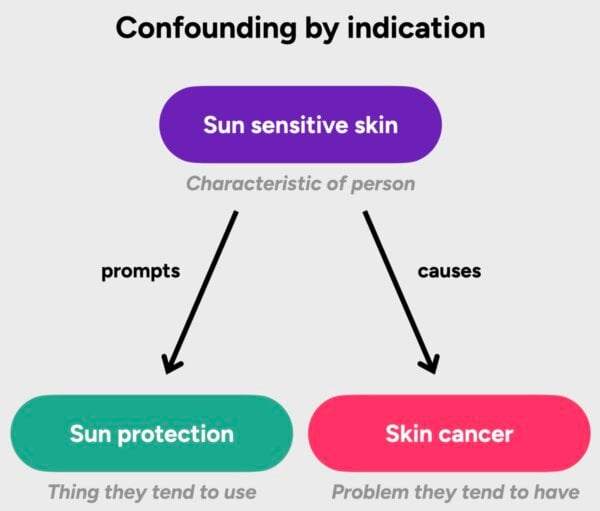
However, public health experts and dermatologists repeatedly stress a fundamental rule of scientific research: correlation does not imply causation. Observational studies track people behaving in their natural environments. In real-world settings, individuals who apply sunscreen are frequently those who spend significantly more time outdoors, have fairer skin types that burn easily, or live in regions with high ambient UV levels. When researchers fail to adequately control for these underlying behavioral variables—such as total cumulative sun exposure and personal sun sensitivity—a statistical artifact emerges: people who use sunscreen also tend to get more sun exposure, and therefore experience higher rates of skin cancer.
Crucially, when epidemiologists adjust for confounding factors like sun-seeking behavior, the correlation between sunscreen and skin cancer disappears. Blaming sunscreen for skin cancer in observational data is akin to noticing that people carrying umbrellas frequently get caught in rainstorms and concluding that umbrellas cause rain.
The Gold Standard: Experimental Evidence from the Nambour Trial
To eliminate the confounding variables inherent in observational research, scientists rely on randomized controlled trials (RCTs), which represent the gold standard of evidence-based medicine. The most comprehensive and long-term RCT investigating the relationship between sunscreen and skin cancer is the landmark Nambour Trial, conducted in Australia.
Initiated in the 1990s and followed up over subsequent decades, the Nambour Trial provided daily broad-spectrum sunscreen to a segment of a community while leaving a control group to follow their usual habits. The results were definitive. Participants who applied sunscreen daily experienced a statistically significant reduction in the development of both squamous cell carcinomas and basal cell carcinomas. Furthermore, long-term follow-ups revealed a dramatically reduced incidence of melanoma among the regular sunscreen group compared to the control cohort. Additional experimental studies have consistently corroborated these findings, proving that when sun exposure is held constant, regular sunscreen use actively suppresses the biological mechanisms that lead to cancerous mutations in the skin.
Historical Shifts in Cancer Rates and Diagnosis Trends
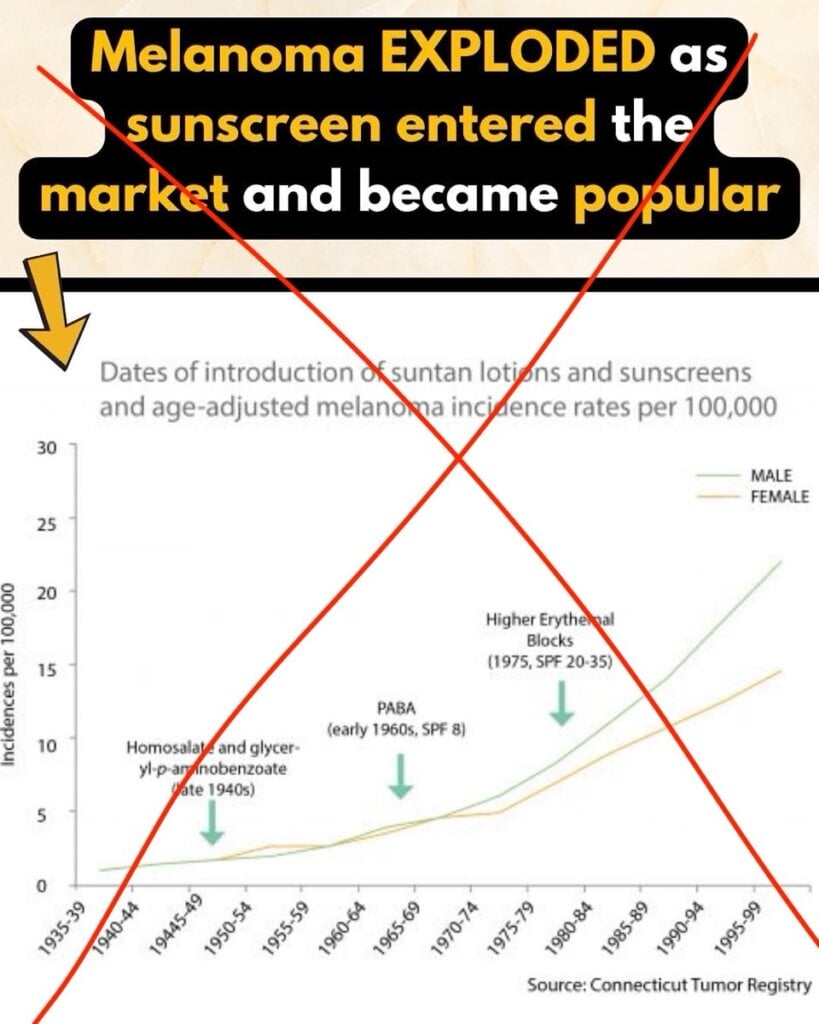
Another prominent argument weaponized by wellness influencers involves historical cancer registry graphs—such as data from the Connecticut cancer registry—purporting to show that melanoma diagnoses have surged continuously since the 1940s, precisely alongside the commercialization and adoption of modern sunscreens.
Dermatologists and cancer epidemiologists point out several critical flaws in this narrative. First, the upward trajectory on these graphs primarily reflects a massive increase in the detection and diagnosis of early-stage skin cancers, rather than a true biological epidemic caused by chemical formulations. Over the past century, advancements in dermatological screening, increased public health awareness, routine skin checks, and a broadening of diagnostic criteria (including the classification of in-situ melanomas) have drastically increased the number of cases caught and recorded.
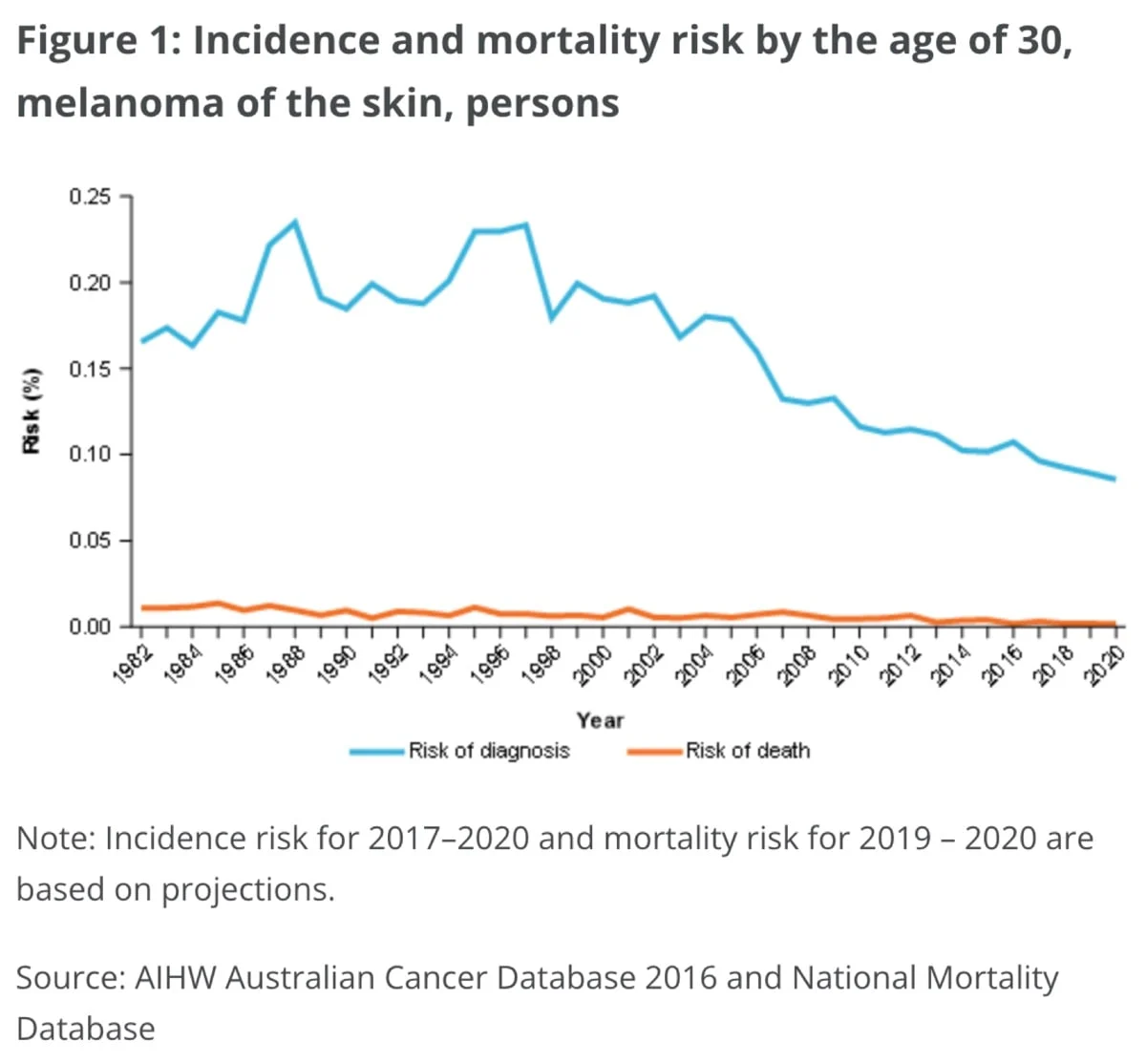
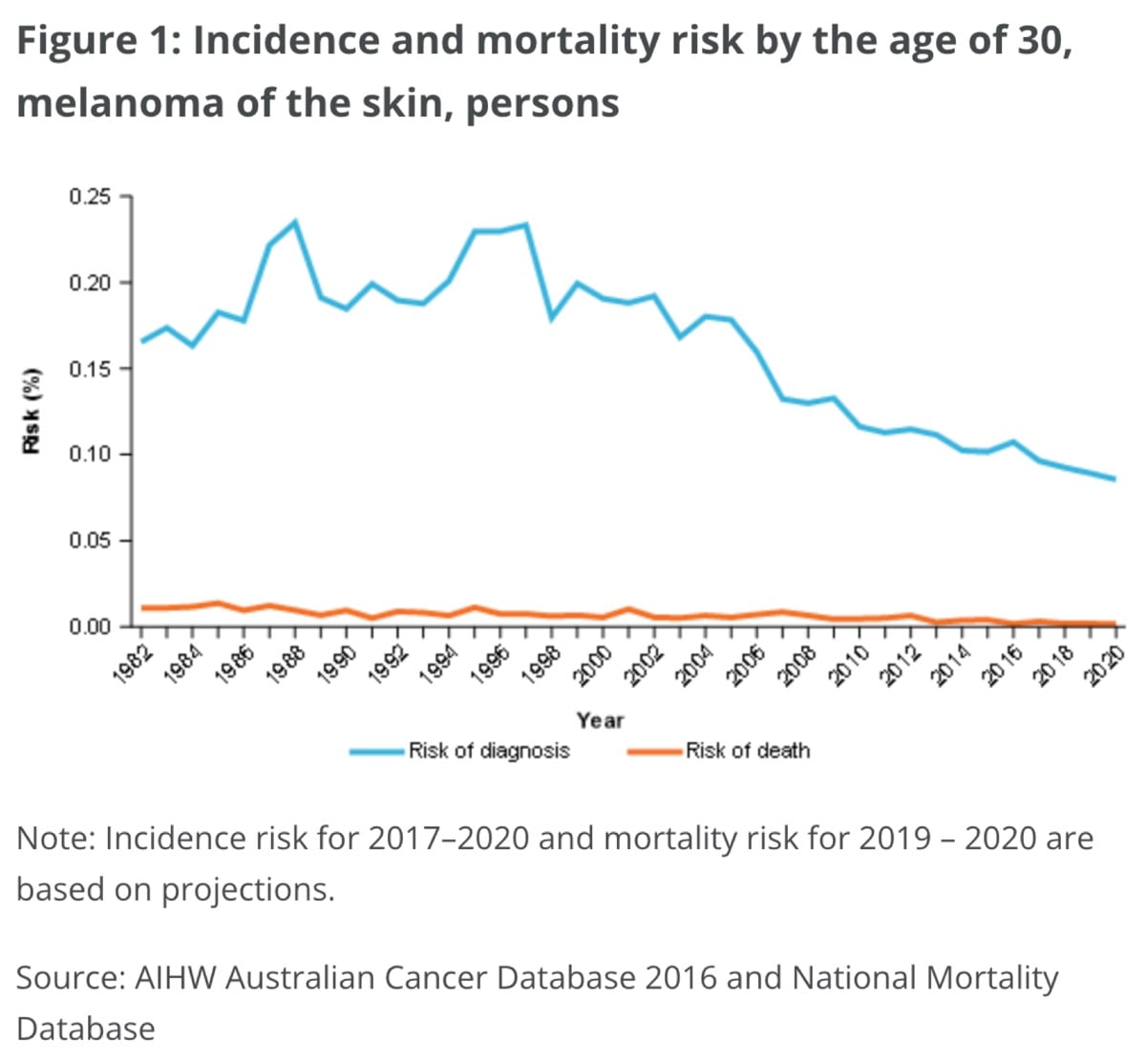
Furthermore, lifestyle changes since the 1940s explain rising skin cancer rates far more accurately than sunscreen adoption. Modern leisure culture has prioritized tropical vacations, outdoor recreation, and indoor tanning beds—all of which dramatically increase cumulative UV exposure. When analyzing population data correctly, such as reports from the Australian Institute of Health and Welfare (AIHW) and the Australian Bureau of Statistics, regions with high, proactive sunscreen adoption and comprehensive sun-safety campaigns ultimately see stabilization or favorable shifts in melanoma rates among younger, consistently protected generations.
Debunking Secondary Myths: Benzene, Coral Reefs, and Blood Absorption
Skeptics have also latched onto secondary chemical safety narratives to discourage sunscreen use, though these claims frequently rely on distorted laboratory findings or toxicological misunderstandings.
Benzene Contamination Claims
Concerns regarding benzene in sunscreens gained traction following reports from analytical laboratories like Valisure. While benzene is a recognized human carcinogen linked to blood cancers like leukemia, independent toxicological reviews have established that the trace amounts occasionally detected in certain aerosol spray batches do not pose a meaningful risk of skin cancer. Moreover, comprehensive population analyses, such as data from the National Health and Nutrition Examination Survey (NHANES), have demonstrated that individuals who regularly wear sunscreen do not have elevated blood benzene levels compared to non-users.
Coral Reef Safety and Environmental Debates
The narrative that chemical sunscreens are destroying coral reefs largely stems from a flawed 2015 laboratory study on specific UV filters like oxybenzone. However, a comprehensive 2022 review by the U.S. National Academies of Sciences, Engineering, and Medicine concluded that legislative bans on chemical sunscreens were not supported by robust ecological science. Marine experts agree that the overwhelming existential threats to coral reefs are global climate change, warming ocean temperatures, and coastal pollution—not the minute quantities of sunscreen washed off swimmers.
Systemic Absorption and FDA Safety Studies
Regulatory evaluations by agencies such as the U.S. FDA have noted that certain active chemical sunscreen ingredients can be absorbed through the skin into the bloodstream under maximal use conditions. Public health authorities emphasize that systemic detection does not equate to toxicity or harm. Regulatory bodies across Europe, Asia, and North America enforce strict safety margins—typically requiring a 100-fold safety buffer between detected systemic levels and any threshold of biological concern—ensuring that the protective benefits of UV defense vastly outweigh any theoretical systemic risks.
The Biological Mechanism of Protection
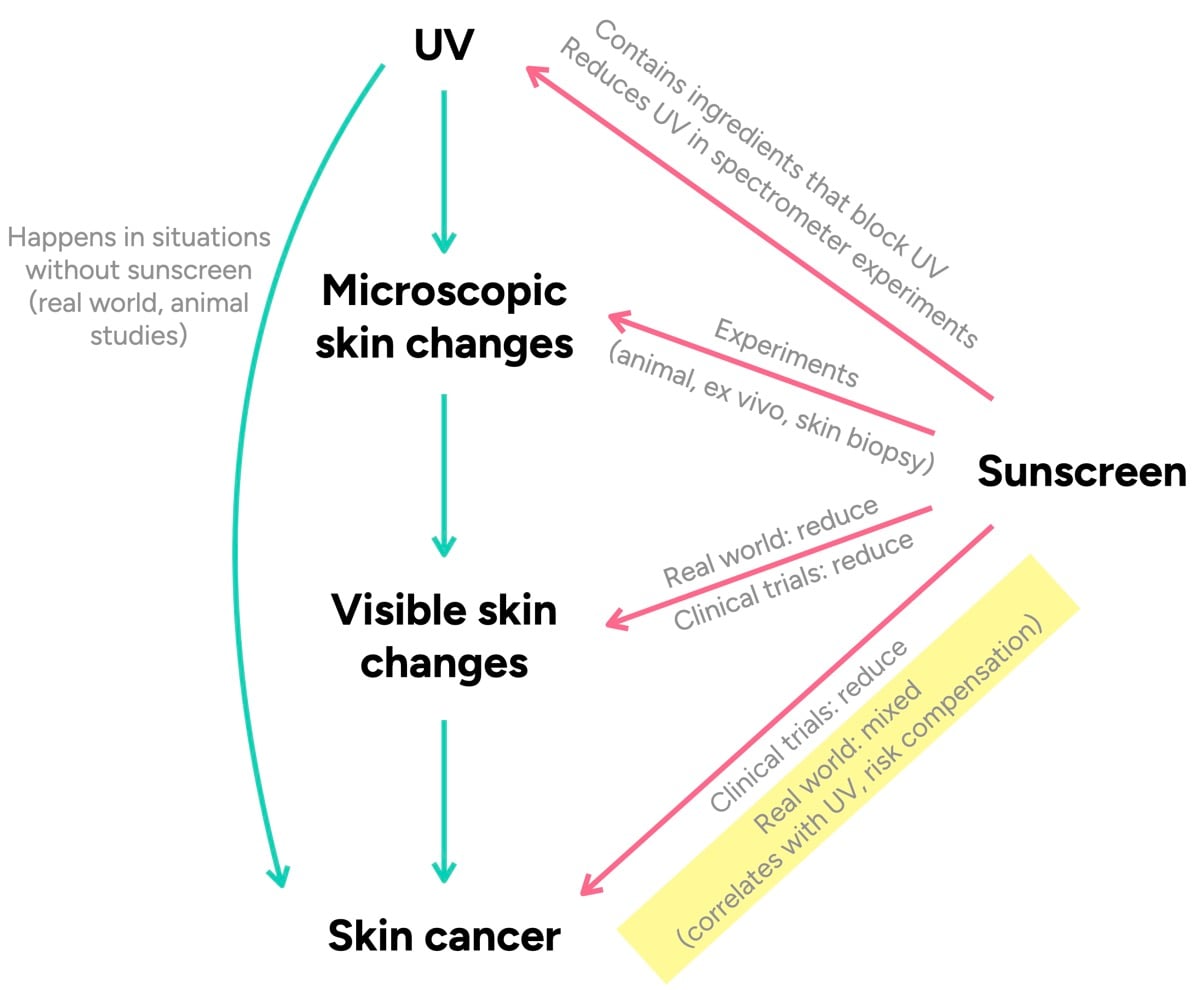
The scientific consensus supporting sunscreen is built upon an unbroken chain of mechanistic evidence. Ultraviolet radiation is highly energetic, capable of directly damaging cellular DNA and generating reactive oxygen species that disrupt genomic integrity. This process triggers microscopic cellular mutations, visible skin damage such as sunburns and solar keratoses, and ultimately, skin malignancies.
Extensive clinical and laboratory testing has verified that broad-spectrum sunscreens block and neutralize UV radiation before it penetrates living tissue. By interrupting this chain at every checkpoint—preventing DNA photoproduct formation, halting microscopic cellular stress, suppressing visible actinic keratoses, and ultimately lowering skin cancer incidence—sunscreen acts as an indispensable shield.
Public Health Implications and Future Outlook
The persistent spread of misinformation discouraging sunscreen use presents a tangible public health hazard. As dermatological societies and independent scientists continue to publish clarifying data, the medical community stresses that education remains the most effective tool against pseudoscientific trends. While no single public health measure is completely foolproof—and proper application, reapplication, and protective clothing remain necessary components of sun safety—the foundational message from decades of clinical research remains unchanged: sunscreen is a safe, rigorously tested, and vital pharmaceutical intervention that saves lives by preventing skin cancer.
