
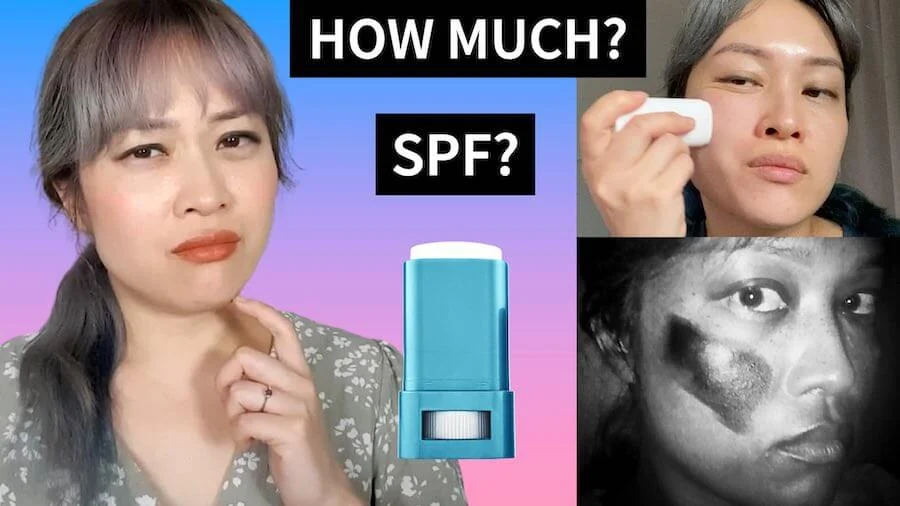
Sunscreen sticks have surged in popularity across global skincare markets, touted by manufacturers and beauty influencers alike as the ultimate on-the-go solution for UV protection. Promising mess-free application, portability, and ease of reapplication over makeup, these solid formulations have become a staple in beach bags and daily purses. However, a significant scientific and consumer challenge persists: precisely how much product must be applied to achieve the sun protection factor (SPF) stated on the label? To address this ambiguity, cosmetic chemist and science educator Michelle Wong undertook a comprehensive, empirical investigation to evaluate the real-world efficacy, application metrics, and physical limitations of popular sunscreen sticks.
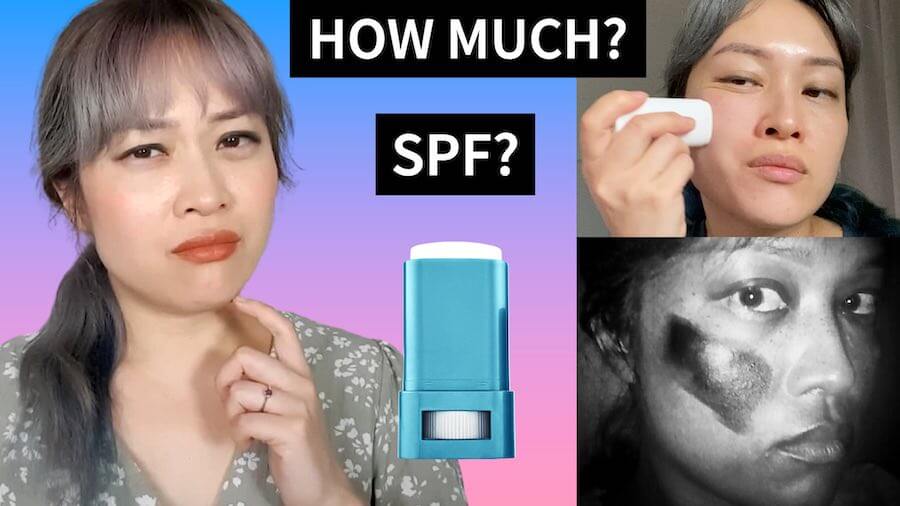
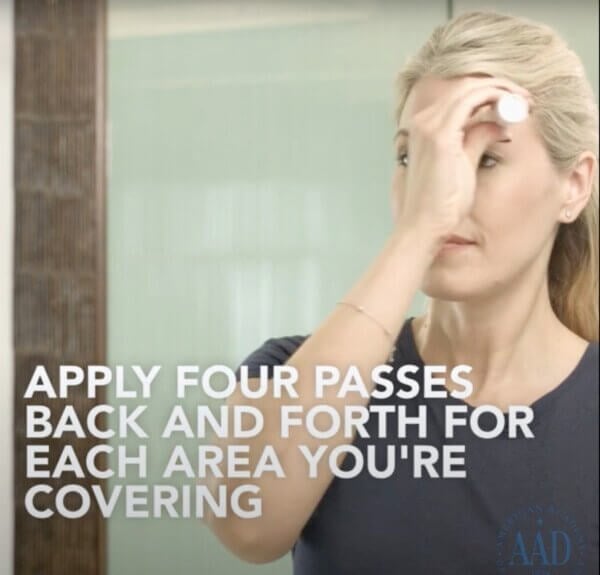
The findings challenge standard industry advice, such as the widely circulated recommendation from the American Academy of Dermatology (AAD) to execute four passes with a stick, revealing that typical application habits fall drastically short of required medical thresholds.
Background Context and Regulatory Testing Standards
To understand the scope of the problem, it is necessary to examine how sunscreens are officially evaluated. Standard SPF testing—the methodology mandated by regulatory bodies worldwide to determine a product’s sun protection rating—is conducted strictly by weight. Laboratories apply sunscreen to test subjects at a standardized density of 2 milligrams per square centimeter ($2text mg/cm^2$). For an average adult human face, this translates to approximately 0.76 grams of product per application.
While liquid lotions and lightweight creams allow users to measure or approximate volume relatively easily, solid wax- and lipid-based sticks present an entirely different mechanical challenge. Consumers cannot readily visualize or weigh the product as they swipe it across facial contours. Consequently, users rely on tactile sensation, visual sheen, or heuristic guidelines—such as counting swipes—to determine adequacy. Recognizing a potential public health gap, Wong designed a multi-phase experiment to quantify precisely what consumers apply during a routine, generous application versus what science demands.
Chronology and Experimental Methodology
The investigative testing protocol was executed in structured phases utilizing three prominent Korean SPF 50+ sunscreen sticks: the Tocobo Cotton Soft Sun Stick, the Abib Quick Sunstick Protection Bar, and the Benton Mineral Sun Stick. These products represented a mix of chemical and mineral UV filter systems as well as varying stick textures.
The testing chronology was structured around precise gravimetric measurements:
- Baseline Weighing: Each sunscreen stick was precisely weighed using high-precision jewelry scales accurate to 0.01 grams before application.
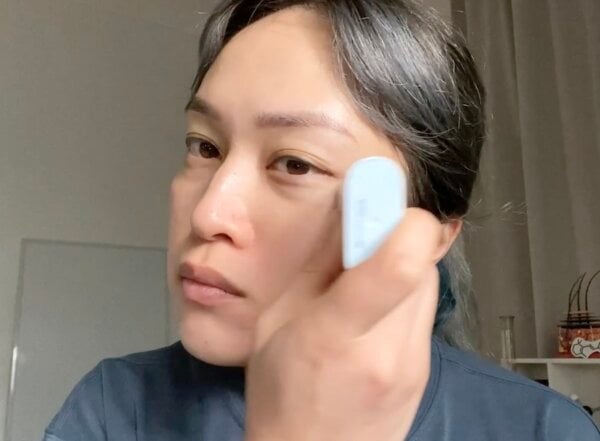
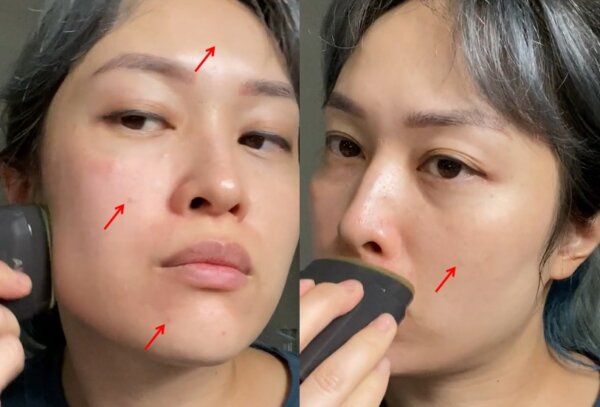
- Simulated Generous Application (Layer 1): Wong applied what she subjectively judged to be a "generous" layer to her face while recording the process via smartphone camera in selfie mode to maintain visual alignment.
- Post-Application Weighing: The stick was immediately re-weighed to determine the exact mass transferred to the skin.
- Subsequent Layers (Layers 2 and 3): Recognizing that the initial layer fell short of the required mass, Wong repeated the process for second and third consecutive layers until the skin surface reached a saturation point where further application became impractical and greasy.
- Chronological Video Analysis: Using video editing software standardized to 30 frames per second, Wong isolated the exact duration the stick made direct contact with the skin, filtering out momentary pauses to calculate cumulative application time.
Quantitative Findings and Data Analysis
The data gathered during the face-testing phase yielded surprising results regarding mass transfer, estimated SPF equivalence, and application duration.
According to the mathematical model—which assumed a linear relationship between mass applied and resulting SPF based on a 0.76-gram full requirement for an SPF 50 product—the initial layers across all three tested brands severely underperformed.
- Tocobo 1st Layer: Accrued mass of 0.29 grams, achieving an estimated SPF equivalent of 19.1 after 43 seconds of cumulative skin contact time.
- Abib 1st Layer: Accrued mass of 0.25 grams, achieving an estimated SPF equivalent of 16.4 after 44 seconds of contact time.
- Benton 1st Layer: Accrued mass of 0.33 grams, achieving an estimated SPF equivalent of 21.7 after 78.5 seconds of contact time.
Across all test subjects, the average first layer transferred only about one-third (approximately 0.29 grams) of the required 0.76 grams necessary to reach the labeled SPF 50 protection. To approach adequate protection, multiple layers were required. However, achieving three cumulative layers demanded an average of nearly four times the application time (ranging from 152 to 220 seconds total contact time) while still resulting in an average total mass of only 0.64 grams—below the theoretical threshold.
In stark contrast, applying an equivalent level of protection via a standard lightweight lotion sunscreen typically requires only about 60 seconds of application time and provides predictable, uniform coverage.
Evaluation of the Four-Pass Rule and Arm Testing
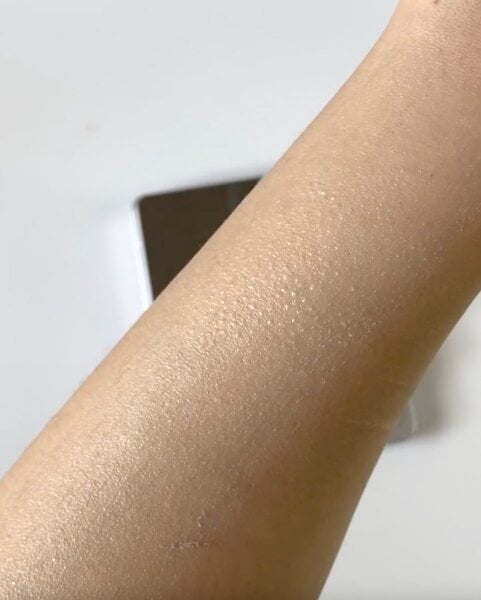
The investigation also scrutinized the American Academy of Dermatology’s guideline recommending four passes of a sunscreen stick for sufficient coverage. To test this recommendation objectively without facial contour irregularities, secondary trials were conducted on the flat, uniform surface of the human forearm.
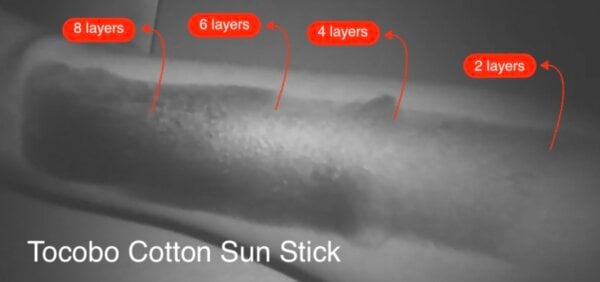
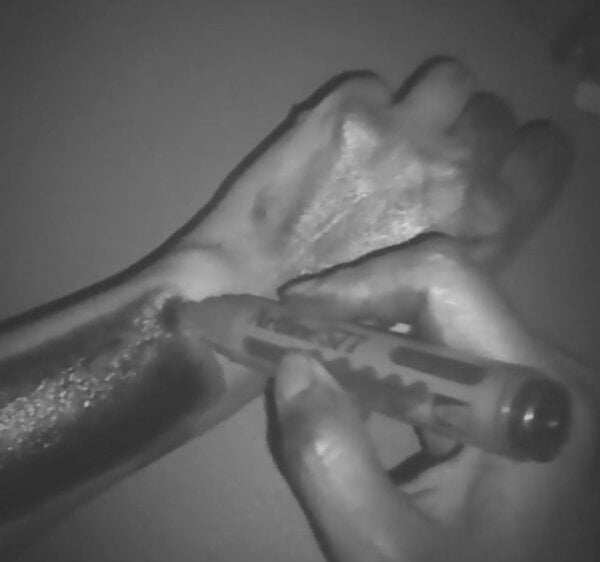
Using UV camera imaging alongside physical markers and rulers, the arm tests evaluated how much product transfers under controlled conditions. The data demonstrated that achieving the benchmark 2 $textmg/cm^2$ coverage required vastly more movement than the standard four-pass recommendation implies:
- Tocobo Stick: Required approximately 16 to 21 passes under firm pressure to achieve adequate density.
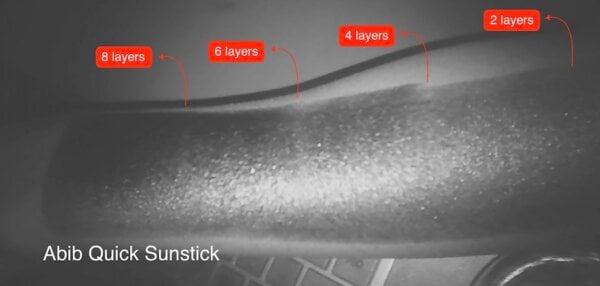
- Abib Stick: Required between 40 and 64 passes due to its slick, highly emollient texture, which significantly reduced product transfer after initial swipes.
Wong noted that while UV camera footage showed the visual darkness of the applied patch plateauing after roughly four passes—likely explaining the origin of the AAD guideline—the actual mass transferred remained mathematically insufficient until significantly more product was deposited. This highlights a critical pitfall: visual appearance under a UV camera is an unreliable indicator of true SPF protection density.
Texture, Appearance, and Ergonomic Limitations
Beyond mathematical dosing, the physical characteristics of sunscreen sticks introduce practical barriers to effective daily use. Traditional lotion sunscreens are formulated with substantial water content and volatile solvents (such as alcohol and cyclopentasiloxane) that evaporate upon application, leaving behind a thin, uniform protective film.

Conversely, sunscreen sticks consist almost entirely of non-volatile waxes, oils, and emollients. Consequently, every gram of product applied remains on the skin.
- Layer 1: Felt substantial yet acceptable, yielding satin-matte or dewy finishes depending on the brand.
- Layer 2: Began to feel heavy, slide across the skin surface, and create a barrier incompatible with smooth makeup application.
- Layer 3: Resulted in a heavily greased, mobile mess that readily transferred white pigment or oily residue onto fingertips and clothing, particularly evident with the mineral-based Benton stick.
Furthermore, ergonomic testing revealed that sticks are ill-suited for navigating facial topography. UV imagery clearly exposed missed patches in critical, high-risk sun-exposure zones—including the nasal bridge, the inner brow bone, hairline crevices, and the nostrils. Because solid sticks lack the malleability of human fingers, users consistently missed areas despite consciously monitoring their reflection during application.

Broader Industry Implications and Practical Recommendations
The implications of these findings are substantial for public health and consumer skincare routines. Sunscreen sticks cannot be treated as a direct, hassle-free substitute for conventional lotions when engaging in prolonged outdoor activities. Relying solely on a single, casual swipe of a sunscreen stick leaves the skin profoundly under-protected, translating to a fraction of the advertised SPF.

Despite these limitations, the analysis concludes that sunscreen sticks retain clear utility in specific scenarios:
- Reapplication over existing makeup when chemical or cream lotions cannot be layered without disrupting cosmetics.
- Targeted touch-ups on easily accessible, flat areas such as the bridge of the nose, cheekbones, or the backs of the hands during incidental sun exposure.
- Travel convenience for quick, temporary defenses when primary protection is unavailable.
For consumers choosing to rely on sticks, experts recommend abandoning low-effort heuristics like counting passes. Instead, users must apply numerous, overlapping layers with firm pressure, followed by manually blending the product with clean fingers to ensure complete surface coverage and adequate film thickness. Independent researchers continue to encourage broader replication of these experiments to establish a more robust dataset on consumer application habits globally.
