
A groundbreaking study conducted by researchers at the Tufts University Center for Cellular Agriculture (TUCCA) has shed new light on the critical role of terminology, consumer trust, and familiarity in shaping the acceptance of cultivated meat. The findings, published in the journal Food Quality & Preference, suggest that the specific words used to describe this novel protein source can significantly influence consumer perception and willingness to purchase, with terms like "cultivated" and "cultured" demonstrating greater appeal than "lab-grown" in both the United States and Germany.
The research delved into the complex psychological landscape surrounding cultivated meat, exploring how different labels evoke varied associations and impact consumer valuation. This investigation is particularly timely as the alternative protein sector matures and cultivated meat products begin to enter the commercial market. The study’s lead author, Katherine Fuller, emphasized the profound influence of language: "Our findings suggest that the words used to describe cell-cultivated meat can meaningfully influence consumer valuation." This highlights a crucial juncture for the industry as it navigates the challenges of consumer education and market penetration.
The Nuances of Naming: "Cultivated" Outperforms "Lab-Grown"
The TUCCA study meticulously examined consumer responses to various labels for cultivated meat, including "cultivated," "cultured," "cellular," and the often-used "lab-grown." The results consistently showed that "cultivated," "cultured," and "cellular" terms outperformed "lab-grown." The latter term, while perhaps descriptive of the manufacturing process, appears to carry negative connotations for a significant portion of consumers, potentially triggering anxieties about artificiality and a lack of naturalness. This negative association was found to reduce consumer appeal and, consequently, market share.
This preference for "cultivated" and its synonyms is not merely semantic. The research indicates that these more natural-sounding terms activate different perceptual associations related to the product’s origin, perceived risk, and the degree of technological intrusion. The study noted, "Naming is often one of the first pieces of information consumers find, so terminology can shape initial perceptions before people have direct experience with the product." This underscores the power of initial branding and marketing efforts in establishing foundational consumer attitudes.
The financial implications of this naming preference are also significant. The study revealed that naturalness-oriented terms increased consumers’ willingness to pay for cultivated meat. In the United States, this willingness to pay increased by up to $1.97, while in Germany, it rose by €0.78, when compared to products labelled "lab-grown meat." This suggests that consumers are willing to attribute a higher value to cultivated meat when it is presented in a way that aligns with perceptions of naturalness and less with a starkly industrial or laboratory-based origin.
Food Tech Neophobia and Trust: Pivotal Drivers of Acceptance
Beyond the impact of terminology, the TUCCA study identified two other paramount factors influencing consumer acceptance: food technology neophobia and trust in established institutions. Food tech neophobia, defined as the inherent caution or reluctance to adopt new and unfamiliar food technologies, played a substantial role in shaping attitudes. "People with higher food neophobia were less willing to choose cell-cultivated meat products regardless of how they were named, suggesting that concerns about the product itself may outweigh the influence of terminology," Fuller explained. This indicates that while effective naming can mitigate some skepticism, deep-seated concerns about the novelty and perceived risks of cultivated meat require a different approach, likely involving robust education and demonstrated safety.
Conversely, trust in food system institutions acted as a significant amplifier of positive attitudes. Consumers who exhibited higher levels of trust in the entities involved in the production and regulation of food were more receptive to cultivated meat, and the impact of naming differences was more pronounced among this group. This suggests that a strong foundation of trust can foster greater openness to innovation. The study also found that religiosity, while sometimes considered a factor in food choices, did not show an independent impact on the acceptance of cultivated meat. Instead, moral concerns appear to be channeled through perceptions of risk and naturalness, indicating that the framing of these ethical considerations is crucial.
A Global Landscape of Consumer Perceptions
The TUCCA study’s findings were consistent across both the United States and Germany, two of the world’s largest markets for alternative proteins. This cross-cultural resonance suggests that the identified psychological mechanisms underlying consumer responses to cultivated meat are broadly applicable, transcending specific national or cultural contexts. The presence of commercialized cultivated meat products in the US, spanning chicken, pork, and salmon, provides a tangible backdrop for such studies, allowing for observations on real-world consumer engagement.
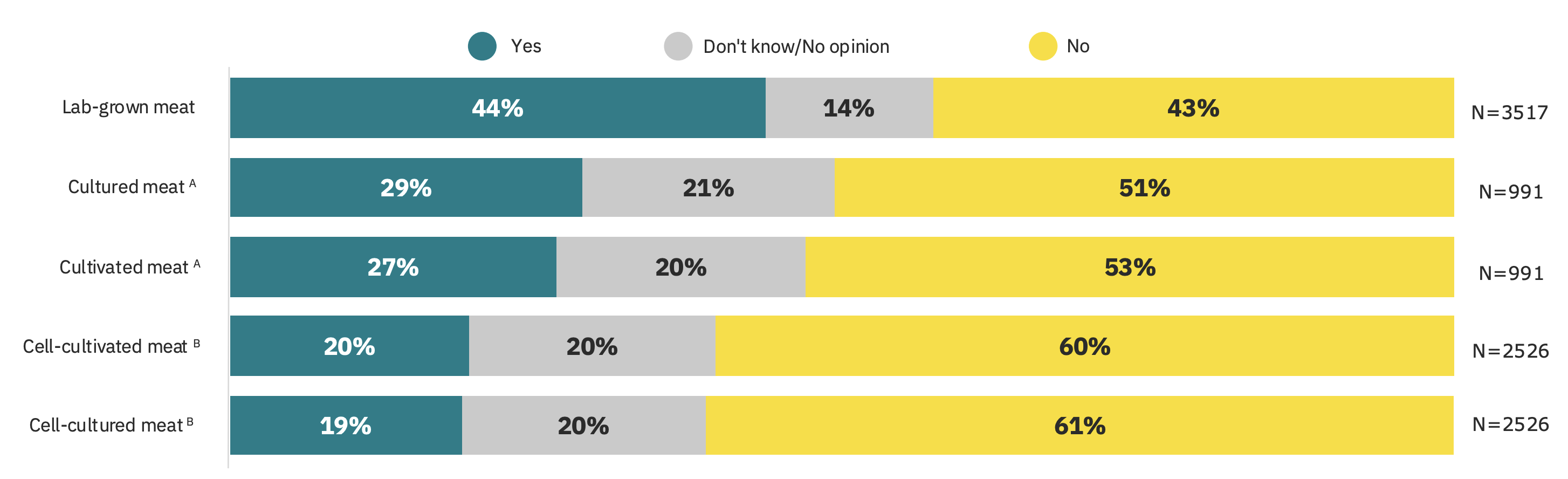
These findings align with and build upon previous research in the field. A survey earlier this year by the Good Food Institute (GFI) indicated that a significant portion of Americans remain unaware of cultivated meat. Among those who are aware, "lab-grown meat" was the most recognized term, familiar to 44% of respondents, compared to 29% for "cultured" and 27% for "cultivated." Despite this naming familiarity, only 21% of US consumers found these proteins appealing, though a substantial 45% expressed likelihood to try them, and 26% indicated they might purchase them. This highlights a gap between recognition, appeal, and purchase intent, where naming and perceived attributes likely play a key role.
Further bolstering the TUCCA study’s conclusions, a 2022 peer-reviewed study found that "lab-grown" and "artificial meat" were the least favorable terms among consumers, while "cell-cultured" and "cell-cultivated" emerged as the most popular. This consistent pattern across multiple research efforts underscores a growing consensus within the scientific and consumer research communities regarding the linguistic preferences for cultivated meat.
In 2021, a GFI survey of 44 industry CEOs revealed that 75% preferred the term "cultivated." Similarly, in Singapore, meat-eaters displayed a more positive attitude towards "cultivated meat" than other terms, followed by "lab-grown," "animal-free," "cultured," and "clean." The term "cell-based" was the least favored in that particular survey. These varied responses across different regions and demographics emphasize the complexity of consumer perception and the need for clear, consistent communication strategies from the industry.
Implications for the Cultivated Meat Industry
The TUCCA study’s findings carry significant implications for the future trajectory of the cultivated meat industry. The consistent preference for "cultivated" and similar terms over "lab-grown" suggests a clear path forward for product labeling and marketing. By adopting these more palatable terms, companies can potentially mitigate initial consumer skepticism and foster a more positive perception of their products.
The research also underscores the importance of building trust in the institutions involved in cultivated meat production. This can be achieved through transparent communication about the production processes, rigorous safety testing, and clear regulatory frameworks. As companies like Upside Foods, Mission Barns, and Wildtype continue to innovate and bring their products to market, their ability to effectively communicate the benefits and safety of cultivated meat will be paramount.
The study’s analysis of food tech neophobia also points to the need for targeted consumer education campaigns. These campaigns should focus on demystifying the technology, highlighting the environmental and ethical benefits, and addressing common concerns about safety and naturalness. By providing accessible and factual information, the industry can help to overcome the inherent hesitations associated with novel food technologies.
Katherine Fuller concluded, "Research like ours helps stakeholders understand how terminology shapes perceptions and valuation and can inform discussions about labelling standards and consumer education." As the cultivated meat sector continues to evolve, a deep understanding of consumer psychology, coupled with strategic communication and a commitment to transparency, will be essential for fostering widespread adoption and realizing the full potential of this transformative food technology. The naming convention is not just a detail; it is a critical component in bridging the gap between innovation and consumer acceptance, paving the way for a more sustainable and ethical food future.
