
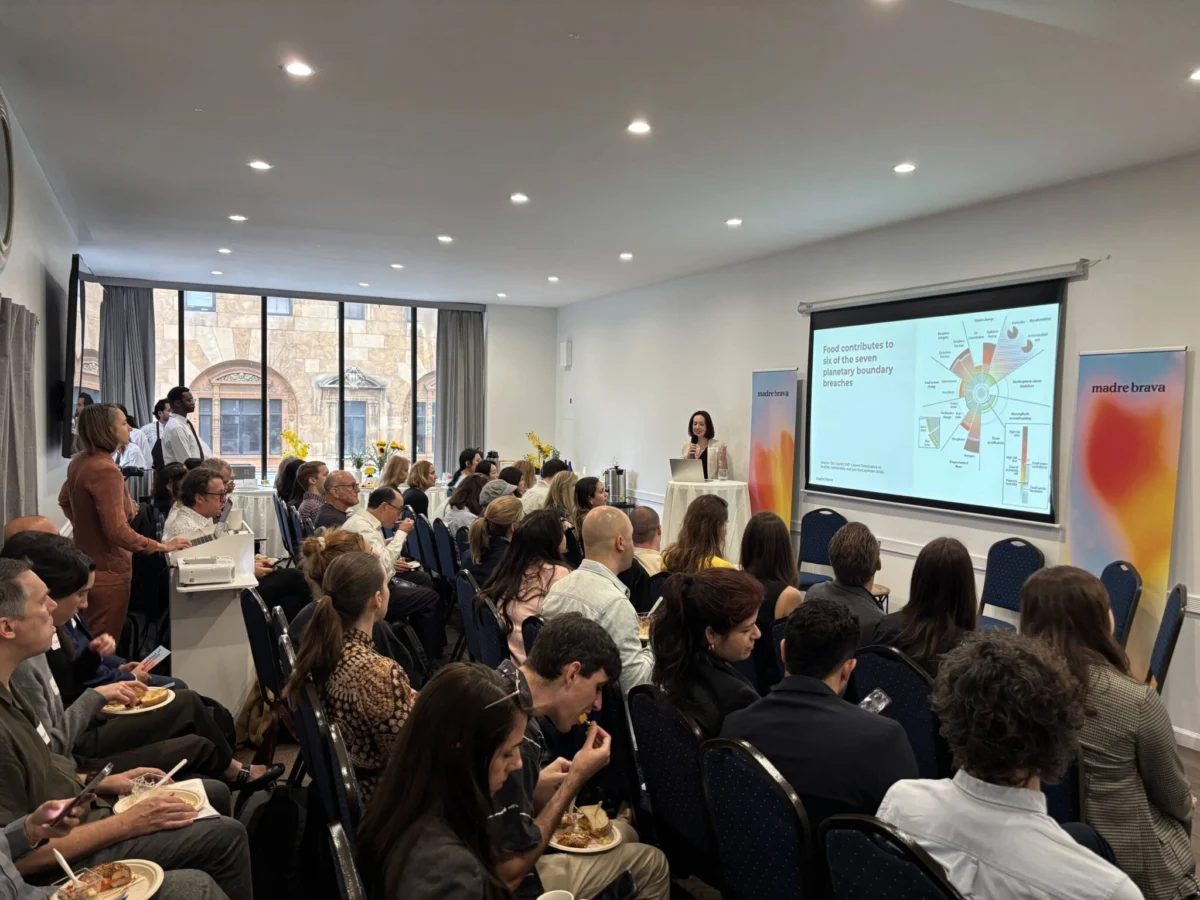
The global food system is undergoing a quiet yet profound revolution, one that took prominent center stage during New York Climate Week 2026. For years, climate summits have predominantly focused on decarbonizing heavy industry, transitioning the energy grid to renewables, overhauling transportation networks, and navigating the rapid rise of artificial intelligence. Yet, as the impacts of agricultural emissions become increasingly impossible to ignore, this year’s gathering in New York marked a vital departure from the status quo. Food—long relegated to a secondary talking point behind energy and tech—was served up as a primary solution for planetary health.
According to Vicky Bond, Chief Executive Officer of the research non-profit Madre Brava, the momentum observed during the 2026 climate summit indicates an encouraging shift in how policymakers, industry leaders, and consumers approach agricultural emissions. While the proportion of climate events dedicated to food still does not fully reflect livestock farming’s massive contribution to global greenhouse gas emissions, the increased visibility represents a crucial milestone. Despite a challenging political landscape in the United States, innovative solutions and urgent food system transformations are successfully breaking through into the mainstream climate debate.
The Evolution of Food’s Place in Global Climate Summits
To understand the significance of New York Climate Week 2026, it is necessary to examine the historical trajectory of food within global climate negotiations. For decades, international climate conferences—ranging from annual United Nations Climate Change Conferences (COPs) to localized climate weeks—have centered heavily on fossil fuels. Energy production, manufacturing, and transport infrastructure dominated plenary sessions, leaving agricultural policy and livestock emissions on the periphery.
This oversight persisted despite scientific consensus showing that global food systems account for roughly one-third of all anthropogenic greenhouse gas emissions, with livestock production acting as a primary driver of methane and nitrous oxide releases. Policymakers frequently avoided food systems due to the political sensitivities surrounding dietary habits, rural livelihoods, and powerful agricultural lobbies.

However, the tide began to turn noticeably in the mid-2020s. By the time delegates gathered in New York for the 2026 climate events, the narrative had shifted from avoidance to urgent engagement. Specialized programming, such as Tilt Collective’s heavily attended Food Day and Madre Brava’s dedicated "Breakfast of Tomorrow" panel, demonstrated that stakeholders are increasingly eager to confront the intersection of agriculture, nutrition, and climate change. These sessions highlighted alternative proteins, cultivated salmon, plant-based dairy and egg alternatives, and the reinvigoration of traditional plant-rich staples.
Taste, Price, and the Consumer Reality
A central theme emerging from the 2026 discussions is the friction between idealistic climate goals and practical consumer behavior. Industry analysts and researchers emphasize that broad appeals to environmental altruism rarely succeed in grocery store aisles. When shoppers face tight household budgets, factors such as flavor, convenience, and affordability invariably dictate purchasing decisions.
Consequently, experts argue that revolutionizing consumer habits overnight is neither practical nor necessary. Instead, the most effective pathways to reducing agricultural emissions leverage "balanced proteins" and the culinary revival of nutrient-dense legumes like beans. By blending plant-based ingredients with traditional meats—or substituting portions of meat with beans and vegetables—food manufacturers can significantly lower the carbon footprint of everyday meals without sacrificing taste or driving up costs.
This pragmatic approach addresses two of the most pressing societal challenges of the decade: climate change and the global cost-of-living crisis. By framing sustainable eating around affordability and health rather than abstract environmental metrics, proponents of food system reform are successfully sidestepping the polarizing culture wars that often derail climate discourse.
International Precedents: Successes in the Netherlands and the United Kingdom
Global markets are already demonstrating the commercial viability of plant-enriched and blended products. The Netherlands, widely recognized as a policy pioneer in promoting plant-rich diets for human and planetary health, offers a compelling case study. Early commercial data from Dutch supermarkets indicates that the introduction of blended meat-and-plant products has achieved substantial market penetration. Nearly all major Dutch retailers, including the nation’s largest supermarket chains, have incorporated these items into their inventory.
Furthermore, research conducted by Food Valley, an international food innovation hub, revealed that these blended food items were sold at an average of 4.4% less than their traditional, non-blended counterparts. This price advantage highlights how incorporating plant proteins can actually alleviate financial pressures for consumers while simultaneously reducing agricultural emissions.
A similar renaissance is unfolding in the United Kingdom, where the culinary and commercial revival of beans has captured consumer interest. Nutritional data shows that integrating beans and pulses into standard meal preparations not only lowers production-related carbon emissions but also substantially increases dietary fiber and essential micronutrients.
In the United States, similar innovations are gaining traction through initiatives like Perdue’s "Chicken Plus" product line, which stealthily incorporates wholesome vegetables into poultry products. This strategy provides a practical solution for parents seeking to improve children’s nutrition while incrementally decreasing the environmental footprint of standard meat consumption.
Institutional Adoption and Foodservice Integration
Beyond retail supermarkets, the institutional foodservice sector represents a massive lever for systemic change. During the Madre Brava Breakfast of Tomorrow panel, industry leaders discussed the vast potential for blended proteins within US institutional catering, spanning universities, hospitals, and corporate dining facilities.

Organizations such as Greener by Default have pioneered this operational shift. By working directly with large-scale food service providers, these groups help normalize plant-forward menus through strategic choice architecture—such as making sustainable, plant-based dishes the default options while maintaining meat as an available alternative. This methodology allows institutions to achieve significant carbon reductions without triggering resistance from consumers wary of perceived dietary restrictions.
Foodservice companies adopting these strategies benefit from a lower risk of political backlash. Because blended products retain familiar textures, flavors, and culinary applications, they integrate seamlessly into existing supply chains and institutional menus.
Broader Implications for Policy and Market Transformation
The growing prominence of food systems at high-level climate forums underscores a broader realization among policymakers: effective climate action must intersect with everyday human experiences. While international policy debates regarding agricultural subsidies, methane regulations, and global trade frameworks remain essential, ground-level solutions must be economically viable and culturally accessible.
The integration of food into the New York Climate Week 2026 agenda signals that sustainability advocates are moving beyond mere critique and offering tangible, market-tested alternatives. By focusing on products that simultaneously deliver on taste, price, health, and environmental stewardship, the sustainable food movement is constructing a durable bridge toward a low-carbon future.
As stakeholders look ahead to subsequent international climate summits, expectations are high that food systems will occupy an even more prominent position on the global agenda. The ongoing convergence of economic necessity, public health priorities, and environmental urgency ensures that the transformation of what we grow, buy, and eat will remain a defining feature of the global climate strategy for years to come.
