
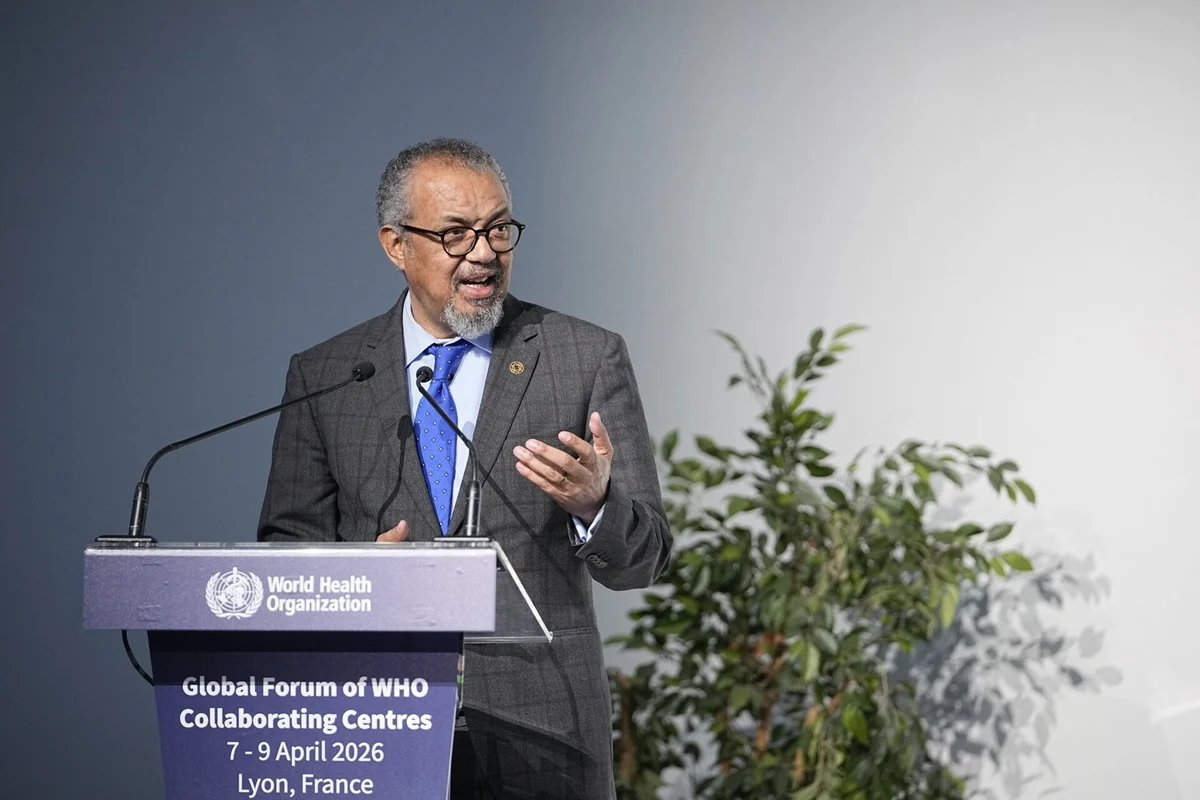
The World Health Organization (WHO) has successfully concluded its inaugural Global Forum of Collaborating Centres, marking a pivotal moment for one of the most expansive and diverse public health networks in existence. By bringing together representatives from over 800 institutions across more than 80 countries, the Forum served as a high-level platform for scientific exchange and strategic alignment. These institutions, designated as WHO Collaborating Centres (CCs), represent the backbone of global health expertise, ranging from premier academic research facilities and national health institutes to specialized technical agencies. The meeting focused on the urgent need to address emerging health threats in an increasingly fragmented geopolitical landscape, emphasizing that while modern challenges are complex, they also provide unique opportunities to modernize health solutions through integrated, cross-border cooperation.
The conclusion of this historic gathering signaled a transformative shift in how the WHO intends to engage with its technical partners. Moving away from a history of siloed, rigid scientific projects, the Forum established a new mandate for dynamic, integrated partnerships. This evolution is designed to ensure that the scientific community remains agile enough to respond to rapid outbreaks and long-term systemic health issues alike. As the Forum closed, delegates expressed a renewed commitment to the "Stand with Science" initiative, a movement intended to insulate public health progress from political volatility and ensure that evidence remains the primary driver of global health policy.
The Evolution of the WHO Collaborating Centres Network: 1949 to Present
The roots of the WHO Collaborating Centres network are as old as the Organization itself, grounded in a constitutional philosophy that prioritizes the leveraging of existing global expertise over the centralization of research. In 1949, during the Second World Health Assembly, a foundational decision was reached that would shape the trajectory of international medical research for the next 77 years. The Assembly affirmed that the WHO should not seek to establish its own independent research institutions. Instead, the Organization was tasked with coordinating, supporting, and mobilizing the world’s existing scientific infrastructure.
This decentralized model was revolutionary at the time, fostering a sense of global ownership over health outcomes. Since the late 1940s, the network has grown from a handful of laboratories focused on basic pathology and infectious diseases to a sophisticated web of 800+ centers. These institutions now cover a vast array of disciplines, including non-communicable diseases, mental health, occupational health, nutrition, and emergency preparedness. By utilizing the specific strengths of local institutions—such as the Centers for Disease Control and Prevention (CDC) in the United States, the Pasteur Institute in France, and various specialized centers in the Global South—the WHO has been able to maintain a global footprint without the overhead of maintaining thousands of proprietary labs.
Over the decades, these CCs have been instrumental in some of humanity’s greatest public health achievements. They provided the technical data necessary for the eradication of smallpox, the ongoing fight against polio, and the rapid characterization of the SARS-CoV-2 virus. Today, the network serves as a critical mechanism for setting global norms and standards, ensuring that a diagnostic test or a treatment protocol developed in one region meets a universal standard of efficacy and safety.
Addressing Modern Threats: The CORC Initiative and Disease X
A central theme of the Global Forum was the proactive identification of "Disease X"—a placeholder term used by scientists and the WHO to describe a currently unknown pathogen that could trigger a future pandemic. To confront this existential threat, the WHO announced the expansion of its Collaborative Open Research Consortia (CORC). This initiative is designed to break down the traditional barriers of intellectual property and institutional competition that often slow down the development of life-saving interventions during a crisis.
The CORC mission is built on the principle of "scientific readiness." By joining thousands of scientists worldwide into a unified network, the consortia aim to accelerate the research and development lifecycle for vaccines, diagnostics, and therapeutics. This collaborative framework ensures that when a new pathogen emerges, the global community is not starting from zero. Instead, a pre-established infrastructure for genomic sequencing, clinical trial protocols, and manufacturing scaling will already be in place.
Dr. Sylvie Briand, WHO Chief Scientist, emphasized during the Forum that science must be the "heart of everything" regarding health protection. She noted that the concentration of expertise within the CC network is "indispensable" for shaping a healthier future. The CORC initiative represents the practical application of this belief, moving beyond theoretical preparedness into active, ongoing research that builds a "scientific shield" for the global population.
Financial Realities and the Case for International Cooperation
The Forum took place against a backdrop of significant economic pressure. Participants discussed at length the challenges posed by recent reductions in global health financing. As many nations grapple with domestic economic constraints and shifting political priorities, the funding for multilateral health initiatives has faced scrutiny. However, the consensus among the 800 institutions was clear: coordinated global responses are more cost-effective than isolated national ones.
The economic analysis presented during the Forum suggested that the collective investment in the CC network provides a high return on investment (ROI). By sharing the burden of research and development across 80 countries, the cost per nation is significantly reduced, while the speed of innovation is increased. The Forum highlighted that preventing a local health crisis from becoming a global emergency is the most effective way to protect the global economy. Experts argued that the "fragmented world" mentioned by leadership refers not only to political borders but also to the fragmentation of funding, which can create dangerous gaps in global surveillance and response capabilities.
Strategic Alignment: One Health and World Health Day 2026
The Global Forum was strategically timed to align with the international One Health Summit. The "One Health" approach recognizes that the health of humans, animals, and the environment are inextricably linked. Most emerging infectious diseases are zoonotic—originating in animals before jumping to humans—making the collaboration between veterinarians, environmental scientists, and medical doctors essential.
The Forum served as a cornerstone for the World Health Day 2026 campaign, which will operate under the theme: "Together for health. Stand with science." This theme is a direct response to the rising tide of health misinformation and the erosion of trust in scientific institutions. By showcasing the power of the CC network, the WHO aims to rebuild public confidence in evidence-based policy.
Dr. Tedros Adhanom Ghebreyesus, WHO Director-General, described the network as an "immensely valuable but under-utilized resource." His statement underscored a desire to bring these centers from the background of technical support to the foreground of global health leadership. He characterized the collaborating centers as a "powerful demonstration of international cooperation," particularly at a time when multilateralism is under strain.
Implications for Global Health Governance
The outcomes of this first Global Forum suggest a significant shift in global health governance. By formalizing the interactions between these 800+ institutions, the WHO is creating a more structured and reliable "scientific senate" that can advise on policy with greater speed and authority. This move is seen by analysts as an attempt to "de-politicize" health emergencies by ensuring that technical experts have a direct and permanent seat at the table.
The implications for the Global South are particularly noteworthy. The Forum emphasized capacity building within institutions in developing nations, ensuring that the next generation of scientific breakthroughs can emerge from the regions most affected by tropical diseases and climate-related health challenges. This democratization of science is intended to reduce the reliance of lower-income countries on Western-centric research and foster a more equitable global health architecture.
Chronology of the Forum and Future Milestones
The Forum followed a rigorous three-day agenda:
- Day 1: Foundations and Legacy. A review of the 77-year history of CCs and a reaffirmation of the 1949 mandate.
- Day 2: Emerging Threats and Innovation. Focused on the launch of CORC and the technical requirements for combating Disease X.
- Day 3: Strategic Integration and Closing. Discussions on the "One Health" framework, financial sustainability, and the adoption of the 2026 "Stand with Science" roadmap.
Looking ahead, the WHO has already committed to maintaining this momentum. The Organization announced that the next Global Forum will be held in 2027. Between now and then, the CCs are expected to implement the new "dynamic partnership" model, moving away from isolated reports and toward real-time data sharing and collaborative research consortia.
Conclusion: A New Era of Scientific Solidarity
The first Global Forum of Collaborating Centres marks the beginning of a new era for the World Health Organization. In a world characterized by rapid technological change and complex geopolitical tensions, the WHO has doubled down on its most reliable asset: the global scientific community. By reinforcing the bonds between 800 of the world’s leading institutions, the WHO is not only preparing for the next pandemic but is also strengthening the daily systems that manage chronic disease, environmental health, and medical standards.
The message from the Forum was unequivocal: science is not a luxury, but a necessity for survival. As the world moves toward the 2026 World Health Day campaign, the commitment of these 80 countries to "Stand with Science" provides a rare example of unified global purpose. The success of this collaborative platform will ultimately be measured by its ability to turn scientific evidence into life-saving action, ensuring that when the next "Disease X" arrives, the world is not only ready but is acting as one.
