
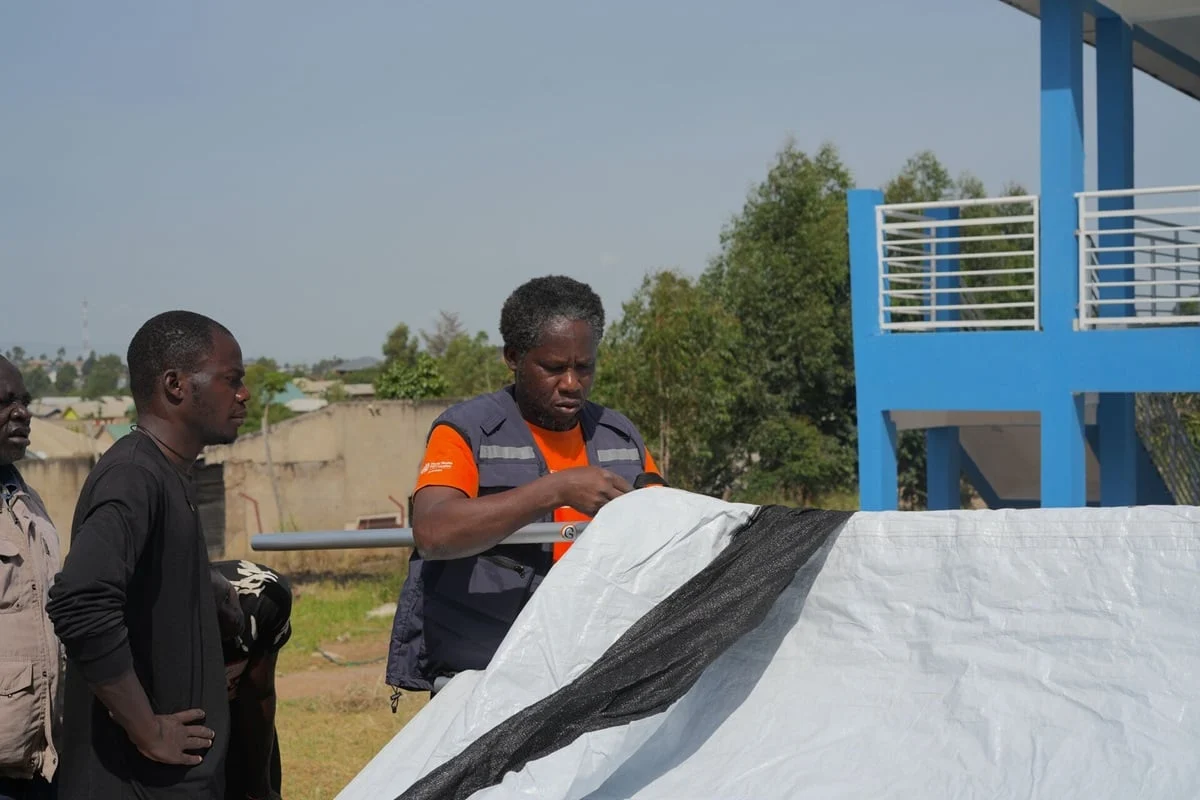
The Democratic Republic of the Congo (DRC) is currently grappling with its 17th recorded outbreak of the Ebola virus, a crisis that has centered primarily in the northeastern province of Ituri. Dr. Tedros Adhanom Ghebreyesus, the Director-General of the World Health Organization (WHO), has issued a high-level appeal for a humanitarian ceasefire in the region to allow health workers safe passage to affected communities. Unlike several recent outbreaks caused by the Zaire ebolavirus, for which established vaccines and treatments exist, the current surge is attributed to the Ebola Bundibugyo strain. This distinction has introduced significant clinical and logistical hurdles, as there are currently no approved vaccines or specific therapeutics available for this particular variant of the disease.
The epicenter of the current health emergency is Ituri, a province already burdened by decades of protracted armed conflict, mass displacement, and chronic food insecurity. According to data released by the WHO and the DRC Ministry of Health, more than 90% of all confirmed cases in this 17th outbreak have been documented within Ituri, with sporadic cases also appearing in neighboring North Kivu and South Kivu provinces. The convergence of a deadly viral pathogen and an active conflict zone has created what international observers describe as a "perfect storm" of humanitarian risk, prompting Dr. Tedros to announce a personal mission to the provincial capital of Bunia to oversee the response efforts.
The Epidemiological Challenge: Ebola Bundibugyo vs. Ebola Zaire
The identification of the Bundibugyo strain marks a critical turning point in the DRC’s history of managing viral hemorrhagic fevers. Since the massive 2018–2020 outbreak in North Kivu (the 10th outbreak), the international community has relied heavily on the Ervebo vaccine and monoclonal antibody treatments like Ebanga and Inmazeb. However, these medical countermeasures are specifically designed to target the Zaire strain.
Ebola Bundibugyo was first identified in 2007 in the Bundibugyo District of Uganda and has appeared intermittently in the DRC since then. While historically associated with a lower case-fatality rate (CFR) than the Zaire strain—ranging from 25% to 50% compared to Zaire’s 60% to 90%—the lack of a preventative vaccine means that containment relies entirely on traditional public health interventions: rigorous contact tracing, isolation, and early supportive care. Supportive care, which includes fluid replacement, oxygen therapy, and treatment of co-infections, remains the primary method for improving survival rates in the absence of specialized antivirals.
Chronology of Ebola Outbreaks in the Democratic Republic of the Congo
The DRC has faced more Ebola outbreaks than any other nation since the virus was first discovered near the Ebola River in 1976. Understanding the current crisis requires a review of the country’s recent history with the disease:
- 1976 (Yambuku): The first recorded outbreak, caused by the Zaire strain, with a 88% fatality rate.
- 1995 (Kwit): A major outbreak that reinforced the need for specialized isolation units.
- 2007 (Kampungu): The first significant emergence of the Bundibugyo strain in the DRC.
- 2012 (Isiro): Another emergence of the Bundibugyo strain, highlighting the difficulty of regional containment.
- 2018–2020 (North Kivu/Ituri): The 10th outbreak, which lasted nearly two years and resulted in over 2,200 deaths. This was the first time the WHO declared a Public Health Emergency of International Concern (PHEIC) for an outbreak within the DRC.
- 2021–2023: Several smaller, localized outbreaks of the Zaire strain were successfully contained using "ring vaccination" strategies.
- Current Outbreak (2024): The 17th outbreak, characterized by the dominance of the Bundibugyo strain in Ituri province.
This timeline illustrates a pattern of increasing frequency in outbreaks, which experts attribute to factors including deforestation, increased human-wildlife contact, and the destabilizing effects of regional insecurity on health infrastructure.
Security Constraints and the Call for a Ceasefire
The primary obstacle to containing the 17th outbreak is not a lack of medical expertise, but a lack of security. Ituri province is currently home to multiple armed groups, and the resulting violence has displaced hundreds of thousands of civilians into overcrowded camps. These conditions are ideal for the rapid transmission of infectious diseases.
Dr. Tedros, who visited the region fourteen times during the 10th outbreak, emphasized that the safety of health workers is paramount. During previous interventions, clinics were frequently targeted, and medical personnel were caught in crossfire or directly attacked. The WHO Director-General’s call for a ceasefire is a strategic necessity; without a cessation of hostilities, contact tracers cannot reach remote villages, and safe and dignified burial (SDB) teams—essential for stopping transmission from deceased victims—cannot operate without military escort, which often increases community mistrust.
"No cause, no conflict, no grievance is worth condemning innocent people to death from a preventable disease," Dr. Tedros stated in his appeal to warring factions. The request for a "humanitarian window" is intended to allow for a surge in medical supplies and the establishment of mobile treatment centers in high-risk zones.
Supporting Data and Socio-Economic Impact
The impact of the Ebola virus in Ituri is exacerbated by a "syndemic"—a situation where multiple health crises interact. Data from the World Food Programme (WFP) and UNICEF indicate that Ituri has some of the highest rates of acute malnutrition in the country. Additionally, the province remains a high-burden area for malaria and measles.
The socio-economic toll is equally severe. Bunia, the capital of Ituri, serves as a vital commercial hub for trade between the DRC, Uganda, and South Sudan. The imposition of health screenings and travel restrictions, while necessary for containment, threatens the livelihoods of traders and farmers. In his address, Dr. Tedros highlighted the "vibrant commerce" and "entrepreneurial spirit" of Ituri, noting that the economic resilience of the population must be protected alongside their physical health.
Current statistics indicate that the youth population—defined as those under the age of 25—comprises more than 60% of the provincial demographic. This group is being prioritized for community engagement programs, as they are seen as the most effective messengers for dispelling misinformation regarding the virus and the motives of international health organizations.
Official Responses and Strategic Coordination
The response to the 17th outbreak is being led by the DRC Ministry of Health, with technical and financial support from the WHO, Médecins Sans Frontières (MSF), and the Red Cross. The strategy is built on four pillars:
- Surveillance and Laboratory Capacity: Enhancing the speed of diagnosis in local laboratories to reduce the time between symptom onset and isolation.
- Community Engagement: Utilizing local leaders, including traditional healers and religious figures, to build trust. Dr. Tedros’s adoption of the local name "Dr. Paluku"—a title given to him by the community in North Kivu meaning "firstborn"—serves as a symbolic gesture of this commitment to cultural integration.
- Case Management: Providing high-quality supportive care in Ebola Treatment Centres (ETCs) to lower the fatality rate of the Bundibugyo strain.
- Safe and Dignified Burials: Ensuring that the highly infectious bodies of victims are handled with medical precision while respecting the cultural and religious traditions of the bereaved families.
The Government of the DRC has also reinforced its commitment to providing security for health corridors, though the effectiveness of these measures remains contingent on the cooperation of non-state armed actors.
Analysis of Implications and Future Outlook
The current situation in Ituri serves as a stark reminder of the vulnerabilities inherent in the global health security architecture. The fact that the 17th outbreak involves a strain without a vaccine highlights the "innovation gap" for diseases that primarily affect impoverished or conflict-ridden regions. While the rapid development of Zaire-strain vaccines was a triumph of modern medicine, the lag in Bundibugyo research leaves the people of Ituri at a disadvantage.
Furthermore, the outbreak tests the limits of "humanitarian neutrality." As health workers operate in zones controlled by various factions, the WHO must navigate a complex political landscape to ensure that aid is distributed based on need rather than political affiliation. The success of the response in Ituri will likely influence how future outbreaks are managed in other fragile states.
As Dr. Tedros prepares for his arrival in Bunia, the international community’s attention is fixed on whether a temporary ceasefire can be achieved. The resilience of the Congolese people has been proven through sixteen prior outbreaks, yet the combination of the Bundibugyo strain and active warfare represents a unique and formidable challenge. The WHO has signaled that it will remain in the region long after the outbreak is declared over, focusing on strengthening the primary healthcare system to prevent future "spillover" events from becoming national emergencies.
In the final analysis, the containment of the 17th Ebola outbreak will depend less on the arrival of new medicines and more on the restoration of trust and the cessation of violence. As the WHO Director-General noted, the "spirit of Ituri" and the dedication of its local health workers are the most powerful tools available in the fight against the virus. The world now waits to see if the warring parties will heed the call for a pause in conflict to prioritize the survival of the civilian population.
