
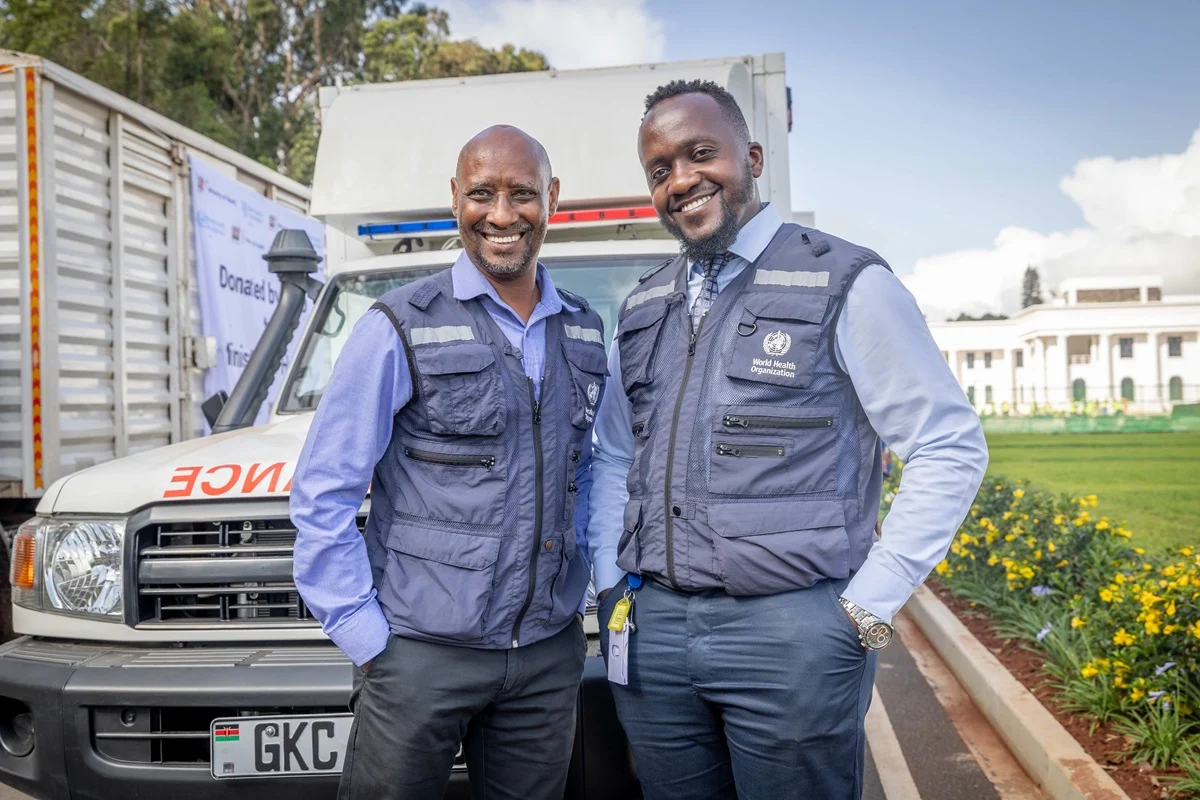
The World Health Organization (WHO) has officially released its comprehensive Results Report for the 2024–2025 biennium, offering a detailed assessment of the state of global health at the conclusion of a critical seven-year strategic cycle. The report, published in anticipation of the Seventy-ninth World Health Assembly scheduled for May 2026, presents a complex picture of measurable improvements in health outcomes worldwide, even as the organization and the broader global health sector grapple with severe funding constraints and systemic challenges. As the final evaluation under the Thirteenth General Programme of Work (GPW13), which spanned from 2019 to 2025, the document serves as both a testament to international cooperation and a stark warning that the world remains off track to achieve the health-related Sustainable Development Goals (SDGs) by the 2030 deadline.
The Triple Billion Framework: A Seven-Year Retrospective
The GPW13 was established in 2018 with an ambitious "Triple Billion" target: to ensure that by the end of 2025, one billion more people would benefit from universal health coverage (UHC); one billion more people would be better protected from health emergencies; and one billion more people would enjoy better health and well-being. This framework was designed to move the WHO toward a more impact-oriented and data-driven model of operation.
According to the 2025 Results Report, significant progress has been made across all three pillars, though the distribution of these gains remains uneven. The period covered by the GPW13 was uniquely defined by the COVID-19 pandemic, which acted as both a disruptor of routine health services and a catalyst for rapid innovation in emergency preparedness. The report indicates that while the "Triple Billion" targets provided a vital North Star for global health policy, the external shocks of the early 2020s, combined with a tightening global financial landscape, have left many of the more granular objectives unfulfilled.
Successes in Universal Health Coverage and Disease Control
Progress toward universal health coverage has been largely propelled by significant advancements in the management of communicable diseases. The report highlights that expanded service coverage for HIV and tuberculosis (TB) has saved millions of lives over the GPW13 period. Integration of these services into primary healthcare systems has allowed for more consistent treatment and better patient outcomes in low- and middle-income countries.
Furthermore, the global health workforce has seen a strategic expansion, with the WHO providing technical guidance to Member States on the training, recruitment, and retention of medical professionals. This expansion has been critical in addressing the "health worker gap" that previously hindered service delivery in rural and underserved regions. Improvements in sanitation and the prevention of bacterial diseases through large-scale immunization programs also contributed to the UHC billion target.
However, the report identifies persistent gaps that threaten to undermine these achievements. While communicable disease metrics have improved, the management of non-communicable diseases (NCDs) remains a major hurdle. Diabetes management, in particular, has not seen the necessary level of investment or policy prioritization, leading to rising morbidity rates in many regions. Additionally, measles surveillance has lagged, resulting in sporadic outbreaks that highlight the fragility of routine immunization systems in the post-pandemic era. Financial protection—the ability of individuals to access care without suffering catastrophic out-of-pocket expenses—also remains a significant challenge for hundreds of millions of people.
Health Emergencies: Resilience and Institutional Reform
The "protection from health emergencies" pillar of the GPW13 was tested more severely than perhaps any other aspect of the WHO’s mandate. The 2025 report notes that the world is undeniably better prepared for pandemics than it was in 2019, thanks to the adoption of the Pandemic Agreement and the comprehensive revisions to the International Health Regulations (IHR). These legal and institutional frameworks have strengthened early warning systems and enhanced the response capacity of individual Member States.
Technical leadership from the WHO played a central role in these gains, providing the standards and protocols necessary for rapid disease detection. Despite these institutional victories, the report cautions that operational challenges persist. Polio eradication, a long-standing goal of the organization, remains elusive due to complex geopolitical environments and the logistical difficulties of reaching children in conflict-prone areas. The "polio transition"—the process of integrating polio assets into broader health systems—has also faced delays due to financing gaps and shifting national priorities.
The report reveals that while high-level preparedness has improved, the "last mile" of emergency response remains underfunded. In resource-constrained settings, the ability to deploy rapid response teams and maintain robust surveillance networks is often compromised by a lack of flexible, sustained funding.
Promoting Health and Well-being through Environmental and Behavioral Change
The third "billion"—better health and well-being—showed some of the most consistent progress, driven largely by environmental interventions and public health regulations. The WHO’s global guidance on air quality, water safety, and hygiene (WASH) has been adopted by an increasing number of countries, leading to tangible improvements in household energy access and a reduction in pollution-related illnesses.
Behavioral health also saw notable shifts. Global campaigns against tobacco use and alcohol consumption, supported by WHO-led technical tools and standards, have resulted in a measurable decline in usage rates in several key demographics. These achievements underscore the value of the WHO’s role as a global standard-setter. When countries align their national legislation with WHO recommendations—such as those found in the MPOWER package for tobacco control—the resulting public health benefits are substantial.
The Financial Reality: Earmarking and Resource Constraints
One of the most critical sections of the 2025 Results Report focuses on the WHO’s internal performance and the financial pressures that have hampered its delivery. The report utilizes 121 output indicators to assess the WHO Secretariat’s performance. Alarmingly, approximately 50% of these indicators were not achieved.
The failure to meet these internal targets is directly linked to the organization’s financial structure. A large portion of the WHO’s funding remains "highly earmarked," meaning donors specify exactly which programs or regions the money must be used for. This limits the Secretariat’s ability to allocate resources strategically according to the most urgent global health priorities. When a crisis emerges in an underfunded sector, the WHO often lacks the "flexible" funds necessary to pivot its resources effectively.
Furthermore, the report notes that a "realignment process" within the organization, intended to improve efficiency, has had the unintended immediate consequence of reducing human resource capacity. In many emergency-prone areas, the WHO has been forced to scale back technical support due to budget cuts, leading to a slowing of program implementation. The document emphasizes that a "sustainably financed WHO" is not just a budgetary goal but a prerequisite for achieving the SDGs.
Official Responses and the Director-General’s Outlook
Dr. Tedros Adhanom Ghebreyesus, WHO Director-General, emphasized the dual nature of the report’s findings in his official statement. "The Results Report 2025 shows that with support from WHO and partners, countries have delivered tangible benefits for millions of people," Dr. Tedros stated. "At the same time, these gains cannot be taken for granted. Protecting and expanding them will require sustained support and investment, so that together we can continue advancing the vision set out in WHO’s Constitution: the highest attainable standard of health as a right for all."
The Director-General’s remarks reflect a broader sentiment within the global health community: while the technical expertise of the WHO is more refined than ever, the political and financial will of Member States is not always aligned with the scale of the challenges. Reactions from global health advocates and non-governmental organizations (NGOs) have echoed these concerns, with many calling for a move away from earmarked contributions toward a more "sovereign" and predictable funding model for the organization.
Chronology of the GPW13 Period (2019–2025)
The trajectory of the GPW13 provides essential context for the 2025 results:
- 2018-2019: Adoption of the GPW13 and the launch of the Triple Billion targets. The WHO begins a massive transformation process to become more country-focused.
- 2020-2022: The COVID-19 pandemic consumes the majority of global health resources. Routine services for HIV, TB, and malaria are disrupted, but emergency infrastructure is rapidly expanded.
- 2023: The WHO declares an end to COVID-19 as a public health emergency of international concern (PHEIC). The focus shifts to "building back better" and pandemic treaty negotiations.
- 2024: Significant funding cuts across the global health sector as donor nations face domestic economic pressures. The WHO begins a critical realignment to manage reduced budgets.
- 2025: The conclusion of GPW13. The Results Report is finalized, showing that while "billions" were reached in terms of population coverage, the quality and equity of that coverage remain inconsistent.
Broader Impact and Implications for the 2030 Agenda
As the WHO prepares to present this report to the Seventy-ninth World Health Assembly in May 2026, the implications for the future of global health are profound. The world is currently at the midpoint between the creation of the SDGs in 2015 and the 2030 deadline. The fact that the world is "off track" for the health-related SDGs suggests that the current pace of progress is insufficient to meet the promised targets.
The 2025 Results Report serves as a data-driven foundation for the development of the Fourteenth General Programme of Work (GPW14). It clarifies that future strategies must prioritize "equity-based" reporting and more robust support for resource-constrained settings. The report also highlights that the health of the planet and the health of people are inextricably linked, suggesting that climate change and environmental health will likely take a more central role in the next strategic cycle.
Ultimately, the report concludes that while the WHO has demonstrated its "comparative advantage" through technical leadership and convening power, the organization’s impact is capped by the volatility of its funding. For the world to reach a "healthier, safer, and fairer" state by 2030, the transition from earmarked, reactive financing to sustained, strategic investment is no longer optional; it is a necessity for global stability.
