
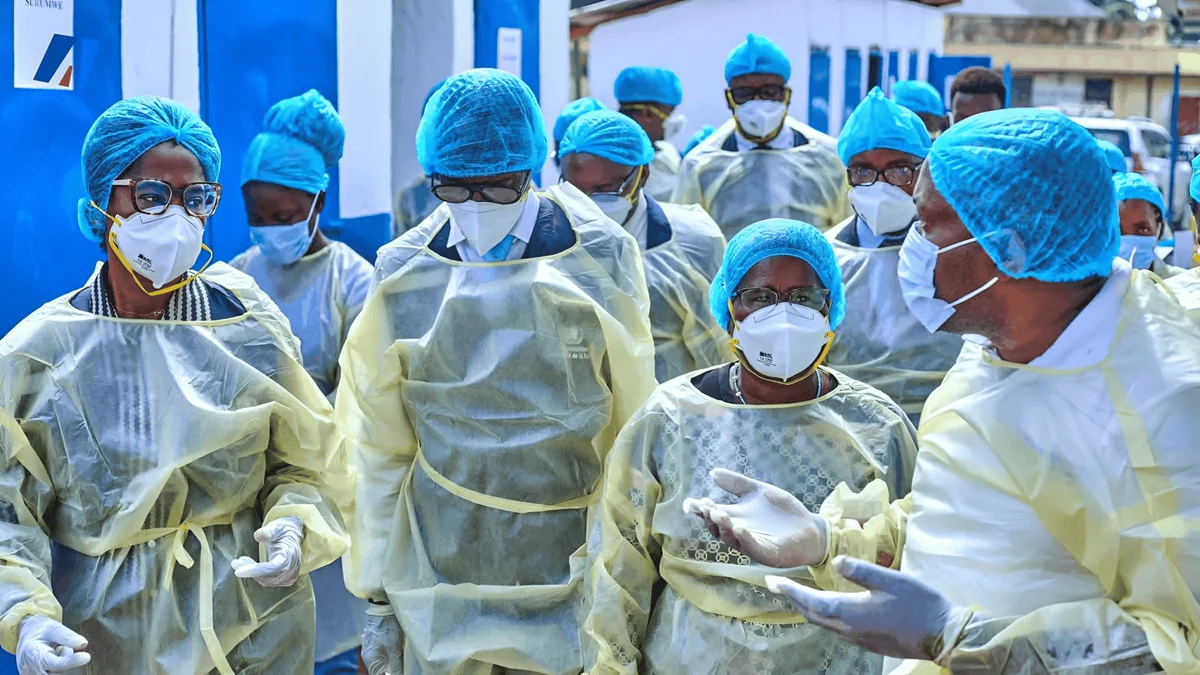
The World Health Organization (WHO) has successfully concluded Exercise Polaris II, a high-intensity, two-day simulation designed to stress-test global responses to a hypothetical fast-moving bacterial pathogen. Conducted on April 22 and 23, the exercise mobilized more than 600 health emergency experts from 26 countries and territories, alongside 25 international partner organizations. This major operation serves as a critical milestone in the WHO’s ongoing efforts to transition pandemic preparedness from theoretical frameworks into operational reality. By simulating a fictional bacterium spreading across borders, Polaris II provided a unique platform for nations to evaluate their emergency workforce structures, the speed of information dissemination, and the efficacy of cross-border coordination under the most strenuous conditions.
The exercise was the second installment of the HorizonX initiative, a multi-year simulation program designed to build a continuous cycle of readiness rather than relying on periodic, ad hoc responses. Building upon the foundational work of Polaris I—held in April 2025, which focused on a viral pathogen—Polaris II shifted the focus to a bacterial threat. This choice reflects the growing global concern over antimicrobial resistance and the distinct logistical challenges posed by bacterial outbreaks, which often require different diagnostic, treatment, and containment strategies compared to viral respiratory infections.
A New Paradigm in Global Health Coordination
The core objective of Polaris II was the operationalization of two landmark WHO frameworks: the Global Health Emergency Corps (GHEC) framework and the National Health Emergency Alert and Response Framework. These documents, published in mid-to-late 2025, represent a significant shift in how the international community approaches health crises. The GHEC framework, in particular, emphasizes the principles of sovereignty, equity, and solidarity. It seeks to create a "network of networks," ensuring that when a local health system is overwhelmed, a pre-coordinated, highly trained global workforce is ready to surge into the area without the delays typically associated with international aid deployment.
Dr. Tedros Adhanom Ghebreyesus, WHO Director-General, emphasized the necessity of this collaborative model during the closing of the exercise. "Exercise Polaris II showed what is possible when we act together. It demonstrated that global cooperation is not optional—it is essential," Dr. Tedros stated. He further noted that the primary purpose of the Global Health Emergency Corps is to foster trust and strengthen connections so that nations can work as a single unit across borders when the next real-world threat emerges.
Chronology of Exercise Polaris II and the HorizonX Program
The path to Polaris II began with the lessons learned during the COVID-19 pandemic, which exposed deep fractures in global supply chains and communication. In response, the WHO launched the HorizonX program to ensure that the global health architecture remains "ever-ready."
- April 2025: Exercise Polaris I – This inaugural exercise tested the world’s response to a fictional viral outbreak. It focused heavily on vaccine distribution and initial lockdown protocols.
- June 2025: Publication of the GHEC Framework – This provided the legal and logistical guidelines for international health workforce deployment, prioritizing the autonomy of host nations.
- October 2025: National Health Emergency Alert and Response Framework – This document outlined how local and national governments should structure their internal alert systems to sync with global WHO standards.
- April 22-23, 2026: Exercise Polaris II – The current simulation, which expanded the scope to include 26 nations and integrated advanced AI-enabled tools for workforce planning.
During the 48-hour simulation, participants were forced to make rapid-fire decisions as the fictional bacterium "mutated" and spread through simulated travel hubs. Health ministries had to activate their Emergency Operations Centers (EOCs), share real-time epidemiological data through the WHO’s secure channels, and request or offer technical assistance through the GHEC portal.
Integration of Artificial Intelligence and Data-Driven Logistics
A significant enrichment in Polaris II compared to its predecessor was the experimental use of AI-enabled tools. These technologies were employed to support workforce organization and complex resource planning. In a real-world pandemic, the logistics of moving thousands of medical professionals and tons of equipment are staggering. During Polaris II, AI models were used to predict where the "outbreak" would peak next, allowing participants to preemptively surge their workforce to high-risk zones.
The data-driven approach also allowed for better policy alignment. By using shared digital platforms, participating countries could see the immediate impact of their border policies or quarantine measures on the simulated spread of the pathogen. This transparency aimed to prevent the "policy chaos" seen in previous real-world emergencies, where conflicting national regulations often hindered the movement of essential goods and personnel.
Global Participation and Regional Collaboration
The diversity of the participating nations highlights the universal nature of the threat. The 26 countries and territories involved spanned every WHO region, including:
- Asia and the Pacific: Bangladesh, Brunei, India, Indonesia, Malaysia, Nepal, Philippines, Thailand.
- The Americas: Brazil, Colombia, El Salvador, Paraguay, Suriname.
- Africa: Ghana, Kenya, Republic of Congo, Rwanda.
- Eastern Mediterranean: Egypt, Jordan, Libya, Oman, Qatar, Yemen.
- Europe: France, Georgia, Kosovo.
The participation of countries like Yemen and Libya—nations currently facing significant internal challenges—was particularly noteworthy. It underscored the WHO’s commitment to ensuring that even the most vulnerable health systems are integrated into the global security net.
Furthermore, Polaris II saw the debut of the Health Emergency Leaders Network for Africa and the Eastern Mediterranean. This recently launched network, a collaboration between the WHO, Africa CDC, and Morocco, aims to foster regional leadership and reduce reliance on Western-centric response models. By empowering regional hubs, the WHO hopes to decrease response times and increase the cultural and linguistic competency of emergency teams.
Stakeholder Perspectives and Institutional Support
The simulation was not merely a government exercise; it involved a massive coalition of non-governmental and technical partners. Over 25 organizations provided surge support and technical expertise, including the Africa Centres for Disease Control and Prevention, the International Federation of Red Cross and Red Crescent Societies (IFRC), Médecins Sans Frontières (MSF), and UNICEF.
Technical institutes like the Robert Koch Institute and UK-Med worked alongside emergency networks such as the Global Outbreak Alert and Response Network (GOARN) and the Emergency Medical Teams (EMT) initiative. This "whole-of-society" approach is intended to ensure that in a real crisis, the various actors on the ground are not meeting for the first time.
Edenilo Baltazar Barreira Filho, Director of the Public Health Emergencies Department at the Ministry of Health in Brazil, highlighted the practical value of the exercise. "By simulating the spread of a dangerous pathogen under real-life conditions, Exercise Polaris II helped us turn existing plans into action. It is not enough to have plans on paper—what matters is how they perform in practice," he said. This sentiment was echoed by Dr. Chikwe Ihekweazu, Executive Director of WHO’s Health Emergencies Programme, who described the spirit of the exercise as a "well-organized, trained, coordinated, and connected emergency workforce ready to respond wherever and whenever it is needed."
Implications for Global Health Security
The conclusion of Polaris II marks a shift toward a more proactive stance in global health. Analysts suggest that the shift from viral to bacterial simulations is a strategic move to prepare for the "silent pandemic" of drug-resistant infections. Bacterial outbreaks often require more localized, intensive medical interventions and complex antibiotic supply chains, which Polaris II successfully tested.
Furthermore, the emphasis on "sovereignty" within the GHEC framework addresses a long-standing tension in international relations. By ensuring that the WHO acts as a coordinator rather than a governing body, the framework encourages more nations to participate without the fear of surrendering national authority. This is seen as a vital step in securing the participation of major global powers and developing nations alike.
The economic implications are also substantial. The cost of running simulations like Polaris II is a fraction of the trillions of dollars lost during the COVID-19 pandemic. By investing in these exercises, the WHO and its partners are essentially purchasing an "insurance policy" for the global economy.
Looking Forward: World Health Day 2026 and Beyond
As the WHO moves toward World Health Day 2026, the theme "Together for health. Stand with science" will serve as a year-long campaign to highlight science as the bedrock of health security. The lessons learned from Polaris II will be compiled into a comprehensive report to be shared with all member states, providing a roadmap for future legislative and budgetary decisions regarding health emergency departments.
The HorizonX program will continue to evolve, with future simulations expected to incorporate even more complex scenarios, including the intersection of health crises with climate-related disasters and cyber-threats to health infrastructure. For the 26 nations that participated in Polaris II, the exercise has provided more than just data; it has built the human connections and institutional trust that will be the first line of defense when the next real-world pathogen emerges. Through Exercise Polaris II, the World Health Organization has reaffirmed that while pathogens do not respect borders, a coordinated and scientifically-grounded global response can effectively contain them.
