
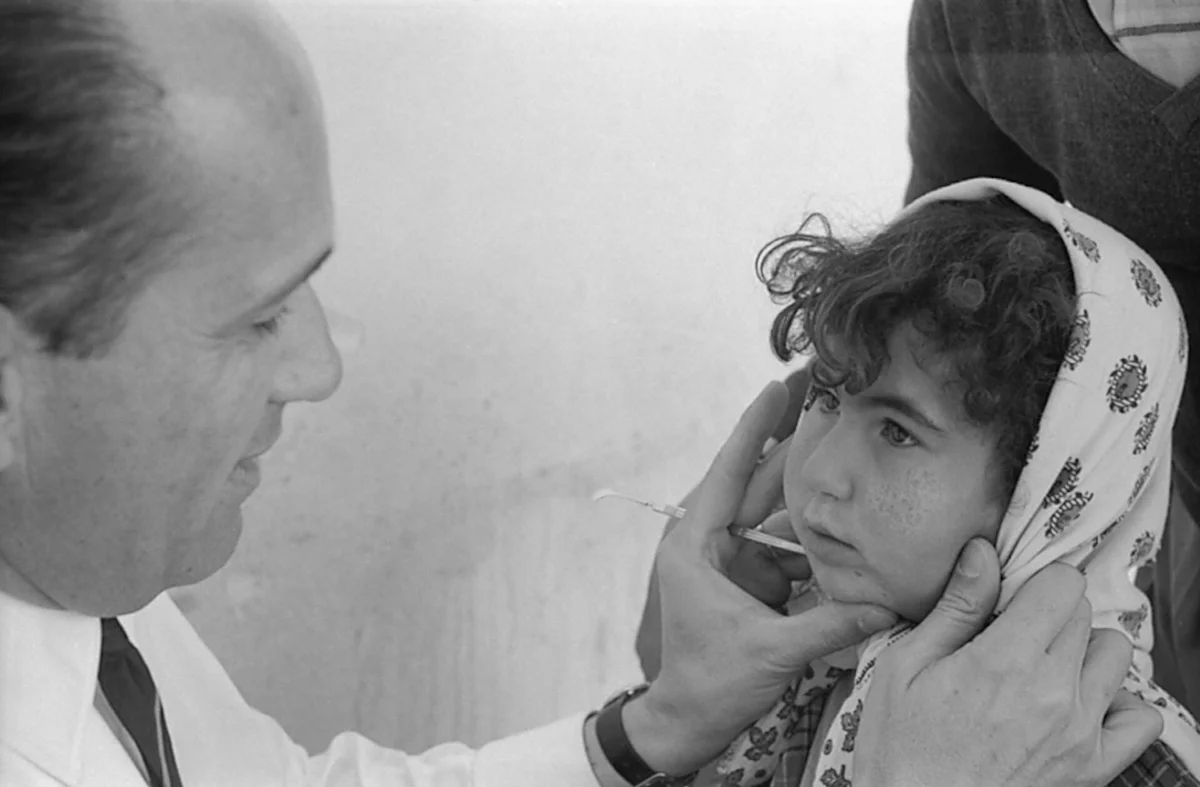
The World Health Organization (WHO) has officially validated Tunisia for having eliminated trachoma as a public health problem, marking a monumental achievement in the nation’s medical history and a significant victory for the global campaign against neglected tropical diseases (NTDs). This validation, announced following a rigorous assessment process, concludes a multi-generational effort to eradicate the world’s leading infectious cause of blindness within the country’s borders. Tunisia now stands as the 31st country globally to receive this validation and the 14th in the WHO Eastern Mediterranean Region to eliminate at least one neglected tropical disease, signaling a shift in the regional health landscape.
Trachoma, a devastating eye disease caused by the bacterium Chlamydia trachomatis, has plagued humanity for millennia. It is characterized by its predilection for the most vulnerable populations, thriving in environments with limited access to clean water, poor sanitation, and inadequate hygiene. In Tunisia, the disease was once a pervasive threat; during the early to mid-20th century, trachoma was endemic across the nation, with historical data suggesting that at least half of the population was affected. The burden was particularly heavy in the arid southern regions, where environmental conditions and socio-economic challenges facilitated the rapid spread of the infection.
A Legacy of National Commitment and Strategic Intervention
The journey toward elimination was not an overnight success but the result of a sustained, comprehensive national strategy that spanned several decades. Central to Tunisia’s success was the early adoption and aggressive scaling of the WHO-recommended SAFE strategy. The acronym stands for Surgery for advanced cases (trichiasis), Antibiotics to clear the underlying infection, Facial cleanliness to reduce transmission, and Environmental improvement to address the root causes of the disease.
Tunisia’s Ministry of Health led the charge by integrating eye care into the foundational layers of the country’s primary health care system. This integration ensured that even the most remote communities had access to screening and treatment. School health programs played a pivotal role, identifying early-stage infections in children and educating the younger generation on the importance of hygiene. By embedding trachoma prevention into the national education and health infrastructure, Tunisia created a self-sustaining model of disease surveillance.
Dr. Tedros Adhanom Ghebreyesus, WHO Director-General, lauded the achievement as a testament to political willpower. “I congratulate Tunisia on this historic public health achievement,” Dr. Tedros stated. “Eliminating trachoma shows what long-term political commitment, strong primary health care, and teamwork can do. Tunisia has proven that even the world’s leading infectious cause of blindness can be overcome.”
The Science and Impact of Trachoma
To understand the magnitude of Tunisia’s achievement, it is necessary to examine the pathology of trachoma. The infection is transmitted through direct or indirect contact with discharge from the eyes or nose of an infected person. This can occur through hands, clothing, or flies—specifically Musca sorbens—which breed in areas with inadequate sanitation.
In its initial stages, the disease presents as conjunctivitis. However, repeated infections over years lead to a condition known as trachomatous trichiasis (TT). In this advanced stage, the eyelid scars and turns inward, causing the eyelashes to rub against the eyeball. This constant friction results in intense pain, corneal scarring, and eventual irreversible blindness. Because the disease often affects the most productive members of a household, its economic impact is profound, trapping families in cycles of poverty due to the loss of labor and the burden of care.
Tunisia’s intervention addressed both the biological and environmental aspects of this cycle. By expanding access to potable water and improving sanitation coverage, the government significantly reduced the breeding grounds for flies and made facial cleanliness a practical reality for rural families.
Statistical Thresholds and the Validation Process
The WHO does not grant elimination status lightly. A country must meet specific, evidence-based criteria to be validated as having eliminated trachoma as a public health problem. These metrics include:
- A prevalence of trachomatous trichiasis (TT) "unknown to the health system" of less than 0.2% in adults aged 15 years and older.
- A prevalence of trachomatous inflammation-follicular (TF) in children aged 1–9 years of less than 5% in every formerly endemic district.
- The implementation and maintenance of a robust system to identify and manage incident cases of TT.
Tunisia’s data demonstrated that it had not only met but sustained these thresholds across all its governorates. The validation process involved a detailed dossier submitted by the Tunisian government, which was then reviewed by an independent group of experts and the WHO. The findings confirmed that the disease was no longer a significant threat to the population’s health, though the country must remain vigilant to prevent a resurgence.
Dr. Hanan Balkhy, WHO Regional Director for the Eastern Mediterranean, highlighted the consistency required for such a result. “This is a major achievement that reflects sustained and consistent national commitment over many years and shows what is possible when a country remains focused on addressing preventable causes of blindness,” she noted.
Regional Leadership and Global Context
Tunisia’s success places it in an elite group of nations. It joins fellow North African countries such as Morocco, Algeria, Egypt, and Libya, which have also been validated for trachoma elimination. This creates a growing "blindness-free" corridor in the region, providing a blueprint for other nations still struggling with the disease.
The global fight against trachoma is coordinated through the WHO Alliance for the Global Elimination of Trachoma by 2020 (GET2020), which was launched in 1996. While the initial 2020 goal was ambitious, the progress made by countries like Tunisia has allowed the WHO to refine its targets in the "Road Map for Neglected Tropical Diseases 2021–2030." The new goal is to eliminate trachoma globally by 2030.
The Minister of Health of Tunisia, Dr. Mustapha Ferjani, emphasized the equity aspect of this milestone. “Validation marks a historic achievement for Tunisia and reflects our country’s long-standing commitment to public health, prevention, and equity,” Ferjani said. He noted that the success belonged to generations of healthcare professionals and local communities who worked tirelessly to expand care access.
Sustaining Gains: Post-Validation Surveillance
The declaration of elimination does not mean the work has ended. Tunisia has established a robust post-validation surveillance system designed to act as an early warning network. This system ensures that any localized outbreaks or individual cases of trichiasis are identified and treated immediately.
Ongoing training for healthcare workers remains a priority, ensuring that the clinical knowledge required to diagnose trachoma is not lost even as the disease becomes a rarity. Furthermore, the integration of eye health into general health services ensures that the infrastructure built to fight trachoma will now serve to address other ophthalmic issues, such as cataracts and glaucoma, thereby strengthening the overall health system.
Dr. Ahmed Zouiten, Acting WHO Representative in Tunisia, pointed out the broader scientific implications. “This milestone stands as a strong demonstration of how science, evidence-based programming, and coordinated technical support can overcome neglected tropical diseases every time and everywhere,” he said.
Broader Implications for the Sustainable Development Goals (SDGs)
The elimination of trachoma in Tunisia contributes directly to the United Nations Sustainable Development Goal 3, which aims to ensure healthy lives and promote well-being for all at all ages. Specifically, Target 3.3 calls for ending the epidemics of neglected tropical diseases by 2030.
Beyond health, the elimination of a disease that causes blindness has cascading benefits for education (Goal 4) and economic growth (Goal 8). Children who are free from the pain of trachoma can attend school more regularly, and adults who retain their sight can continue to support their families and contribute to the national economy. The environmental improvements made to combat trachoma also align with Goal 6, which focuses on clean water and sanitation.
As Tunisia celebrates this achievement, the international community looks to the nation as a case study in perseverance. The transition from a state where 50% of the population was at risk to a state of total elimination provides a powerful narrative of hope. It reinforces the idea that with coordinated international support, dedicated domestic funding, and a focus on the most marginalized populations, the burden of neglected tropical diseases can be lifted, paving the way for a healthier, more equitable future.
With 31 countries now having crossed the finish line for trachoma, the global health community moves one step closer to a world where no person loses their sight to a preventable bacterial infection. Tunisia’s victory is not just a national one; it is a vital contribution to a global movement dedicated to the dignity and health of every human being.
