
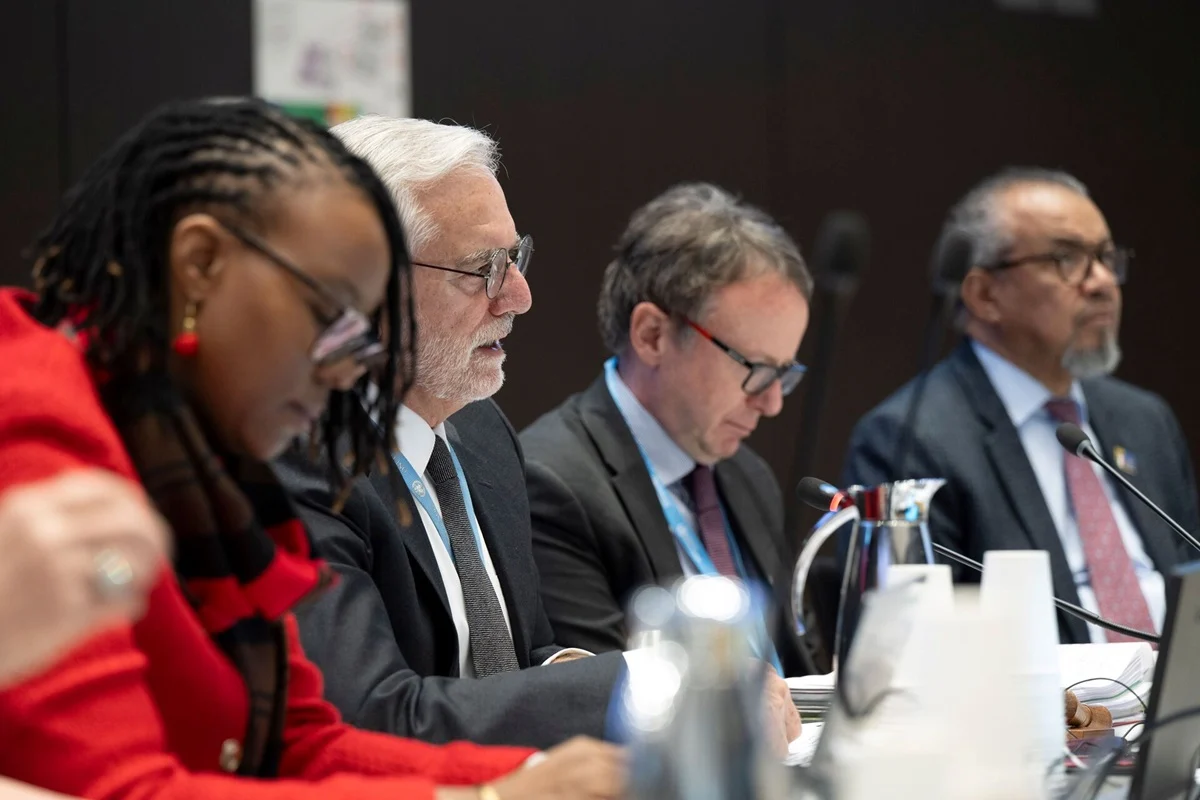
Member States of the World Health Organization (WHO) have formally concluded a critical session of the Intergovernmental Working Group (IGWG), marking significant progress on the Pathogen Access and Benefit Sharing (PABS) system while acknowledging that further time is required to finalize this complex framework. The PABS system is regarded as a cornerstone of the broader WHO Pandemic Agreement, a landmark international instrument designed to prevent a recurrence of the systemic failures witnessed during the COVID-19 pandemic. At the conclusion of the resumed session of the sixth meeting of the IGWG in Geneva, delegates reached a consensus that the technical and legal intricacies of the PABS annex necessitate a prolonged negotiating window to ensure the final document is both robust and equitable.
The outcome of these deliberations will be presented to the Seventy-ninth World Health Assembly (WHA) later this month. Given the outstanding issues, the Assembly will be invited to consider an extension of the IGWG’s mandate, as initially outlined in Resolution WHA78.1. This extension would see the final outcome submitted to the World Health Assembly by May 2027 at the latest, though provisions have been discussed for an earlier special session in 2026 should negotiations reach a breakthrough ahead of schedule.
The Core Objectives of the PABS Framework
The Pathogen Access and Benefit Sharing system is designed to solve a fundamental tension in global health: the need for rapid, transparent sharing of biological materials and genetic sequence data versus the moral and practical necessity of ensuring that the resulting medical countermeasures—such as vaccines, therapeutics, and diagnostics—are distributed fairly across the globe.
Under the proposed PABS system, countries would commit to sharing samples of pathogens with pandemic potential with WHO-coordinated laboratories in a timely manner. In exchange, the system would establish a "grand bargain" where manufacturers who utilize these materials and data are required to contribute to a benefit-sharing mechanism. This could include providing a percentage of their production to the WHO at affordable prices or as donations during a declared public health emergency of international concern.
The finalization of the PABS Annex is not merely a technical formality; it is a legal prerequisite for many Member States to proceed with the formal signature and ratification of the overarching Pandemic Agreement. Without a clear, binding framework for benefit-sharing, many developing nations argue that the agreement would lack the teeth necessary to prevent the "vaccine apartheid" that characterized the early years of the COVID-19 response.
A Chronology of Global Health Diplomacy
The journey toward the PABS system began in the immediate aftermath of the COVID-19 pandemic, which exposed deep fissures in international cooperation. While the World Health Assembly adopted the WHO Pandemic Agreement in May 2025 to strengthen global prevention and response, it recognized that the specific mechanics of pathogen sharing were too complex to be resolved in the initial treaty text.
Consequently, the Assembly established the open-ended Intergovernmental Working Group (IGWG) to hammer out the details of the PABS system. Since its inception, the IGWG has held six major meetings, with the most recent session in Geneva focusing on the legal language governing data access and the percentage-based contributions of pharmaceutical entities.
The timeline for these negotiations has been adjusted several times to accommodate the diverse interests of the WHO’s 194 Member States. The current proposal to extend work into 2026 or 2027 reflects the reality that harmonizing the interests of high-income countries with large pharmaceutical sectors and lower-income countries that often serve as the frontlines for emerging zoonotic diseases requires meticulous diplomacy. The IGWG has already scheduled its seventh meeting for July 6 to 17, 2026, indicating a long-term commitment to a high-quality legislative outcome over a rushed agreement.
Supporting Data: The Cost of Inequity and the Value of Sharing
The urgency expressed by WHO leadership is supported by a wealth of data from the 2020-2023 period. During the COVID-19 pandemic, the "access" portion of the global response was relatively successful in terms of scientific speed—the genetic sequence of SARS-CoV-2 was shared early in January 2020. However, the "benefit-sharing" aspect failed significantly.
According to data from the UNDP and the WHO, while high-income countries achieved vaccination rates of over 80% by late 2021, many low-income countries remained below 10%. Economically, the International Monetary Fund (IMF) estimated that the pandemic cost the global economy over $12.5 trillion through 2024. Proponents of the PABS system argue that a more equitable distribution system, facilitated by a pre-negotiated legal framework, could have saved millions of lives and trillions of dollars by suppressing viral transmission more effectively on a global scale.
Furthermore, the WHO’s Global Influenza Surveillance and Response System (GISRS), which has operated for over 70 years, provides a precedent for pathogen sharing. However, the PABS system seeks to expand this model to all pathogens with pandemic potential, ensuring that the legal obligations are clear and that the benefits are not restricted to influenza vaccines alone.
Official Responses and Leadership Perspectives
Dr. Tedros Adhanom Ghebreyesus, WHO Director-General, emphasized the existential importance of the PABS annex in his closing remarks to the working group. "Real progress was made on the PABS annex and I am confident through continued negotiations differences will be overcome," Dr. Tedros stated. He reminded Member States that "the next pandemic is a matter of when, not if," and characterized the PABS system as "the last piece of the puzzle" for the global health architecture.
The leadership of the IGWG Bureau echoed this sentiment of cautious optimism. Ambassador Tovar da Silva Nunes of Brazil, serving as Co-Chair, highlighted the technical rigor of the process. "Finalizing a document of such technical and legal complexity requires precision and dedication, both of which the Member States have demonstrated in full," he said. He acknowledged that while a final deal remains elusive, the extension provides the necessary "breathing room" to resolve contentious points regarding intellectual property and mandatory vs. voluntary contributions.
Co-Chair Matthew Harpur also noted that the group is moving in the "right direction." He underscored that the eventual PABS framework would provide the Pandemic Agreement with the "framework needed to ensure countries are better, and more equitably, prepared and protected."
Technical Hurdles and Negotiating Friction
Despite the progress noted by the WHO, several technical and legal hurdles remain. One of the primary points of contention involves the "Standard Material Transfer Agreements" (SMTAs). These are the legal contracts that would govern how a laboratory or company receives a pathogen sample. Negotiators are still debating the specific terms of these contracts, including:
- Monetary vs. Non-Monetary Benefits: Should companies pay into a global health fund, or is the provision of free vaccines sufficient?
- Intellectual Property (IP): How can the system encourage innovation while ensuring that IP rights do not become a barrier to manufacturing in the Global South?
- Digital Sequence Information (DSI): As modern science increasingly relies on genetic data rather than physical samples, how will the PABS system track and monetize the use of digital sequences?
These issues have created a divide between the "Global North," which hosts many of the world’s leading biotech firms, and the "Global South," which seeks guaranteed access to life-saving technology in exchange for their cooperation in pathogen surveillance.
Broader Impact and Global Health Implications
The implications of the PABS negotiations extend far beyond the walls of the WHO headquarters in Geneva. A successful PABS annex would represent a shift in international law, moving from a charity-based model of global health to one based on legal rights and obligations. It would provide a predictable environment for the pharmaceutical industry while offering a safety net for vulnerable populations.
Failure to reach an agreement, however, could lead to a fragmented global surveillance landscape. If countries feel they will not benefit from sharing information about new outbreaks, they may be less inclined to report them promptly, fearing the economic consequences of travel bans without the upside of vaccine access. This "pathogen sovereignty" could leave the entire world vulnerable to undetected viral threats.
The proposed extension to 2026 or 2027 is a strategic move to prevent a collapse of the talks. By allowing more time for informal consultations and technical drafting, the WHO hopes to produce a document that can withstand the political shifts of its Member States. As the Seventy-ninth World Health Assembly approaches, the international community will be watching closely to see if the spirit of cooperation born out of the COVID-19 crisis can be translated into a lasting legal framework for the future.
Conclusion and Future Outlook
The decision to extend the IGWG’s work reflects a pragmatic recognition that equity cannot be rushed. The PABS system is intended to be a permanent fixture of global health governance, and the precision mentioned by Ambassador Nunes is essential to its longevity. As the world moves further away from the immediate trauma of the COVID-19 pandemic, the challenge for the WHO and its Member States will be to maintain the "sense of urgency" requested by Dr. Tedros.
With the next formal meeting scheduled for July 2026, the intervening months will likely be characterized by intense bilateral and regional consultations. The goal remains a unified, legally binding system that ensures that when the next "Disease X" emerges, the world’s response is defined not by competition and hoarding, but by the rapid sharing of science and the equitable distribution of its benefits. The progress made in Geneva suggests that while the path is long, the collective will to reach the destination remains intact.
