
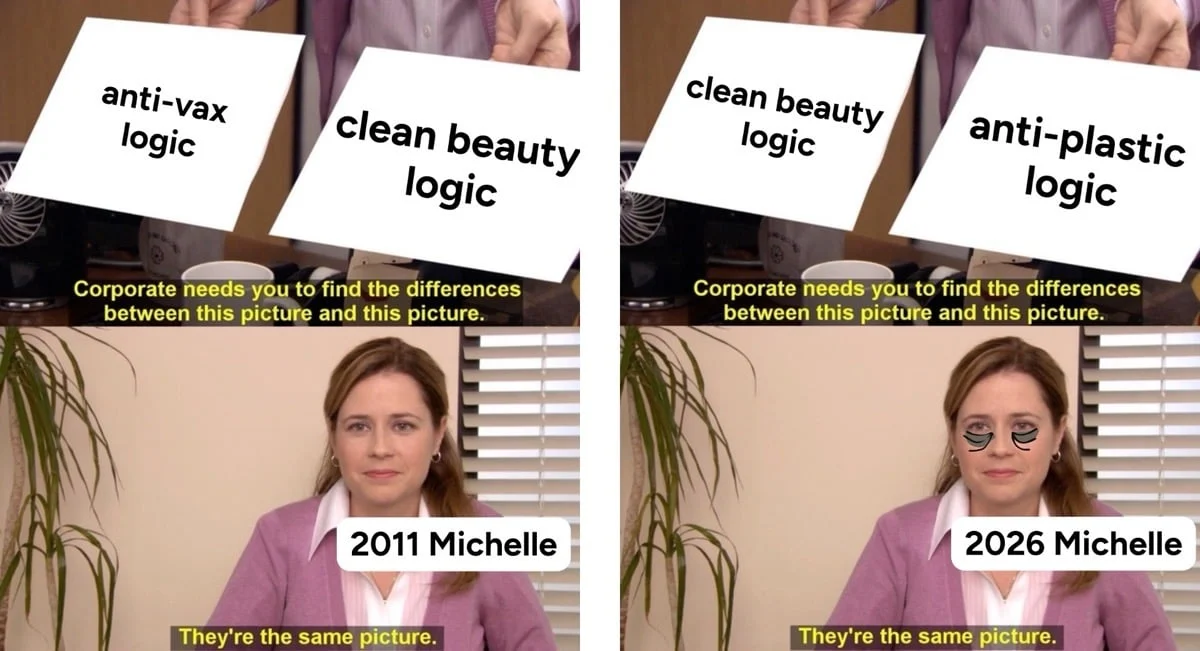
The burgeoning "plastic-free" movement, particularly prominent within the beauty industry, is exhibiting striking parallels with the "clean beauty" trend that gained traction in the early 2010s, according to an analysis by Dr. Michelle Wong of Lab Muffin Beauty Science. This assessment, published in January 2026, posits that both movements, despite ostensibly promoting health and environmental well-being, often rely on similar pseudoscientific arguments and fear-mongering tactics, potentially leading consumers down misinformed paths. The observation was initially spurred by a social media post on Threads from @idea.soup, which speculated about the anti-polyester movement’s potential to become a "right-wing pipeline," a sentiment that resonated with Dr. Wong’s decade-long experience in science communication.
Dr. Wong, who began her scicomm efforts in 2011 to counter the "non-toxic" clean beauty movement’s potential link to anti-vaccination beliefs, notes a shared logical framework. Both clean beauty and the current anti-plastic trend frequently demonize similar substances—such as aluminum and formaldehyde—and employ comparable rhetorical strategies. Beauty brands and influencers are increasingly observed making blanket "plastic-free" claims and propagating fear-based narratives surrounding microplastics.
A critical point of concern highlighted in the analysis is that many proponents of the "plastic-free" movement, despite acknowledging the pseudoscientific nature of clean beauty, often fail to recognize how the very arguments used to debunk clean beauty apply directly to their anti-plastic messaging. This phenomenon, where even reputable scientific outlets like The Conversation and previously Science-Based Medicine have inadvertently echoed clean beauty tropes, underscores a broader challenge in distinguishing genuine scientific discourse from well-intentioned but misguided activism.
It is crucial to clarify that the critique is not against reducing plastic waste or addressing the legitimate concerns surrounding microplastics. Dr. Wong explicitly states, "I definitely think we’re using too much plastic, and there are concerns around the health impacts of microplastics." However, she argues that "overblowing the concerns, and switching to ‘eco’ alternatives without looking at evidence, actually goes against the underlying goals of better human and environmental health," mirroring the misaligned outcomes of removing "dirty" ingredients in clean beauty.
The Echo Chamber of Misinformation: Parallels Between Anti-Plastic and Clean Beauty
The analytical framework identifies several key parallels in the logical fallacies and communication strategies employed by both movements:
1. The Appeal to Nature Fallacy
Both "clean beauty" and "plastic-free" narratives heavily lean on the appeal to nature fallacy, asserting that "plastic = bad, natural = good." This extends even to "bioplastics," which are derived from natural starting materials. The fundamental flaw in this reasoning is that a substance’s origin provides no inherent information about its effects on health or the environment. History and toxicology are replete with examples of highly toxic substances found naturally, such as arsenic, mercury, or various plant toxins. In the realm of clean beauty, this fallacy manifests as the promotion of "natural" ingredients over "chemicals," despite all matter being chemical and many synthetic compounds being safer and more sustainable than their natural counterparts.
2. Disregard for Foundational Science
A significant parallel lies in the selective disregard for basic scientific principles. Clean beauty, for instance, often overlooks fundamental toxicology, such as the principle that "the dose makes the poison." Similarly, blanket "plastic-free = better for the environment" claims frequently ignore the core tenets of sustainability science, particularly Life Cycle Assessment (LCA).
Life Cycle Assessment is the scientifically accepted standard for quantitatively measuring a product’s environmental impact across its entire lifespan. This comprehensive evaluation considers:
- Raw material extraction and processing
- Manufacturing and production
- Transportation and distribution
- Use and maintenance
- End-of-life management (disposal, recycling, composting)
Crucially, consumer perception often overemphasizes a product’s end-of-life impact. Research, such as a 2018 study in the Journal of Cleaner Production on consumer attitudes towards biobased packaging, indicates a tendency to disproportionately focus on disposal, leading to incorrect judgments about environmentally impactful options. In the anti-plastic discourse, discussions are almost entirely dominated by end-of-life concerns: microplastics, recycling rates, landfill accumulation, decomposition times, and "trash islands." Meanwhile, the overwhelming scientific consensus points to climate change as the most pressing environmental threat, an aspect often sidelined in the anti-plastic narrative.
Plastic packaging frequently demonstrates advantages in terms of climate change impact. For example, a 2011 Denkstatt report, commissioned by the Biodegradable Plastics Association, found that transitioning from plastic to glass, paper, or aluminum packaging would, on average, necessitate 3.6 times more material, consume 2.2 times more energy, and generate 2.7 times higher carbon emissions. These benefits stem from several properties of plastics:
- Lightweight: Reduces fuel consumption during transport.
- Durability: Minimizes product damage and spoilage, reducing waste.
- Barrier Properties: Extends shelf life for perishable goods, further cutting food waste.
It’s important to note that these are not universal truths; plastic is not always the superior option. However, the blanket condemnation of plastic often ignores these nuanced benefits, favoring emotional responses over evidence-based assessment. Brands, in their pursuit of "eco-friendly" branding, sometimes exacerbate this issue by promoting plastic alternatives without comprehensive LCA. For instance, Dieux Skin’s promotion of aluminum samples as gifts with purchases, alongside limited-edition tote bags made of nylon and polyester, was observed to mislead customers into believing these alternatives were inherently "plastic-free" or more sustainable, despite the complex environmental footprints of these materials. Such actions, even from brands perceived as science-advocates like Dieux Skin and its co-founder Charlotte Palermino, contribute to a form of "performative greenwashing" that can misinform even diligent consumers.
3. Citing Methodologically Flawed Studies
Both movements often bolster their claims by citing studies with significant methodological shortcomings. In the context of microplastics, a January 2026 article in The Guardian highlighted widespread issues in microplastic research. Accurately measuring minute quantities of any substance is challenging, but microplastics present unique difficulties, often leading to false positives or exaggerated findings.
A common quantification method, pyrolysis-GCMS (Py-GCMS), can mistake fats for polyethylene unless rigorous corrections are applied. This can lead researchers to report higher microplastic concentrations than actually present, as seen in the widely publicized, but potentially flawed, study claiming a "spoon’s worth of microplastics in our brains." Furthermore, pervasive contamination is a monumental issue, with ubiquitous microplastics from lab equipment and gloves frequently being misattributed to samples. This creates fertile ground for misinformation, as sensational headlines often precede scientific scrutiny.
In clean beauty, analogous issues include studies on parabens or phthalates that fail to establish a causal link to adverse health effects, often due to poor experimental design or irrelevant exposure levels. For example, studies linking parabens to breast tumors often fail to measure paraben levels in normal tissue, making it impossible to ascertain if the observed concentrations are unusual or harmful.
4. The Fallacy of Presence Equaling Harm
A recurring error is the assumption that the mere presence of a substance implies harm. Finding microplastics in diseased tissues—such as arterial plaque or the brains of individuals with dementia—does not automatically establish them as the cause of the disease. This correlation-causation fallacy can be explained by:
- Reverse Causation: The disease itself might make individuals more susceptible to accumulating microplastics.
- Confounding Factors: Other, unmeasured variables could be responsible for both the disease and the presence of microplastics.
- Coincidence: The widespread presence of microplastics in the environment makes their incidental detection likely.
This mirrors the infamous clean beauty example of parabens found in breast tumors. While parabens were detected, the study failed to compare these levels to those in healthy tissue, thus providing no basis to conclude that parabens were either unusually present or causative.
5. Overlooking Material Benefits
The demonization of plastics often ignores their numerous functional advantages beyond environmental impact. These benefits include:
- Product Protection: Plastics offer excellent barrier properties, protecting products from contamination, degradation, and damage.
- Safety: Lightweight plastic packaging reduces the risk of injury from breakage, a common concern with glass.
- Accessibility: Plastics enable innovative product designs and delivery systems that might be impractical with other materials.
- Cost-effectiveness: Often, plastic is the most economical option, making products more accessible to a wider demographic.
In clean beauty, a parallel is the blanket avoidance of parabens. Parabens are highly effective preservatives, meaning smaller quantities are required to prevent microbial growth compared to many alternative preservatives. This can translate to safer products for individuals with sensitive skin, as lower concentrations generally reduce the risk of allergic reactions. The removal of parabens, driven by unsubstantiated fears, has sometimes led to the adoption of less effective or more allergenic preservatives, or even products with shorter shelf lives and higher spoilage risks.
6. Science-Washing and Convenient Experts
Both movements are characterized by "science-washing," where brands and influencers selectively cite evidence and "convenient experts" to support predetermined conclusions. Claiming adherence to science is distinct from genuinely following scientific methodology. The beauty industry, like many others (e.g., fitness, wellness), frequently employs science-washing as a marketing tool.
Regulatory bodies in major regions, including the US Federal Trade Commission (FTC), the UK Competition and Markets Authority (CMA), and the Australian Competition and Consumer Commission (ACCC), have issued guidelines deeming unsubstantiated sustainability claims as misleading and deceptive. Responsible brands are advised to consult genuine sustainability experts to vet claims. However, there is a recurring pattern of brands and influencers lacking a true understanding of relevant expertise. For example, a cosmetic formulator, while knowledgeable about ingredients, may not possess expertise in toxicology or environmental life cycle assessment.
Clean beauty examples abound, from brands citing outdated or discredited studies to "detox" products promoted by influencers with no formal scientific training. The anti-plastic movement similarly leverages cherry-picked data and experts who may lack comprehensive knowledge of materials science or sustainability assessment.
The Broader Impact: Motivated Reasoning and Misplaced Conservation
Beyond these specific parallels, other similarities include the promotion of "fear of the unknown" (e.g., "what’s in my plastic?"), the proliferation of misleading "facts," and the tendency to present complex scientific issues as simple good-versus-evil narratives. Notably, some individuals who previously spread misinformation about parabens and phthalates have now shifted their focus to microplastics, demonstrating a pattern of fear-mongering regardless of the specific chemical target.
The overarching consequence of this misinformed approach is "misplaced conservation." While the goal of reducing plastic waste is laudable, blanket demonization without proper evidence assessment leads to suboptimal choices that can worsen overall environmental and human health outcomes. This echoes the adverse effects of removing "dirty" ingredients in clean beauty, which sometimes results in less safe or less effective products.
A critical challenge in addressing this misinformation is "identity-based motivated reasoning" and confirmation bias. This phenomenon, observed with increasing frequency, involves individuals accepting evidence only when it aligns with their existing beliefs or political/social alignments. A recent example involved The Guardian newspaper, which in January 2026, commendably published an article discussing methodological issues in microplastic measurement and correcting previous reporting on the "brain microplastic" study. This willingness to engage with complex science and correct prior misinformation is rare and praiseworthy.
However, the article faced accusations of being "bought by Big Plastic" because it quoted a former Dow chemist. These accusations persisted despite The Guardian also quoting two independent scientists from public institutions who corroborated the findings, and referencing a response letter penned by nine European scientists also affiliated with public institutions. As cosmetic scientist Jen Novakovich of The Eco Well aptly states, "Discounting something solely based on funding source or affiliation is actually the opposite of critical thinking." Evaluating financial conflicts of interest is merely one step; true critical thinking demands a rigorous assessment of the arguments and evidence presented, which The Guardian‘s article facilitated for a non-expert audience.
The work of experts like Dr. Michelle Wong and Jen Novakovich (who is currently pursuing a PhD on the impacts of environmental misinformation) is vital in navigating this complex landscape. Their efforts underscore the urgent need for evidence-based decision-making in both consumer choices and industry practices, ensuring that genuine efforts towards human and environmental health are not undermined by well-intentioned but scientifically flawed movements.
References
Carrington D. ‘A bombshell’: doubt cast on discovery of microplastics throughout human body. The Guardian. January 13, 2026.
Elias M. Should you be freaking out about microplastics? SBS News. November 6, 2025.
Herbes C, Beuthner C, Ramme I. Consumer attitudes towards biobased packaging – A cross-cultural comparative study. J Clean Prod. 2018;194:203-218. DOI: 10.1016/j.jclepro.2018.05.106.
Novakovich J. Out for 2026: Beauty businesses claiming to be “eco-friendly” because of some buzz word, without any kind of valid proof. Instagram @theecowell. January 7, 2026.
Novakovich J. So… we don’t have a spoonful of microplastic in the brain? Instagram @theecowell. January 20, 2026.
Novakovich J. Sustainable Packaging with Dan Coppins Podcast. The Eco Well. January 26, 2022.
Novakovich J. The Truth About Microplastic. Podcast Recap. The Eco Well. May 16, 2025.
Novakovich J, Coppins D. Sustainability in Packaging Fireside Chat. Presentation at: Sustainable Beauty E-Summit; March, 2022.
Symphony Environmental. Denkstatt Report. 2011.
Wong M. Are plastics and petrochemical products bad for the environment? Lab Muffin Beauty Science. June 3, 2023.
Wong M. Plastic Spoon in Your Brain? YouTube @labmuffinbeautyscience. April 14, 2025.
Wong M. “Plastic-free” is the new clean beauty: a treatise. Lab Muffin Beauty Science. January 21, 2026. Accessed June 23, 2026. https://labmuffin.com/plastic-free-is-the-new-clean-beauty-a-treatise/
